






In many ways the history of the World Series of Poker is the history of tournament poker itself. First run in 1970 as a cash game whose participants elected an eventual “best all-around player,” the 1971 WSOP marked the first time the event featured the freezeout, winner take all format organizer Benny Binion felt would attract more participants. And that it has. Thirty-five years after Moss won the first freezeout main event, topping a field of seven entrants, Jamie Gold beat out a field of 8,773 entrants in the largest live poker tournament in history.
Over the past four and a half decades, the WSOP has lead the industry, not just in growing fields, but also in innovation. By adding the bracelet in 1976, the Series rewarded its champions and created a tangible representation of victory. Through the creativity and hard work of numerous individuals and companies, the WSOP has stood the test of time, surviving and thriving while changing with the times. As the 45th annual WSOP begins, we take a look back at some of the greatest moments in the history of the game’s biggest institution.
1. Chris Moneymaker Wins the 2003 WSOP Main Event
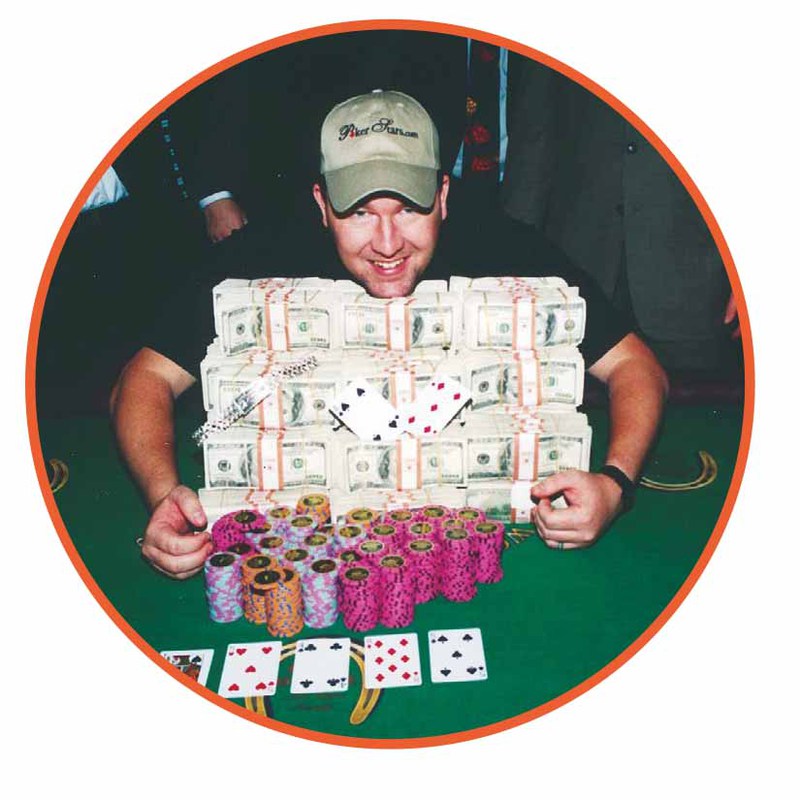 In retrospect, the confluence of events that took shape at the 2003 World Series of Poker is almost unbelievable. Not only did a 27-year-old everyman beat the stereotypical card shark Sammy Farha heads-up to win the title, but his name was also Moneymaker. Not only did the accountant from Tennessee win $2.5 million dollars, but he also did so after investing only $39 to win his way into the tournament on an online poker site. Not only did he do so on television, he also did it with hole cards shown for the first time on ESPN.
Chris Moneymaker topped a field of 839 entrants in the main event that year at Binion’s Horseshoe in downtown Las Vegas and in doing so ensured that the tournament would never again have less than multiple thousands of entrants. Just four years later, around 5,000 players qualified at online poker sites for the 2006 main event, a year that paid Jamie Gold $12 million for winning the tournament. There is no doubt that Moneymaker’s win sparked the poker boom of the early 2000s, infusing the game with new participants and fans who were inspired to believe that they could also do what Moneymaker had done. Without fail, any poker pro under the age of 30 who is asked today what lead to their getting into the game will respond, “Moneymaker.” Who wouldn’t be inspired? What happened on that night in May changed the trajectory of poker by making it a modern expression of the American dream.
2. Johnny Chan Wins Back-to-Back, Almost Gets Hat Trick
If Moneymaker convinced the world that anybody could win at the WSOP, nearly two decades earlier Johnny Chan did his best to prove that sentiment false. In 1987 Johnny Chan became the first foreign-born player to win the championship, proving that the Series was a global affair in more than just name. That year he topped a field of 152 players to win $625,000.
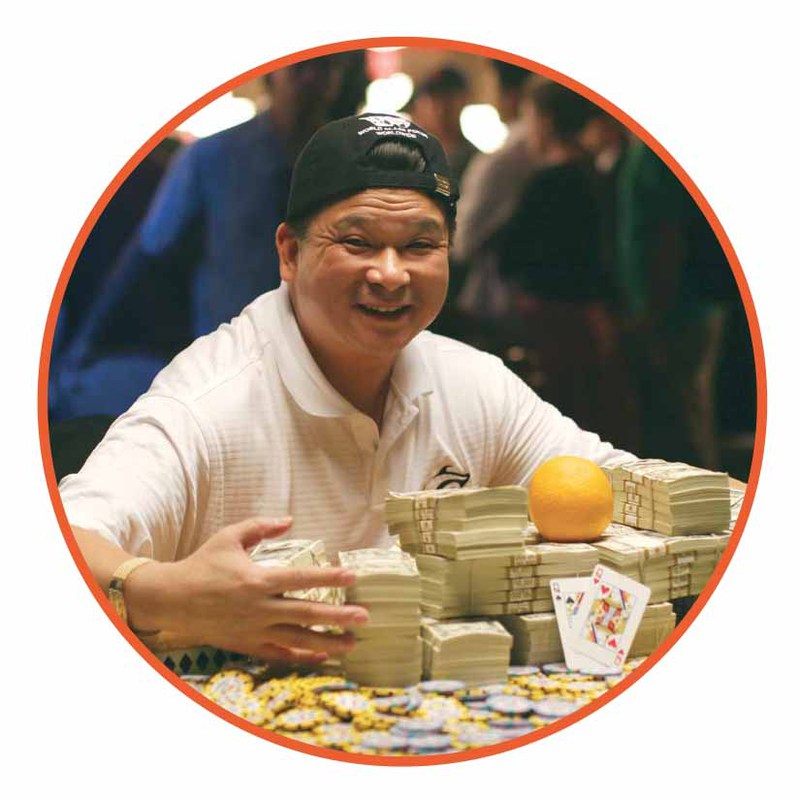 The following year 167 players posted the $10,000 buy-in, but again the “Orient Express” ran right over everyone, all the while smelling an orange he kept next to his chips to combat the smell of smoke in the room. That year Chan defeated Erik Seidel heads-up for the title, with the final hand being immortalized in the cult classic poker film Rounders more than a decade later. Chan was not the first player to win back-to-back main events, but the feat was becoming harder to achieve as the fields at the WSOP continued to grow.
In 1989, owner of the Los Angeles Lakers and poker fanatic Jerry Buss promised Chan an NBA championship ring if he could win three in a row. Buss must have surely thought he would never have to make good on that promise, but incredibly Chan once again navigated his way down to heads-up play from a starting field of 178. Chan lost heads-up to a 24-year-old from Wisconsin named Phil Hellmuth, falling short of the three-peat and having to settle for back-to-back wins in the main event. Chan remains the last player to have accomplished that feat.
3. First $1 Million Buy-In Tournament Awards Largest Prize In Poker History
There was a time when the $10,000 main event at the WSOP seemed prohibitively large. For the most part, only the best poker players and well-to-do businessmen posted the stack of a hundreds required to play. In 1972 Johnny Moss, Doyle Brunson, and the rest of the game’s top players probably would have bet the bank against there being an event held 40 years in the future that would cost 100 times as much to enter.
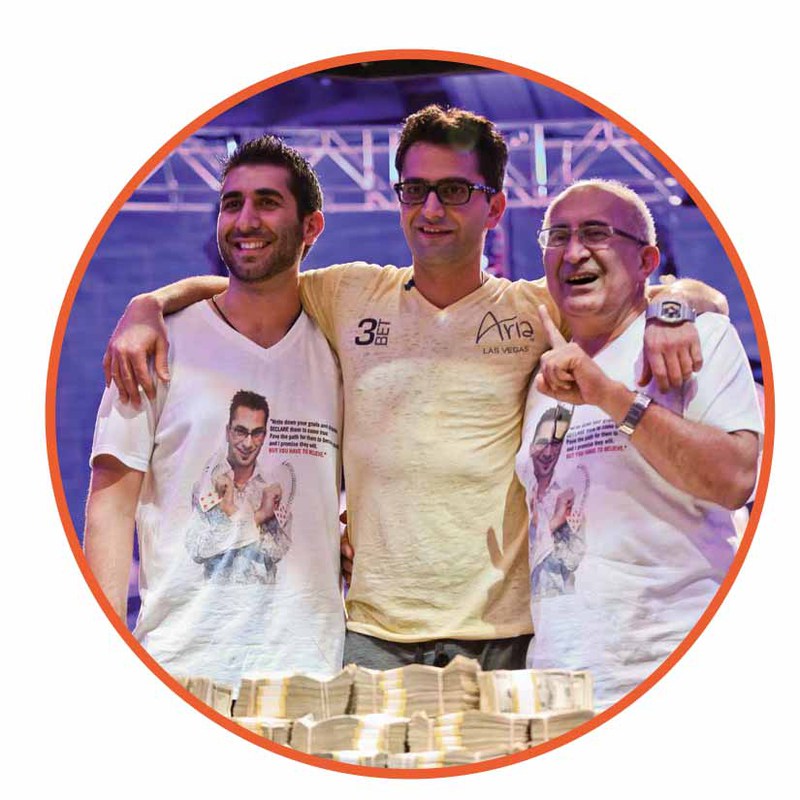 But that is exactly what happened in 2012, when 48 players posted $1 million (roughly 24 times the average American’s annual salary at the time) to play the Big One For One Drop event. Organized by billionaire poker enthusiast and philanthropist Guy Laliberté, it raised more than $5.3 million for charity and also built the largest first prize in the history of tournament poker: $18,346,673. Antonio “The Magician” Esfandiari emerged victorious from the field of world-class professionals and razor-sharp businessmen to become the all-time money leader in the history of tournament poker. This tournament was so big that runner-up Sam Trickett’s payout was the third largest awarded in history behind only Esfandiari and 2006 WSOP main event champion Jamie Gold, who earned $12 million. The event was so successful that after a one-year hiatus it has returned to the schedule in 2014, meaning that in a matter of weeks there could very well be a new record first-place prize.
4. Phil Hellmuth Wins 13th Bracelet In 2012 WSOP Europe Main Event
The WSOP gold bracelet is undeniably the most coveted hardware in the game. Despite the rapid expansion to nearly 60 events during the summer and the addition of the World Series of Poker Europe and World Series of Poker Asia Pacific, the gold bracelet still marks its owner as a member of an elite club.
During the poker boom that followed Moneymaker’s win, several of the game’s greats become embroiled in an arms race of sorts to see who could win the most bracelets. For a while it was a three-man race between Johnny Chan, Doyle Brunson, and Phil Hellmuth. But while the latter two topped out at 10, Phil Hellmuth just kept on winning.
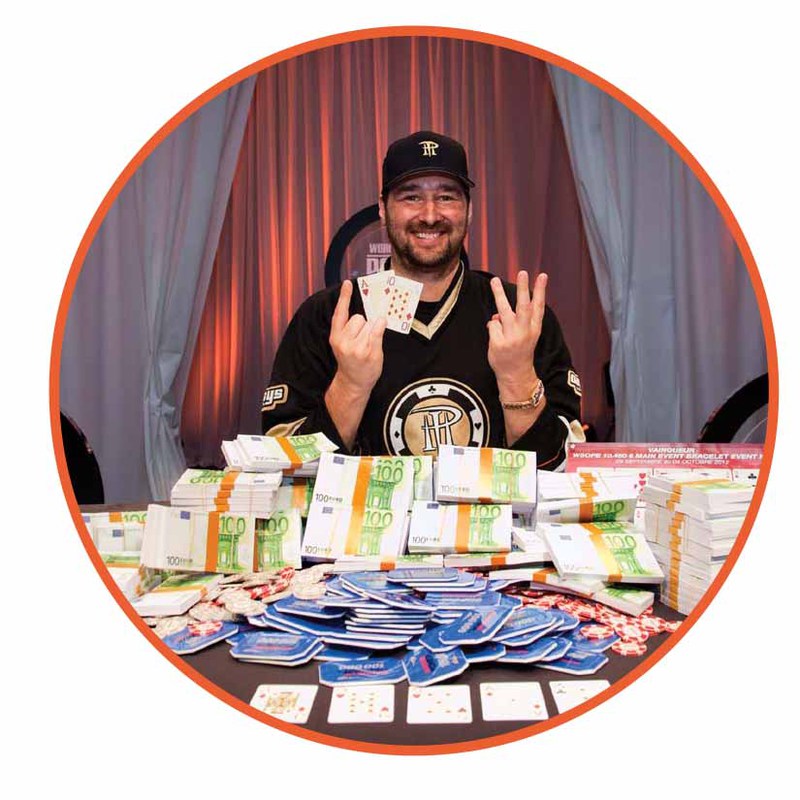 On June 11th, 2007 “The Poker Brat” stood alone as the only player to win 11, topping a massive field of 2,628 players in a $1,500 no-limit hold’em event. In 2012 he defeated Don Zewin, who finished third the year Hellmuth won the main event, to win a $2,500 razz event and further his bracelet race supremacy. Then, in fall 2012, Hellmuth secured his dominance by wining the 2012 World Series of Poker Europe main event, capturing his lucky thirteenth bracelet and becoming the only player to ever win both the flagship WSOP championship in Las Vegas and the WSOP Europe main event.
5. Stu Ungar Wins Third WSOP Main Event 16 Years After First
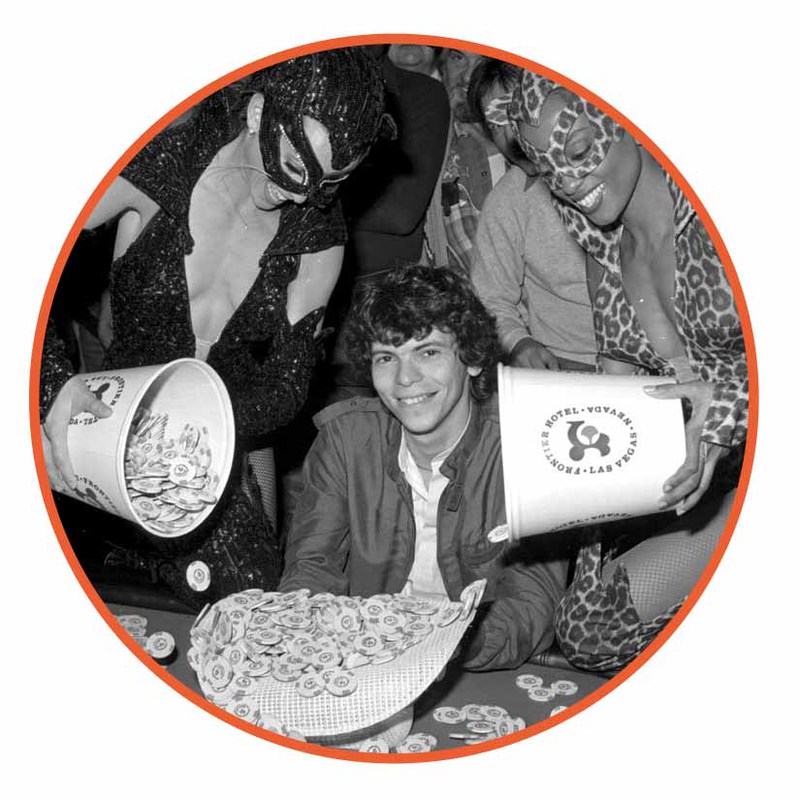 Stu Ungar is one of poker’s tragic figures, an incredible natural talent whose battle with addiction cut short a legendary career. When he first won the main event in 1980, the 26-year-old was the youngest player to win the big one. When he successfully defended his title the following year “The Kid” secured himself a place in the history books, but his developing drug habit and degenerate gambling tendencies kept him from using his considerable talents to reach his full potential.
The year after winning two bracelets, he and his wife gave birth to his daughter Stefanie. Sixteen years later, wearing circular blue sunglasses in an attempt to hide his nostrils that had collapsed from years of cocaine abuse, Ungar scraped together a last minute buy-in and was the final entrant in the 1997 WSOP main event. With a photo of his daughter by his side throughout, the “Comeback Kid” tore through a field of 312 players to capture his third main event title and the $1 million first place prize. It was a historic poker achievement and one last shining moment for the prodigy. He died the following year from a heart condition brought on by drug abuse.
6. Amarillo Slim Wins 1972 Main Event, Becomes First “Ambassador” Of The Game
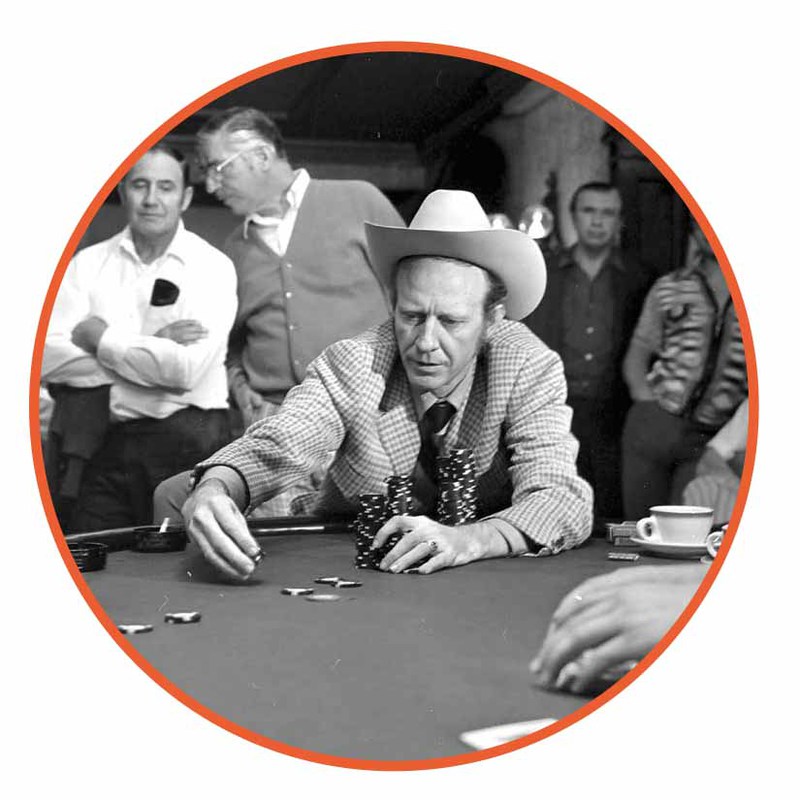 The year 1972 marked another major step in the evolution of the World Series of Poker with the birth of the marketable poker professional. When “Amarillo Slim” Preston defeated Puggy Pearson heads-up to become the first player not named Johnny Moss to win the main event, Preston used his newfound notoriety to pitch poker to the general public.
He parlayed his title and charismatic personality to embark on a national publicity tour that led to a total of 11 appearances on The Tonight Show and also a feature on 60 Minutes. The WSOP had made its first impression on mainstream America thanks to Preston, and largely due to his win and ensuing press coverage a CBS camera crew was present to film a documentary featuring the event the following year.
7. Doyle Brunson Goes Back-to-Back In Main Event With 10-2
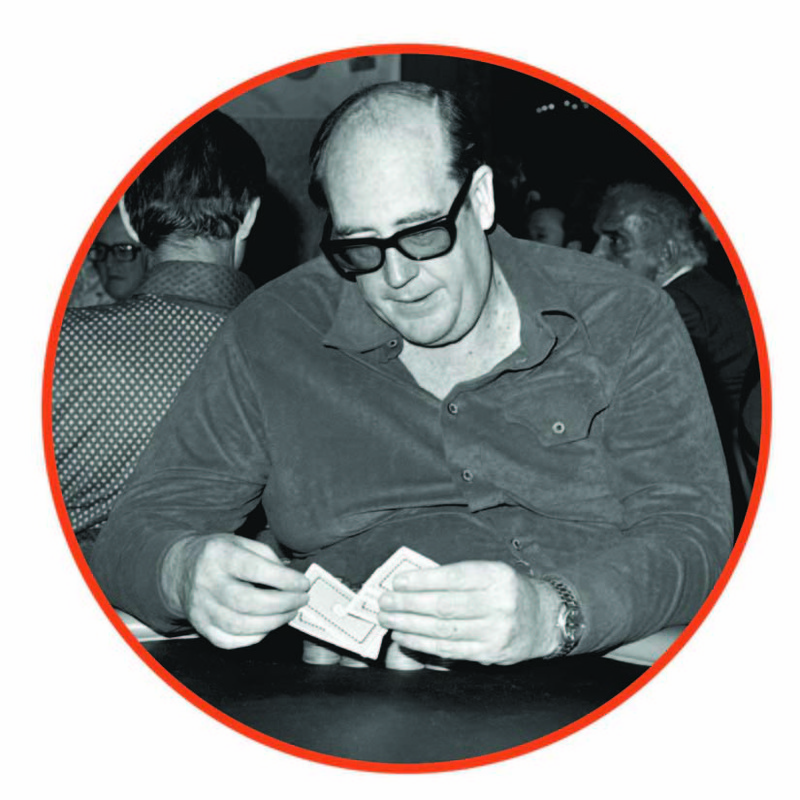 Many poker players have a “lucky hand”, but only Doyle Brunson can say that his won him back-to-back WSOP main events. “Texas Dolly” first took down the 1976 main event, making two-pair with the 10
 2 on an A
 J102
J102 only to find out he was up against heads-up opponent Jesse Alto’s AJ. Fortunately for Brunson the 10
 hit the river, giving him the pot and the title. Incredibly Brunson made it to heads-up play in the main event the following year and this time Brunson’s 10-2 made the best two pair on a 10852 board when the money went in with his opponent Gary “Bones” Berland holding the 85. The river 10 again gave Brunson tens full of twos to win the pot and his second consecutive main event win. This incredible sequence of events put Brunson on the path to becoming the living legend he is today and ensured that 10-2 would forever be associated with the Poker Hall of Famer.
8. Tom McEvoy Becomes First Satellite Winner To Capture Main Event Title
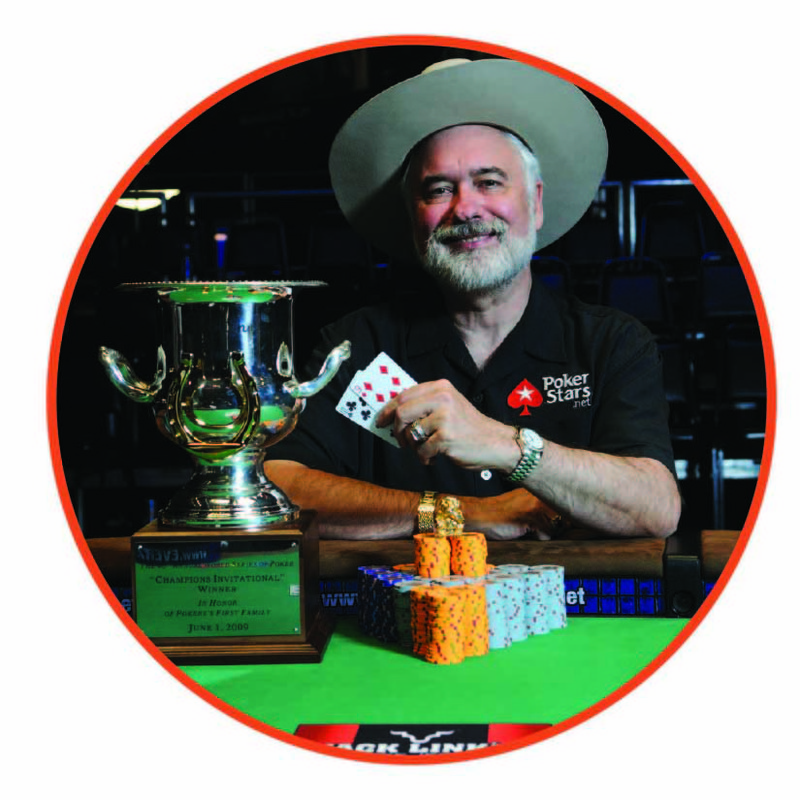 Moneymaker may have sparked the definitive poker boom, but two decades prior to his win, Tom McEvoy represented another major shift in the poker world. The advent of satellite tournaments was changing the game, allowing more players to qualify and compete for the world championship. The idea was dreamed up by WSOP poker manager Eric Drache, who spied a group of players in a cash game playing with just about $1,000 each. He suggested they play a single-table freezeout for a main event buy-in.
They did and just like that one of them was in the big dance and the satellite was born. 1983 was the first year that amateurs outnumbered seasoned pros in the field, but would go down in history as the first time that a satellite winner became the main event champion. Tom McEvoy was no rank amateur, having won a bracelet earlier that year, but the former accountant, who was laid off several years prior, was also far from a Texas road gambler like many of the event’s prior champions. When he came out on top it helped to shift the idea of who could be a WSOP world champion.
9. Annette Obrestad Wins Inaugural WSOP Europe Main Event
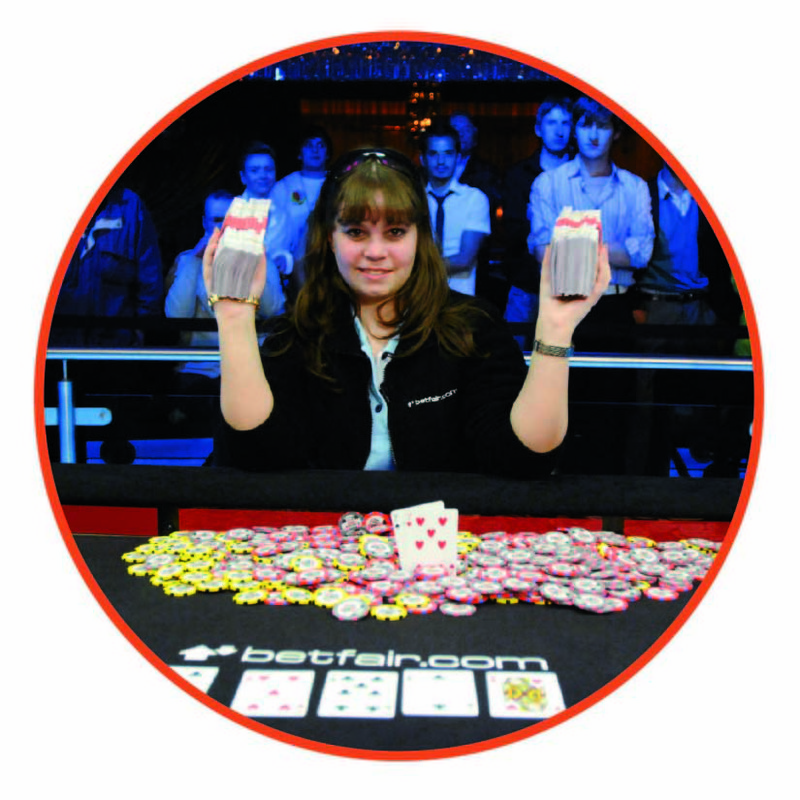 With several years of continued growth during the post-Moneymaker boom, it seemed only logical that the WSOP would look to expand. The first step was the creation of the WSOP Circuit in 2005, which would free the Series from Las Vegas and move it around the country. The year 2007 saw the inaugural World Series of Poker Europe series in London become the first event to award official gold bracelets outside of Las Vegas. The £10,000 main event there attracted 362 entrants, but in the end only one player emerged victorious.
For an event that represented the new path of poker’s modern era, there couldn’t have been a more appropriate champion: 18-year-old Norwegian online poker sensation Annette Obrestad. For the win, Obrestad earned £1,000,000 and a place in WSOP history as the first player under the age of 21 to win a gold bracelet. To this day she remains the youngest bracelet winner at 18 years and 364 days old, despite a total of 38 bracelets being awarded at the WSOP Europe and five more at the WSOP Asia Pacific, with all 43 events being open to players 18 or older.
10. Chip Reese Wins Inaugural $50,000 H.O.R.S.E.
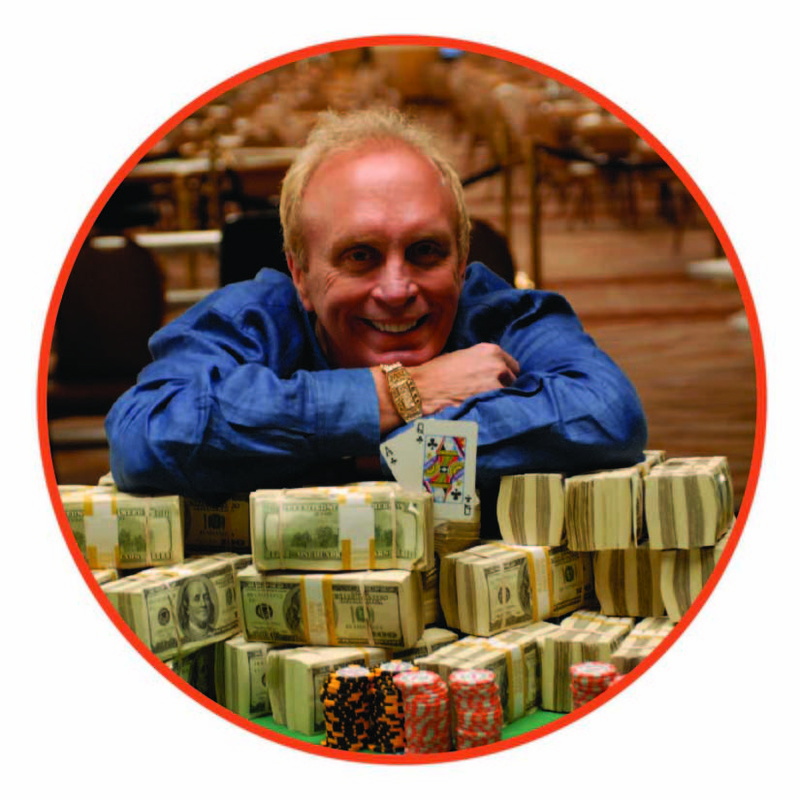 At the 2006 World Series of Poker, Poker Hall of Famer David “Chip” Reese won the inaugural $50,000 H.O.R.S.E. event, earning more than $1.7 million after defeating Andy Bloch heads-up for the win. At the time, the event featured the largest buy-in in WSOP history.
It also set the record for the longest heads-up battle, with Reese and Bloch playing for 286 hands against each other over a seven-hour period. Reese, who was a high-stakes cash game regular and three-time bracelet winner, died in 2007. As a tribute, the “David ‘Chip’ Reese Memorial Trophy” was inaugurated in 2008 as an additional prize for the winner of the $50,000 H.O.R.S.E. event, which has since been changed to an eight-game mix.
Top Ten WSOP Historic Events Vol. 27, No. 11
-
Head Games: Know Your Table Image to Make Strategic Plays and Appropriate Adjustments
-
Final Table Takedown: Alex Masek Captures Another World Series Of Poker Circuit Ring
-
Crushing Live Poker With Twitter
by Bart Hanson
-
A Poker Life: Walter Browne
by Tim Peters
-
Pro-File: James Carroll Discusses His $1.3 Million March
by Erik Fast
-
No-Limit Betting Patterns To Monitor — Part 2
by Bob Ciaffone
-
Open-Face Chinese Poker: Late Game Simulations
-
Mistakes $5-$10 Players Make
by Ed Miller
-
Second Place May Be The First Loser, But It’s Worth A Lot More Than Third
-
Force Them Out Or Keep Them In?
-
A Primer for the 2014 World Series of Poker $1,500 Dealer’s Choice Event – Part I
by Ben Yu
-
The WSOP: It’s Almost Here!
by Roy Cooke