Responsible Gambling Guide
This guide provides all the responsible gambling information you need to enjoy safe play on live and online casinos, betting sites, and apps. In the U.S., online gambling is only legal in certain states like New Jersey, Delaware, Michigan, Pennsylvania, West Virginia, and Connecticut. Always make sure the site is licensed by your state’s gaming control board.
What Is Responsible Gambling?
Responsible gambling means gambling in a way that is fun, safe, and under control. It’s not about avoiding risk completely; it’s about understanding the risks and making wise choices.
At its core, responsible gambling revolves around life balance. Whether you play once a week or grind daily, your gambling habits should never harm your finances, health, or relationships. The goal is to keep it enjoyable and sustainable in the long run.
Some people assume that gambling always leads to addiction, but that’s not true. Still, the emotional highs and lows affect everyone. Gambling disorder is recognized in the DSM-5 as a clinical condition, with a diagnosis requiring at least four of nine criteria over a 12-month period. In the U.S., about 2.5 million adults meet criteria for severe gambling disorder, and several million more experience milder forms.
While gambling involves games of skill over time, luck, also known as “variance”, plays a big role in the short term. This unpredictability can make betting emotionally challenging, even for experienced players, which is why it’s essential to take proactive steps to support safe and responsible play.
Whether you’re a beginner or a seasoned pro, following safe gambling practices helps you stay in control and keep the fun in the game.
How to Set Healthy Limits for Gambling
Setting personal limits in advance is the key to responsible play. Responsible gambling tips in this section help you protect your money, time, and emotional well-being.
1. Keep Your Bankroll Separate From Other Money
A simple but powerful rule is: only play with money you can afford to lose. Keep your betting bankroll separate from the money you need for basics, bills, personal savings, and family activities.
This is one of the most important responsible gambling tips, so make sure to be clear and consistent.
2. Play Within Your Bankroll
At the very least, use basic bankroll rules. For example, when playing poker, have at least 30 buy-ins for No Limit Hold’em cash games and at least 100 buy-ins for tournaments. This helps you deal with the swings and avoid risking money you can’t afford to lose.
3. Set a Stop Loss (and Profit Goal)
Before each session, set a clear financial limit, especially a stop loss, and possibly a profit goal. For example, you might choose to stop after losing (or winning) three buy-ins. This helps you avoid emotional decisions and protect your bankroll.
4. Track and Manage Your Time
Most players worry about their money, but time is just as important. Online gambling can easily eat up hours without you noticing.
Decide in advance how much time you’re comfortable spending on gambling. Use a timer or app to track your sessions and ensure your play aligns with your previous decisions.
5. Only Play When You’re in a Good Headspace
One of the worst mistakes is playing when you’re already tired, upset, or stressed. That’s called coming to the table on “life tilt”, and it rarely ends well. Playing under the influence of alcohol or drugs also increases risk and can quickly lead to unsafe decisions.
Online gaming isn’t an outlet for venting or fixing a bad day. If you’re not in the right mindset, do something else, don’t risk your bankroll and your long-term progress.
6. Be Flexible but Consistent
Good boundaries aren’t set in stone; they can shift with your goals or life situation. What matters is setting your rules and limits, your own responsible gambling policy, ahead of time, when you’re thinking clearly.
It’s not about one hand or a session. Responsible gambling is about showing up with awareness and discipline over the long run.
Signs of Problem Gambling
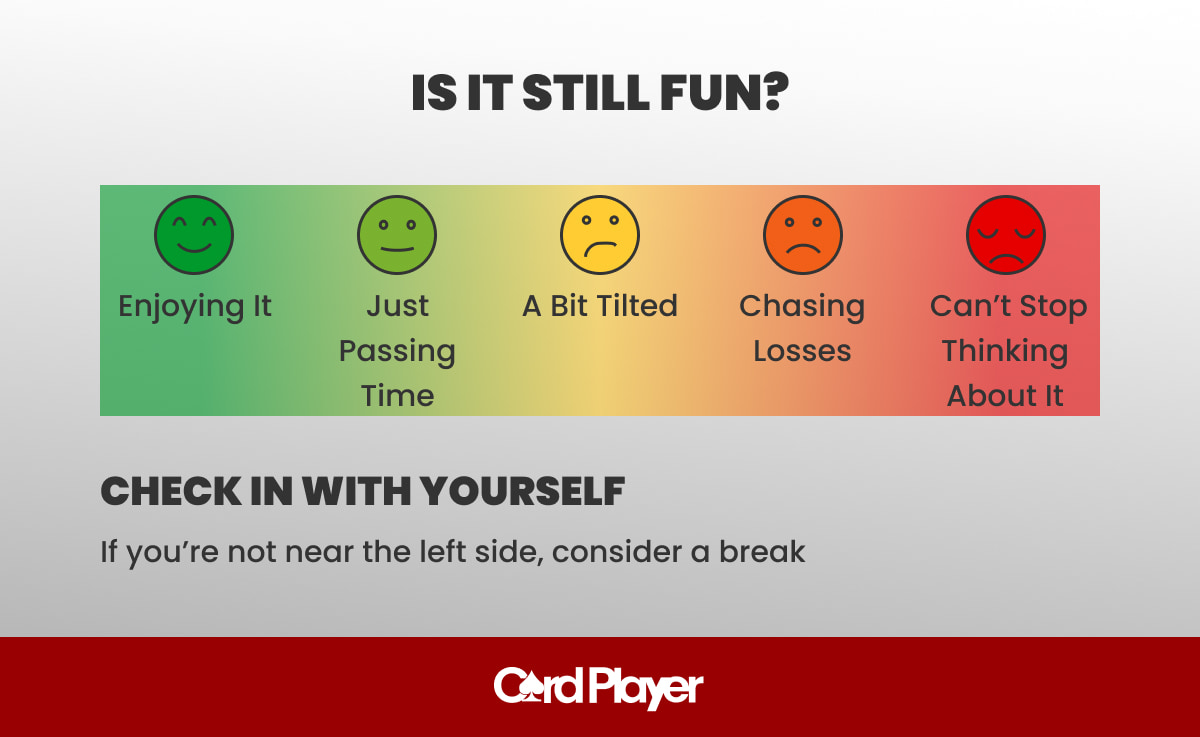
Responsible play means staying honest with yourself about how the game is affecting your life. If gambling starts feeling stressful instead of fun, or begins to harm your finances, mood, or relationships, it may be time to take a closer look.
Here are some common signs that your gambling may be becoming a problem:
- You’re spending more money or time than planned, and playing for increasingly high stakes.
- You feel anxious, irritable, or restless when you can’t play.
- You’re preoccupied with playing and struggle to stay present in other areas of life.
- You’ve tried to cut back but couldn’t stick with it.
- Gambling is affecting your productivity, motivation, or ambition.
- You chase losses or feel a strong urge to win back money.
- You hide or lie about your play or spending.
- You feel guilty or ashamed after playing.
- You’re skipping work, social plans, or appointments.
- You’re gambling to pay off debts or fix financial problems.
- You borrow money to play or fall behind on bills.
- You use gambling to escape emotions or cope with stress.
- You gamble until you’ve lost all your money.
Many players experience some of these signs from time to time. There’s no shame in that, what matters is how you respond. The goal of this responsible gambling information isn’t to demand perfection, but to raise awareness and help you act early. Catching changes in behavior sooner makes it much easier to adjust before things spiral.
How to Get Help if Gambling Becomes a Problem
If you’re looking for responsible gambling tips because you have noticed some signs of problem gambling, you’re not alone. Help and responsible gambling tools are available, whether you’re feeling slightly out of control or already overwhelmed.
Option 1: Talk to Someone
For some players, the first step is just talking to someone. This could be a trusted friend, family member, or mental health professional. Even a simple chat can help you think more clearly and plan your next steps.
Option 2: Take a Self-Assessment Test
A short self-assessment quiz is a good first step to take. Here are a few options:
- A confidential self-assessment by The National Council on Problem Gambling (NCPG);
- A 20-question assessment by Gamblers Anonymous;
- GambleAware’s anonymous self-assessment tool takes only 2-4 minutes.
Option 3: Contact a Designated Helpline
Help from an experienced counsellor is available 24/7 through different channels:
- Call or text the National Problem Gambling Helpline at 1-800-GAMBLER
- Text support via 800GAM
- Live chat at ncpgambling.org
- Gambling Therapy offers free, confidential support at gamblingtherapy.org internationally.
Option 4: Contact Gamblers’ Associations
Several organisations connect gamblers and offer varied types of support (click name for link):
This is the largest national organization in the US, offering a helpline and various other types of support with a lot of resources.
Gamblers Anonymous offers support groups (live and online) connecting people who’ve faced similar challenges.
Offers support to people with a gambling problem and their family and friends.
Online community and support forum, moderated and frequented by fellow problem gamblers; it is a judgment-free site where you can get information, ask questions, and find some peer support.
Just the fact that you are looking for responsible gambling information in this guide is already a great first step; it means that you are paying attention, and that matters. Getting help doesn’t always mean quitting the game altogether. In many cases, it means learning how to set boundaries, manage urges, and reconnect with why you enjoyed betting in the first place.
Tools to Support Responsible Play
One of the best ways to maintain responsible online play is to use the tools that are built right into your betting site or casino. These aren’t just for people who feel they’re struggling; these are safe gambling practices that benefit every player, no matter their skill level. Be cautious with promotions: bonus terms can include wagering requirements or time limits that encourage excessive play. Always read the full terms before claiming.
Most regulated platforms support a full responsible gambling policy with at least a few of the tools discussed in this section.
If you need more support than your site provides, or if you play on multiple sites, there are some great third-party options available as well.
Built-In Tools on Casino Sites
-
Deposit limits
Set daily, weekly, or monthly limits on how much you can add to your account. This is one of the most effective safe gambling practices, and it takes just a minute to set up.
-
Loss limits and wagering caps
These stop you from losing more than you’re comfortable with in a given session or period. They’re invaluable if you tend to chase losses or push through losing streaks.
-
Session time limits and reality checks
Get reminders about how long you’ve been playing, or lock in a max session length. These tools help you maintain awareness and perspective and manage fatigue, mood, and attention.
-
Cooling-off periods
Feeling emotional and need a break? A cool-off period lets you lock yourself out for 24 hours or another short window.
-
Self-exclusion
If you need a more extended break, self-exclusion tools can similarly restrict access to the platform for weeks, months, or longer. Many players use this effective tool during high-stress periods in order to protect their finances and mental health. In addition to site-level tools, many states offer exclusion programs that cover all licensed casinos and online platforms.
-
Behavioral analytics tools
Behind the scenes, many platforms use analytics to detect risky patterns, like increased bet sizes and session times. This data can trigger messages to you or alerts to the site’s responsible gambling policy team, who may follow up with resources or recommendations.
-
Personal Messaging Systems (PMS)
You can have information sent to you, for example, regular reports or summaries of your buy-ins and times spent playing, or messages based on changes in your activity (e.g., if your deposit amounts or session lengths change noticeably). This information may prompt helpful breaks or limit-setting.
All players must meet the legal gambling age in their jurisdiction and ensure the site holds a valid license for their region. U.S. law also requires players to be physically located in a licensed state; using VPNs or spoofing tools can violate platform terms and state law.
Third-Party Tools and Apps
GamBan / BetBlocker: Apps like GamBan and BetBlocker block access to gambling sites across your devices. They’re useful if you need a clean break or want help sticking to a self-exclusion plan, especially across multiple gambling platforms.
Tracking tools: Tracking your spending and gaming habits helps you stay grounded and avoid surprises. There are even poker-specific tracking apps like Nash Bankroll, PokerStack, or Bink that help you log sessions, track profit/loss by game type and location, spot patterns over time, and help you stay aware and accountable.
However, even using a simple spreadsheet to log time, stakes, mood, and outcomes can go a long way; the goal is to build self-awareness and consistent control over time.
Mental Game and Emotional Control
Maintaining rational control over our decisions is one of the most important parts of safe gambling, but it’s something humans aren’t naturally great at. Often, we only realize we weren’t thinking clearly after a mistake has already cost us.
There are plenty of resources, from books to complete courses, on recognizing tilt and improving emotional control. But one of the simplest ways to protect your mindset is to take regular breaks. Stepping away from the table, whether you’ve won or lost, gives you a chance to reset and check in with yourself.
Ask:
- Am I still thinking clearly?
- How tired am I?
- Am I having fun, or am I chasing a result?
- Is this still a good game for me?
- Am I playing my A-game, or reacting emotionally?
If the answer to any of those feels less than optimal, it might be time to call it a day.
Responsible Gambling in Live vs. Online Games
There are many similarities between live and online gambling, but the risks can also look different.
Online casinos provide 24/7 access and more anonymity, making it easier to lose track of time, money, or emotions. Because the game is faster, tilt can be as well, sometimes. On the flip side, online sites with their responsible gambling policy offer more built-in tools (like time reminders or deposit limits), which are helpful.
Playing in live casinos is slower and more social, but long sessions, travel costs, and the pressure to keep playing can still impact your finances or well-being. The key is to plan ahead, set limits, and don’t be afraid to walk away when you’re tired or tilted.
Gambling Is Just a Game — Keep It Fun!
Gambling should be a fun game of skill and strategy, not a way to make money. Feeling the pressure to profit or recover losses increases stress, which can quickly lead to burnout or more risky behavior.
Responsible online play means playing for enjoyment, not chasing outcomes. Maintain a mindset focused on entertainment and growth, rather than income. When it’s not fun anymore, it’s worth stepping back.
Conclusion
If you’ve ever wondered what is responsible gambling, it simply means playing in a way that protects your well-being, not just your bankroll, but your time, focus, and enjoyment of the game.
In this guide, we’ve looked at warning signs to watch for, and the tools that can help, from self-exclusion and cool-off periods to personal messaging systems and third-party apps. These aren’t just safety nets, they’re proactive ways to stay aware and in control.
Whether you play online or live, safe gambling practices come down to knowing your limits, staying honest with yourself, and reaching out for support when needed.
FAQs
What is responsible gambling?
Responsible gambling means playing in a way that protects your finances, health, and emotional well-being. It includes setting limits, recognizing risk, and knowing when to take a break or get help.
What are the most important responsible gambling tips and tools?
Use bankroll management, time tracking, and site tools like deposit limits or self-exclusion. Stay aware of emotional cues, and reach out for help if needed.