
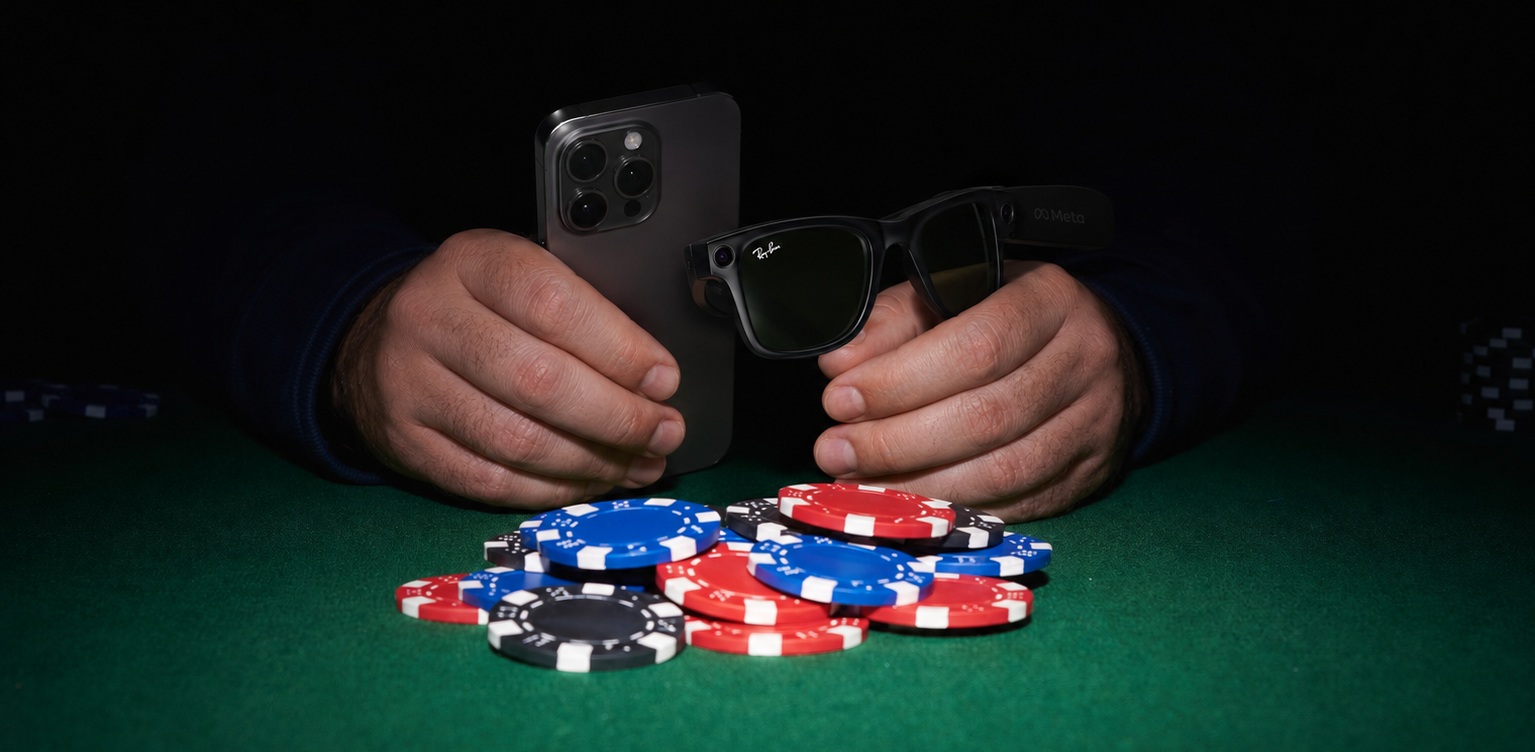
Do you know the rules on cell phones at the table? Let’s check! Which of the following are World Series of Poker rules?
- If you make or take a call while you are at the table, you must leave the table.
- You may not place your cell phone on the rim of the table.
- You may use your phone for texting or email when you are not in a hand.
- You may not use your phone for texting or email when you are in a hand.
- During play at the final three tables, your friend in the audience can’t watch the livestream.
- While you are in a hand, you can use your phone to place a bet on the Caesars betting app.
As cell phone use has evolved, the rules have struggled to keep up. Initially, phones were used to make phone calls – imagine that! Because someone jabbering on the phone during the game is annoying, it seemed simple enough to adopt a rule that required a player to step away from the table to make or receive a call.
Rule 63 says:
All Participants desiring to talk on a cell phone must be at least one table length away from their assigned table during all said communication.
But then smart phones came along. It was not disruptive to text at the table (except for the all-too occasional need to nudge someone and say, “it’s on you.”) But the player might also be obtaining information on how to play a hand, violating the “one player to a hand” rule. So it made sense to add a rule saying you cannot use a phone while playing a hand.
Surprisingly, the rule does not say that. Instead, Rule 63 says:
Participants not involved in a hand (cards in muck) shall be permitted to text/email at the table but shall not be permitted to text/email any other Participant at the table.
In law, one maxim of interpretation is expressio unius est exclusio alterius – the expression of one thing excludes another. So if the rule says a player is permitted to use a phone when not involved in a hand, then it is a reasonable deduction that they are not permitted to use a phone when involved in a hand. But it would be nice if the rule came out and said that in a straightforward way.
Then along came sophisticated cheating in which the camera in the phone could actually read the cards as they were flying off the dealer’s fingers. To prevent this, a person should not be able to position their phone where it is possible to do this. The answer to this problem is found at the end of Rule 63:
No cell phones or other electronic communication device (E.g… Phone, tablet, computer, headphone cases) can be placed on a poker table.
The use of solver apps and the ability to get real-time information on the play of a hand became an issue at the conclusion of the 2024 main event. That posed the question of whether to ban all phone use to avoid any doubt of what a person is using the phone for, or to ban only the use of solvers, which seems like a good idea but is almost impossible to monitor. The WSOP’s answer to this problem is found in Rule 64 and is particularly convoluted.
The rule begins in 64.a by reproducing a Nevada statute that makes it a criminal offense to use an electronic device to gain an advantage. The statute was originally intended to apply to card counting devices and no one is sure whether it applies to using solvers in a poker tournament, so the WSOP wisely makes no comment but just makes it part of the rules. Relevant statutes are of course part of the rules anyway (see Rule 45) but this specific rule brings it to our attention.
Then 64.b allows reasonable use of electronic devices such as iPods and noise-cancelling headphones. This will come as a relief to those seated at a table with Will Kassouf or Martin Kabrhel, but 64.c prohibits even these at the final three tables.
Rule 64.d directly addresses the problem of solver apps. Interestingly, this rule is addressed to both players and spectators:
Participants and spectators are not allowed to use charts, apps, artificial intelligence or any other form of electronic assistance in the tournament room that could give a Participant an advantage over another Participant.
While Rule 64.c prohibits electronic devices used to play music at the final three tables, Rule 64.e provides that the WSOP has discretion to “remove” all devices from players at the final three tables. The rule provides in part:
No devices will be allowed to be used in the tournament room during these late stages of streamed events and no coaching from anywhere within the tournament room will be allowed; this includes viewing of the tournament stream and usage of any electronic assistance.
This rule seems too all-encompassing. Unless the final three tables are in a separate room, the “tournament room” may well have other tournaments running and those tournaments may have spectators. I assume there will have to be exceptions for players to get seating assignments. These are now made through the WSOP LIVE app, which will not be available if the devices are removed from players.
Finally, Rule 64.g states “Participants are prohibited from using betting apps, gaming charts, or any poker information tool while involved in a hand.”
If we applied the rule of expressio unius to this rule, we might conclude that players are not prohibited from using these tools while not in a hand, but we know from Rule 64.d, discussed above, that this is not true, so I’m not sure what this rule is doing here. This rule also states other loopholes to the ban on phone use. Rule 64.g.1 states:
Notwithstanding the foregoing, Participants may utilize the WSOP LIVE registration app, WSOP.com, or Caesars Mobile Sports App while involved in a hand as use of these applications does not give an unfair advantage to the Participant.
If, during the play of a hand, the dealer sees a player using a phone and calls the floor, the player can explain, “I was just using my Caesars betting app to lay $1,000 on the Dodgers tonight.” Apparently profit trumps common sense, and this use is allowed. This gets my vote for Stupidest Rule.
The use of electronic devices at the table is sure to be a hot topic at this year’s Tournament Director’s Association (TDA) Summit, which takes place later this month at Aria in Las Vegas. Although the WSOP doesn’t use every TDA rule, the vast majority of cardrooms in the world do, and tournament officials are looking for ways to combat the growing threat of technology at the tables.
 Scott J. Burnham is Professor Emeritus at Gonzaga University School of Law in Spokane, Washington. He can be reached at profburnham@yahoo.com.