







Jonathan Tamayo: Poker’s Most Unlikely ‘Bad Boy’
Main Event Champ On Unintentionally Triggering Rule Change
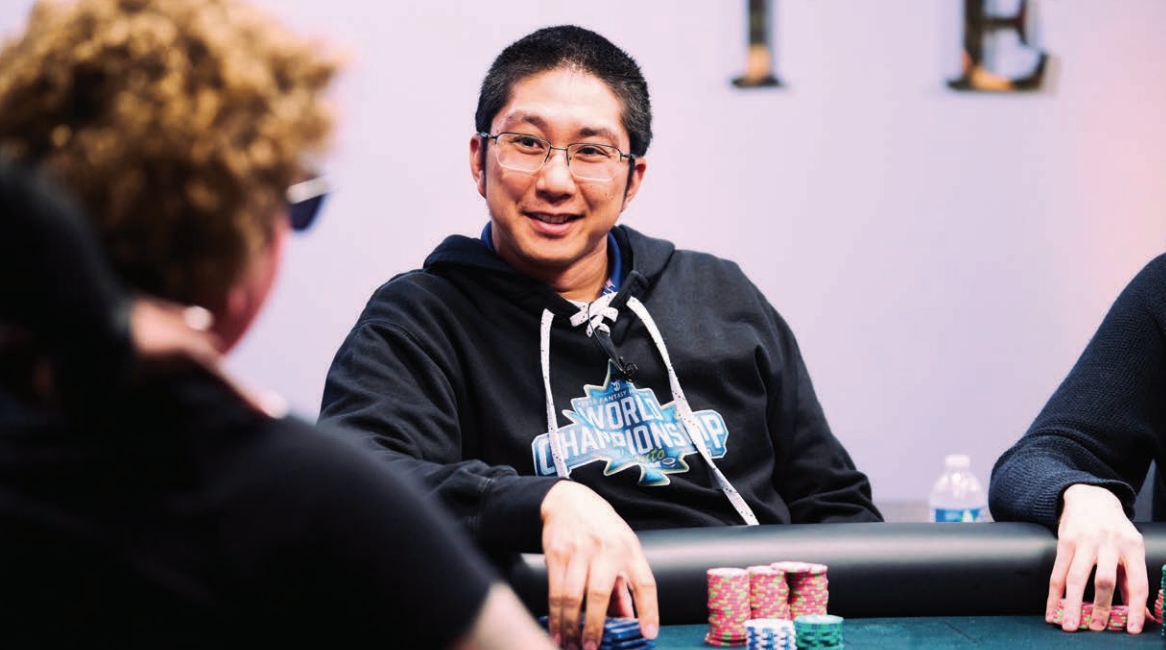
Twelve months ago, you couldn’t have picked out a less likely poker player to be surrounded by controversy than Jonathan Tamayo.
The 39-year-old from Houston has been attending the World Series of Poker every year since 2007, with highlights that included a runner-up showing in a $1,500 half limit, half no-limit hold’em event in 2008 for six-figures and a 21st-place finish in the 2009 main event for $352,832.
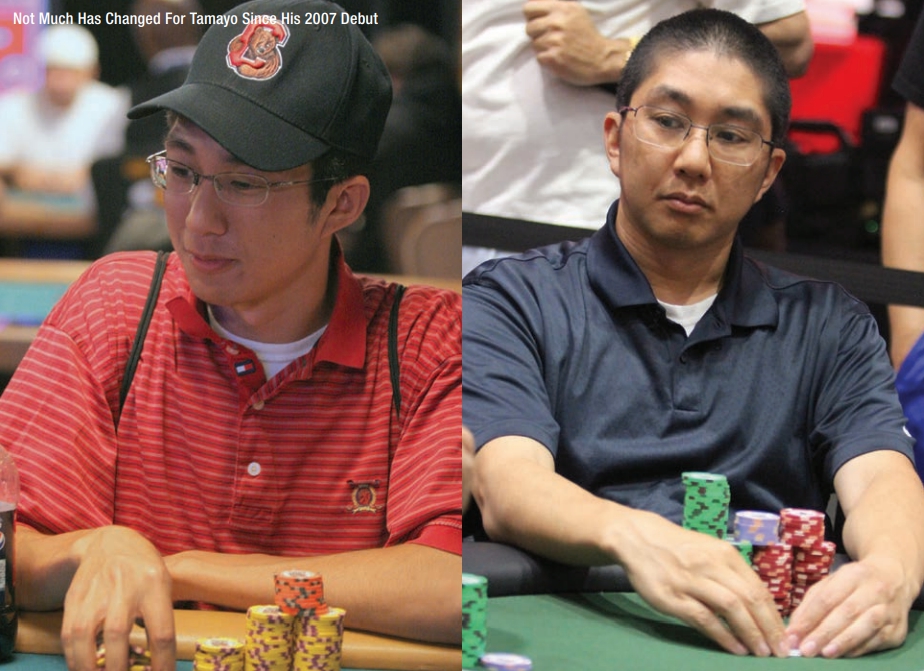
Tamayo cut as low a profile as a long-term tournament grinder could have, looking more ready for the golf course than the felt. You could always count on him to be sporting some version of a comfortable polo and khaki pants in a corner of the Rio, or more recently, the Horseshoe on the Strip.
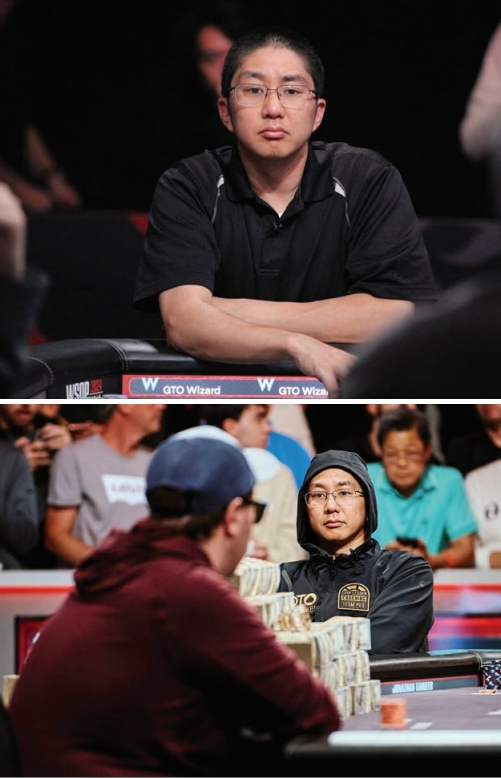
And yet, on his way to becoming the 2024 main event champion and banking $10 million, Tamayo drew a tremendous amount of attention beyond the bright lights and tense moments of the hands playing out on the WSOP broadcast. With his good friend Joe McKeehen, the 2015 WSOP main event champion, and four-time bracelet winner Dominik Nitsche supporting him, Tamayo’s run to victory kicked off a long overdue conversation about coaching on the rail and technology that still burns brightly heading into the 2025 series.
Every Journey Starts With A Few Key Steps (And Pots)
Like a kid who imagines hitting a Game 7 home run in the World Series while swinging a bat in his backyard, Tamayo’s existence in the poker world started with stakes as small as they could be. In his late teenage years, as the WSOP broadcasts on ESPN became a nationwide sensation, Tamayo first dipped his toe in the poker waters in a small-stakes home game.
 “The game was, now that I think about it, really degenerate,” said Tamayo. “Way more degenerate than I realized. It was an ante-only game that started at a nickel and turned into a $2 ante by the end of the night. The buy-in was $20. I remember the first time I had two aces in my hand, and I decided to put no extra money in preflop.
“Forty dollars later, I realized I didn’t know anything.”
That experience didn’t discourage Tamayo, by any means. In fact, that $40 mishap fueled a curiosity that led him to seek out online poker resources. He stumbled upon the now-defunct pokerroom.com, with its in-browser games, and took advantage of how his class schedule was set up in his final year of high school to hit the online tables hard.
“I had a schedule in my senior year where I would be home two hours early every other day, and the other days I only had two classes and had to be at school from 7:30 to 10:45. I would be home to play all of those daily freerolls, and then I won a $20 tournament for $600.”
Tamayo built up his bankroll to $1,600 and had his first payout check mailed to his house. It was around this time that he was accepted to Cornell, an Ivy League university in Ithaca, New York.
During his very first week on campus, Tamayo found his people in a hurry. It just so happened that Cornell was just a 90-minute drive away from Turning Stone Resort Casino, which had a popular poker room that was open to players as young as 18.
“I walked into the lounge, and they were playing poker on a pool table,” he recalled. “There was a group of friends that would drive up there every weekend.”
While no-limit hold’em was obviously exploding in popularity in the post-Moneymaker era, limit hold’em was still going strong when Tamayo first started making the weekend trips. He started out in $1-$5 spread limit games and worked himself all the way up to $30-$60 over the course of his years in Upstate New York, admitting that he was “making money every weekend.”
At the same time, while still managing his studies and maintaining his grades, Tamayo was racking up online tournament successes on PartyPoker, PokerStars, and Full Tilt Poker. There was a key fifth-place finish in a PokerStars Sunday Million event netted him $63,000 and significantly juiced up his bankroll.
Tamayo made his first trip to the WSOP in the summer of 2007, between his junior and senior year of college, and then started a streak of being in Vegas every summer.
Early WSOP Success Kept Tamayo On Poker Path
Tamayo’s first full summer at the WSOP nearly brought him a gold bracelet. He combined his experiences in online no-limit tournaments and live limit hold’em games to make a run in a split format event. He got all the way down to heads-up play against Floridian Frank Gary, until a brutal limit hold’em hand in which Tamayo flopped the Broadway straight with A-K, only for Gary to hit a runner-runner full house with pocket nines.
Still, the $140,093 cash was far and away the best of his career to that point. It ultimately helped shape the trajectory of the next two decades of his life, as Tamayo had other opportunities and an expectation that his full-time poker career could be short-lived, otherwise intending to use his degree from Cornell’s School of Hotel Administration.
“If I don’t have that good summer, then I am probably taking a job in Tampa, being on the road half the year and auditing sports stadium operations,” Tamayo said.
He more than doubled his live tournament high water mark the following year when he played down to the last three tables of the 2009 main event, finishing 21st for $352,842.
While it gave him some valuable time under the bright lights of a televised broadcast, the poker he was playing in 2009 was drastically different from what Tamayo experienced in 2024.
“I was still strictly focusing on limit hold’em and holding on to that dying game at the time, as far as it being widely spread,” said Tamayo. “In tournaments, knowing that I didn’t know how to play deep, I was pretty much just waiting until I was shallow. At the time, you could always win a tournament knowing how to play 20 big blinds. I would register as late as possible, which was only two hours later back then.
“I also learned better eating habits on dinner breaks, like not overstuffing myself into a food coma. Because that’s probably where I made a lot of my mistakes, post-dinner break on day 7 that year.”
Tamayo has an excellent record in the main event overall, which includes another deep finish in 2015 when he took 78th place for $79,668. He has seven main event cashes in total.
There have been ebbs and flows to Tamayo’s life and poker career. He won a WSOP Circuit main event in Florida in 2013 for $206,020, one of his four Circuit rings overall. In 2021, he took down a Wynn Summer Classic title for $237,935. Last year, he finished third in the Texas Poker Open for another $180,000.
Tamayo also became deeply invested in daily fantasy sports, and in 2019 won a major fantasy hockey contest on DraftKings. And he’s done this while maintaining a pretty unique day job. For the last 10 years, Tamayo has been a Texas high school football referee.
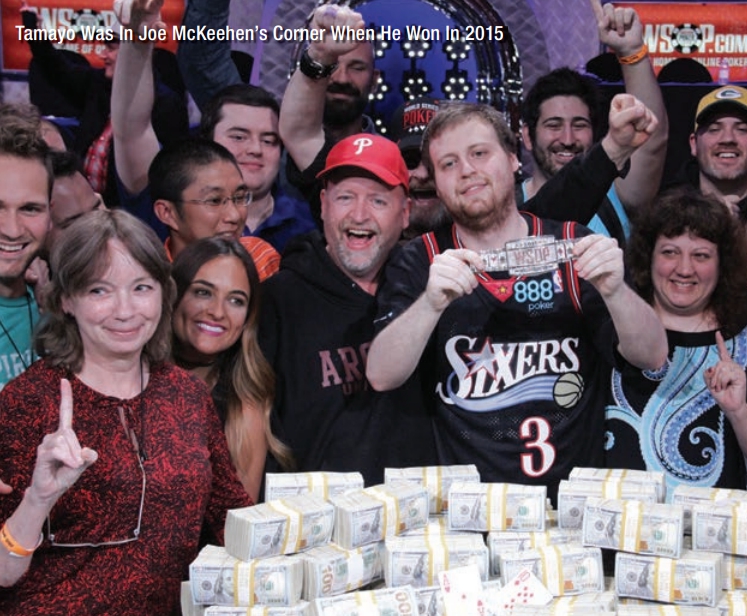 But every summer, like clockwork, Tamayo would show up at the WSOP, sharing a house and a rental car with a good friend and fellow poker pro who he met on one of his last college trips to Turning Stone. At the time, Joe McKeehen was a promising young player who wasn’t yet old enough to play elsewhere. Neither of them could have possibly dreamed that one day they’d have the chance to take down the biggest event in poker, let alone that they’d both get it done.
A History Of Coaching In The WSOP Main Event
When the WSOP implemented the November Nine concept back in 2008, the final table of the main event was delayed and played out live several months later to coincide with the finale of the pre-taped television broadcasts on ESPN. It was during that era, which ran until 2016, in which players most publicly sought out coaching and assistance.
In 2015, McKeehen won the WSOP main event. As anyone who had an opportunity for such a life-changing sum on the line, McKeehen put together a team to help him prepare for his final table. On that team, naturally, was Tamayo, who to this day on his Twitter/X profile lists himself as the “Defensive Coordinator of the 2015 Main Event Champion.”
While the delayed final table format went away after 2016, there was still a scheduled day or two off before the conclusion of the tournament. That was still plenty of time for a crash course on stack and position strategy, ICM implications, and learning everything they could about their opponents.
Coaching remained part of the equation, with some top pros offering their services for a small cut of the payout. As technology improved and solver tools like GTO Wizard came to the forefront, players refined their approach even further in an effort to play unexploitable poker.
Trips to the rail on breaks or between hands to confer with coaches and friends during the WSOP main event final table became commonplace. And there was typically someone watching the broadcast in order to run through hand histories and relay hole card information.
It was that same environment in which Tamayo found himself in 2024, making pay jump after pay jump until there were only three players and one day of poker remaining between him and a main event title of his own.
That’s where the controversy began. A laptop belonging to a member of Tamayo’s rail was visible on the live broadcast, and as he battled his way to victory, defeating Jordan Griff heads up, chatter began to surface.
Accusations of live simulations being run in real time were levied, and public figures including Doug Polk made strong statements condemning the optics of how everything played out.
Nitsche, the founder of DTO Poker and one of the coaches in his corner, was quick to defend his would-be pupil.
“People have this misconception about how deep you can get as a poker coach during the main event,” he explained on the Dan ‘Jungleman’ Cates podcast. “You can’t really do much. You can’t run a full simulation on [an opponent]. You can’t plug information into your dream machine and get an answer. That’s not how this works. All this advice has to be quite general.
“I think it’s a fair assessment that most [critics] just don’t know how the software works. In general, it’s just the fear of computers.”
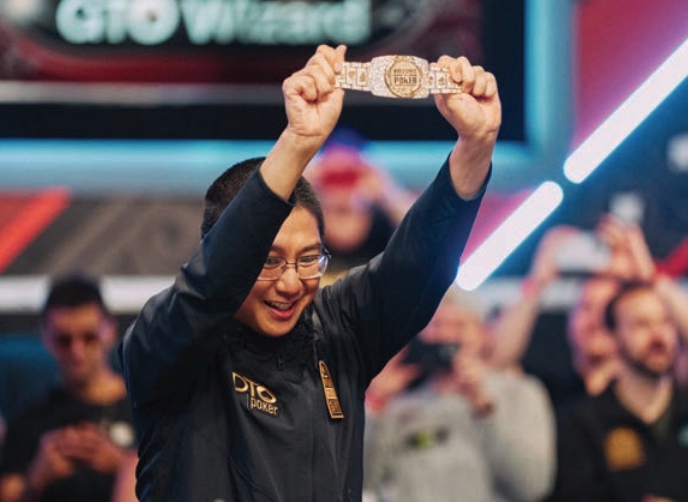
It was clear that no rules had been broken, but the public response triggered a response from the WSOP. The now-GGPoker owned series made significant changes to their rules, adding several clear addendums intended to reduce and potentially eliminate any assisted coaching during televised final tables in the future.
Some even took to calling these alterations “the Tamayo rule,” and yet, despite some frustration, Tamayo has largely let things roll off his back.
“Whatever the rules are, I’m okay with them as long as it’s the same for everybody,” he explained. “There’s been instances in the past where players think certain people have gotten more favorable rulings than they deserve over the years, some less favorable than they deserve over the years. It’s been all over the place. The way the rules are this year, I really don’t care [what’s changed], because it’s the same for everybody.”
His stance should come as no surprise. After all, Tamayo loves rules. He had to memorize an entire book of them for his day job as a football referee.
Moving Forward
The ideal outcome for Tamayo is fading back more towards the low-key, under-the-radar presence he enjoyed before 2024. While he’ll never quite experience that level of anonymity again, the attention he’s received in the aftermath of his big win seems likely to fade with time, at least to a degree.
He’s enjoyed some of the small quirks and benefits of being a main event champion, from the occasional nod of recognition on the street or on the sidelines of a football game, to playing on some major live streams, and the unique experience of how differently some players approach playing hands with him at the table now.
“It’s changed,” said Tamayo. “The problem that I run into is, what the change is, you never truly know. Some people will play tighter. Some people just go out of their way to win pots against you. It’s all over the place, and you truly don’t know until it happens.”
Tamayo likened the rest of his experience to being a D-List celebrity, allowing him to wait in line at Chick-Fil-A unbothered, but having to deal with a bit of added attention when he’s walking around a casino.
And while there’s certainly some added scrutiny from parts of the poker community following the controversy surrounding his win last year, Tamayo hopes that with time the loudest and angriest opinions will fade.
“Everybody’s entitled to their opinion, and it is what it is,” said Tamayo. “Probably best to leave it at that, I think.”
- Photos by PokerGO, Card Player