






Seth Davies Enjoying Absurd $12 Million Start To 2025
Hot Streak Continues With $250,000 WSOP High Roller Title
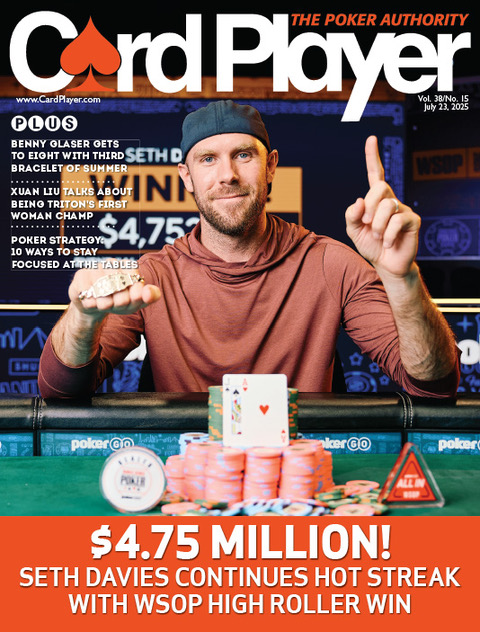
Seth Davies put together one of the most ridiculous two-month stretches in modern poker history, crushing the high-stakes circuit for millions between May and June of 2025.
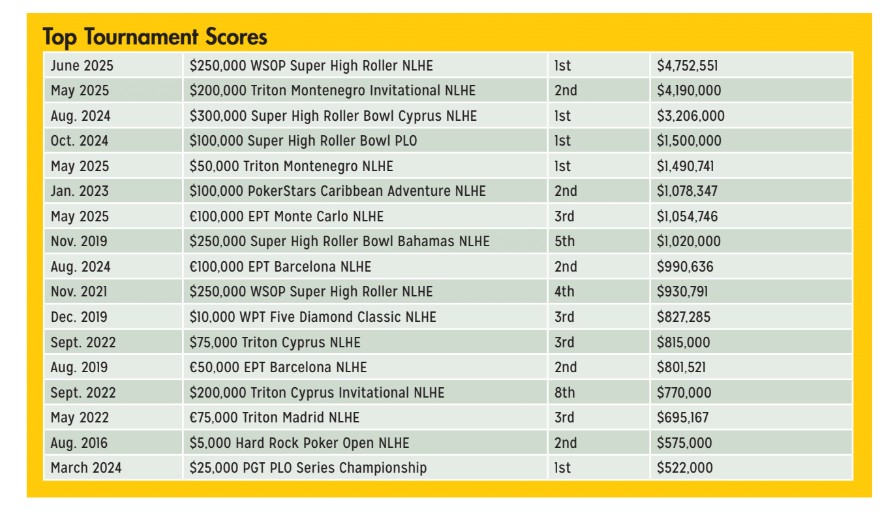
After raking in over $1 million in a €100,000 high roller at EPT Monte Carlo, Davies put on the performance of a lifetime at the Triton Poker Montenegro festival. Across four cashes, Davies banked $6 million during trip in Montenegro. He finally captured his first Triton title for $1.5 million, finished second in the $200,000 Triton Invitational for another $4.2 million and rattled off a second runner-up finish to boot.
Those results on their own were enough to wipe away years of tough trips and results that didn’t line up with what Davies is actually capable of at the tables. He’d set a new high score for himself in Montenegro, and Davies had the pressure off his back heading into the 2025 World Series of Poker.
Perhaps that’s what unleashed him to promptly beat that career-best result just a few weeks later. Davies checked off another major career milestone in winning the WSOP $250,000 super high roller for $4.75 million and his first bracelet.
With over $12.2 million in results already in 2025, Davies has already eclipsed every previous year of his career so far with half of the calendar still to come. The Oregon native, who now calls Las Vegas home, had a lot to say to Card Player about his recent run of success, the social dynamics of the high roller scene, and what the future holds for him.
A Triton Breakthrough
Tim Fiorvanti: After years of these high-stakes Triton trips, you had put together some good results and had some close calls, but also a lot of tough luck along the way. What was it finally like to break through on that stage in Montenegro?
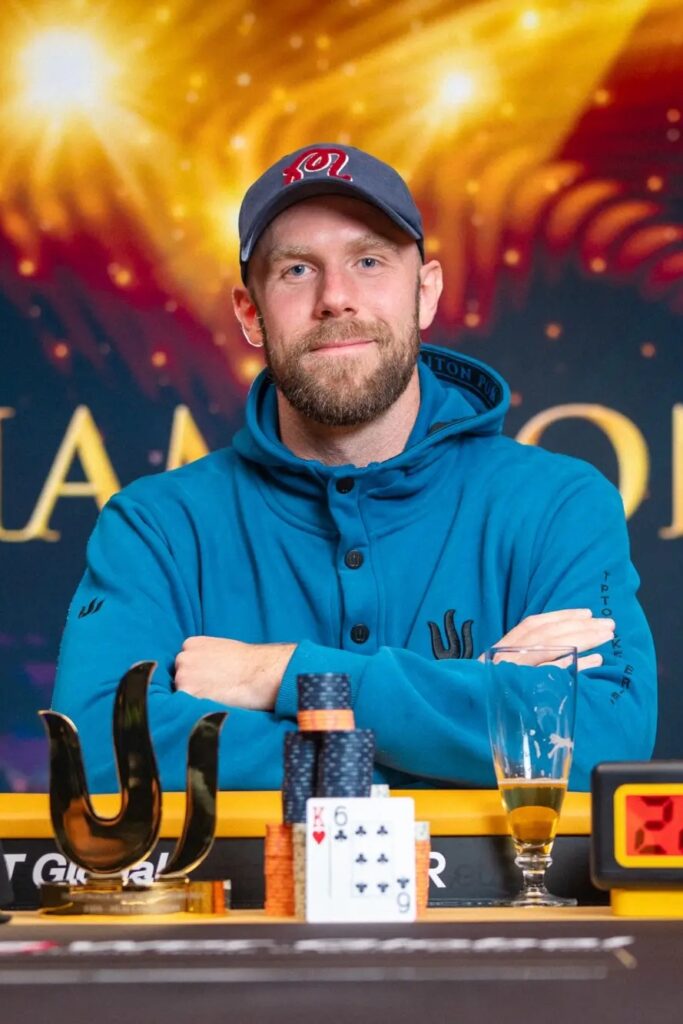
Seth Davies at the Triton Montenegro
Seth Davies: That whole trip was kind of… I guess vindicating would be the best way to describe it. Like you said, I’ve been going to Tritons forever, and I was down quite a bit, especially the two Triton stops before that.
I lost a ton of my net worth at the two Tritons preceding Montenegro, and I was just kind of thinking, ‘Is this something I can continue doing?’ Obviously, I can’t continue losing like this, and is this ever going to happen for me? So, when it all just kind of happened at once, it was just vindicating. If felt like it was a long time coming.
Tim Fiorvanti: I imagine you have to have a lot of self belief to keep coming back after a tough run. What kept you focused and pushing forward?
Seth Davies: With poker, the people around you really are everything. The people you talk poker with and just go through these things with, my three or four closest friends are high-stakes poker pros who go and play all these Tritons. Jason Koon is my closest friend. He’s had all the results and has been there supporting me through all the downswings, for sure. And then Nick Petrangelo, Tim Adams, Daniel Dvoress, Ben Tollerene. Those guys are my core group. We watch each other win and watch each other go through the downswings, so we have formed a special bond.
Because nobody besides us really knows exactly what we’re going through, and what it feels like. Watching these guys who have won in the past, and they say, ‘Listen, man, you have what it takes to be in the position that I’m in right now.’ Those guys really get you through it. That’s everything.
The Trip Of A Lifetime
Tim Fiorvanti: Even with all of the success you’ve had over the years, how long does it take to process something like a $6 million trip?
Seth Davies: Man, I’ve been thinking about that quite a bit, and I don’t know if it ever really does sink in. If you’re a full time tournament pro, when you’re on a downswing, or on an extended period of not necessarily losing a ton, but it’s not going great, you really just feel like you’re on this constant slide down a mountain.
And then all of a sudden, a trip like this, and a stretch like this happens. I think I’m at $12 million in earnings for 2025, where that’s a kind of break-even for two years of buy-ins. You can imagine that you have an okay two years, and you had the same amount of earnings as I had in the last six weeks. It’s just kind of hard to even catch up with in your own mind.
But it is extremely relieving after all those hard times I went through. This is why. This is the payoff at the end.
Tim Fiorvanti: There is a really interesting dynamic with players who are competing in these high rollers, battling it out for these big prizes, and at the same time they’re also your friends, confidants, and sometimes support systems.
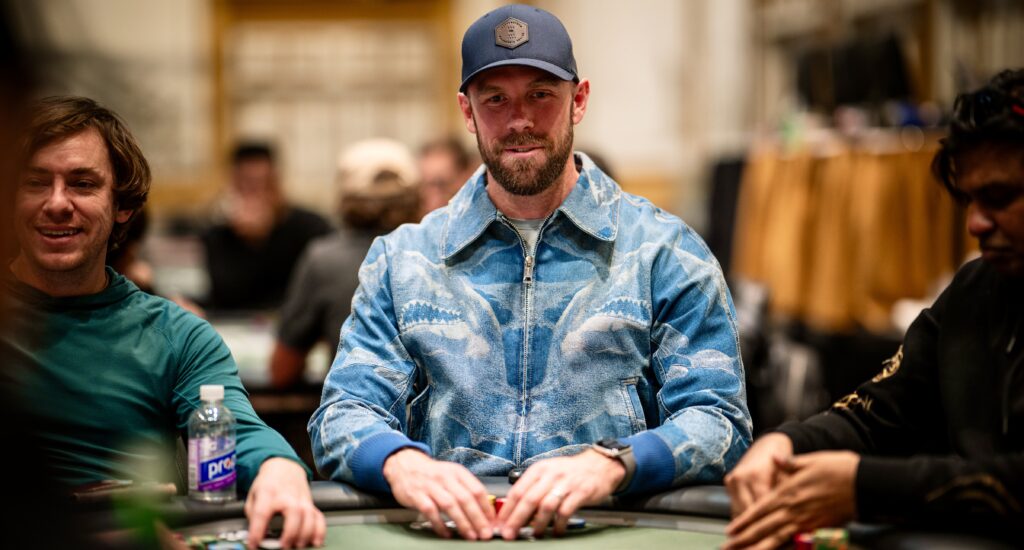
Battling Friends
Seth Davies: It is interesting with your closest friends also being your opponents. The fortunate thing for me and my friends, and I guess anybody who competes at the highest level in tournaments, is that we’re all kind of poker nerds. We actually love poker strategy, so we never get tired of learning and getting better at poker.
When we’re actually competing with each other, we all have an extreme amount of respect for each other, so we’re not necessarily looking for major exploits. It’s kind of this space where we’re almost competing against poker theory, in a way. What I’m getting at is, it’s not as confrontational as it might seem.
It is confrontational with some people, however. We certainly all have people who feel like rivals to us in poker, and people we don’t like to see win. But against each other, we’re just trying to make the right play. Once the tournaments are over and the cards are put away, there’s never any animosity towards each other, even towards people that you don’t necessarily like that much. I’m never leaving a tournament thinking, ‘this guy torched his hand in that spot, I hate him so much.’ It’s never like that. Let’s look at the hand, see what happened, and see what we can take from it.
And fortunately, with poker, it’s such a complex game that every single situation is unique, and can be fun. You’re trying to unpack the spot and how the spot should play out theoretically. That’s the cool part.
Tim Fiorvanti: At these exotic, luxurious stops, once poker is done for the night, is it just nerding out over poker, or is there any normal social banter going on?
Seth Davies: For me, it’s just normal hanging out with my friends. At the end of the night on a Triton trip, the most common thing you’ll see is that we’ll go play tennis. There’s a bunch of us who play tennis together. There’s also a little individuality to this, because I do have some friends, like Nick Petrangelo. He really wants to dig deep into every single hand he plays.
It’s always worked out best for me to detach as much as possible, because these Triton trips, there’s so many hours of very super-charged, adrenaline-fueled poker being played. That means going to work out or play tennis or just go for a walk, just something to get my mind off poker, but that’s definitely not how everybody handles it.
WSOP Carryover
Tim Fiorvanti: You followed up Montenegro with your first bracelet, taking down the biggest high roller of the summer. Can you walk us through that experience, especially off the back of what had just happened?
Seth Davies: If you have a chip lead with 15 players left, your brain convinces you that you’re just going to cruise to a win. If this heater has taught me anything, or reaffirmed anything, it’s that in a poker tournament a million different things need to happen before It’s over. Stacks are going to swing wildly.
It’s almost never going to be the case where a chip leader comes into a final table and just cruises to the win. It just does not work out that way, at least not at high stakes. Maybe it’s a little more likely at low stakes, where there’s a lot more scared money involved, and someone can just raise every pot. But when you have eight or nine really good players battling with each other, chips are going to fly around.
It’s just about who’s going to end up with the most at the end, and that’s what this felt like to me. I had the chip lead earlier in the tournament with maybe 20 or 25 left, but then towards the final table and during the final table, I was kind of a middle stack. Nothing crazy or exciting happened for me in those late stages, up until it was four-handed and all hell broke loose, with all these big pots and wildly swinging chip stacks.
I think whirlwind is a great way to describe it. Fortunately for me, coming off of such a big trip in Europe, there were considerably fewer feelings of pressure. Because I was just having such a good year already, I was kind of just along for the ride. I think I played pretty well, although I think I missed a couple things, but I was just sitting there trying to cruise along and do what I had to do to win. I ran great, especially in the end, and it worked out.
Trophies Vs. Money
Tim Fiorvanti: Do you have a sentimentality about winning trophies and winning bracelets, or is it more like a money in, money out thing for you when it comes to poker and your results?
Seth Davies: I have some sentiment towards trophies, for sure. What trophies mean is longevity. And for people who can start stacking up a number of trophies across a variety of different tours and games and locations like that, that’s what means something to me.
At the end of the day, money is priority number one. This is my career. It’s what I do for a living. This is how I hope to retire one day. But the trophies are a validation of all of that. Getting two of them in the last couple months, two very prestigious ones, it does feel really good.
But the other big thing is that the comedown from this big win has been kind of hard too. As funny as that might sound to somebody, I basically just had a headache for four straight days. These are such hormonally charged events where you’re at a final table dealing with non-stop adrenaline for like seven, eight hours, that you really crash afterwards. And the crash has been pretty hard.
The Future

Seth Davies at the 2025 WSOP.
Tim Fiorvanti: When things are going this well, it might be hard to look at anything other than poker. But I’m curious how you envision your future over the next couple of years, and how much you have plotted out.
Seth Davies: I’m glad you asked that. I actually had a talk with Stephen Chidwick and Orpen Kisacikoglu about this on day 1 of the $250,000 event. We are all dads now, and I’ve thought about, say four or five years from now, when my son gets a little older, starts playing more sports and stuff like that. Should I just stop playing and just be dad? And those guys made a really good point to me.
They talked about how important it is to have some purpose in your life, have something to work for, and how good that is for your happiness and your contentment. I want my family to be proud of me, and I want them to look up to me, and I want to model behavior for my son and for my wife and everybody else in my life as well. I want to model for them what it looks like to be a hardworking, successful person who is worth being proud of.
So yeah, I plan on continuing doing what I’m doing for now, and I don’t think I’m going to slow down too much anytime soon.
Defending High Rollers
Tim Fiorvanti: You recently made some comments on social media talking about the outside perception of the high-stakes tournament poker scene, and how much action gets traded and sold around. What prompted you to speak out?
Seth Davies: This kind of started with Daniel Negreanu. He was talking shit on his podcast about high stakes tournament pros. Daniel was saying that none of us make any money, that we’re all in for $12 million in buy-ins every year, and nobody actually wins.
I commented by saying, ‘Hey, this is completely wrong.’ I play every single high roller tournament, and the most expensive it’s ever been for a year was like $7.3 million. Nobody’s in for $12 million. And there are a lot of people making a really good living from it.
It’s just tilting because I’m the kind of guy he’s coming after. These people on social media think all these guys have 10% of themselves, and nobody actually wins. Nothing could be further from the truth than that. I know I shouldn’t pay attention to them, but it’s kind of impossible not to.
All these guys playing high-stakes tournaments, for the most part, they’re very successful. There are far more guys who sell 0% of themselves than guys who sell 90% of themselves. I’m a little younger than the core group of high-stakes tournament pros. But these guys have been winning players for 20 years. Of course they have a lot of money. There’s lots and lots of money being risked and won with people playing high-stakes tournaments.♠
- Photos by PokerGO / Miguel Cortes.