







 Even the best players in the world make mistakes. Join Sam Greenwood as he breaks down and analyzes hands played from the high roller circuit on his Punt Of The Day Substack.
Today we’re going to look back to a hand that is so old that there is no big blind ante. At the time I had all the confidence of one of the best players in the world, but looking through the footage of this final table all I can see is the mistakes made by me (and others).
Two hands before this, I had shoved pocket eights from under-the-gun in a spot where I’d always raise-fold if I played the hand today. It just goes to show how much the game has evolved in the past nine years, and even if you think you’re the best, there’s always room to improve.
Event: 2016 EPT Monte Carlo Event €100k Super High Roller
The Hand
We are eight-handed at the final table. The blinds are 25,000-50,000 with a 5,000 ante, and the bubble has just burst, putting us all in the money. The average stack is 1,900,000, and I have 895,000.
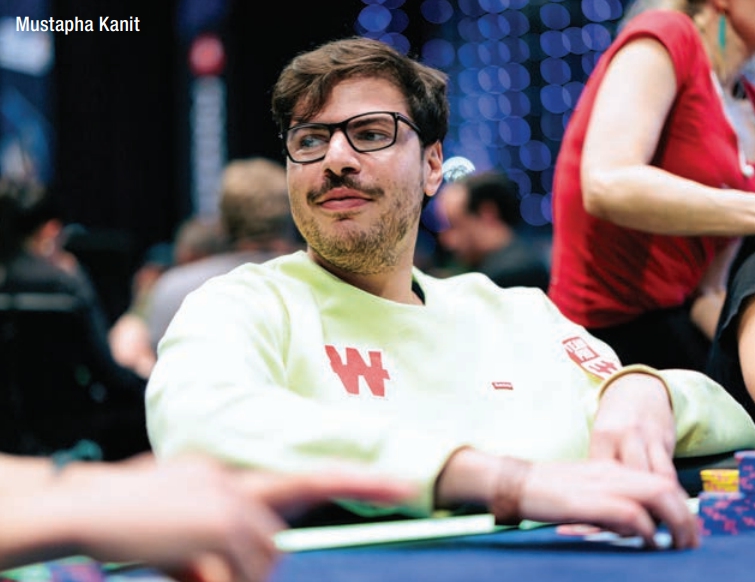
Everyone folds to me in the small blind and I look down at K♥K♦. I complete, and the action is on Mustapha Kanit in the big blind with 2,100,000 behind.
Mustapha raises to 125,000, and I call.
Flop: 8♥6♥5♣
I check, and Mustapha checks behind.
Turn: 2♣
I check, and Mustapha checks behind.
River: 7♣
I check, and Mustapha bets 225,000. I call, and lose to 9♦2♥ for a rivered straight.
What Was I Thinking?
This hand took place nine years ago, so I will not be as tapped into my thought process as I am about hands that took place last month, but I’ll try my best.
It folded to me in the small blind, and I limped kings because at the time I played shove or limp from the small blind off 15 big blinds. I thought if I raised non all-in with my strong hands, my limping range would be too weak and could get punished by aggressive players in the big blind.
Mustapha raised to 2.5 big blinds. I didn’t want to shove a hand as strong as kings, and I didn’t think I could three-bet/fold such a large portion of my stack, so I didn’t think it was a credible play to have in my range. Mustapha will rarely raise small with ace-high hands, so I was not that worried about playing post-flop if an ace hit the board.
I decided to keep trapping. The flop was dynamic, but I didn’t consider leading. At the time, under ICM pressure, I played very defensively and would rather have too strong a checking range than risk having a weak checking range and getting bluffed too often.
On the turn, the board was so connected that I wanted to end the hand right away, but I didn’t want to risk seeing a river out of position, so I checked with the plan of check-shoving. He didn’t cooperate, however, and checked behind.
On the river, I thought my hand was too weak to value bet, but too strong to fold. I gave Mustapha credit for bluffing any no-pair hand, so I check-called.
What Did I Get Wrong?
So many things. Where to start?
As a short stack at a final table, when you play tight from the small blind, you can raise first in. It’s better to play aggressively and put money in the pot with good hands, than it is to get a lot of pressure put on you in limp-check nodes with a large stack-to-pot ratio.
Once I limp and Mustapha raises to 2.5x, I can easily three-bet non-all-in. I started the hand with 15 big blinds and he made it 2.5 big blinds. Making it 5.5 big blinds and folding is fine vs a polar raising range. If I bluff three-bet K-6 offsuit and he has 9-2 offsuit, it’s very hard for him to do anything about it.
Additionally, so little money has gone in preflop that while I am trapping his bluffs, I’m failing to get value from a ton of his value range. What if he has A-K and the flop comes 8-6-5 with a flush draw? What if he has pocket nines and I don’t stack them on an A-K-Q flop?
On the flop, I could lead all-in with my hand and range, but I think K-K is a little too strong to do this with. If he is bluffing preflop with hands like Q-2 offsuit, I want to give him rope to keep bluffing.
On the turn, my logic was sound. I could bet, but checking with the plan to check-raise all-in is a common play in the sim I ran and accomplishes what I wanted to accomplish in 2016.
I didn’t even consider a blocker bet on the river, but I should have. He should have a lot of one-pair hands that I can get value from, and he could call ace high, which beats all my bluffs. From a tournament perspective, when I block the river, especially without a flush blocker, I set my price. And while I make it more likely I get bluffed off the best hand, I also lose less money when I have the worst hand. Not blocking the river isn’t a giant mistake, but not considering a block is.
Once I checked the river and Mustapha bet, as you can hear in the live coverage, I said, “I played this hand really stupidly.” I was not wrong, but I was not done making mistakes.
While calling the river here is fine, king-high should be a very common bluff for Mustapha, and without the K♣ in my range, I don’t block any of his value bets. If I wanted to call with one pair on the river, I’d much rather call a pair on board.
Types Of Errors I Made
- Bad Range Strategy
- Bluff Catching With The Wrong Cards
Grade
At a big final table, I made two horrible decisions preflop that could have won me the pot and two bad decisions on the river that cost me a third of my stack. However, the worst part of this hand is that at the time, I thought I played it well and Mustapha played it poorly.
In 2016, almost no one knew how to play chip-EV solver poker, and no one knew how to play ICM solver poker. My thought process was simply something like, “Fucking Musta, what an idiot raising with 9-2 offsuit! I trapped him and he got there.”
With nine years of hindsight, I can say, outside of sizing a little too small preflop, Mustapha played this hand perfectly. Preflop was a high-frequency, if not pure raise. The flop mixes bet or check, but it’s probably a pure check against a small blind who was never leading the flop. The turn was a pure check, the river was a pure value bet, and his sizing was good.
Learning to be process-oriented instead of results-oriented is an important skill for any gambler, but sometimes negative results are caused by negative processes. In this hand, I was blinded by the negative results, and it took me years to realize that in this hand my process stunk.
The goal of poker is to win, not to ace a poker exam. In this hand, I was confident that while I lost, I had at least aced the exam and played the hand well. In reality, I lost the hand and failed the exam. There is only one appropriate letter grade for today’s hand.
This hand is a clear F.
 Sam Greenwood is one of the winningest tournament poker players ever and is third on Canada’s all-time money list, having cashed for $42 million and counting in high roller events all over the world. The former stock trader-turned-champion has played millions of poker hands and is breaking them down street by street on his Punt Of The Day Substack. You can reach out to the Run It Once coach on Twitter/X for private coaching @SamGreenwoodRIO.
- Photo by PokerStars – Danny Maxwell