







Huck Seed Returns To Poker After A Decade Away From The Game
Poker Hall Of Famer Shares Stories On The Table 1 Podcast
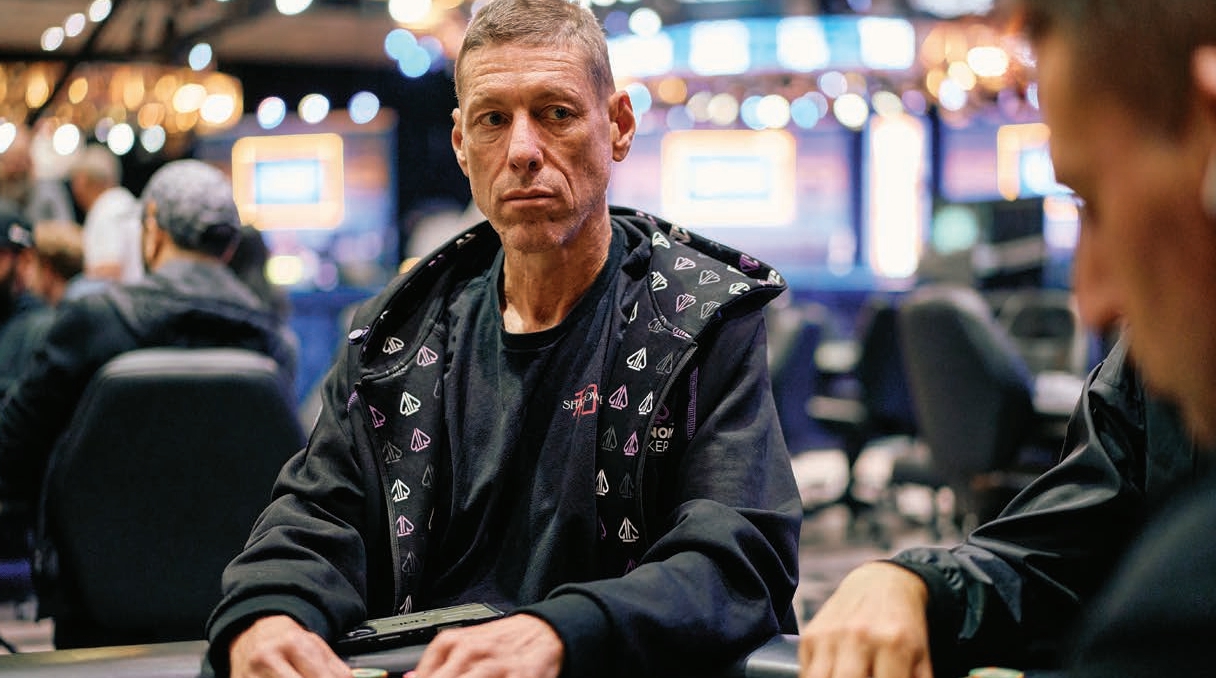
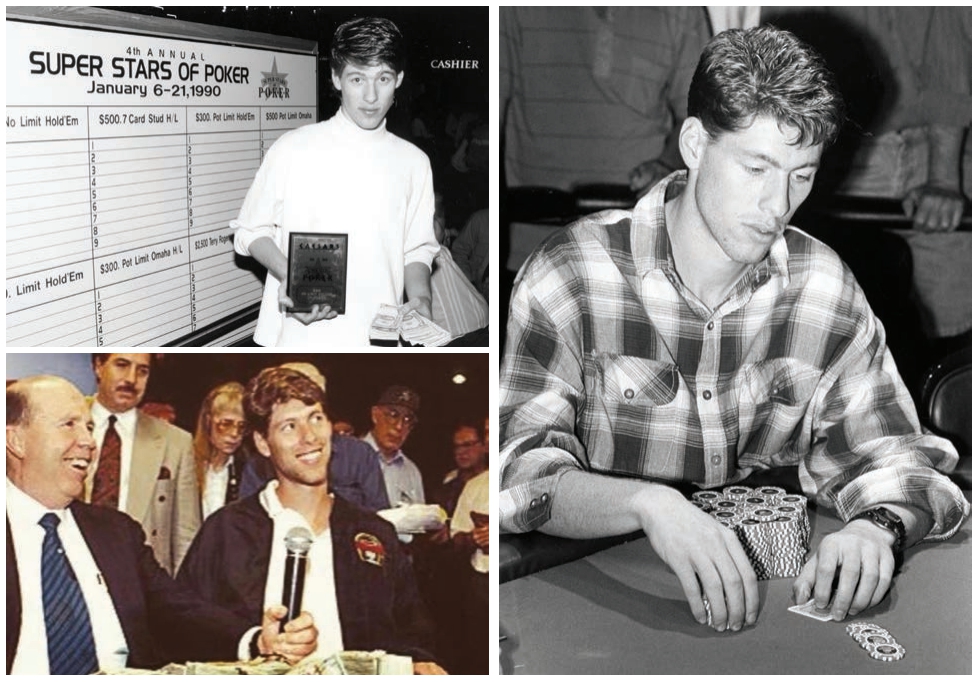
Huck Seed became one of the biggest names in poker after taking down the 1996 World Series of Poker main event for $1 million. He has nearly $8 million in poker winnings in a career dating back to the early 1990s, plus a long history of success in high-stakes cash games. His poker record includes three other WSOP bracelets, and the 2009 NBC Heads-Up Poker Championship, where he took the top prize of $500,000.
While not officially a bracelet event, the poker pro originally from Santa Clara, California, who grew up in Montana, cashed in for another big title at the WSOP. In 2010, he took the top spot in the Tournament of Champions freeroll for $500,000.
But just a few years later, Seed disappeared from the poker scene. Although he resurfaced in 2020 to be inducted into the Poker Hall of Fame, he largely stayed away from the tables. The 56-year-old returned strong in 2025, however, racking up numerous cashes at the series while coming close to a fifth bracelet, finishing runner up in the $1,500 stud eight-or-better event for a six-figure score. It was his first final table at the series in a decade.
Seed was recently a guest on the Table 1 Podcast and spoke about his life in poker – including winning the main event after almost not being allowed to play, some of the characters that attracted him to the game, why he left the scene for a while, not to mention some insight on some legendary prop bets. Keep reading for some of the highlights.
You can also watch or listen to the entire episode on YouTube, Spotify, Apple, or any podcast app.
Seed spoke about some characters in poker from the old days and how the lack of charisma he saw in the game caused him to stop playing for a while.
Huck Seed: Back in those days, the pro poker players were such amazing characters. They had so much charisma and they were just funny.
Justin Young: Do you think today’s poker or gambling is lacking that kind of back and forth (among players) – players giving each other shit?
Huck Seed: Ten or 15 years ago, I would say no, but that’s when I dropped out of poker because I didn’t like the way poker was going. All those old, charismatic characters worked so hard to build up the game. First, you had the people before my era that were very charismatic, but they were also a little shady. There was a lot of cheating going on.
Then my generation was like, ‘We’re not as cool and funny as those guys, but we’re going to be ethical and honest.’ Gamblers always had a bad name but everyone was going to like us because we were honest gamblers.
We used to play with Jerry Buss, and he loved us because he was like, ‘You guys are so much more honest than the businessmen.’ My generation of Ted Forrest and John Hennigan and that ‘90s group tried to be the most ethical players. And we tried to be funny and entertaining… but we weren’t quite as funny or as cool as (the older generation).
 I feel like it was the combination of those elements that blew up poker. Then in the 2000s came all the millennials who had grown up on computers and had no social skills, they just had entitlement issues. They weren’t trying to add to the game. They weren’t overly honest or and they were also not funny, just vacuums. So that was one big problem why poker went downhill I think.
Art Parmann: It’s funny, you’ve got to convince people to come and gamble with you and play poker. So, you have to be kind of entertaining. [Your generation] succeed at that, and then everybody else comes in [during the boom], and all the games are amazing. They thought they were entitled to great games all the time without any work.
Now we’re kind of slipping back into that previous arc where I think a lot of people are realizing, ‘I should probably not be a robot. I should probably be at least some level of entertaining. I should add some value to people spending time with me if I think I’m going to win in this poker game.’
Justin Young: Those are the more thoughtful players. I do think poker is lacking the players that can self-realize and say, ‘Okay, I need to perpetuate this’ instead of people who think, ‘Oh, poker is perfect for me. I don’t like people, but I like money and I like puzzles. Perfect. This is great. I can just sit here and be quiet.’
Art Parmann: You’re 100% right, but at the higher stakes, people are realizing you need to add something to the game.
Huck Seed: When you compare American culture to other cultures in other countries, we’re lacking a certain social outlet. A lot of people are working on the computer, they’re at home. We don’t have as many children. There’s just not a lot of social structure. Sometimes their only social interaction is at the store buying something.
Poker is a social outlet. I know when I got into poker, I had very poor social skills. When I first started, I was quiet. I wanted to learn how to be social. I would hear the people with their stories and jokes, which was a big learning experience for me.
Later, online poker came up and that was really fun. I got good at playing six or eight games at once. But then all that crashed and burned with Full Tilt. I tried to keep playing, but then with all the politics and home games, that was the last straw for me. I just quit poker.
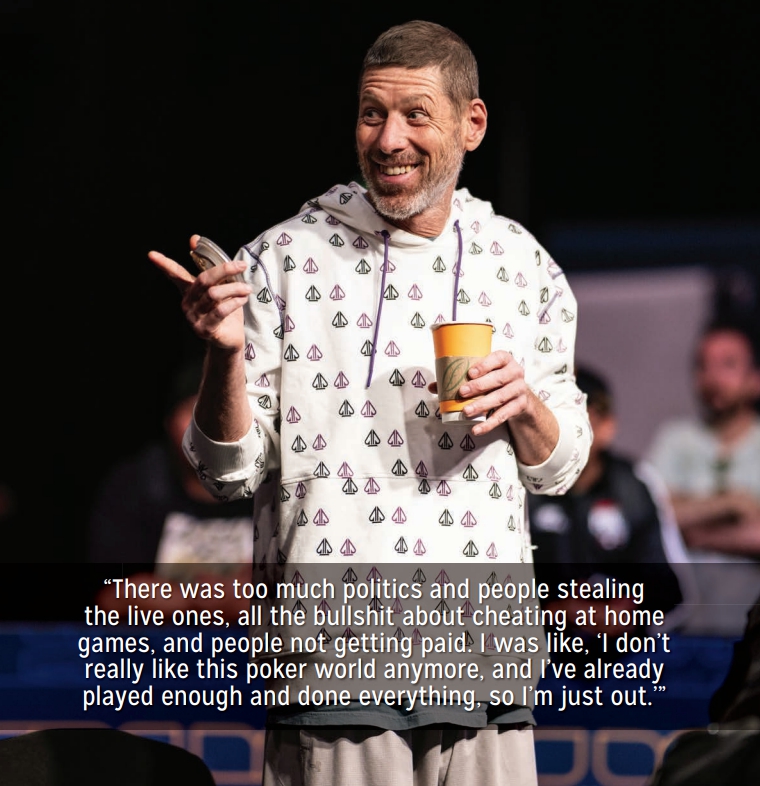
It was a combination of the (cash game) rakes and the tournament rakes going up. There was too much politics and people stealing the live ones, all the bullshit about cheating at home games, and people not getting paid. I was like, ‘I don’t really like this poker world anymore, and I’ve already played enough and done everything, so I’m just out.’
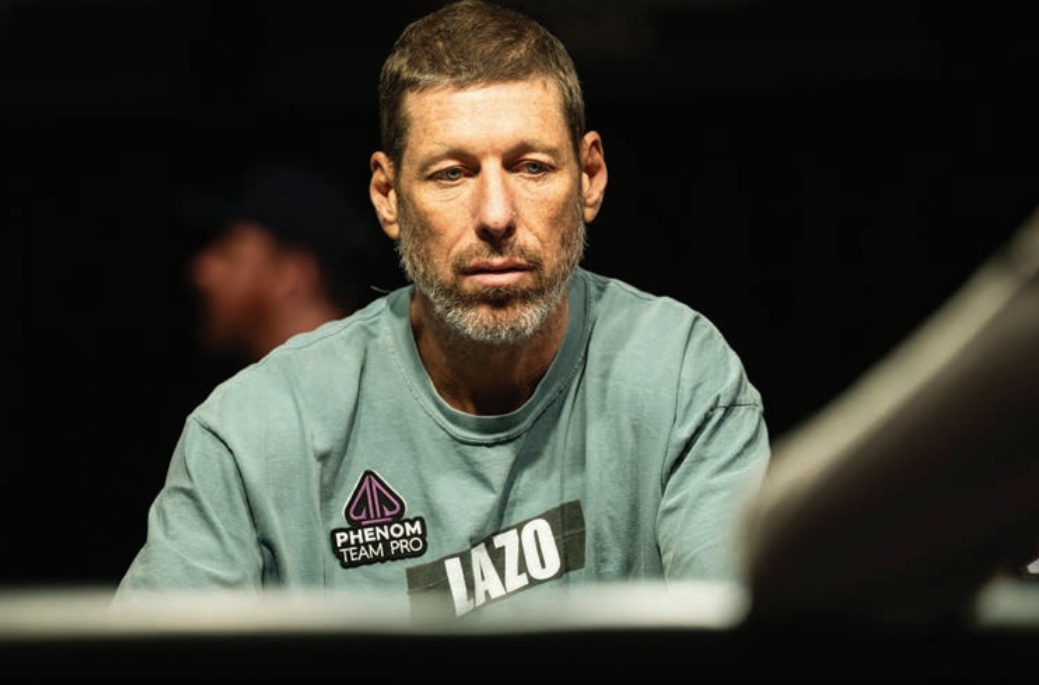
Then every year I’d play two or three times. It just wasn’t a great experience. Nothing ever got me really excited to come back until by some random chance I made this running bet with (Phenom Poker founder) Matt Valeo. I got to know him. I tried the site and I loved the idea of a community-owned site – the combination of crypto and poker and him trying to solve the problems of the cheating and the real-time assistance and all that. I really liked his vision and it was just a good feeling being a part of that. And that finally got me back to poker [this year].
Seed described how he dropped out of Cal Tech and hit the road to play poker full time. He worked his bankroll up to $1 million in about a year and a half. That included getting started at the WSOP and playing underage.
Huck Seed: My original poker goals were to make a million dollars and win the world championship once I dropped out of school when I was 20. Then by the time I was 21, I had a million dollars. Then I took a few months off and I was like, ‘Should I go for this? Should I stay in poker or do something else? I’ve got the money to do whatever I want.’ I said I’ll just play for fun, and then focus on what I’m maybe better at, which is math and science.
Art Parmann: How did the million come about?
Huck Seed: I took it very slow, believe it or not. I was actually very careful with my bankroll. I just turned 20 and I had $10,000 and I played $15-$30 limit hold’em. I played for three months and made like $15,000 a month or something. I had like a $60,000 bankroll and then I went to the WSOP.
I was just playing satellites and selling chips and everything. I thought I should play some of these tournaments just for the experience, since my goal was to win the main event. So the next year, I’d have a little extra experience when I was 21.
I was a limit hold’em player, so I jumped in a $1,000 limit hold’em tournament, got to the bubble, and then threw my chips away. When I got to the bubble, I wasn’t sure what to do. I was like, ‘Should I really just try to win or get in trouble?’ I decided just to throw my chips away.’
Seed has been known to be part of some interesting prop bets through the years and spoke about a few of those as well.
Art Parmann: I guess this is a good time to go into all the bets that you’ve had, because you had another golf one I saw – breaking 100 four times in the same day with three clubs.
Huck Seed: That was with [fellow high-stakes pro] David Grey. I had to play the Jack Nicklaus course at Lake Las Vegas. Reflection Bay is not set up for walking. There are quarter-mile walks in between holes. It was the middle of summer – 115 degrees. I had to complete four rounds shooting under 100 with just a five-iron, sand wedge, and putter. It’s mostly about the heat, but also the score a little bit.
The first round I was way on pace to make it, but hit into a ditch three times. I had to go par, par, par, the last three holes. The next hole was a 440-yard uphill par four. I hit five-iron, five-iron to six feet and then I lipped out the putt. So I was a par. The next hole was the par three, 160-yards over the water. I’ve got a five-iron and it was very windy. So I sand wedged over to the ladies tee then I sand wedged two feet, and I missed the two footer.
Now I had to birdie the last hole, par five, and I had a 20-footer and missed. I just barely missed the 99. I shot 100 exactly because I hit it three times in the ditch. I missed one, so I could now play much quicker and squeeze in four more rounds. I got in the groove and I was shooting 92 or 93 every time. So I’m plugging along and I got three in a row.
Then the last round, I was really pushing it for time and the wind was kicking up. On the sixth or seventh hole, I fell to the ground with muscle cramps. The next day, my throat was sore because I had worn off the mucus of my throat from drinking so much water. But I wasn’t getting enough electrolytes.
I got up, somehow recovered, but then the last nine, there was no way I was going to make it time wise. I had to run between every shot. It became speed golf, and I had to finish the back nine in like 20 or 30 minutes. I got to the last hole and then finished in the stone dark. I was out there for 13 hours.
He didn’t win the bet.
Art Parmann: How much was that bet for?
Huck Seed: I think it was $25,000 or $35,000. It wasn’t a huge bet.
I became a golf gambler because Chip (Reese) and Doyle (Brunson) made me bet. I decided to try to win, and got a golf coach and practiced every day, all day, for eight months and got down to 79. Then along the way we had a pretty good little golf gambling community. It was pretty fun.
Justin Young: I do want to touch on the prop bet where you had to float in the ocean for 24 hours.
Huck Seed: At the time, I was hanging out a lot with Phil Hellmuth. He’s a swimmer and we had all kinds of prop bets. I had read an article about some boat wreck, and the people were just out there floating around, dog paddling for three or four days until they got saved. I was like, ‘Of course I could float for 24 hours. This guy did it for four days to save himself. Why couldn’t I do it?’
We bet $10,000 and were supposed to do it three months later, but I was winning every day and the games were good. I just sort of forgot about it. I tried to postpone it or settle it, but he was smart. He wouldn’t settle and I just paid off the bet.
Prop bets were always just an extra way to motivate me to do something. Or it might be if something funny just came up in conversation. It’s nice to bet on things because people talk a lot and you put your money where your mouth is.
The conversation shifted to Seed’s 1996 victory in the WSOP main event, including how he was actually late for the event and almost wasn’t allowed to play.
Justin Young: I want to talk about the main event run and what the state of poker was at the time.
 Huck Seed: I might have won it earlier because I would always have all the chips and be the chip leader. Then with two or three tables to go, I would blow up. I had no girlfriend, I was living in the hotel room, and I would just burn myself out playing all these cash games. I didn’t really play tournaments. Then by the time the main event came, I was all hyped up for it, but I was a bit burned out.
The year I won, I had moved to Vegas. Home court advantage is pretty big. I got a girlfriend, was working out, eating better, and had a more balanced life. I was friends with Gus Hansen, and he was staying with me. He was just getting into poker and he came and sweated me. I gave him a little piece of me, and I won it.
We were playing squash at the time. I would get up and eat with my girlfriend, and go play squash. It was a nice, balanced day. During the tournament, I had energy. The day that I played the main event, we went to play squash and showed up a few minutes late to the tournament.
Jack McClelland (former WSOP Tournament Director) said, ‘It’s too late, we start at noon.’ It was like 12:35. He’s like, ‘You can’t get in.’ I got this look of anguish on my face. He saw how sick I was that I wasn’t going to be able to play and was like, ‘We can squeeze you in somehow.’
He changed his mind, and just stuck me in even though it was kind of against the rules. I decided to take things a little slower and pace myself, not try to get too many chips the first day and just hang in there. I was a little more careful of not going broke early or not risking any of my chips, and just slowly chipping up.
At the end, Gus was like, ‘You were the only one that was playing the game of no-limit hold’em in that tournament.’ I was just doing everything so differently than everybody else.
Justin Young: How many days was the main event back in ‘96?
Huck Seed: Three days with 295 people. I remember Doyle had bet on me to win because in those days, on the second day and third day whenever there was an all in, Jack McClelland announced it. Doyle never heard my name, so was like, ‘Well, he’s never all in and he’s the chip leader. He’s going to win the tournament.’
About The Table 1 Podcast
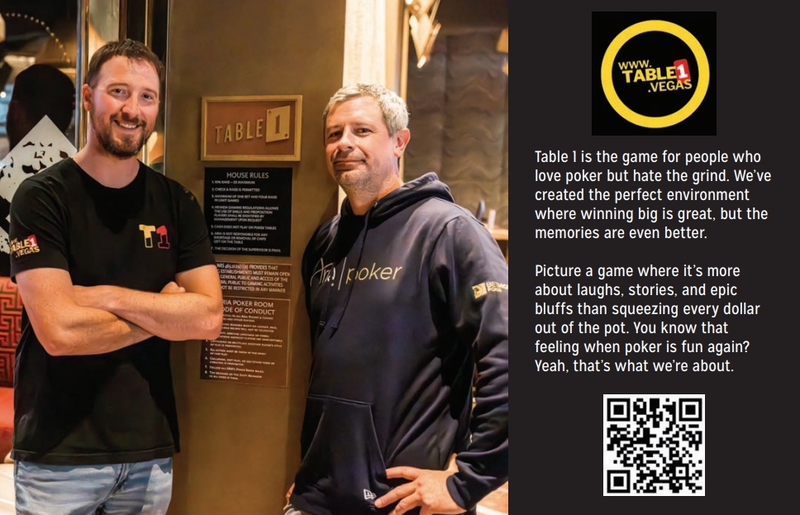
Hosted by high-stakes poker pros Art Parmann and Justin Young, the Table 1 Podcast is on a mission to make poker fun again. Tune in to see world-class pros talk poker, gambling, and all manner of life experiences on and off the felt. Visit the website for the podcast, newsletter, or even to get in the game. ♠
- Photos – PokerGO, Card Player, Drew Amato