






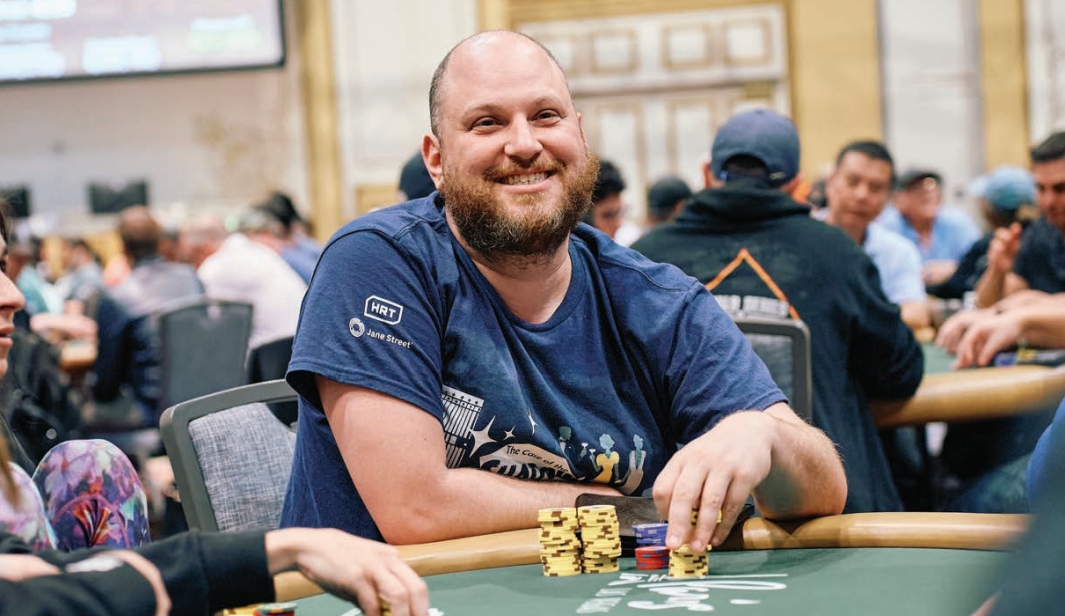
Scott Seiver’s career as a professional poker player was seeded early in life, learning gin and bridge from his grandparents before he even attended kindergarten. His grandfather taught him to bid his own bridge hands at five, and he played quarter-ante poker at his parents’ kitchen table weekly through middle school. The New York native spent both his 18th and 21st birthdays at the casino.
Mastering the math of games has been an obsession in Seiver’s life. It’s as natural as breathing. When prompted with the question of what he would do if it weren’t for poker, he blanked for a few moments and then replied, “I don’t know, got any ideas?”
It was an expected answer given the 40-year-old’s résumé. Not only has Seiver spent countless hours in some of the biggest cash games ever spread, but he has banked nearly $28 million in tournaments, took down the World Poker Tour Championship, won seven World Series of Poker bracelets, and was crowned the 2024 WSOP Player of the Year.
Playing Close To Home
Seiver cut his teeth playing online, like most of his generation, but proved to be ahead of his class on the live felt. Examining his tournament results in a geographic distribution graph over his career shows an inverse relationship with most of his peers. He began traveling the globe, dominating international events, but he hasn’t cashed outside of Las Vegas since 2016.
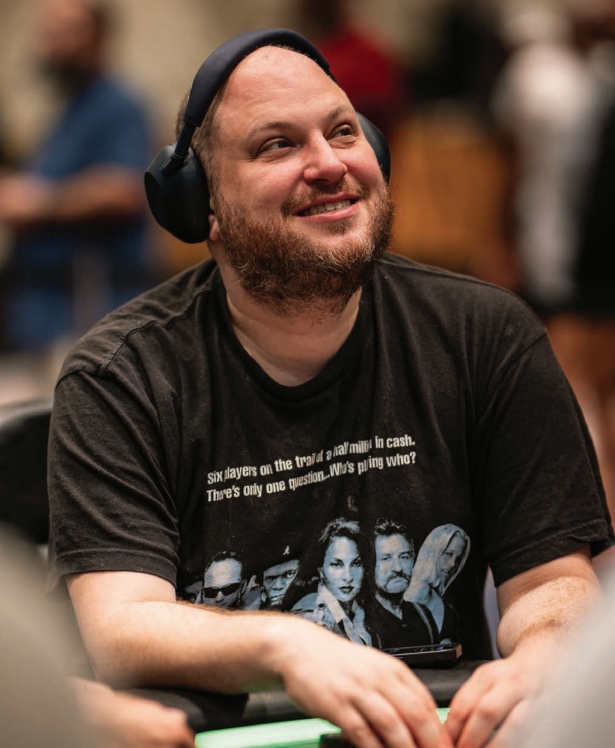 “The reason why my schedule seems so grouped was two factors,” Seiver said. “One, as I became increasingly enamored with playing mixed games, that took up a much bigger focus and portion of my time. The cash games were in Vegas, which kept me there. The other part of it was that as I started playing bigger, a lot of the traveling for tournaments wasn’t really, I’ll say, economically feasible. Although that’s kind of a bullshit phrase, but I was able to play bigger or higher stakes at tougher games than I would want in tournaments.”
“And sure, now there are all these Triton and super high roller events,” Seiver added. “But honestly, the top, top players in those are so unbelievably good that it doesn’t really spark the joy in me that I had playing previously or the feeling that I get playing mixed games. To be at that level, you have to work every day. I’m happy to leave that for other people. Don’t get me wrong, it’s a beautiful thing to chase and achieve perfection in that way, but it’s never been for me.”
Summer Specialist
Still, despite the limited tournament schedule, Seiver has a mind-melting 49 six-figure cashes topped off with five seven-figure cashes and is somehow, hilariously, only in fifth place for New York’s all-time money list. (The top four is made up of Bryn Kenney, Alex Foxen, Erik Seidel, and fellow Brown University buddy Ike Haxton.)
“Honestly, it’s pretty cool that New York is so strongly represented in poker,” Seiver said. “The true, top high roller crop has a lot of New York and East Coast players.”
Seiver has developed into a WSOP specialist, playing very little competitive poker outside of the summer marathon.
“At this point in my career, I’m so entrenched and ensconced in what poker is; it’s deeply written into my core DNA that I don’t feel I need to maintain a specific level of readiness. It’s just like riding a bike, I feel very comfortable once I’m in there.”
As a former WSOP POY, Seiver has a tight grasp on the competition.
“It’s an extremely fair race,” he said. “If anything, a couple of high rollers are overvalued, but that’s a good thing. It brings more people into the race. There’s just not a huge number of players who are truly great at all the games that also have the stamina. It’s more stamina than bankroll – that’s the difference.”
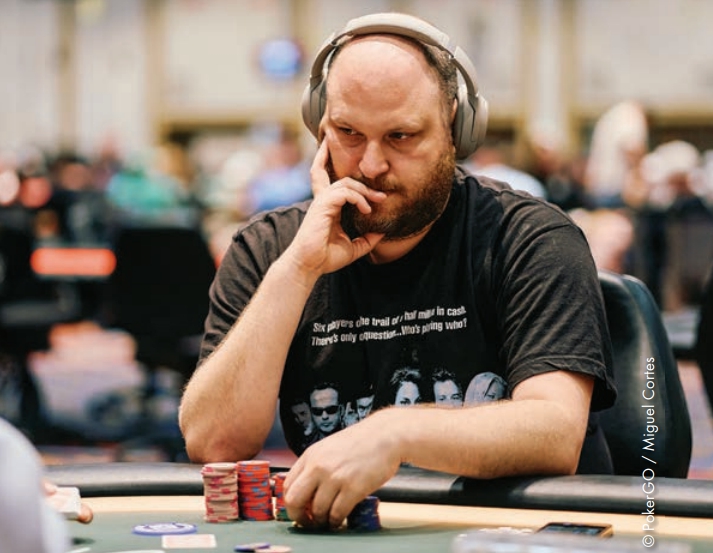
Hall Of Fame Lock
Had Seiver not been 39 years old during his three-bracelet summer in 2024, he’d most likely already be in the Poker Hall of Fame. But in his first year of eligibility, he was overshadowed by Nick Schulman’s seventh career bracelet and Michael Mizrachi’s incredible double.
“It’s a goal I actively worked for, and now that it is something that I feel will happen,” he said. “I definitely hope it happens. It’s a big part of why I played so much of the WSOP last year and this year as well because I wanted to try and make a stronger push for it. For ten years or so, I played a smattering of events here and there in between cash games, but I wanted to get back into the WSOP for Hall of Fame reasons.”
It’s a goal he’s had his sights set on for far longer than most people realize.
“Honestly, it’s unbelievably arrogant, but I would have expected it. The whole reason I got into poker and stayed in poker is because of my desire. I’ve always wanted to find a career path that led me try to become the best at something,” he admitted. “I didn’t really care what that something was, I just wanted to push myself to prove that if I can set any goal, I can reach the apex of whatever that is.”
 Life Away From The Table
 Life Away From The Table
“I’ve always been a goal-oriented person, so I wanted to just find a path that made it possible,” Seiver explained. “And honestly, if I were less good at poker, I probably would have quit at some point to try and search for the next thing that I could have been the best at.”
While staying laser-focused on his goals, Seiver has maintained a healthy personal life away from the tables.
“The vast majority of my friends and social group aren’t poker players or gamblers at all,” he said. “I’ve never felt my involvement in the gambling world has affected my ability or understanding of the rest of the world. I’ve never felt any disconnect because of it. The only real disconnect is when I want to gamble on the bill at dinner. They don’t know credit card roulette.”
Losing A Legend
“My grandparents taught me Gin and Bridge at like three or four years old,” said Seiver. “At five years old, they taught me how to count points in Bridge. That was my first exposure to math and strategy to bid. I have a lot of fond memories.”
“My family always had a weekly card night and would have their friends over and play for fun,” he recalled. “We’d play for quarters in all the normal games you think of at a home game – Follow the Queen, Chicago, Baseball – all those. As a kid watching, I just loved it – games, card games, board games. There was just something that really sung to me about the competitiveness, seeing them with chips, winning, and also just how much fun they all seemed to be having. It was a core memory for me. I could satisfy the competitive need and social desire at a very young age. I found it beautiful.”
Stan Seiver enjoyed life for 95 years and played cards four times a week, including up until the week he passed. Doyle Brunson’s quote of “we don’t get old from playing, we get old when we stop playing” epitomized Stan’s life.
“Playing weekly was clearly very good for him,” said Seiver. “It was the center of his social circle and kept his mind sharp. It’s very easy to let your mind slip away as you get older, and completing a puzzle or small challenge to keep the mind working is unbelievably important to me.”
While many young players of Seiver’s generation fought their families when it came to choosing poker as a profession. But not him, he had quite the opposite experience.
“I was very special to have someone, not just understanding what I did, but a genuine fan of it. To be able to share the journey with me, for him to cheer for me, was a true blessing. To have someone like that in your corner, it’s all you can ask for.”

Living With Sharks
A long grind or downswing can ruin any poker player’s week, month, or year. Their livelihood is based on a zero-sum game. But Seiver finds comfort in his community of players.
“It’s very easy for outspoken voices of bad things to make an impression that the poker community is in dire straits. But in my experience, I’d say you’ll never find more honest and trustworthy people than in the poker world.”
“It’s easy to lose sight of that because it’s easy to focus on the squeaky wheel that ruins things for everyone,” Seiver added. “Poker is one of the few places left where your word is all you have. Once it loses value, you lose your reputation. There’s something beautiful about the concept of a handshake because your name is your name, not a contract.”
- Photos by PokerGO