







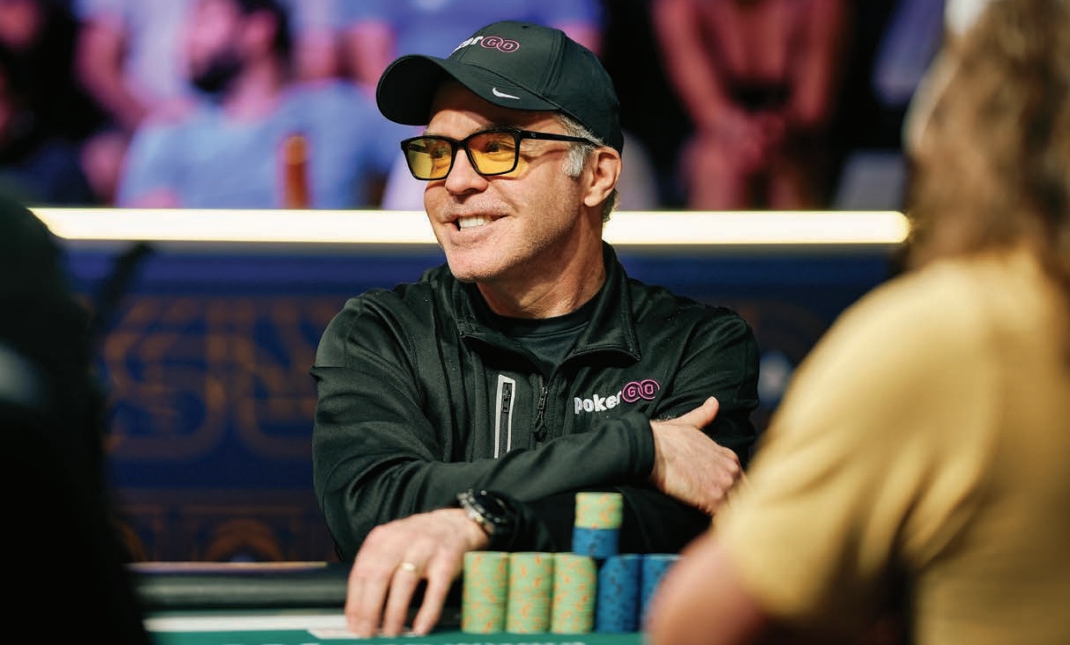
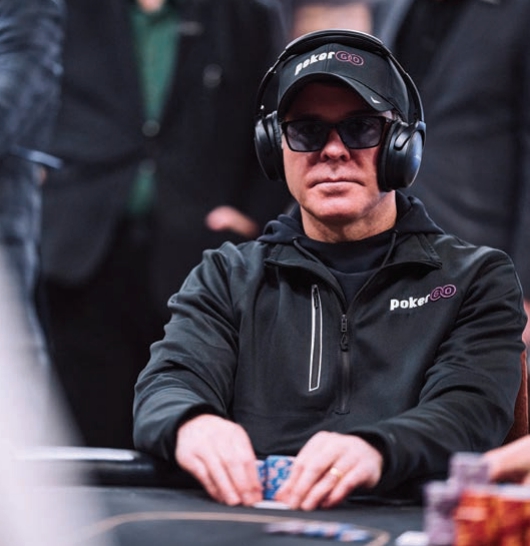
There aren’t many who have contributed to poker as both a player and an entrepreneur like Cary Katz. The businessman parlayed a love for the game when he growing up into more than $41 million in live tournament earnings. He also went on to found PokerGO, which has become the tournament home for high-stakes players in Las Vegas. The streaming service and companion PokerGO Tour allows poker fans to tune in for numerous series and cash game shows throughout the year.
A native of Atlanta, Georgia, Katz grew up playing chess and other games with family members. His grandmother taught him to play poker at age 6. He continued to play poker with friends while he was in college, but Katz would later turn his attention to launching the College Loan Corporation (CLC), which would become one of the largest student loan servicers in the United States.
Not afraid of a challenge, he jumped headfirst into the high rollers. Despite his day job, Katz has more than held his own among the elite players. In 2018, he won the $100,000 high roller at the PokerStars Caribbean Adventure for $1.5 million. The next year, he took down the Super High Roller Bowl London event for a massive $2.5 million payday. In 2019 he won the AUD $100,000 high roller at the Aussie Millions for $1.1 million, and he came out of the pandemic in 2021 to win the PokerGO Cup $100,000 high roller for another $1 million.
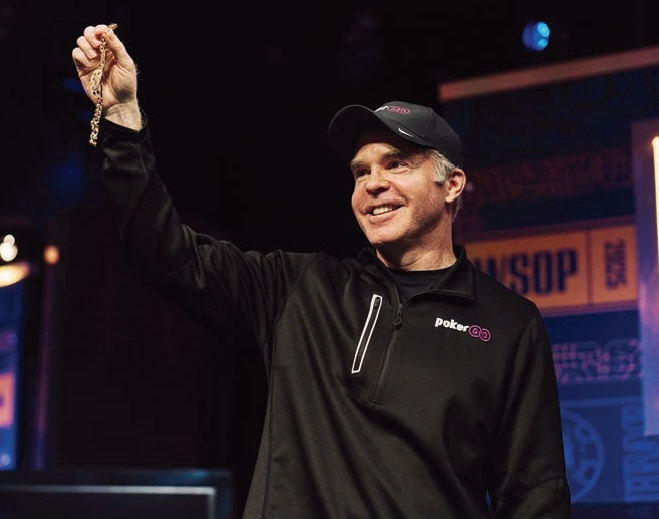
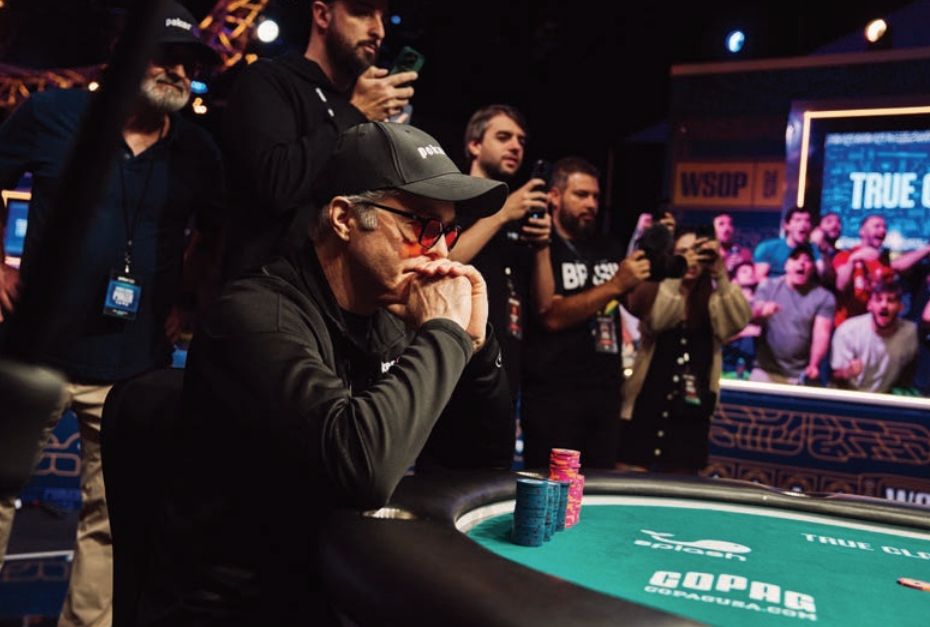
Katz has nine seven-figure scores in total, most recently a runner-up finish in the 2023 WSOP $100,000 high roller for $1.6 million. It was yet another close call for Katz, who had fallen just shy of a bracelet on numerous occasions. This summer, with the PokerGO family in his corner, the 55-year-old broke through to take down the $2,500 no-limit event for $449,245, along with his first piece of WSOP gold.
Katz was recently a guest on the Table 1 podcast and discussed starting his company, a backing deal with Bryn Kenney, the challenges of building a poker tour, and what it felt like to finally get that bracelet. Keep reading for some of the highlights.
You can also watch or listen to the entire episode below or on YouTube, Spotify, Apple, or any podcast app.
After majoring in business at the University of Georgia, Katz went on to found College Loan Corporation, which eventually made him a billionaire.
Cary Katz: I always knew I wanted to be a businessman. My father was a businessman, and so I knew I’d follow in his footsteps.
Justin Young: Did you have a bunch of ideas during college where you knew what you wanted to do once you graduated?
Cary Katz: No, all I wanted to do was chase girls and drink and go to football games. It was just a four-year paid vacation. I actually took student loans out back then.
Justin Young: Did you pay them off?
Cary Katz: I did pay them off, but I didn’t actually pay them off until I was in my late 20s.
Art Parmann: So, you went straight into work after college?
Cary Katz: I wasn’t really qualified for anything, so I got a job as a salesman, which is pretty much all I am today. I don’t have a title, it’s just salesman. I guess sometimes you slap a founder title on there. But sales is the most important skill in business. It’s the most important skill in life, right? You’ve got to sell your kids on being good kids. You’ve got to sell your kids on not being a bad student, like I was. You’ve got to sell your wife on being a good partner. You’ve got to sell her on why you want to go on a trip. I had to sell my wife to move to Las Vegas out of San Diego – that wasn’t an easy sale.
 And in business, you’ve got to sell people on your vision. So, life is all about sales. But obviously you’re not trying to sell somebody something you don’t believe in. Fortunately for me and the student loan thing, I’m a much better businessman now than I was then, even though I just was in the right business at the right time and got really, really lucky.
The first year we did about $16 million in loans. I’d lost almost all my money, and I started offering a new product called a federal consolidation loan, which allows the students to consolidate their loans together. I went from $16 million to $780 million in year two. By year three, we were doing $3 billion a year in loans. It was quite an operation.
Justin Young: How did the initial business start, was it just an idea?
Cary Katz: At my other company, I was senior vice president of sales and marketing, and I was trying to work out a new deal to stay there long term. I had a pretty good salary, but I couldn’t work out a new deal. And I was like, ‘Fuck this. I want to just start my own company.’
I ended up stealing a bunch of the best employees. Because a business is a team. It’s all about just having the best employees, good people that you like working with that are smart and motivated. I was able to get a lot of the employees to come over and follow me, so they were already trained. That really saved me a lot of time. And we were up and running, we were humming.
Justin Young: It sounds like exponential growth for two or three years?
Cary Katz: Over a 10-year run, we did $20 billion in loans.
Justin Young: Did every business get bigger than you expected?
Cary Katz: Oh yeah, that was always kind of the goal. I wasn’t expecting it to be the largest privately-held student loan company in the nation. I wasn’t expecting to do $20 billion in loans. I just was in the right place at the right time.
And when I was losing a lot of money the first year, I was getting a little worried because I had five kids. You wake up at 3 in the morning, you get that pain in your gut. But I didn’t want to freak my wife out. I wasn’t telling her how bad the financial situation was.
Art Parmann: How does a business like that work? Are you borrowing the money to loan?
 Cary Katz: I had to convince a bank to give us a warehouse line (a line of credit used by another lender to finance loans), and initially I was selling the loans, but then eventually you get warehouse lines and then you securitize the assets so that you basically turn them into bonds. Then you get all the future cash flows, which maximizes the value of the asset.
Art Parmann: I’ll pretend I understood all of that, and we’ll move on. (laughing)
Katz eventually left the company in 2012 after selling CLC to employees, making at least 75 of them millionaires in the process. He became more serious about poker during the Moneymaker boom and he began playing in Las Vegas. That eventually led to moving to Sin City, and a backing deal with Bryn Kenney.
Cary Katz: Obviously I’m very strong mathematically, so I know all the odds and stuff like that. My instincts are strong, and I do my best when my instincts are unleashed and I’m loose. The more you talk to people, it kind of gets them out of their game because then they’re thinking about what you’re saying. Then when they start running out of time, a lot of times they’ll just check or play passively, which in many cases is what I want them to do. I have a really good memory, so I just watch.
There are a lot of things I’ve picked up over the years just watching other players that I like and just copy. That’s all I really do.
The only player I’ve ever really talked strategy with, which was a good one to talk with because he’s obviously an instinctual player, is Bryn Kenney. And that’s the only player I’ve ever backed, until he fired me. I told him that was the plan, ‘When I back you, I want you to get so rich that you don’t need me anymore. You just get rid of me.’
Then he won that $20 million event (the $1.3 million buy-in Triton London Invitational) and didn’t need me to back him anymore. So, it worked out well.
Justin Young: It sounds like it worked out pretty well for you too.
Cary Katz: That run was insane. He had never really had a losing year until I started backing him, and then we were down $4 million.
He was very high character about it. I said, ‘Look, why don’t we just part ways?’ Because I actually had a contract with him where he had to pay me back. But then he got annoyed by that. He claimed he didn’t read it. I said, ‘Alright, then don’t worry about it. We can just walk away. We’re down $4 million. It’s been a year and a half.’
He had some deep runs, but he just kept losing. He goes, ‘Cary, I really want to win you money. Let me work my way out of this hole. I just want to work. I want to win you the money.’ From that point, he goes on like a $30 million run in six months. It was fucking incredible. Boy did he come through.
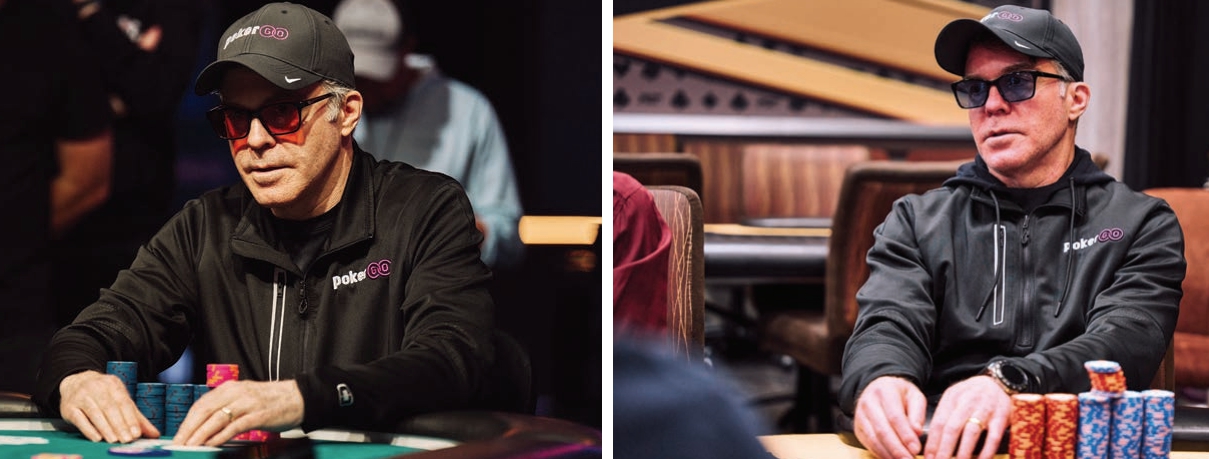
Moving to Vegas allowed Katz to play more and help start the high roller scene. That eventually transitioned to starting Poker Central, which would become PokerGO.
Cary Katz: I moved to Vegas in 2010. That’s really when I started playing more tournaments. I remember at one point I went to the Venetian. This is actually probably the best thing I actually did in poker. I think I won back-to-back $500 events, which had maybe 300 people. That’s hard.
I had a lot of time on my hands. The company was on autopilot. That was one reason why in 2013 we started the high rollers, because I remember looking at the calendar and there wasn’t a single $10,000 event in six months.
I went to Bellagio and said, ‘Look, let’s run a $10K and put a $100K guarantee on it.’ They wouldn’t do it. I said, ‘How about this? I’ll put a personal guarantee on the $100,000. I’ll personally take the risk and I’ll fill it up.’
I thought it would be easier than it was. We eked out 11 entries. The only reason we hit 11 is the guy who won fired six bullets, or I would have failed on the guarantee.
The Bellagio high rollers continued and I kept the $100,000 guarantee for a while. The Bellagio ones started doing quite well, and then we eventually moved to Aria. They were fun.
Justin Young: I remember you reaching out and it was a lot of 10- to 20-person fields of $10Ks and $25Ks. You partially backed me during that time, basically buying a piece of me, and for that I’m completely grateful. I think I made you money. Not much, not like a Bryn Kenney.
It was a refreshing atmosphere and I think you did carry that over into the PokerGO Studio. I think [the idea for PokerGO] was first mentioned over one of our dinners. I think you were just spit balling and had an idea to make poker presented more like golf with separate events and actually have advertisers put in some of the money.
In the back of my head, I was like, ‘I don’t see how this can work.’ Poker just seemed like such an outlier compared to something so mainstream like golf or tennis. I was extremely happy, obviously, that you went ahead with your vision because to me, that is the biggest poker contribution in the last 10 years. I love what you’ve done.
Art Parmann: Will you tell us a little bit about the early days and like trying to get that off the ground?
Cary Katz: I was very naive, just underestimating the media service and thinking I could just build it from scratch like I did at College Loan Corporation.
Hindsight is always 20/20, but if I was smarter, I would have just acquired things. I would have just acquired the WPT, and I could have a nice operation as opposed to trying to just build it from the ground up.
Because building a media company from the ground up is just too expensive. I put way too much money into it. It’s a passion project. We’re finally to the point where we’re making some money, but it’s been a real grind. It’s been very humbling, even though the company to the outside world looks very successful. And it is if you look at the fact that we got five billion minutes viewed.
We do 100 live streams a year, and we’ve created some amazing brands. We’ve acquired High Stakes Poker, we’ve now acquired the NBC Heads-Up Poker Championship, which is great content. And now we’re going to be doing another six seasons of that on Peacock. We’ve got a lot of great things going on, but it’s been a 10-year grind to get to this point where the company’s finally making money and there are some bigger opportunities I think that are going to start unfolding.
Justin Young: Was there any time in the early days when there was any thought of [closing the company]?
Cary Katz: Yeah. I shifted a lot and the mistake I made was bringing in experts, expensive people to help out. I wasn’t really very focused on the day to day. I had done that grinding at CLC, and I thought I could just hire the right people to do it.
 When you’re starting a company like this, you’ve got to know everything that’s going on and you’ve got to watch every penny very closely. Because I had a lot of money at the time, it made me not as diligent and as focused as I should have been.
Just in Young: How did that correlate with you playing poker? Did you feel more motivated or more responsible to play just for your product?
Cary Katz: I pretty much always played because I really enjoy playing. The last couple of years, I had kind of lost my love of the game for some reason. I was late registering with an hour to go.
I just wasn’t excited to play for some reason, but I’ve got that passion back, and I’m excited to play again, and I’m enjoying it, and my results have been better lately since my interest levels increased.
The conversation later shifted to Katz’s run to a bracelet this summer. He discussed some of his outlook on poker that helped lead to the win.
Cary Katz: I late registered. I was supposed to take my wife out for dinner, but I felt really compelled to play [that day]. She was kind of annoyed with me.
Justin Young: Did you just have a feeling?
Cary Katz: I don’t know why because I really don’t play those events too often. I literally enjoyed every minute. I really did.
I asked my wife what my blind spot was, I’m working with this energy guy on it. And she said, ‘Your blind spot is you’re not present.’ So I think one thing you learn in life is that when you get older, if you’re not present, your days start going by extremely fast. You’re like, ‘Wow, this year went by fast.’
My goal now is to learn to be more present, and the only way to do that is to really be there, which slows things down. I’m very blessed and grateful to God for my life, and I need to be more present and focused so each day slows down more.
I meditate. I do yoga. I’m very regimented. I do yoga 150 times a year. The guy who really raised me, in a way, is Earl Nightingale. (An American radio speaker and author who touched on subjects like character development, motivation, and meaningful existence). I used to listen to his tapes. These are very powerful, big picture concepts, things like always having a positive attitude and setting goals.
One thing he teaches in particular is incredibly important. Probably the most important aspect, the most important thing you can have in life, is integrity. Integrity in all your actions, because if you don’t, then the karma shitstorm’s just going to be unbearable.
You just have to have integrity in all aspects of your life, but that’s one thing I like about playing poker. It’s like Survivor or Big Brother, I can lie and I can mislead people. I can just fuck with people, get in their head. I don’t have to act with integrity at the table in terms of what I’m saying because that’s part of the game and it’s to be expected.
It’s the mischievous part of me. I really just enjoy talking to other players and just getting reactions out of them, especially because even in the more tense moments I don’t really feel it. I’m just very relaxed at the table for the most part. Then I see that they’re under a lot of stress and I feel like that’s one of my competitive advantages.
About The Table 1 Podcast
Hosted by high-stakes poker pros Art Parmann and Justin Young, the Table 1 Podcast is on a mission to make poker fun again. Tune in to see world-class pros talk poker, gambling, and all manner of life experiences on and off the felt. Visit the website for the podcast, newsletter, or even to get in the game. ♠
- Photos – PokerGO