






How to Play Pai Gow Poker: Key Points
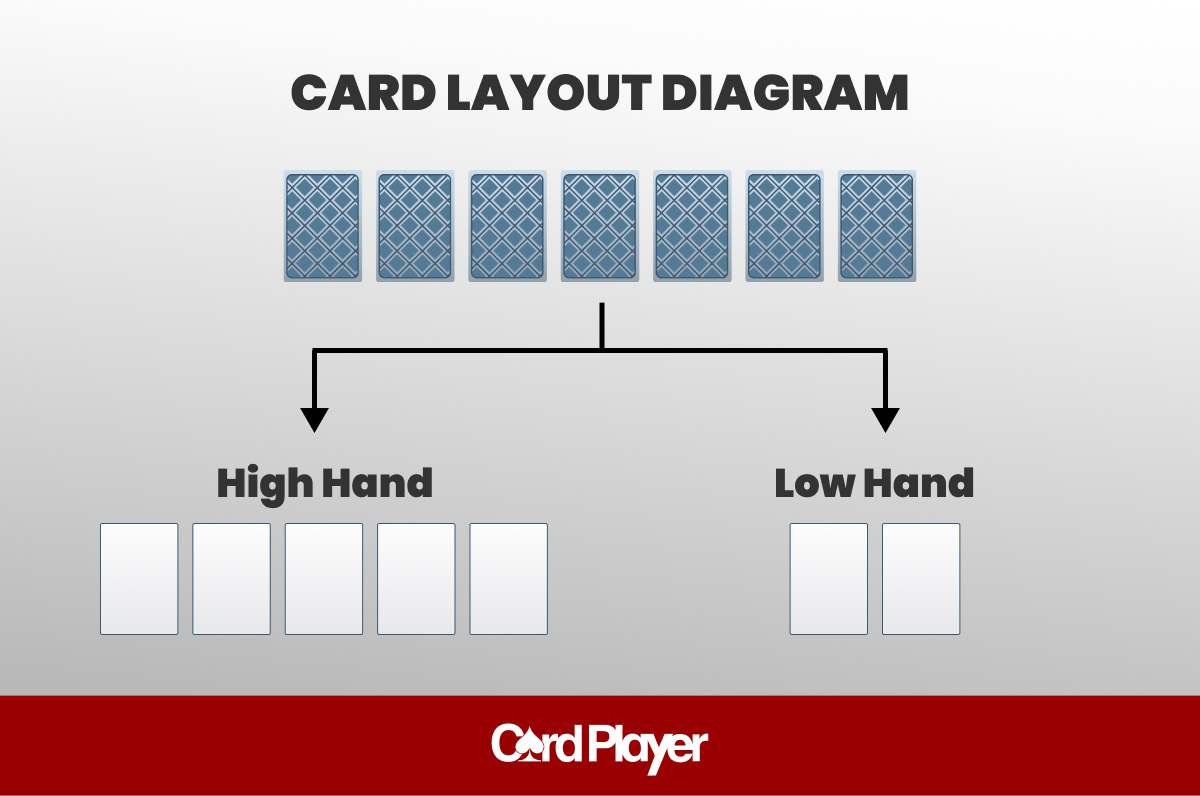
- Each player and dealer receives 7 cards, divided into a 5-card “high hand” and a 2-card “low hand.”
- Your high hand must outrank your low hand.
- You win if both hands beat the dealer’s. Split = push.
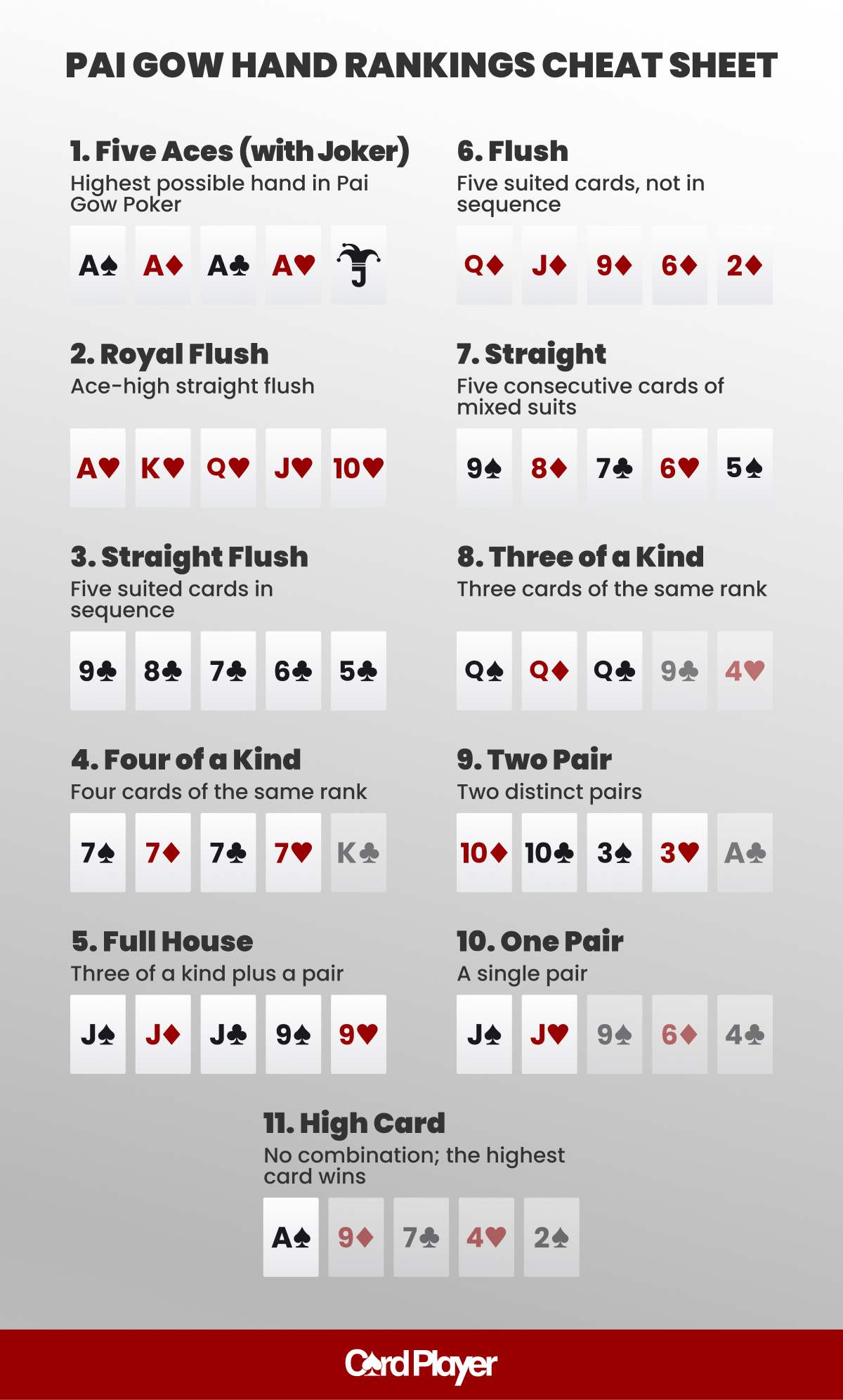
- Pai Gow Poker hands follow standard poker rankings, except A-2-3-4-5 straight (wheel) is the second-lowest straight.
- The house way sets the dealer’s hand automatically.
- The table is slow-paced, with many pushes, making the bankroll last longer.
What Is Pai Gow Poker?
Pai Gow Poker is a poker casino game that combines the Pai Gow game of ancient China and the standard poker game. The game requires the playing of two versus the dealer cards from a deck of 52 cards and one joker.
The pace of the game is slower than most table games, and the experience includes push experience and strategy, thus appealing to the veterans and newcomers equally.
Pai Gow Poker Story
Pai Gow Poker is a modern game, created in 1985 by Los Angeles card club owner Sam Torosian. Inspired by the popularity of the Chinese tile grouping game Pai Gow and card games like Pusoy and Chinese Poker, Torosian wanted something faster. He swapped tiles for cards, used poker hand rankings, and reduced play to two hands instead of 13. The result was an instant hit. Here’s how it works.
Pai Gow Poker Rules
Pai Gow rules are straightforward. So once you understand the basic strategy, the game starts to make sense:
- Cards & Joker: 52 cards + 1 joker, which acts as an ace or completes a straight/flush. Pai Gow Poker uses the standard poker hand rankings to score hands, with the addition of a potential five-card hand of aces.
- Objective: Make two Pai Gow Poker hands – a 5-card “high hand” and a 2-card “low hand.”
- Comparison: High hand vs dealer’s high, low hand vs dealer’s low.
- Outcome: Win both = win bet, lose both = dealer wins, split = push.
The Joker in Pai Gow Poker
In Pai Gow Poker, the Joker acts as a wild card. It is one of the elements that makes Pai Gow Poker unique:
How to Set Your Hands in Pai Gow Poker
The aim of the game is to make two hands: a high five-card hand and a low two-card hand. In most cases, there is an obvious pairing. However, there are sometimes strategic decisions to make.
Rules for Hand Splitting
- Your high hand must outrank your low hand.
- You cannot place a stronger pair on the low hand if the weaker hand is the five-card hand.
Common Mistakes to Avoid
- Putting a pair in your low hand, overlooking the weaker high hand.
- Misusing the Joker.
Making any of the mistakes above is an automatic loss. You will forfeit your hand.
In reality, if you are new to the game, there is a good chance the croupier will cut you some slack and help you correctly arrange your two hands.
How Pai Gow Works
Here’s how a typical round of Pai Gow Poker plays out, from start to finish:
Playing as the Banker in Pai Gow Poker
In most Pai Gow poker games, the dealer always acts as the banker. However, some casinos – especially in California card rooms, where flexible banking is required by law – allow the banker role to rotate.
With flexible banking, each player has the option to act as banker. The dealer will set the banker’s cards according to the house way. Acting as the banker lets you win all ties, but you must be able to cover all winning bets. The commission, however, still goes to the house.
Playing the banker reduces the house edge to roughly 1.5%. If you can cover the bets, it’s a great spot.
The House Way in Pai Gow Poker
The House Way is the official method used by the dealer to set their seven cards into two hands. If you are a serious Pai Gow Poker player, this can make a difference, affecting both the house edge and game risk.
For example:
- One casino might always split two pairs unless they’re very low.
- Another might keep pairs together unless one is high (e.g., Kings or better).
- Some casinos are more aggressive with their Joker usage; others only use it to complete the highest-ranking 5-card hand possible.
Pai Gow Poker Winning Hands & Payouts
Pai Gow Poker is a low-volatility game, with a high rate of pushes, up to 45%. Win payouts are typically 1:1 (even money), less the 5% house commission.
You win if you manage to beat both the dealer’s high and low hands. It’s a push when you win one of the two hands. Pushes are very common, which is great for beginners.
The house edge is typically about 2.5%, or even lower (1.5%) if you’re the banker.
Payout Examples
| Outcome | Payout |
|---|---|
| Win Both Hands | 1:1 |
| Push (Split) | Bet Returned |
| Lose Both Hands | Lose Bet |
| Bonus Side Bet (e.g., 5 Aces) | Varies by casino |
Pai Gow Poker Strategy Tips
Pai Gow Poker is fundamentally a game of luck. However, there are a few strategic tweaks you can make to improve your chances of winning, especially if you’re used to playing on online poker sites, where strategy often plays a bigger role.
Basic Strategy for Beginners
- Always keep your best poker hand in the 5-card high hand.
- Never make your low hand stronger than your high hand – this will disqualify your hand.
When to Split Pairs
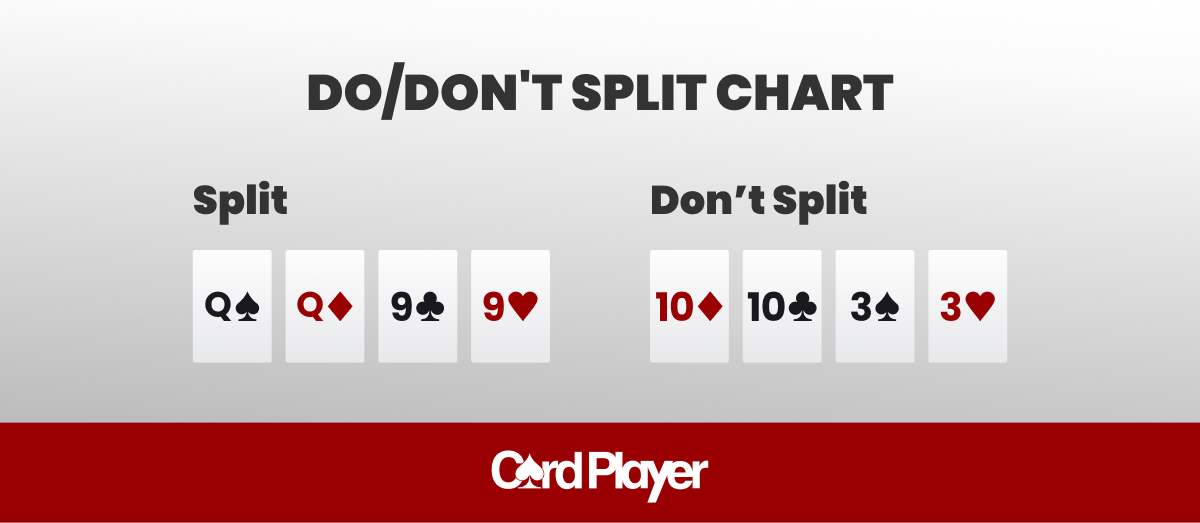
- If you are lucky enough to hit two pairs, you should split them only if one is Jacks or higher.
- If you draw three pairs, the highest pair should go to the low hand.
Optimal Hand Setting Scenarios
- Sharpen your Pai Gow Poker game with sample hands. This will help you learn how to balance strength between the two hands.
- Use the “House Way” as a fallback guide.
Practice Online
- Get online and learn how to play face-up Pai Gow Poker. You should be able to find a free play game to practice.
Side Bets & Variations in Pai Gow Poker
There are usually several side bets available when playing Pai Gow Poker at the casino. These games offer higher Pai Gow odds and bigger Pai Gow payouts.
Fortune Bonus
This is the most popular side bet. It pays out bonus wins based on the strength of your seven-card hand.
For example:
| Hand | Payout |
|---|---|
| 5 Aces (with Joker) | 8000:1 |
| Royal Flush | 1500:1 |
| Straight Flush | 200:1 |
| 4 of a Kind | 25:1 |
| Full House | 5:1 |
| Three of a Kind | 3:1 |
These payouts vary from casino to casino. There is no definitive Pai Gow hands list.
Envy Bonus
The Envy Bonus is the same as the Fortune Bonus. However, instead of betting on just your hand, you now bet on everyone’s hand. You have to wager more money to qualify for the Envy Bonus.
So, if another player at the table hits a Royal Flush, even though you have lost your hand, you will still win the Envy Bonus.
Progressive Jackpot
At some casinos, you will find Pai Gow Poker tables with a shared jackpot pool and a progressive jackpot option.
A small percentage of every bet seeds the jackpot. It typically only pays when a premium hand lands: royal flush, 5 aces, or a seven-card straight flush.
Online vs. Live Pai Gow Poker Differences
| Aspect | In-Person Pai Gow Poker | Online Pai Gow Poker |
|---|---|---|
| Game Speed | One of the slowest games on the casino floor. Every round takes time, as the players sort their cards | Faster dealing, automatic splitting options |
| Social Interaction | Very social; players often check out each other’s hands before the dealer reveals theirs | Less social interaction due to the solitary nature of online play |
| Card Dealing | Players sort their own cards | Cards are usually dealt face up in Pai Gow Poker online, a great way for beginners to learn the game |
Pai Gow Poker remains a niche game with loyal fans, forever linked to its creator, Sam Torosian.