






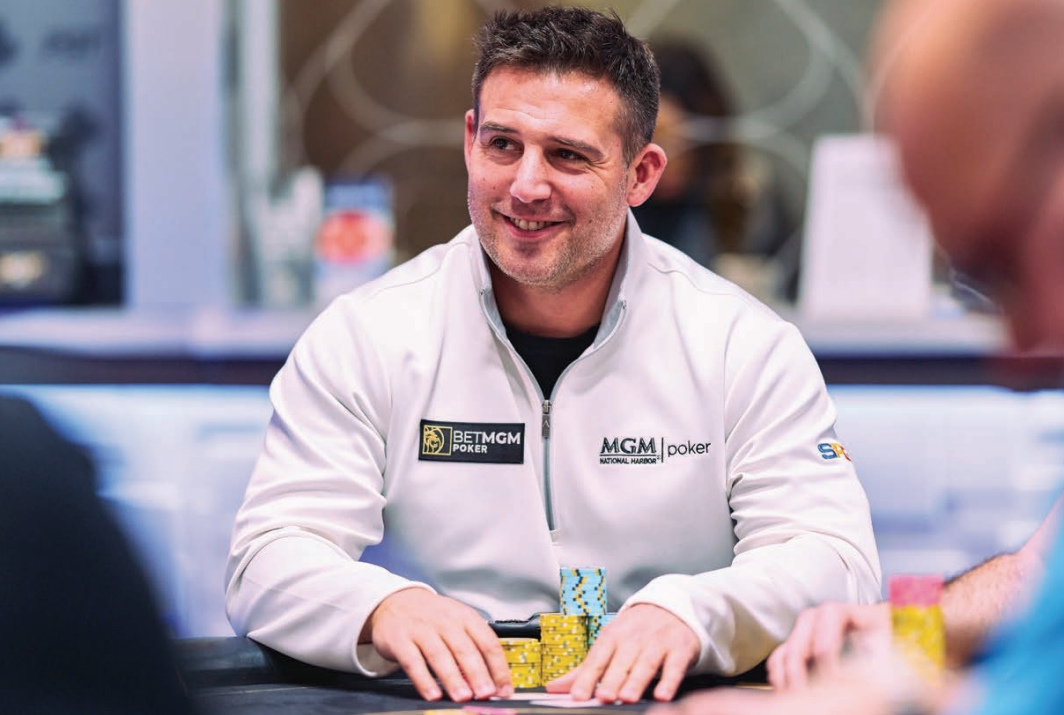
Darren Elias has been regarded as one of the toughest opponents to face at the poker table, having taken down the first of his four World Poker Tour titles just over a decade ago. The 38-year-old pro has dominated the WPT and holds several records on that tour, and has won big on the high roller circuit, racking up $16 million in career earnings, but a World Series of Poker bracelet continued to elude him.
There were many close calls over the years, including a third-place showing in a 2023 high roller for $725,000. He also had success in the $10,000 no-limit deuce-to-seven lowball event, considered to be one of the more respected disciplines of the game by poker’s elite. Elias took third in 2017. Then in 2019 he finished third again.
This summer, Elias bested those finishes by making it down to heads-up play. In his way was recent Poker Hall of Fame inductee Nick Schulman. The two would battle for almost eight hours, trading chips and the lead several times before Schulman came out on top for his third bracelet in the event.
“Darren Elias is easily the toughest no-limit deuce player I’ve ever played with. He just hung in there the whole time and played so great,” Schulman said after the win. “It’s a little emotional because I was content to lose to him because he deserved it. I’m a little bit overwhelmed with this one.”
The compliment was nice to hear, but it wasn’t gold, and Elias was left to regroup with his $336,421 consolation prize.
He recovered quickly. Just a week later, the New Jersey resident entered the online $888 buy-in Crazy Eights event and after another marathon session, this time he found the winner’s circle, scoring $170,208 and his first piece of WSOP hardware.
Card Player caught up with the BetMGM Poker ambassador recently to talk about grabbing a bracelet, his life in the game, and more.
Sean Chaffin: How did it feel to finally get a win at the WSOP?
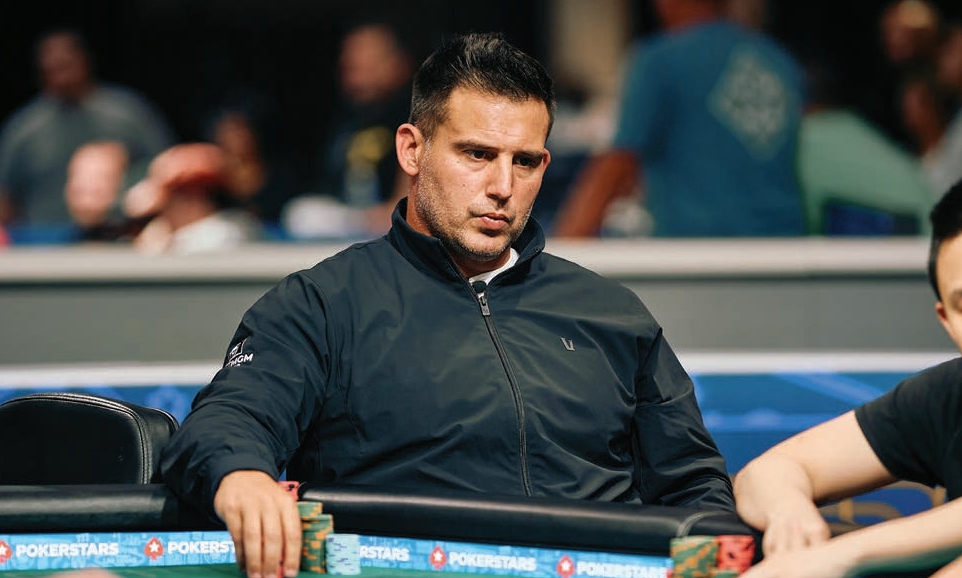 Darren Elias: It was a big relief getting the monkey off my back with the WSOP, where I’ve been playing since I was 21. To finally get first place feels good.
I had gotten second to Nick in that deuce-to-seven event, and went home about a week later back to New Jersey with my family. I don’t usually play a lot of the online events just because of how late they run and the schedule.
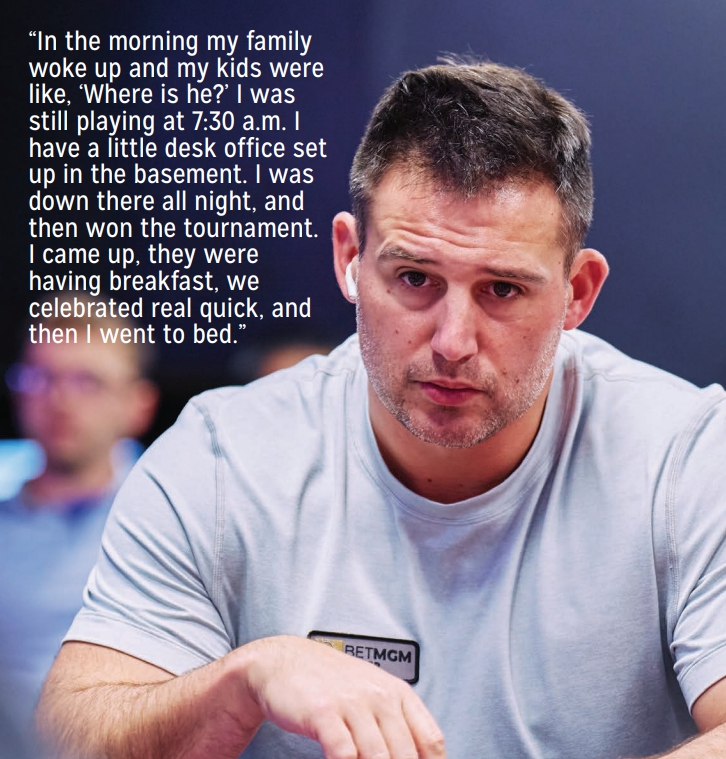
I hopped in that one on Sunday. I think it started at 5 p.m. and was able to get a stack going, and ran deep. It went so late. In the morning my family woke up and my kids were like, ‘Where is he?’ I was still playing at 7:30 a.m. It was a marathon, but definitely worth it to win that bracelet.
Sean Chaffin: What did your wife and family say when they woke up and you were still at it?
Darren Elias: They knew it was good that I was still playing. They were like, ‘Where is he?’ because I never came up. So they were looking for me, and saw I was still playing. I think I was four-handed when they woke up. My daughter was fired up. It was fun.
Sean Chaffin: What’s your setup like for playing online?
Darren Elias: I have a little desk office set up in the basement. I usually go down there and I like to be alone for the most part when I’m playing online and in my space. I was down there all night, and then won the tournament. I came up, they were having breakfast, we celebrated real quick, and then I went to bed.
Sean Chaffin: Now that the ice has been broken, do you have a goal in mind in regard to bracelets?
Darren Elias: No. I think with poker, it’s tough to set specific goals like that, where I’m just going to keep playing my best. And what happens, happens.
Sean Chaffin: What’s your routine like when it comes to playing online?
Darren Elias: When I’m home I try to play on BetMGM as much as I can with the shared liquidity now, where we have Pennsylvania, Michigan, and New Jersey all playing together. The games have gotten a lot bigger and better. So, I’ve been trying to play when I’m home. It’s usually the night shift for online where we’ll have dinner, everyone goes to bed, and I start about 6 or 7 p.m. and play late into the night.
I’m definitely more of a low-volume player, and I’m lucky that I’ve always been like that, even when I was young and single. I couldn’t play non-stop every day, where I’ve always played fewer tournaments and tried to focus on quality over quantity.
Sean Chaffin: Although you lost to Nick Schulman, who has won that event three times, it still must have been frustrating to lose after such a long match.
Darren Elias: That was special and Nick’s incredible in that game. He’s so good, just does the right thing at such a high clip. Playing that match heads-up really reminds me why I play poker, for moments like that – the competition, where we’re playing for a half-million dollars.
It’s a lot of money, but I don’t think either one of us were really thinking about the money. It was just a battle. We’re both going for the bracelet. Playing that match is something I’ll never forget.
Sean Chaffin: What are some things you’re watching for when playing someone like that, considering there are no community cards? Is it difficult to get a read on him or trust your instincts and reads?
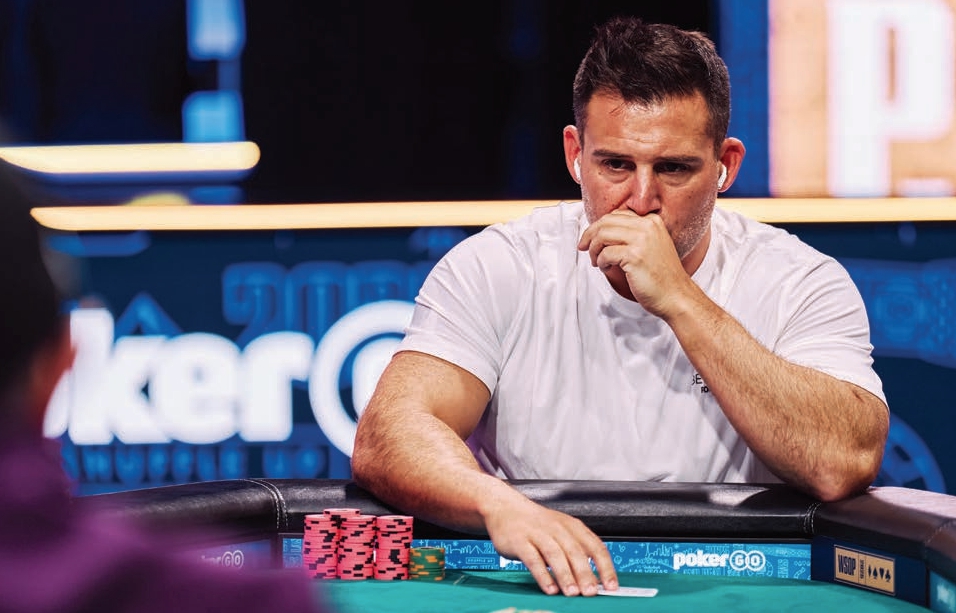
Darren Elias: It’s not like hold’em where there’s a right answer and you should do this, this percentage of time. You get to a lot of spots against a tough player like him, where he’s either bluffing or he has it, and he’s not really giving you anything. You’re not able to get a good read on him. I don’t want to say you’re guessing, but you’re really just trying to use any little bit of information you can to make your decision and there is no clear right answer.
Especially in that game, it’s a binary thing where you’re either beat or the guy’s bluffing. There is no middle ground where you have equity or something like in hold’em. In that tournament with that format, there’s a huge ante. We’re playing heads-up and there’s a big blind and a half in the middle, so you really can’t fold much and to have to play that many hands in that game heads-up is a challenge. I think a lot of players would have struggled with that because you’re playing hands that you either have to draw three or stand pat or pretend to draw one. It takes a lot of creativity to play heads-up with that.
I’ve had a lot of success in that deuce-to-seven event, where I think I’ve gotten third twice and then second. I always thought that would be the event I would probably get the bracelet in, just because that’s my favorite game – probably my best game. It’s a small field where there are a lot fewer players in that field than a big no limit event. So to get the actual win in a small buy-in, big-field online event was a surprise.
Sean Chaffin: How did you get so good at deuce? It’s not a game you see in the casino every day.
Darren Elias: There’s not a steep learning curve with that one. It’s not one where you can really play small stakes either. We used to play it in our home game when I was young and I loved it. I always won in the home game and then one day I was at Commerce and Billy Baxter was sitting there playing $200-$400 with these guys, and I just hopped in and started playing – and loved it. I played a couple summers in Bobby’s Room. We played cash games, no-limit deuce all summer. Those are some of my favorite memories in my poker career.
Sean Chaffin: Did you win in that first session with Billy Baxter?
Darren Elias: Yeah, I won. I think at the time, he thought I was a no-limit tournament guy. I think they wanted me in that game at first, so I would get the calls and the invites that they were playing. I don’t get those invites as much anymore.
Sean Chaffin: On a different subject, Brian Altman recently tied your WPT record by winning his fourth title. How do you feel about sharing the record for now?
 Darren Elias: I’m super happy for him. I’ve been friends with Brian a long time. I respect how he carries himself, and he’s a real professional with a ton of success in these WPTs and no-limit events where I’m always rooting for that guy.
Sean Chaffin: Does it bother you that it was an online event at all?
Darren Elias: No, that doesn’t bother me. I think these days, all sorts of events get lumped together. You see that with bracelets too. I don’t think there’s any distinction on those.
Sean Chaffin: What’s your own schedule like now?
Darren Elias: I’m playing fewer events than I used to. It’s a lot of America-based live events. I like the PokerGO series at the Aria. I play the WSOP, obviously, and then probably four or five other trips throughout the year. I play down at Hard Rock (in Florida). Borgata is having some good poker offerings again.
Sean Chaffin: What do you think about seeing more states coming on board for online poker, especially BetMGM which you are an ambassador for?
Darren Elias: I think the more the merrier when it comes to adding states to our network. I would love that. I think with Nevada, it’s going to be a matter of time. Obviously, these things depend on politics and legislation. That’s above my pay grade, to be honest. But I think the more states we can get on our network, the better, and we’re ready for it.
Follow Elias on Twitter/X @DarrenElias.
- Photos by PokerGO