





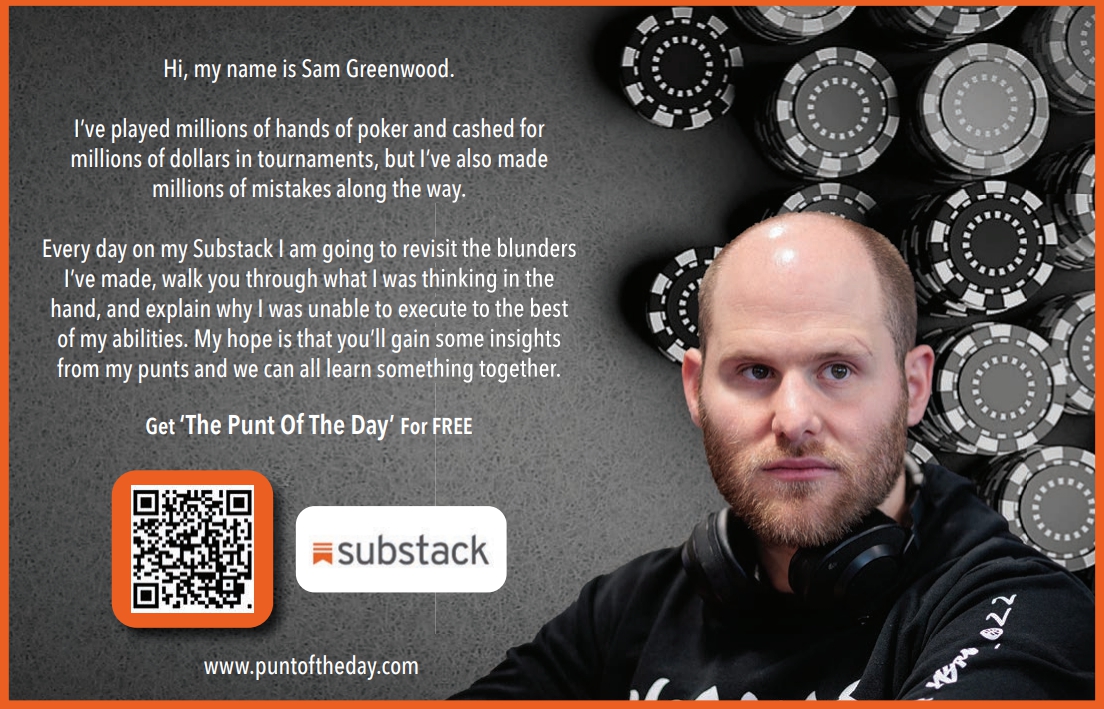
 Even the best players in the world make mistakes. Join Sam Greenwood as he breaks down and analyzes hands played from the high roller circuit on his Punt Of The Day Substack.
“A little knowledge is a dangerous thing.”
It’s a quote I’d heard dozens of times, but I never knew who coined it. In researching this quote, I learned that Alexander Pope is credited, but that the original phrase is actually, “A little learning is a dangerous thing.”
Phil Galfond, another prominent thinker, recently tweeted a sentiment that concurred with Pope’s famous misquoted maxim.
“Most players trying to play GTO (game theory optimal) are actually playing a distorted version that’s easier to exploit than their old game.”
One thing that solvers excel at is recognizing every characteristic of a hand. After millions of hands of self-training, solvers give outputs that recognize how often cards in your hand are in your opponent’s range at each node, and how your range plays on 47 different turns (and 2,162 turn/river combinations.)
Poker is a human game and sometimes looking at a solver output can feel like trying to read the mind of an algorithm. A CFR (counterfactual regret minimization) algorithm does not have a mind to read beyond trying to minimize EV loss.
Humans looking at outputs search for patterns and heuristics they can apply to their own games, but sometimes a little learning can lead to the biggest mistakes.
Someone who has played 100 hands of no-limit might see K♠6♠ on Jx 8x 4♠ and think, “I have three to a flush and three to a straight.”
A person who played 10,000 hands might think, “I missed, I have nothing.”
But a person who has played a million hands and looked at solver outputs might think, “I have an overcard to the jack, block K-J, and have backdoor straight and flush draws. These sorts of hands often bluff.”
In poker knowledge is better than being ignorant, but in any given hand there’s a thin line between having useful knowledge and dangerous knowledge.
Event: 2023 Triton London $125,000 Main Event
The Hand
The blinds are 10,000-20,000 with a 20,000 big blind ante, and I’m sitting on about twice my starting stack with 505,000. ere are 40 players remaining, and only 27 will make the money.
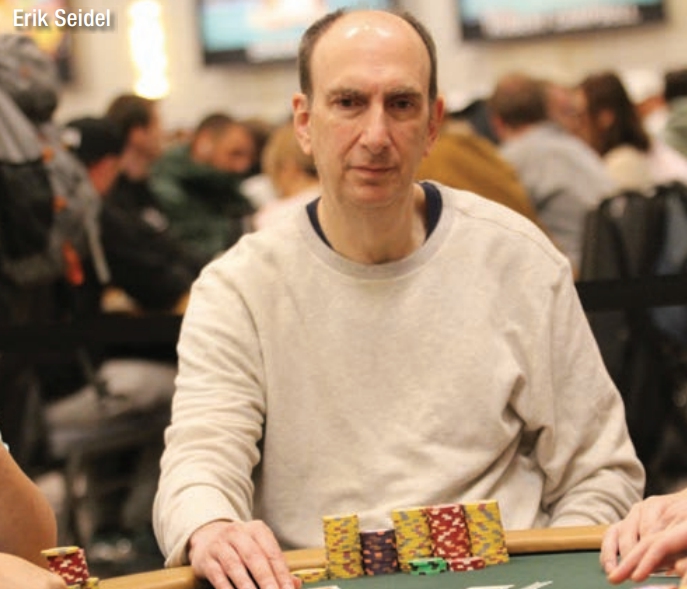
It folds to me in the hijack and I raise to 40,000 with K♠6♠. Erik Seidel calls in the cutoff , playing a stack of 910,000. Mikita Badziakouski folds the button, Lun Loon folds the small blind, and Isaac Haxton folds his big blind.
Flop: J♦8♦4♠
I bet 60,000, and Erik calls.
Turn: 10♠
I bet 100,000, and Erik calls.
River: 10♣
I bet 300,000 leaving a single 5k chip back. Erik calls with 9♣9♠ and drags the pot.
What Was I Thinking?
Even given the tournament situation, with 40 people left and 27 cashing, preflop is a standard open. I could not fold into the money, and I was opening into mostly short and medium stacks that couldn’t put too much pressure on my short stack.
On the flop, I thought my hand was too weak to check or check-raise, but also too strong to check-fold. So I thought betting was the best option.
My thinking was that I could get better hands to fold right away and I would sometimes turn draws
that I can two-barrel.
I turned a flush draw, just what I wanted. Once again, I thought my hand was too weak to check-call or check-raise all-in, and too weak to open shove, so I decided to bet small again, hoping to see a cheap river and get some folds.
On the river, I felt most hands I’d want to bluff with would have some bad blocker effects (it’s not
like I’m bluffing A♥2♥ here). However, I thought bluffing with spades was preferable to bluffi ng with diamonds because I blocked Erik’s nut front door flush draws, and that I should probably be bluffing anything that can’t beat A-Q on the river.
What Did I Get Wrong
A good rule of thumb is that when you raise preflop and the player on your direct left calls and has position on you, you should check to them on the flop.
I globally check the flop around 90% of the time and carve out a small betting range of strong one-pair hands, straight and fl ush draws, and the occasional no-pair, no-draw bluff.
The problem is my hand is not good enough. It can’t turn an open ender, it does not have two overcards to a jack, and in fact it does not even have two overcards to an eight and it blocks almost none of his flop continues.
On the turn the board is so connected, the only size the solver uses is all-in. If I have a hand like A-J or A-A, I shove and I pair that with combo draws. I can’t shove a hand like K♠6♠ on the turn because too much of his range are draws that have me dominated right now, like Ax 10x or 9♠8♠.
Once I bet this hand on the flop, my turn bet sizing is okay. It’s not a size used with my entire range, but it probably doesn’t lose much EV and often allows me to see a river for cheap.
My river bluff is fine. A-Q should be a reasonably large amount of Erik’s range, and bluffing anything that loses to A-Q and doesn’t block A-Q is fine.
Types Of Errors Made
- Range Error
- Too Much Money Went Into The Pot
Grade
As a short stack, nearing the money of a tournament you want to play tighter and get involved in fewer pots with marginal hands. I had a hand in the bottom 5% of my range on the flop and declared it “too strong to check-fold,” then I ran an ambitious bluff vs a legend of the game and
got called by second pair.
Doing more Alexander Pope research, I learned that he also coined the phrase “Eternal sunshine of the spotless mind,” which was the title of a movie about a man who gets his memory wiped to erase the pain of a breakup.
Do I wish I could erase this hand from my memory?
Pope also wrote, “To err is human, to forgive divine.” I erred in this hand, but I don’t think Pope was talking about forgiving oneself, so I won’t do that here.
Let’s call it a C-
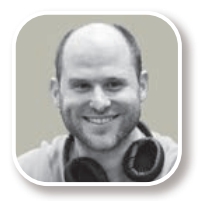 Sam Greenwood is one of the winningest tournament poker players ever and is third on Canada’s all-time money list, having cashed for $42 million and counting in high roller events all over the world. The former stock trader-turned-champion has played millions of poker hands and is breaking them down street by street on his Punt Of The Day Substack. You can reach out to the Run It Once coach on Twitter/X for private coaching @SamGreenwoodRIO.