







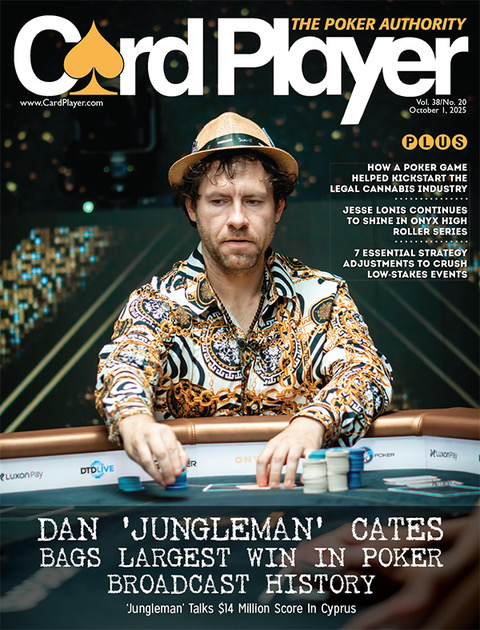
Dan ‘Jungleman’ Cates Bags Largest Win In Poker Broadcast History
‘Jungleman’ Talks $14 Million Score In Cyprus
 Much of poker’s most fascinating history happens far from the bright lights of a studio and away from the public eye. Private games for seemingly impossible stakes in far corners of the world have been played to audiences of none. Handshake deals set up games featuring the ultra-wealthy and uber-famous, and can occasionally include some of the best poker players in the world, some you’ve never heard of and some you have. Stories from the smoky rooms of the past live on only through word of mouth before the line blurs between fact and fable.
There’s a reason only a handful of eye-watering seven-figure heads-up matches come to the light of day, even when poker fans are so eager to eat it up. The Corporation against Andy Beal, Doug Polk’s match against Daniel Negreanu, and Nik ‘Airball’ vs. Matt Berkey come to mind. Every once in a while, an enticing detail or two slips out from the shadows, but for some obvious reasons, anonymity in this environment can be currency.
That’s why what happened on Aug.19 in North Cyprus was so tantalizing.
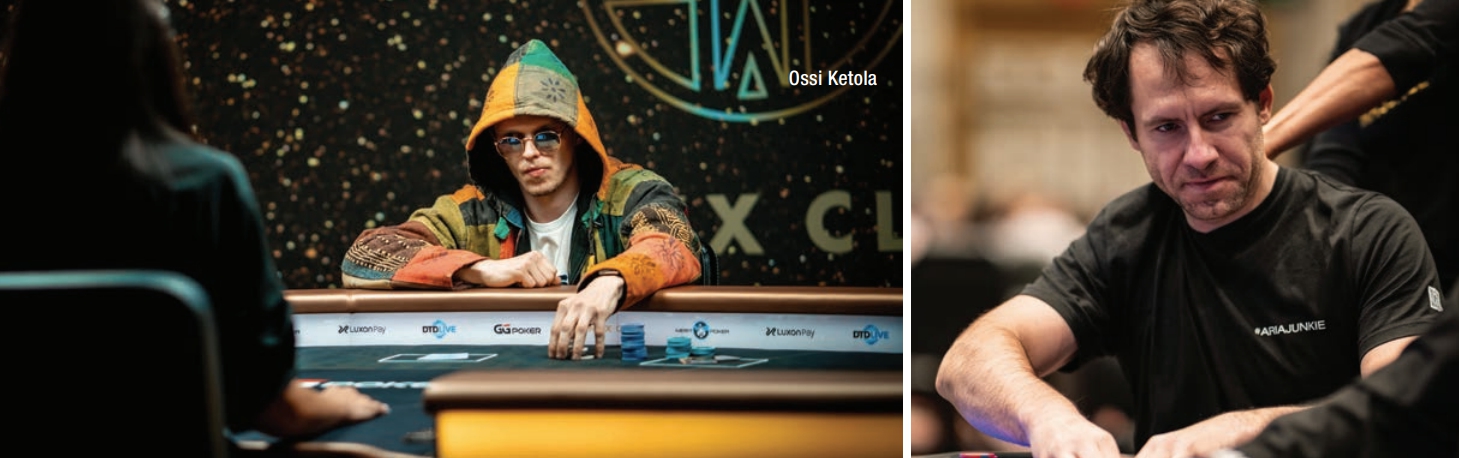
Over the course of more than 12 hours at Onyx Club at Merit Casino, Dan ‘jungleman’ Cates and Ossi ‘Monarch’ Ketola played a series of six escalating heads-up matches. Starting at €1 million per player and eventually climbing all the way up to €6 million, Cates and Ketola played the highest stakes poker game ever broadcast.
Cates, long known as a heads-up poker standout, emerged victorious in four of the six matches over Ketola. That included the final three matches with €5 million, €5 million, and €6 million buy-ins, respectively. When Cates’ two losses are factored in, as well as the handicaps he offered Ketola along the way, Cates appears to have won about $14.2 million USD in all.
That makes it the largest confirmed single-day win in poker history. And definitely the largest win and highest stakes of any broadcasted poker match.
Phil Ivey’s legendary $10 million single-day win against Andy Beal was about as close as it comes to Cates’ feat for a reported session. As far as the record for biggest televised pot, Cates and Ketola played a handful that eclipsed Tom Dwan’s previous record of $3.1 million from 2023.
Hungry For Action
Best known as ‘Monarch,’ Ketola, who hails from Finland, built his fortune in cryptocurrency-focused gambling following a successful esports career. Although relatively unknown in the poker world, Ketola made multiple tournament splashes in Triton events in late 2024, with a second-place finish in Monte Carlo that netted him $2.97 million, and a fifth-place finish in the $100,000 event at WSOP Paradise for another $1.172 million.
One day prior to this historic Jungleman-Monarch battle, Ketola squared off against high-stakes online regular Kayhan Mokri for $2 million. After a five-hour battle, Mokri was seven figures richer. Ketola immediately wanted a rematch for $2.5 million, but Mokri wouldn’t accommodate the request, citing an early flight home. Perhaps he really didn’t want to lose out on the cost of that flight, or perhaps he was just happy to take his big win and get out of town.
Ketola was tilted. After losing to Mokri and having any further action stifled, the casino owner fired off a series of social media posts seeking out more high-stakes heads-up action. He threw out challenges to multiple players including Phil Ivey and Paul Phua, and then came an agreement to play Cates on stream the following day.
This was not the first time that Cates and Ketola had squared off. A few weeks prior, in a series of heads-up matches that also included Mokri, and Elias Talvita, Ketola struck the first blow against Cates.
“It came about in Tallinn, [a few weeks prior to Cyprus], when I was in not a great mood and I woke up to a text that said, “Ossi Ketola wants to play you for $500,000 on a stream.”
“I thought to myself that this is probably some online player, some no-limit wizard of some sort, and I just fell asleep. And then someone texted me that I should really play him, so I changed my mood. Eventually, I did play him for €1 million. He played better than I expected, and beat me, which put me in a slump.”
A few weeks later, Cates traveled to Cyprus specifically to battle Ketola in a rematch, ignoring all the high-stakes tournament action going on at the same time.
“The idea was that I was going to get a rematch, which I didn’t anticipate,” Cates explained. “I had plans already, but I broke them to go play him in Cyprus. It sounded like I was going to get a few matches with him. But the first day I was there, I didn’t end up playing him at all.” (Ketola instead played with Kayhan Mokri.) “The second day, I did get to play, once again for €1 million.”
The Rematch Begins
With introductions from broadcasters Steve Warburton and Jordan Westmorland, the first match kicked off in the early afternoon. Each player started with €1 million in chips, and blinds of €5,000-€10,000.
The first match lasted just 19 hands, with almost all of the chips in play all-in preflop. Ketola’s A♦K♠ ran into Cates’ pocket kings and couldn’t catch up, on a board of 8♠7♠2♣10♥Q♥.
“I actually won that first match straight away, which was just one big cooler. Then we played again, and he won.”
Ketola struck back on hand 42 of the second match. His K♥J♠ won a flip against a short-stacked Cates’ pocket deuces by flopping a straight on a Q♦10♦9♦4♦3♥ board. After a brief break in the streaming action, it was on to round 3.
“Now that he was up a fair bit, he decided he wanted to play a €3 million match,” Cates recalled. “Maybe he was confident. Maybe he felt like gambling. But I was not turning that down. I wanted to make money for myself and my friends. I also like to do things with quite a big impact.”
On hand 46 of the third match, fans enjoyed an all-timer of a hand. With blinds of €15,000-€30,000, Ketola opened to €100,000 from the button with K♠6♥, and Cates called with A♦10♣. The 6♠6♣6♦ flop immediately gave Ketola quads. Cates checked, Ketola bet €75,000, and Cates called.
The turn was a disaster for Cates in the 10♦. Cates checked, Ketola bet €150,000, and Cates check-raised to €400,000. Ketola just called, and the A♠ hit the river, further improving Cates’ hand. Cates bet all but one €5,000 chip of Ketola’s stack, and Ketola decided to pause for a few moments before shoving with quads.
Even after that double-up, the stacks were still even. But Ketola picked up the lead with two-pair over two-pair, and then put Cates away on hand 69. The chips got in on a Q♦9♠6♠ flop, and Ketola’s pocket kings held off Cates’ Q♣J♥, with a 5♥ turn and 10♦ river.
“I played that match, and to my misfortune, I lost again. I was actually feeling very sad, and it seemed he was sympathetic,” Cates admitted.
Raising The Stakes Again
“Guess what? He decided the stakes were still too small and wanted to play for €5 million,” Cates said. “My mood was back, because I could win my money back. At this point, the tables were turning in a few different ways. I figured out a few things about his game. I had a few different ideas or theories, and it turned out that exploitatively speaking, things were really turning in my direction. He also hadn’t slept, which was a huge disadvantage for him. It makes it very hard to readjust and figure out things if you haven’t slept.”
Cates pulled off a significant bluff on hand 28 of the match, turning a busted flush draw into a win with three barrels. He raised to €125,000 with 5♦3♦ and Ketola three-bet to €450,000 with A♣8♣. Cates called and the flop came down A♥Q♦10♦. Ketola checked and Cates bet €400,000. Ketola called and the turn was the 9♣.
Ketola checked again and Cates bet €700,000. Ketola called. The river was the 7♣ and Ketola checked for a final time. Cates put him all in for his last €1,800,000, and Ketola opted to fold, leaving himself short.
It took until hand 51, but Cates put away match 4 when his A♦Q♠ beat Ketola’s A♠8♠.
“Break, then maybe a rematch,” Ketola said, exiting the stage. There would be a round 5.
At this point, Cates held a relatively small edge in the profit column, and both players decided to run it back at €5 million clip for their fifth match. Within five hands, Cates had opened up a 3-to-2 lead, and it was well over 2-to-1 through just 11 hands. Ketola made it to hand 40 of the match, but never really seemed to have a chance. He shoved 14 big blinds with 9♠7♦, and Cates flopped him completely dead with Q♦J♣ as it ran out Q♠Q♥2♦6♣7♣.
As opposed to the breaks following previous matches, both players remained at the table. Each wore a look of exhaustion, but neither was ready to stop. Ketola spent 20 minutes pushing for match six to start, while Cates tried to wrap up some pressing business on his phone with the backers in his corner. Finally, they reached terms. A €6 million match kicked off more than nine hours after the first card of the day went into the air.
“He was steamed and wanted to run it back for another €5 million, and I beat him again, which I definitely didn’t expect. And then he wanted to run it back, one final time, for €6 million. Although that last match started off bad, and got worse at some point, in the end, it ended up a lot better and I won the most ever on a live stream.”
Making History
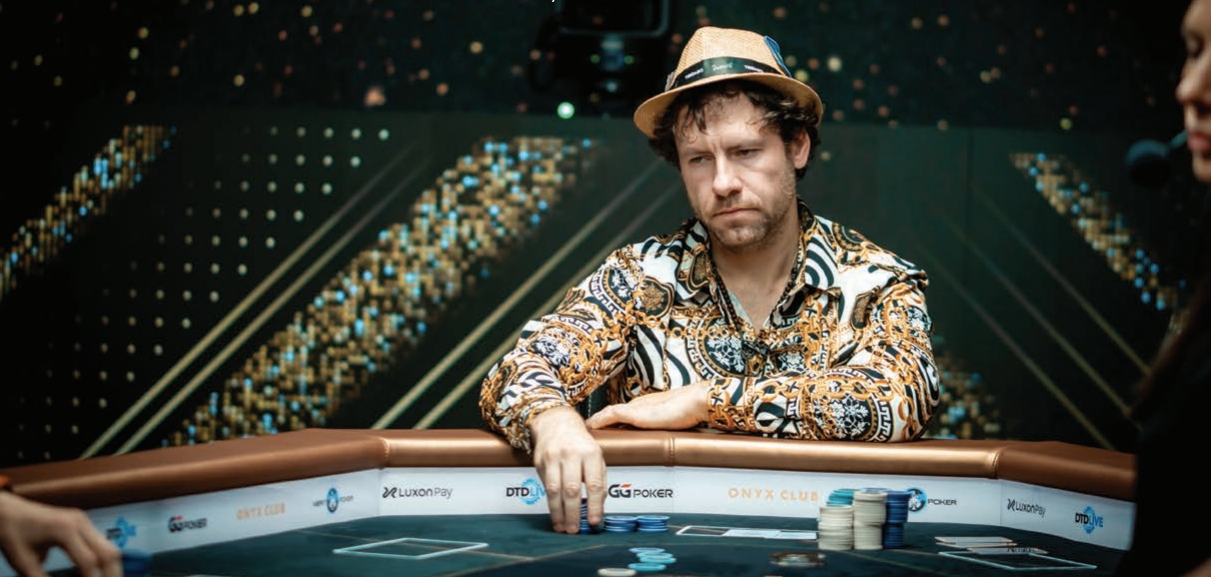
Just nine hands into the sixth match, Cates and Ketola went to war. With blinds of €30,000-€60,000, Cates opened to €150,000 with A♥8♣ and Ketola three-bet to €600,000 with A♣J♣. Cates responded with a four-bet to €1.4 million, and Ketola called.
Both players checked the Q♠7♠5♣, and the turn was the J♠. Ketola checked, Cates bet €1.2 million, and Ketola called. The A♦ landed on the river, and Ketola open-shoved. With his eyelids hanging heavy, Cates put his hand to his forehead. Then a waiter delivered food to the table, offering a moment of levity. After a quick bite, Cates threw away his two pair, and the commentary team was left in stitches.
“This man is facing down a river jam in the biggest pot in televised poker history, and he just snap chomps on a breadstick and then makes the fold.”
Five hands later, Cates made a royal flush in clubs, taking down another pot and signifying to the poker world that nothing was going to stop him from putting Ketola away. The theme of the final match was similar to the previous clashes. When he needed to dig down deep, Cates found some incredible bluffs. And when he was beat, as he was in a straight-over-straight spot midway through match 6, Cates managed to lose less than expected.
Cates eventually managed to whittle Ketola down to crumbs. On hand 82, the final hand of the night, Ketola shoved with Q♥3♥ and Cates called with A♦8♥. The board ran out A♣J♥8♠7♣3♠, and Cates secured his historic victory.
After getting the action he was searching for two days, the cards were unkind to Ketola. He was happy to call it a day after six matches, more than 12 hours after kicking everything off.
“Enjoy the donation,” said Ketola. “I go to sleep.”
A Lot On Cates’ Plate
Cates has a habit of garnering attention in the poker world, whether he seeks it out or not. But for all of the high-stakes poker he’s played over the last two decades, the Maryland native has gotten a lot more selective about where he spends his time, especially when it comes to tournaments. There were the back-to-back WSOP Poker Players Championship wins in 2021 and 2022 for $954,020 and $1,449,103, respectively, and he’s always down to join in on Phil Hellmuth’s annual over-the-top main event entrance, but the days of Cates grinding an entire series are long gone.
He will still occasionally dip his toe into the high roller waters, if his jet setting lifestyle happens to take him to the area, like when he took third in the 2023 Triton London main event for $1,940,000. He only has two tournament cashes in 2025, but they were significant. In March, he finished runner up in the Triton Jeju main event for a career-best $3,528,000. Then in May, he added a fourth-place score worth $875,000 at Triton Montenegro.
Unless a big opportunity crosses his path, such as his match with Ketola, the 35-year-old prefers to focus his energy these days on content creation. His YouTube channel, centered around his interview series Winning the Game of Life, has become one of his most passionate pursuits. In 2026, Cates will also publish POKERWORLD, a book co-written with Rick Maese, a longtime sportswriter for the Washington Post.
Amidst his busy schedule, Cates sat down with Card Player to talk about his big win and get a closer look into his increasingly busy life.
Tim Fiorvanti: Poker-wise, are there highlights from the match that stick out for you?
Dan Cates: The big bluff with the 5♦3♦, of course. A fold with a pair of aces for like 60% pot is not an easy fold against that kind of line. There were a couple other times where I just happened to run pretty well against him. There was a time where I raised with top pair and he folded two-pair. That was very lucky. I thought I had the best hand. And if I think I have the best hand I’m going to raise big.
There were also highlights on his end too. He bluffed me with 6-4 offsuit in a really tough spot. What he did was actually close to equilibrium. He ran a couple other bluffs that were successful. A couple key coolers on his end, and some difficult situations. Maybe those hands like pocket kings vs. A♦K♠ are highlights to some people, too.
Fiorvanti: You put out a public message letting people know that you had other investors. Did you feel it was important to be transparent?
Cates: It was fairly obvious that other people had a big piece of my action. I guess if I had a net worth of $50 million-plus, I would do such a thing on my own. It matters a bit. He knew, and so did the other people betting big on the side.
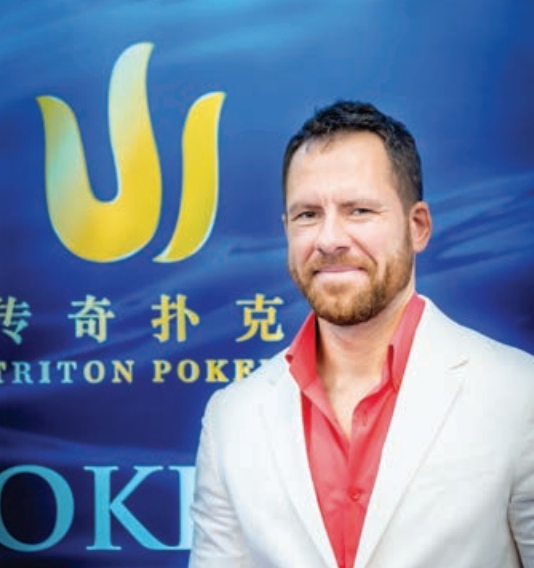 Fiorvanti: Do you imagine future heads-up clashes like this, against Monarch or other opponents?
Cates: I think there will be a couple more big heads-up matches in the future, against him and other players. I think for the true best in the world, it’s going to be on the smaller end. Looking forward to it and letting others watch the matches. I think poker should be a spectator sport, for a lot of different reasons.
Fiorvanti: Speaking of playing big, your last couple tournament results came back in the spring, cashing big in Triton events in Montenegro and Jeju. What does it take to motivate you to play tournaments these days?
Cates: Some of it is about obligation. I want to be loyal to my brands that I promote. Some of it is about EV (expected value), too. I think in general, people overestimate their EV in these tournaments. I have been a little unimpressed by the competition, to be honest.
Sadly, I don’t find these high rollers to be very much fun. Not only is everyone very serious, which is pointless, but they’re incredibly slow to the point where it’s tedious. Maybe other people’s minds work differently from mine.
But it’s too ridiculous. And then people do these things to slow down the game even more, like waiting until it’s their turn to look at the cards. Are they getting tells from watching people before that? Can they not just look at their cards and look at other people? 18 hands an hour, it’s not fun. It would be fun if it was much faster.
Fiorvanti: Making things in poker more fun seems to be something you get into, especially with some of the costumes and personas you’ve adopted over the last few years.
Cates: It’s a bunch of things. I just think of whatever might be funny for the situation. Ideally, I try to make things that are in contrast, or on a theme, or just bring some props with me that will add some extra flare to the table. But I can also be shy sometimes, too. I don’t want to irritate people too much, although perhaps irritating them because they irritate you by being boring and slow is fair game.
Fiorvanti: It seems like you’re putting a lot of that excitement and energy into your YouTube channel as well.
Cates: My incentive for starting my channel and going into more of the content creation route is because I believe in the possibility of influencing others towards social change. It’s also quite interesting. I believe that I have views on things that lead to better possibilities of reality.
At some point I realized that my pursuit of money, especially through poker, was reduced essentially to running on a treadmill and waiting for a paycheck. I had to do something else entirely, or quite a bit different anyway, in order to start creating more social impact. You can inspire people. You can put out your views. You can maybe build something scalable, like Mr. Beast, who does an amazing job with some of his crazy ambitious projects.
Fiorvanti: It’s clear that you put a lot of thought, a lot of effort into your opportunity, your position, your financial standing, and you’re trying to give back to sort of shape the poker world moving forward. I’m curious what you think the future of poker looks like.

Cates: I can say that I want poker to be like this or that, but if the other people in the audience don’t want it to be like that, well, their opinion outweighs mine. For example, when it comes to recording new content, people have tried all kinds of variations on poker. But I’ve found that just a classic version of poker content, and interviews, are what people want to see. I don’t think they want to see people just being boring as they play poker.
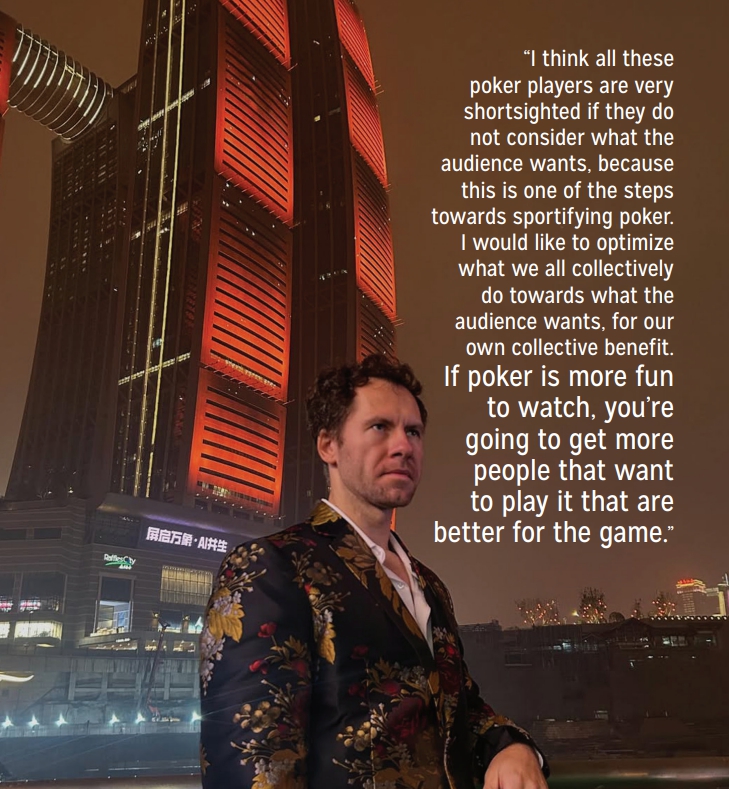
I believe in data driven models above anything else. Whatever works, works. So as far as what’s good for TV and all that, I think all these poker players are very shortsighted if they do not consider what the audience wants, because this is one of the steps towards sportifying poker.
There are some behaviors in poker that are certainly not sportified, and very predatory, like leaving or only playing whenever VIPs are in the game. I get that people want to play with VIPs and need that sustenance to some level. But if someone was only bum hunting, that’s not a good situation. To be a professional poker player, if it is to be considered a sport, requires people to have a certain competitive dynamic.
So, to answer your question more precisely, I would like to optimize what we all collectively do towards what the audience wants, for our own collective benefit. If poker is more fun to watch, you’re going to get more people that want to play it that are better for the game. That expands the horizons.
I also think that it’s very useful for players to invent more variations of poker. With cash games, the squid game, for example, was very beneficial towards a lot of people wanting to play it. Although I’m starting to think the squid game isn’t as good as I imagined for me, because it’s a little bit tougher than I thought.
Fiorvanti: In terms of growing the game beyond its current boundaries, you have a book coming out with Rick Maese of the Washington Post, who wrote a story about you a couple of years ago. How did that come together?
 Cates: Back in 2023, I did a mini press tour near my hometown in DC, including traveling to ABC studios for an interview for Good Morning Washington. I also sat down with Rick for a lengthy interview in the Washington Post headquarters.
As it turned out, that article was one of the most read on their site that year. The piece garnered a lot of attention from readers and literary agents. I was already planning to write a book but that just sped up the process.
The book will be an extension of my interview in The Post and share how poker opened the door to a big world and big life filled with meaning and purpose.
I believe that if I can show people the ways in which I myself changed, and saw that my ways of thinking were undermined by life experiences, that this will lead people to a lot of higher possibilities in their life. I hope that will expand the brand of poker as well, because I can show a bit of a doorway towards hope for many people in my situation, be it with autism or some other condition.
It’s valuable to see things from another person’s point of view. Poker is like the training school. There’s a lot of different principles, such as the idea that there’s emotional buys for things, similar to actual currencies. It’s an important lesson that I learned. You want to be the source of where positive feelings come from. It’s not that different from attending a party or dealing with people in your everyday life. There are a lot of huge lessons in there, like the value of making a good move, that can be more helpful than waiting to play something perfectly.
Follow Dan Cates on Twitter/X @junglemandan and check out his YouTube channel @JunglemanDanCates. You can learn more about the Phenom Poker and GTO Wizard ambassador at his Enter The Jungleverse website.
- Photos by PokerGO, Triton Poker, Onyx Poker – Oleg Novruzov, Dan Cates, Card Player