







How Poker Helped Kickstart The Legal Cannabis Industry
Adam Bierman On The Lessons Learned Building A Weed Empire

Adam Bierman’s new book, Weed Empire: How I Battled Gangsters, Investment Banks, and the Department of Justice to Build the Cannabis Industry in America, begins not in the board room, but at the poker table.
Down on his luck, the then-25-year-old’s Nissan 350Z had just been repossessed, and he and his girlfriend had just been evicted from their apartment. Bierman decided to head down to the Bicycle Casino, a stop that had become part of his regular routine, hoping some time at the tables could remedy the situation.
“That morning I had extracted every last dollar from my sock drawer, a wad of nearly $2,500, binding them neatly with a rubber band,” Bierman wrote. “I tucked the front pocket and stepped into the unforgiving flow of the fluorescent lights.”
“Every bet laid bare my resolve, pocket kings in hand, riding the thin edge between triumph and disaster. A nagging voice taunted me from the back of my mind, wanting me not to go too far, not to lose, not to blow it all. Now heads up, my final adversary pushed all in with a boldness that rattled my confidence. My mind raced – visions of rent payments and empty pockets flickering before my eyes, the fear of returning home a loser. I felt scared, too hesitant to look my pocket kings in the eyes. So, I folded.”
The hand seemed to encapsulate Bierman’s life up to that point. He’d been called a loser, but had the resolve to shake that mentality and work towards his vision to kickstart the fledgling legal cannabis industry. He just needed the capital to start.
“Poker was always there,” he admitted. “I had been playing cards as my main source of income since I officially dropped out of college.”
It’s a familiar tale in the poker world – university dropout transitioning to full-time rounder. But playing cards proved to be a means to a different end for Bierman. The entrepreneur went on to found MedMen Enterprises with partner Andrew Modlin in 2010, with the company reaching a peak valuation of $3 billion six years later.
At the height of the business, MedMen operated retail marijuana outlets in California, Nevada, Arizona, Florida, Illinois, New York, and Massachusetts as well as six cultivation facilities. The company went public on the Canadian Stock Exchange in 2018 and was at the forefront of making cannabis a legitimate industry.
Then everything came crashing down. Bierman left the company in 2020 and MedMen entered bankruptcy proceedings in 2024 before liquidating assets. Despite the downfall of his former company, estimates now peg the size of the U.S. legal cannabis industry at as much as $44 billion, and Bierman played a major role in that.
Originally from Scottsdale, Arizona, the now 43-year-old is sharing all about growers, dealers, lobbyists, tycoons, and titans of industry. The new book includes stories of safeguarding earnings in shoeboxes, facing off with gangs, and taking on the public markets and justice system. But it all started with a poker game.
Card Player: How did you get into poker and how important was the game to funding your startup?
Adam Bierman: I was 20 when my dad showed me the game. He had always been a sharp blackjack player, but it was a business opportunity in poker that caught his attention.
He turned on the Travel Channel and saw Howard Lederer win a World Poker Tour tournament, the first one that used the lipstick camera to reveal players’ hole cards. A lightning bolt of inspiration filled my dad in that moment. He just knew there was about to be a “boom.”
What started as a business idea quickly became something more. Poker became his business, and then it became something we shared. We started studying the game together — hand histories, strategy discussions, tracking the evolution of the game. I didn’t come to poker through gambling. I came to it through curiosity and a sense that something important was unfolding.
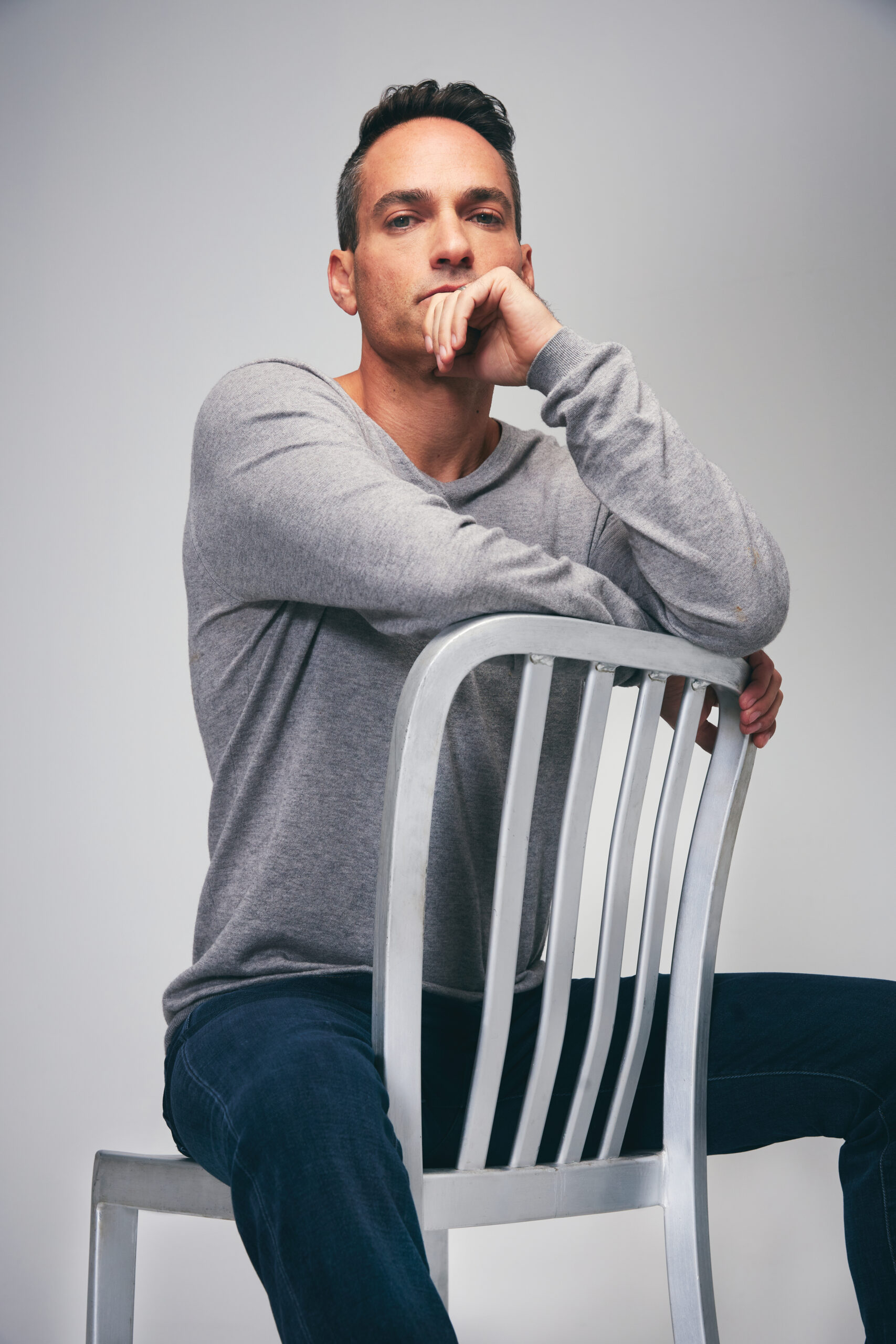 Card Player: Your father ran a major poker affiliate business during the poker boom of the 2000s.
Adam Bierman: Even though he wasn’t a poker player at the time, he was indeed a gambler. My dad didn’t just see poker. He saw that viewers at home were from then on going to be able to “live” the decisions alongside the players and “feel” like part of the game. He knew this would change everything.
Next thing I know, he’s on a plane to Vegas to meet Howard. That meeting sparked everything. They launched a business, Howard became “The Professor of Poker” and my dad became an initial affiliate of Full Tilt. It was a classic moment of spotting opportunity before the crowd.
Card Player: What was your poker routine like back in those days before starting your own company?
Adam Bierman: Before MedMen became real, I was playing multiple sessions a week – mostly no limit hold’em – at the Bicycle Casino and Commerce. As the business started to grow, the hours I spent grinding decreased, but it never left completely. There were definitely a few moments in the early days when a big session helped cover payroll on a Friday. That’s the truth of entrepreneurship sometimes – you do whatever it takes to stay in the game.
Card Player: What are some lessons from the poker table that can be applied in business?
Adam Bierman: Poker has been my greatest teacher – not just in business, but in life. Poker players commit to the next move, knowing it’s based on incomplete information. You act, the next card comes, and you reassess. It’s a cycle of decisions, not conclusions.
If you let your commitment on the prior bet/card determine your decision post the next bet/card, you lose. Business is no different. You can’t cling to results, you need to focus on process, execution, and edge. That detachment has been critical in every major decision I’ve made professionally.
Poker taught me how to make decisions without perfect information. That’s the essence of the game and it’s also the essence of building a business. In both, you’re working with unknowns and yet you must act anyway. If you wait for full certainty, you’re not making a decision, you’re reacting.
In poker, the right decision doesn’t change just because the stakes go up. The pressure increases, sure, but the logic stays the same. That discipline became central to how I operated as I built MedMen — whether we were negotiating licenses, dealing with regulators, or raising capital in an uncertain market. I spent a decade navigating a highly-regulated, constantly shifting space, betting and often semi-bluffing based only on intuition, lived experience, and pattern recognition. Poker certainly hardwired me in preparation for that life.
Card Player: You’ve talked about how the federal crackdown of wide-open international online poker in 2011, known as Black Friday in the industry, had a major impact on your father. What happened and how did that affect your approach with your own company?

Adam Bierman: My dad had built a successful business as a Full Tilt Poker affiliate — and made the most of that window. Then Black Friday happened. The industry shut down overnight and everything he had built was suddenly gone.
What struck me wasn’t just the loss, but it was how vulnerable the entire ecosystem had been. These companies had scaled massive user bases and revenue streams without securing long-term legitimacy. When the pressure came, they weren’t protected.
That experience shaped my approach with MedMen. I knew from the beginning that if cannabis was going to last, it had to be built within the system – by working to change laws, creating real infrastructure, and building a foundation that would hold up under scrutiny. That long-term thinking was directly informed by what I watched happen during Black Friday.
Card Player: Are you interested in playing more now that you are no longer running MedMen?
Adam Bierman: I’ll always love poker. It’s part of my wiring. I still think like a poker player every day—even if I’m not sitting at the table. That said, my priorities have shifted. I live in Costa Rica now. My focus is on my family and the new chapters I’m building. High-stakes no-limit hold’em just doesn’t fit into that season of life.
But I know myself, and I know I’ll eventually find my way back to the felt. It’s too fulfilling, too familiar, too much a part of how I process the world to stay away forever.
The last time I played was a $0.50-$1 no-limit game with my sons, who are 10 and 12. Watching them think through hands, talk through decisions — that was a special night. Sometimes it’s about competition, sometimes it’s about connection. But poker will always be there.
You can find Weed Empire: How I Battled Gangsters, Investment Banks, and the Department of Justice to Build the Cannabis Industry in America on Amazon. Follow Bierman on Twitter/X @_AdamBierman_.