







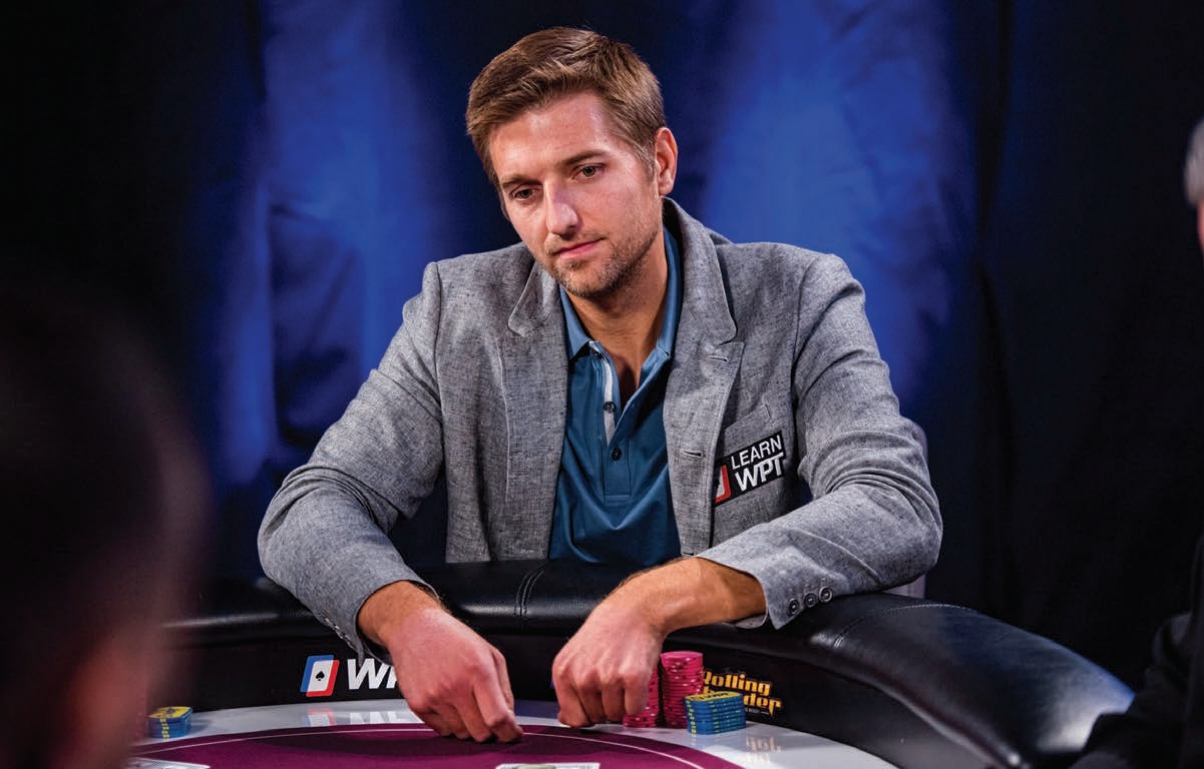
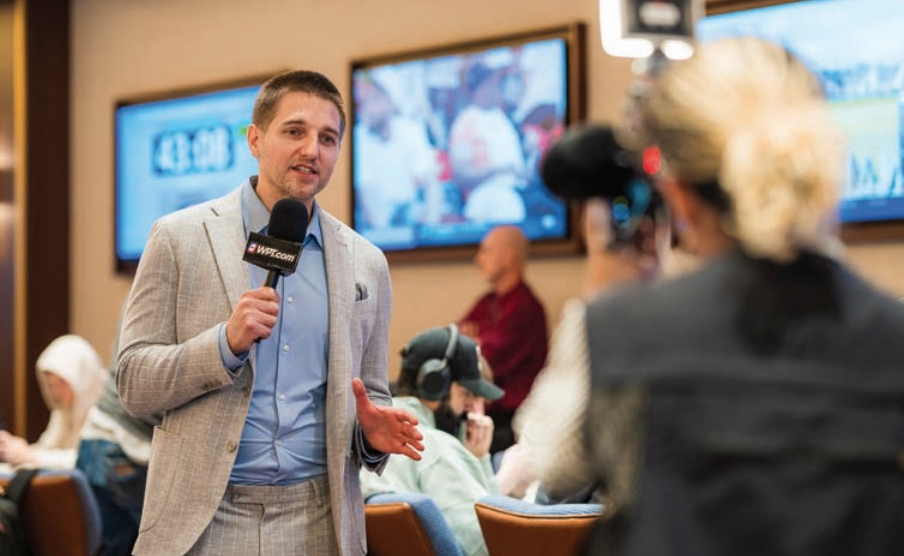
Tony Dunst has made a name for himself not only at the poker tables, but also as one of the voices of the World Poker Tour. The native of Madison, Wisconsin, mans the mic each event for poker fans around the world.
With $5.7 million in live tournament winnings, as well as a natural comfort in front of the camera, Dunst is the rare combination of poker talent and charisma that makes him a natural fit for calling the action, and the logical choice to replace the legendary Mike Sexton.
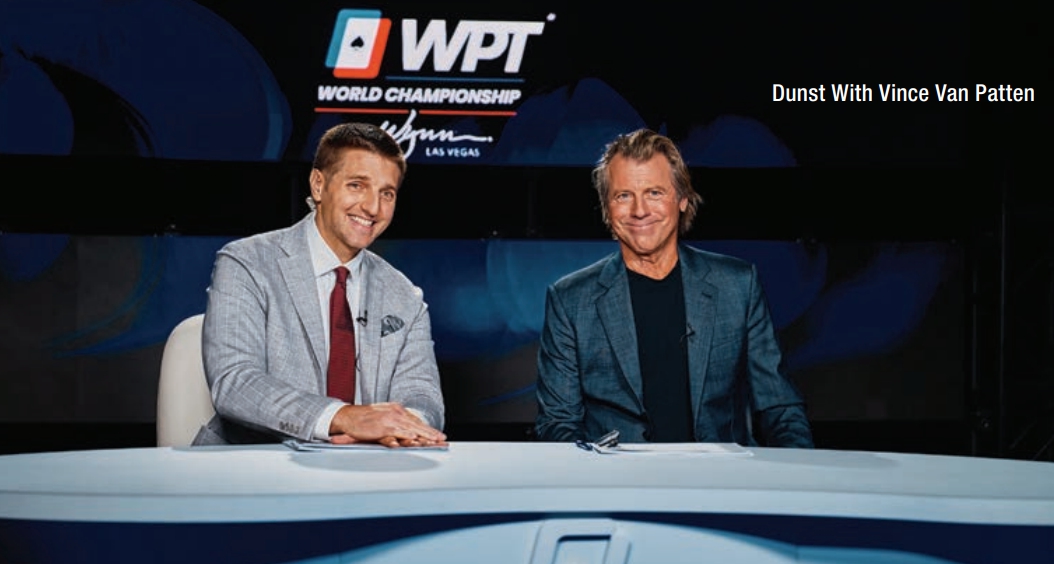
On the media side, he started as the host of the WPT’s Raw Deal segment in 2010. Dunst would offer analysis on various hands from the show, before graduating to the commentary booth alongside Vince Van Patten.
Three years later, Dunst would become a champion himself on the tour, taking down the WPT Caribbean event for $145,000. He narrowly missed out on a second tour title in 2014, earning third place in the WPT World Championship for $452,729. There was another close call in 2019 when he finished runner-up in the WPT Tournament of Champions for $250,265.
Dunst’s biggest score came at the 2016 Aussie Millions when he finished runner-up for $700,000. That same year, he also grabbed his first WSOP bracelet in a $1,000 no limit hold’em event for $339,254. In 2020, Dunst added a second bracelet in a $777 online event for $168,342.
Dunst was a recent guest on the Table 1 podcast explained how he got his start selling video game items on eBay, and why he moved to Australia before getting banned from the country entirely. He also spoke about his WPT commentary journey.
Highlights from the interview appear below. You can also watch or listen to the entire episode below or on YouTube, Spotify, Apple, or any podcast app.
Dunst spoke about how video games gave him the start as far as parlaying game skills into winnings, eventually branching out into poker. He would even book bets in high school.
Tony Dunst: I loved playing video games. You may remember a game called EverQuest. It was a fantasy role-playing game that was big before World of Warcraft. I was very good at trading the money and the items within the game to become more wealthy, and then I would take those items and sell them on eBay for real money. In 2025, selling virtual items for real money is like, ‘Yeah, that’s what you do.’ In 2000-2001, it was absurd.
When I told my parents I was going to sell stuff on eBay that only exists in a virtual space, they thought I was getting scammed. They thought somebody was going to take my money somehow. So even at 14 or 15, I was combining my hobbies to try and generate income through playing these games. So, when online poker came along a couple years later, it was a match made in heaven.
Justin Young: So, you weren’t into poker necessarily, but strategy stuff was right up your alley?
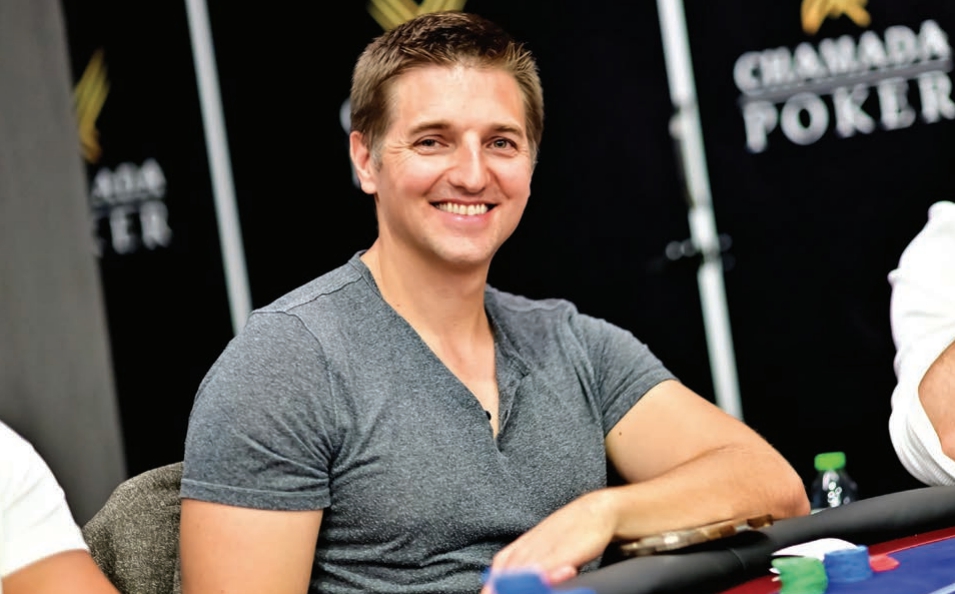
Tony Dunst: Yeah, I think a lot of really amazing poker players, especially from that generation, were chess players, and you just saw their mind graduating to poker strategy. I didn’t have that kind of talent or intelligence. I was more into social games and sports.
Even in high school, I was a very small-time bookie, offering people $5 and $10 bets and a sheet with the lines. This was the early 2000s before [sports betting] culture was everywhere. I got called into the principal once and they were like, ‘We hear you’re running a book in class.’
I was like, ‘Whoa, I don’t know anything about that. Me and my friends make a few bets. I’m not handing a sheet out with all the lines on it,’ as I crumple it in my pocket.
I always just loved gambling culture. I was playing online poker before Moneymaker won the WSOP main event. I was watching televised poker as early as 2002 when Robert Varkonyi won. The famous Varkonyi effect. (laughing)
Justin Young: That’s what got me into thinking I could become a professional poker player. I liked poker before that. I played home games and a little bit online. I’m watching the final table and I’m like, ‘I feel like everyone kind of sucks here. Maybe I can do this for a living.’
Tony Dunst: The money grew on trees for a little while. You did not have to be very good. If you were willing to make any effort to read some poker strategy, develop just a little bit of a framework, you could make money. That’s what I was doing in my late teens and early 20s with the poker boom.
Justin Young: Did your parents know that you had an online poker account playing for real money? How did you get money online?
Tony Dunst: I had a friend who was a bit older than me and he made an account for me. When I was 18, I started playing on my own account.
When my parents found out, they were concerned. My mom was very upset. She had an uncle who had a gambling problem. I think it’s very fair in my parents’ generation to have this strictly negative perception of gambling because back then there really wasn’t such a thing as a professional poker player or gambler. I understand why they reacted that way.
I tried to say things like, ‘No, I’m making money, EV, et cetera,’ and it fell on deaf ears. But once I went to college and could just play on my own computer in my dorm room, and was playing in home games all across the university, there was no stopping me.
The game was exploding in popularity at that time. Even as early as high school, though, I thought this is what I want to do. I saw stuff like the World Poker Tour and the World Series of Poker, and I thought that lifestyle – traveling around, playing a game, seeing the world, rubbing elbows with these weird characters – that all sounded so interesting to me and I wanted to be a part of it.
Art Parmann: So growing up in Madison, how did you end up in Australia?
Tony Dunst: When I was a sophomore in college at Milwaukee, I won a package to the Aussie Millions playing online. My entire bankroll was about $2,800 and I won this $13,000 package to go to this far away land. When you’re 20 years old, it was the most exciting thing. I had a really awesome 12-day trip, just being out in the world by myself as an adult for the first time… and I had a good score.
Basically, the package came with two tournament entries and in one of them I made the final table bubble. It was this weird format where with 36 players left, they broke into six tables of six and you played a sit-n- go to make the final table. I got heads up with Mikael Thuritz, a great Swedish player. He offered a 15% swap when we were heads up, even though he had me out chipped and was the way better player.
He knocked me out in the second hand and went on to win the tournament. So, I cashed for about $15K. When you have that trip and your entire bankroll is like $2,800 and it’s this world-changing, transformative experience, then you win all this money. I was just sold on it so completely.
I used that money to study abroad in Australia. I [eventually] came back here, but that is a really special place. I was actually there [recently]. I’m still adjusting from a trip that WPT sent me on to Star Sydney. We had WPT Australia down there and I also revisited Melbourne to see old friends and hang out a little bit. It’s still an amazing place and country.
When I first went to Melbourne and then I came back and I did study abroad, I was like, ‘Wow, this must be the greatest country, the most livable place in the world. This must be it.’ But I was 20 years old. I had never been outside the U.S., except a Caribbean island. What the hell did I know?
Now I’m 41 and I’ve been to 50 countries. I’ve traveled as extensively as I possibly can during these years. And, yeah, that’s, that’s the best one. I haven’t been everywhere yet, but I’m pretty certain Australia is about as good as it gets for livability.
Art Parmann: And yet you got banned?
Tony Dunst: Yes, I accidentally overstayed a visa. It was an honest mistake in that I was 21 years old and just an idiot. I was granted a six-month visa, but I was in 12 months of classes.
I’m sure that was made clear to me, but we are so dumb when we are 21. You just don’t pay attention to procedural things like that. I just kept going to school. I was supposed to just send a form somewhere and renew the visa. I ended up overstaying by five months, and the immigration department had to come looking for me. They were like, ‘The punishment is a three-year ban.’
Art Parmann: How tilted were you?
Tony Dunst: I was very tilted. We were going to go to the WSOP and visit home, maybe come back in a month. I was in a serious relationship and had a whole network there. I thought I was going to build my life there. Instead, everything was thrown into disorder on extremely short notice, and it was all my fault. I had screwed up our lives through my own stupidity.
Now when I come and go, it’s no problem. When you get banned from a country, it sounds much more dramatic than it is. Especially Australia, the land that was [at one time] a big prison.
Dunst studied theater in college, which came in handy when he snagged the gig working for the WPT.
Tony Dunst: It was summer of 2010 and I had hired somebody to be my agent, thinking maybe he would get me a poker sponsorship. He said, ‘Hey, the WPT is doing open auditions in L.A. for this segment. I think you’d be a really good fit.’ They wanted that younger generation’s voice and strategy to be reflected in the segment.’
I went to the WPT offices and they had me watch a video of a hand. They said, ‘Now write a segment and perform it for us.’ So I did that for the producer. My understanding is that it came down to a decision between myself and Ali Nejad, who is a tremendously talented guy and one of the best poker broadcasters [out there]. They decided to go in my direction, I think because of how experienced I was at tournament poker and how entrenched I was in the online poker world.
Justin Young: What was your mindset like at the initial audition? Was it, ‘I really want this, I think I can do this’? Or was it, ‘Ah, this is shot in the dark, might as well throw my hat in the ring?’
Tony Dunst: Both actually. I wanted to be a professional poker player. I never really wanted a job, so there was no loss in this if I failed the audition. But this was also such a well-crafted job, specifically for my skillset.
I had public speaking training from theater, and some public speaking competitions I did in high school. I dress up more than many poker players, and they needed somebody in a public-facing role who was comfortable in that kind of attire. Basically, somebody who could project a more corporate image.
The job was his and that role eventually expanded to include commentary duties.
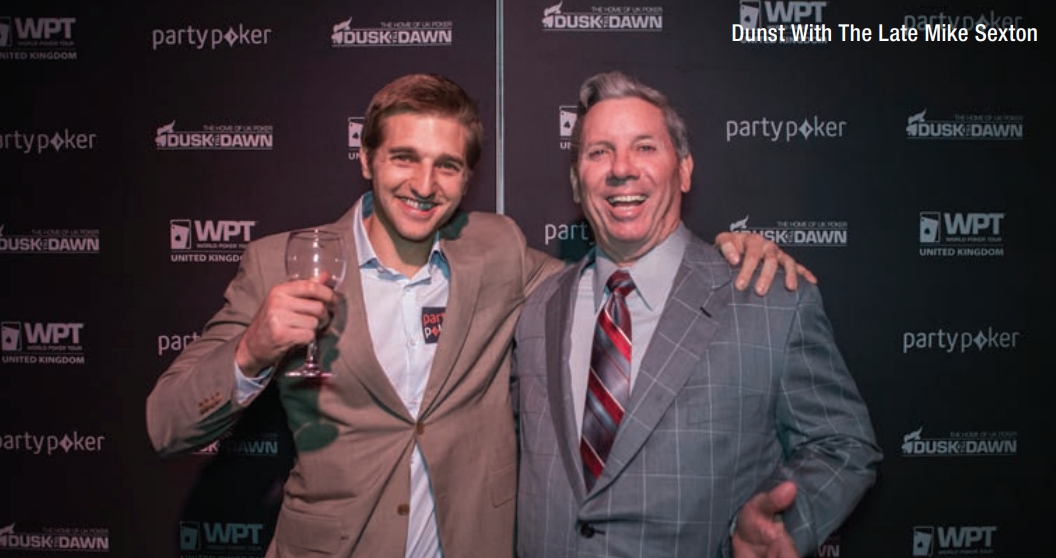
Tony Dunst: I’d been with WPT for seven years at that point. At that stage, PartyPoker owned WPT, which is why both Mike [Sexton] and I were sponsored by [the site]. PartyPoker then sold their stake in WPT and it was kind of understood that, ‘Alright, both you might need to choose a direction. Do you want to stay at PartyPoker or do you want to stay with WPT? Because they’re not going to be conjoined anymore.’
They made a very strong offer to Mike to become the chairman and he felt that opportunity was too good to pass up. He absolutely loved the WPT and really didn’t want to leave, but felt like this was what was best for him and his family. So that created the vacancy for me.
I’m sure they had to think about the fact that one day Mike will retire. I think by that point, they had settled on their decision, and it was pretty quick that the higher-ups contacted me and offered me the position.
About The Table 1 Podcast
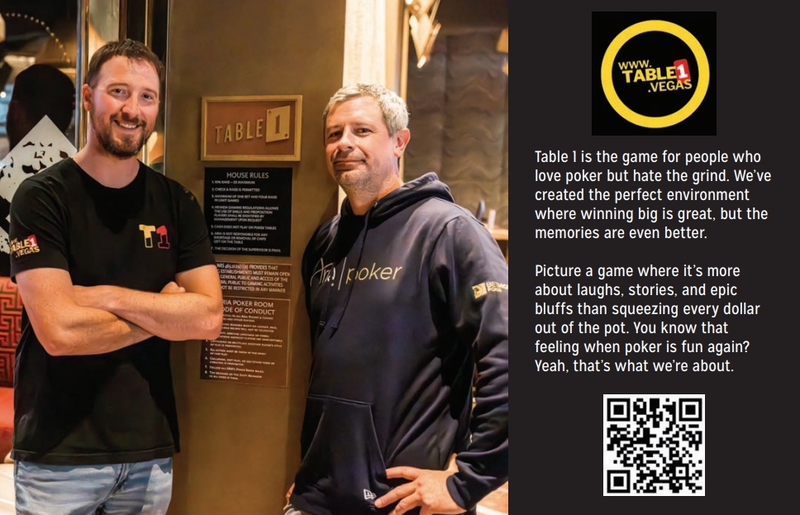
Hosted by high-stakes poker pros Art Parmann and Justin Young, the Table 1 Podcast is on a mission to make poker fun again. Tune in to see world-class pros talk poker, gambling, and all manner of life experiences on and off the felt. Visit the website for the podcast, newsletter, or even to get in the game. ♠
- Photos – Card Player and WPT