





 If you want to increase your poker skills and learn to crush games, check out Jonathan Little’s elite training site at PokerCoaching.com.
Early in a $3,500 buy-in main event, I raised to 700 out of my 60,000 stack from the button with 8♣7♦, the small blind, a tight, passive guy with 40,000, called. The big blind, a splashy 50-year-old with 75,000, called as well.
From the button, I am more than happy to raise with an overly wide range, especially if the players yet to act are not three-betting too often. 8-7 offsuit is loose, but acceptable.
The flop came 6♦5♦4♥. That is good for me! My opponents checked, and I bet 1,300. The small blind called, and the big blind raised to 4,000.
My continuation bet is completely normal, given I have one of my best made hands. I would also bet with many of my draws, although I would not bet too often with my unpaired overcards because this board should connect quite well with my opponents’ ranges.
Facing the big blind’s check-raise, there is no point in slow playing because it is quite easy for one of my opponents to have a decently strong hand on this flop, given they did not three-bet before the flop.
I reraised to 12,300, and the small blind folded. But the big blind quickly called.
At this point, I can reasonably put the big blind on a strong made hand like a set or a high-equity draw, such as a strong flush draw or a pair with a straight draw.
The turn was the J♣. The big blind checked, and I bet 16,000 into the 28,000 pot. He quickly called.
This blank turn is as beautiful as the flop. I made another bet for value, expecting my opponent to continue with his entire flop range. It is important that you do not bet too large in this situation, because the worst thing you can do is bet so large that your opponent hero folds various two pair hands and marginal draws.
The river was the 3♣. The big blind led for 20,000. I of course went all-in for 17,000 more and was immediately called by 7♦6♦, a worse straight.
When he leads into me, I assumed he must be bluffing because leading with anything else is almost certainly terrible.
This may seem like a standard set-up situation, but I think my opponent lost more chips than he should have. If I found myself in my opponent’s shoes on the river, I would have check-called to induce bluffs from busted draws.
As played, he forced me to play perfectly. If I had a seven, I would call, and if I had a worse hand, I would fold. It is as simple as that.
My opponent took the exact worst possible line on the river. That’s lucky for me! Never forget, you have to get lucky to win a tournament. This is a form of luck that many people fail to consider.
Level Up Your Game
If you want more resources to help you improve your game, I put together a course called Five-Day Preflop Challenge. This course is completely free inside Card Player Poker School!
When you join the Card Player Poker School (it’s free to join), you’ll also get:
- Free Downloadable Preflop Charts
- GTO Preflop Charts
- Video Classes
- Interactive Hand Quizzes
- Free Course: Master The Fundamentals
- Free Course: The 25 Biggest Leaks And How To Fix Them
- Free Training Every Week
 Jonathan Little is a WSOP bracelet winner, two-time WPT winner, and the 2024 PokerGO Cup champion with $9 million million in live tournament earnings. He is a best-selling author of 15 educational poker books, and the 2019 GPI Poker Personality of the Year. If you want to increase your poker skills and learn to crush the games, check out his training site at PokerCoaching.com/cardplayer.
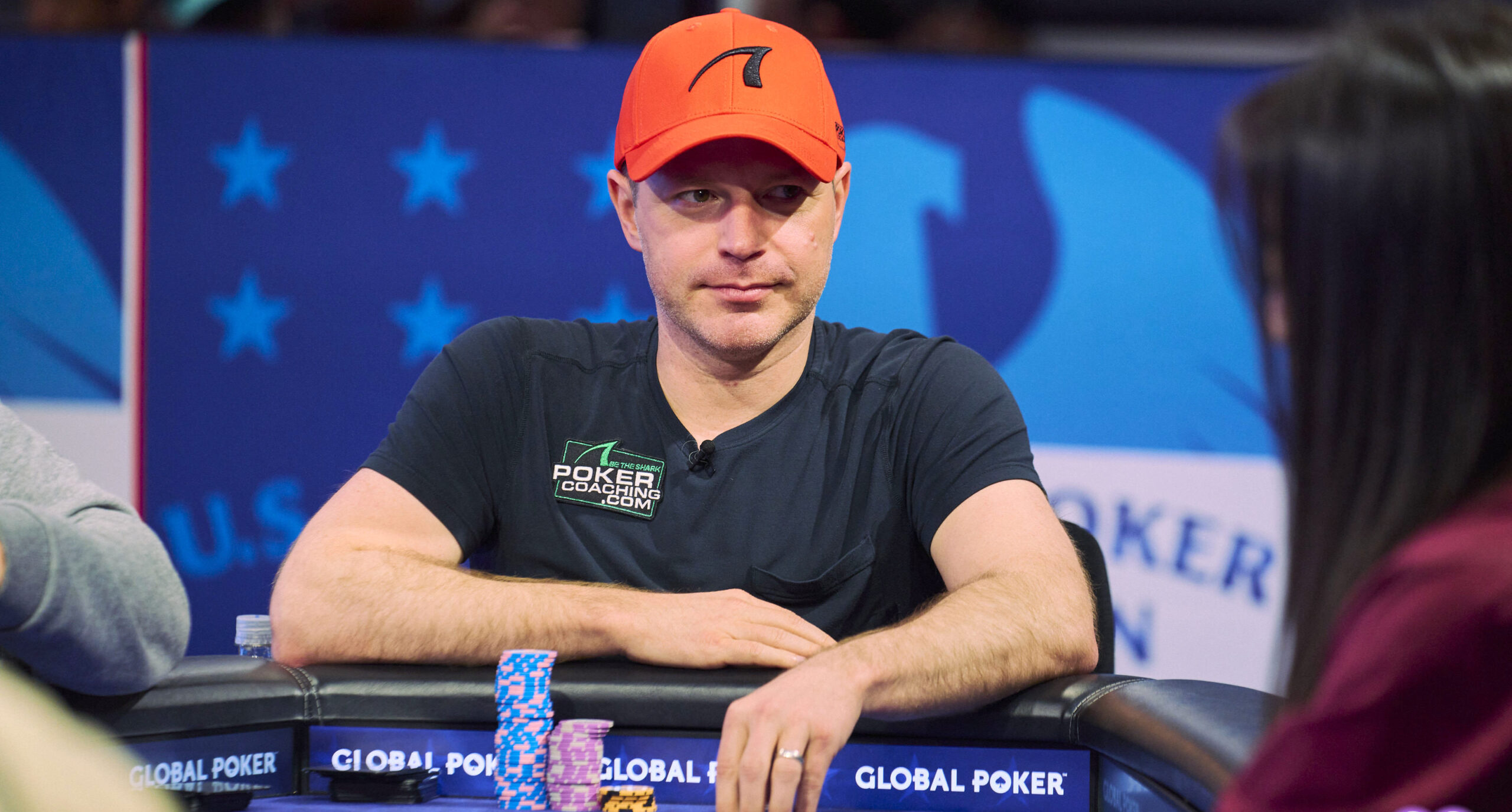
Photo by PokerGO