


As a game, a lifestyle, and a culture, poker contains all of the elements of a good story. The scene is already set; a table of characters from entirely different backgrounds, all competing for a whole load of cash and glory, their fates sealed by the turn of a card. Epic poker stories write themselves.
Here, we take you through a selection of the greatest poker success stories ever told, from Moneymaker’s WSOP satellite victory and the boom that followed, to Phil Ivey’s journey from roaming the streets of Atlantic City to establishing himself as poker’s GOAT.
Sit back, crack open a bag of snacks, and enjoy, as we explore some of the finest moments in poker history and the players who made them happen.
Poker Success Stories: Key Points
- Epic poker stories come in many shapes and sizes, from the grinders who consistently overcame the odds to the everyday underdogs who beat the pros.
- The heroes in online poker success stories are often streamers who bring poker to a wider audience.
- Players from poker success stories share common traits, such as consistency, risk-taking, and emotional resilience.
In This Guide
- Poker Success Stories: Key Points
- What Are Poker Success Stories?
- Epic Poker Stories From The Golden Era: The Moneymaker Effect
- Online Poker Success Stories: From Micro Stakes to High Roller
- Live Poker Tournament Success Stories: WSOP and Major Title Winners
- Poker Success Stories: Cash Game Legends and High Stakes Heroes
- Against the Odds: Underdog Success Stories That Inspired Millions
- Modern Online Poker Success Stories: Streaming, Staking, and New Models
- From Success Story to Legend: What Happened Next?
- 5 Common Traits of Poker Success Stories
- Your Path to Becoming a Poker Success Story
- The Dark Side: When Success Stories Turn to Cautionary Tales
- FAQs
What Are Poker Success Stories?
Poker success stories come in many shapes and sizes. Traditionally, success in poker was defined by tournament results and high-profile victories. The greatest stories often involve underdogs who clawed their way to the top, demonstrating amazing intuition and resilience along the way.
Modern online poker success stories can unfold in slightly different ways. The heroes of today are often Twitch streamers and brand ambassadors who provide a connection between the world of high-stakes poker and the everyday life of a grinder.
Sometimes, poker success stories can even be tragic, shedding light on the true scale of the ups and downs that a life of unmitigated risk can bring. In all cases, though, poker success stories involve a hero, a character who has captured the imaginations of their peers and the wider poker community.
Let’s take a look at some sung and unsung heroes and the epic poker stories that brought them to fame.
Epic Poker Stories From The Golden Era: The Moneymaker Effect
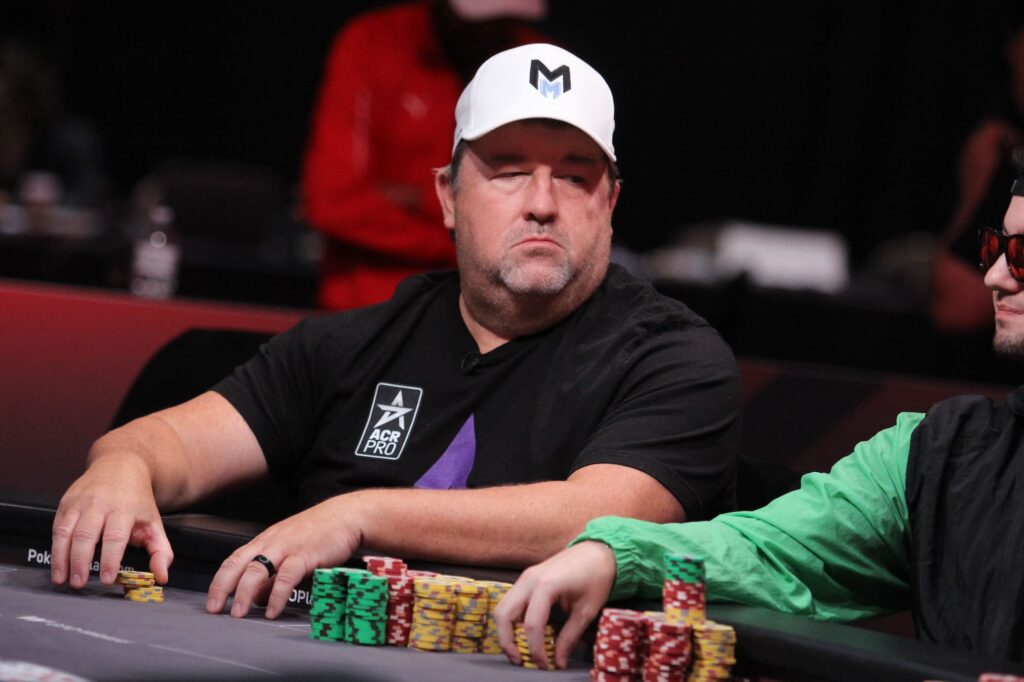
Credit: Erik Fast
In 2003, Chris Moneymaker, an accountant with no ambitions of becoming a professional poker player, entered a satellite tournament on PokerStars for $39. Unbeknownst to anyone at the time, that moment was about to change the course of poker history.
Moneymaker survived the satellite and gained entry to a larger qualifier, eventually winning a seat in the WSOP Main Event. He considered taking a cash prize alternative but, in the end, opted for the trip to Vegas.
Here was a complete amateur who had never entered a major live tournament in his life, now playing in the most prestigious poker event on the planet. Even a min-cash would have been an awesome outcome and an epic poker story. But he took it so much further. He made it through the bubble, into the money, and onto the final table. He then eliminated poker legend Dan Harrington to come heads-up against Sammy Farha.
The stage was set. Amateur online qualifier versus seasoned pro.
The amateur pulled off a huge bluff with king-high on the river against Farha earlier on during the final table, and that now-famous hand set the tone for the heads-up battle. He used an aggressive style to keep his opponent guessing.
Farha had his moments, but couldn’t claw back the chip lead.
In the final hand, Moneymaker flopped two pair and held against Farha’s top pair and a gutshot straight draw, turning a $39 online satellite into a $2.5 million payday.
It was a moment that changed not only his life but also the poker world forever. This poker tournament success story happened to be perfectly timed. Online poker was already starting to gain momentum, and ESPN had recently introduced hole-card cameras that made the live game a viable spectator sport.
Following the monumental win, online poker boomed, and players flooded into live tournaments via satellites, all looking to replicate the dream the Canadian amateur had proven possible: that poker is anyone’s game to win.
This trend became known as the “Moneymaker Effect”.
Online Poker Success Stories: From Micro Stakes to High Roller
As the Moneymaker Effect took hold, online poker boomed, and new heroes rose to the top in a digital playground.
Niklas Astedt – Online Poker’s Greatest
Technically speaking, one of online poker’s greatest success stories is Niklas “Lena900” Astedt and his absolute dominance over the online poker sphere during the last decade. The problem is, there’s not much of a story to tell.
The Swedish pro’s rise to glory has been unusually lacking in drama.
Astedt is not a flashy guy and is not known for making media appearances, glorious speeches, or over-the-top entrances. He’s calm, collected, friendly, but a feared, stone-cold killer at the tables.
Although his results are now hidden, Astedt had nearly $50 million in online winnings to his name as of 2024 and was ranked the number one online tournament player in the world for 44 consecutive weeks between May 2018 and March 2019. As far as we know, nobody has topped his accomplishments online.
Known for his elite strategy, table presence, and unmatched consistency, Astedt has transitioned seamlessly onto the live scene and has now amassed over $8 million in live tournament winnings, including a WSOP final table result in 2024.
Fedor Holz – Solver Superstar
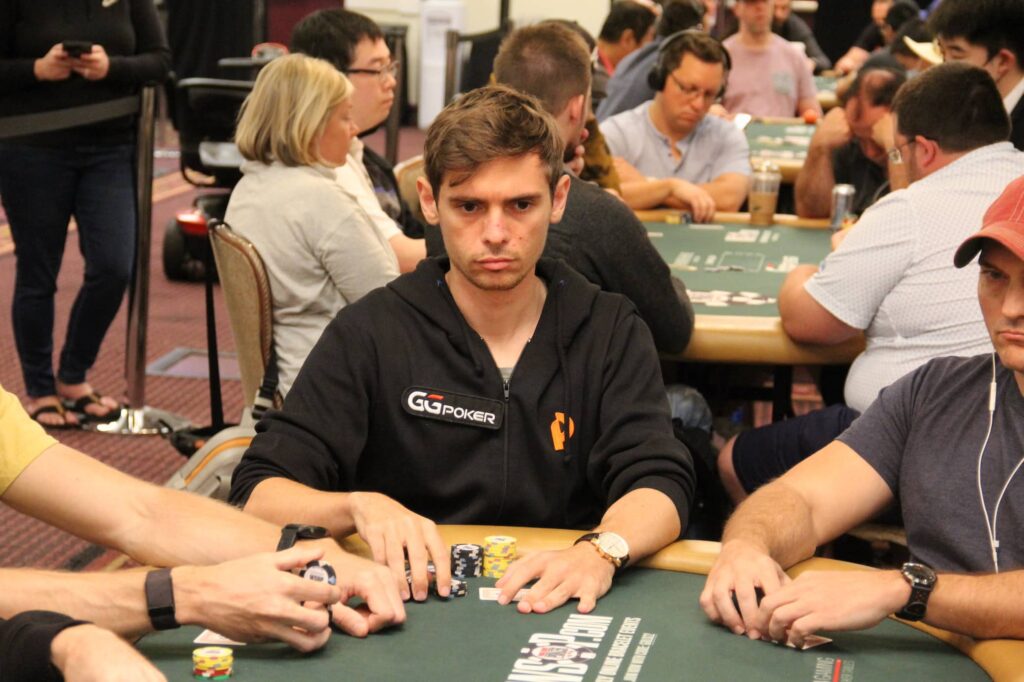
Credit: Erik Fast
A great deal more is known about German semi-retired pro Fedor Holz, who perhaps better encapsulates the archetypal online poker success stories that have long driven an entire community of players to strive for greater heights.
Holz began grinding online poker in his late teens and accumulated small wins using a high-volume, disciplined, solver-based approach. His big break came in 2014, when he won the PokerStars WCOOP Main Event for $1.3 million, one of the biggest online scores of the era.
Like many successful online players, Holz transitioned to the live poker scene and, by the time he was in his mid-20s, had banked more than $35 million in live tournament earnings, which has since increased to over $50 million.
Holz used his winnings to go into semi-retirement and focus on other ventures, but continues to contribute to the poker community and occasionally plays in major live events.
Live Poker Tournament Success Stories: WSOP and Major Title Winners
Live poker tournament success can be measured in a number of ways, such as total winnings, rankings, or scoring a huge result with an impressive ROI. Below is a selection of the best live poker success stories.
Ramon Colillas – From Free Pass to PSPC Main Event Champion
Although it is often overlooked in recounts of poker lore, Ramon Colillas’ poker success story is almost as impressive and profound as Moneymaker’s.
A fitness coach and semi-professional poker player, Collilas was a respected grinder known locally in Spain but was by no means competing at the top level.
That all changed when Colillas got his hands on a Platinum Pass by topping the Campeonato de España de Poker (CEP) leaderboard, accumulating points by playing his usual schedule of local games.
In doing so, he earned a $30,000 package to the PokerStars Players’ Championship.
As Colillas made it deeper and deeper through the 1,039-strong field, the poker world sensed another Moneymaker moment. Despite the high stakes and fierce pro-level competition, Colillas maintained his composure to eventually finish first, earning $5.1 million – one of the greatest poker success stories of all time in terms of ROI.
The Moneymaker moment never came. Colillas went on to have a successful poker career, but his victory didn’t quite have the same ripple effect. The poker boom had already happened.
Phil Hellmuth – 17 WSOP Bracelets
Phil Hellmuth, known as the “poker brat” for his brash personality and outlandish table talk, was a rebellious guy from a middle-class family who wanted him to follow an academic trajectory. Hellmuth wasn’t having any of it and spent more time playing cards than studying.
In 1988, after honing his craft for several years in low-stakes cash games, Hellmuth made his first appearance at the World Series, gaining modest success. The following year, he returned to win the Main Event and his first-ever bracelet. At 24, he was the youngest player to do so.
Hellmuth would soon become a living legend at the WSOP, eventually picking up 17 bracelets across multiple formats of poker. His lavish entrances and unapologetic outbursts have divided opinions, but it’s tough to deny that Hellmuth is still one of the best players in the world and a true poker tournament success story.
Jesse Lonis – Best Poker Player of 2025
People often ask whether a true live poker success story can still happen in the modern era of tough competition and higher rake.
Jesse Lonis is one of the players who proves that it’s still very possible.
Lonis has a total of over $26 million in live tournament winnings to his name. Incredibly, he won over $12.3 million in 2025. That includes close to 50 live tournament cashes and wins across the world, from the WSOP to the European Poker Tour, and beyond.
After recently appearing on the No Limits poker documentary on the WSOP YouTube channel, Lonis revealed more about his personal life as a family man. He’s on track to be crowned the number one player of 2025, surpassing the legends of the game and showing that it’s still possible to rise to the top.
Poker Success Stories: Cash Game Legends and High Stakes Heroes
Some of the greatest poker success stories ever told come from cash game legends and high stakes heroes who came from either humble beginnings or seemingly out of nowhere.
Viktor “Isildur1” Blom — Explosive Rise and Nosebleed Stakes
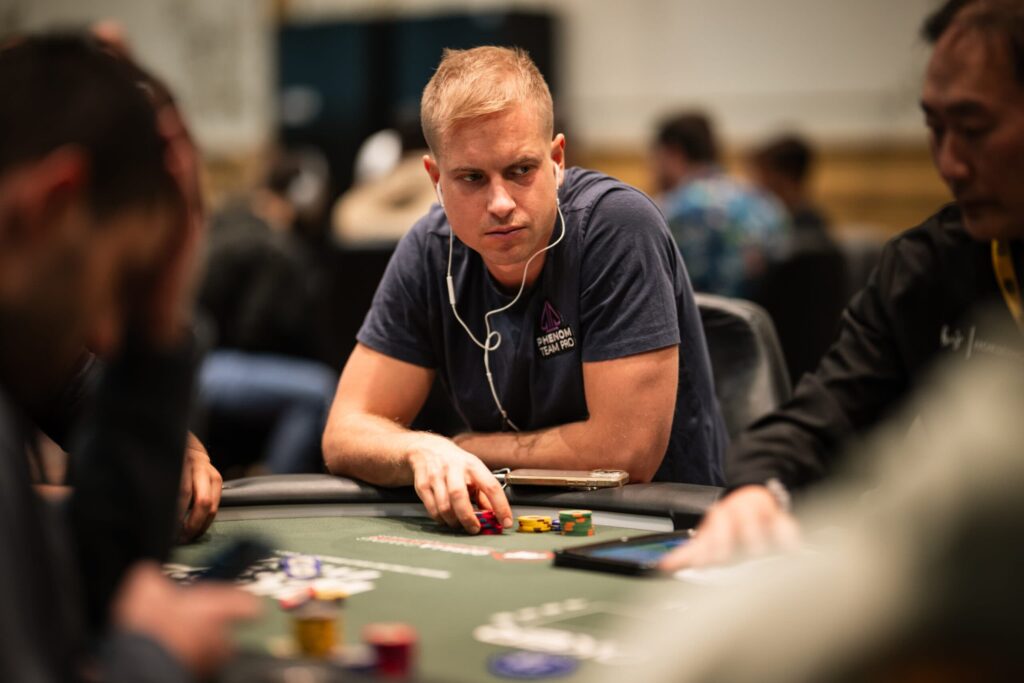
Credit: Drew Amato
Remember “Isildur1”, the mysterious online poker player who seemed to appear out of nowhere to take on the best cash game players in the world? For years, nobody in the poker community seemed to know who he was, until 2011, when he was revealed to be the Swedish player Viktor Blom.
In September 2009, Isildur appeared on Full Tilt Poker and immediately began playing extremely high-stakes cash games against pros like Tom Dwan, Phil Ivey, and Patrick Antonius.
By November of the same year, Isildur had accumulated a bankroll that peaked at nearly $6 million.
It wasn’t all ups for poker’s craziest online persona. Blom also experienced huge downswings, such as a $4.2 million losing session against Brian Hastings in a heads-up Pot Limit Omaha (PLO) match, and huge losses against other pros.
In the end, it’s unclear whether Blom was up or down overall, but he was down almost $5 million overall on Full Tilt according to HighStakes DB tracking and reportedly experienced vicious downswings on other sites.
What we do know is that Blom gave poker fans some of the most exciting nosebleed cash games the world has ever seen in an era of raw, unrestricted, relentless aggression and gambling.
Should we recommend replicating his approach in this poker success story? Definitely not. Are we glad it happened? Absolutely!
Phil Ivey – The Rise of a True Legend
Phil Ivey is known to many as the absolute GOAT of poker, a player with a deep understanding of the maths, a fearless table presence, and an unmatched ability to read other players’ hands.
Ivey’s poker success story started when he was young, and his grandfather taught him 5-Card Stud. By his teens, Ivey was a competent player who could take on local regulars.
There was only one problem; he wasn’t yet old enough to play in the casino.
Not deterred, Ivey got around this little problem by getting himself a fake ID under the name “Jerome Graham” and headed out to Atlantic City, where he would grind the tables of the Tropicana for up to 80 hours a week.
Not yet the millionaire he is today, Ivey would often lose his winnings and was reported to regularly sleep at the tables or in a casino chair, or roam the boardwalk all night because he couldn’t afford a room, which earned him the nickname “No Home Jerome.”
Ivey’s big break came in his 20s, and in 2000, he won his first WSOP bracelet, beating Amarillo Slim in what was a metaphorical passing of the torch. In 2002, Ivey became a superstar, winning three bracelets in one summer. He currently holds ten, along with many other illustrious titles, and has amassed over $54 million in live tournament winnings.
Now, 25 years after Ivey secured his big break, he is still regarded as one of the best players in the world.
Against the Odds: Underdog Success Stories That Inspired Millions
Chris Moneymaker’s incredible victory in the 2003 WSOP Main Event is undoubtedly the greatest underdog poker success story in the game’s history, and several other players went on to replicate his success:
- In 2004, the year after Moneymaker’s breakout moment, patent attorney Greg Raymer qualified via a $160 satellite and won the WSOP Main Event for $5 million.
- Jerry Yang, a recreational player and psychologist, qualified for the Main Event in 2007 via a $225 buy-in in a live satellite and won it for $8.25 million, pledging to donate a percentage of the winnings to charity.
- Darvin Moon, a logger from Maryland, won a live satellite for $225 and finished runner-up in the Main Event for $5.18 million, then quietly returned to his logging business. A true working man’s poker success story.
Jack Strauss – Chip and a Chair
For the most epic underdog poker story, however, look no further than Jack Strauss’ run in the 1982 WSOP Main Event. An experienced high-stakes player, Strauss was far from an underdog when it came to his skill level. However, after losing a pot for what he thought was his entire stack, Strauss was on the verge of being eliminated.
Strauss had already stood up to leave, but the dealer found a single $500 chip under a napkin.
It was ruled that Strauss was allowed to play on with the chip, so he sat back down and attempted to spin it up. From there, Strauss doubled up again, and again, and again, until he was back up to a playable stack. Granted, some run-good was required, but Strauss also demonstrated immense discipline and selective aggression, eventually reaching the final table, which he won for $520,000.
The method of Strauss’ victory became one of the most famous poker tournament stories ever told. During the postflop interview, Strauss said, “all you need is a chip and a chair”, a poker phrase that still inspires millions of tournament players to adopt a resilient approach to this day.
Modern Online Poker Success Stories: Streaming, Staking, and New Models
Before the modern era, poker success stories online were nearly always measured on results, such as total winnings or number of major titles. Now, poker success can also mean being entertaining, attracting an audience, and becoming an ambassador for the game.
One of the first players to achieve this hybrid definition of success was Jamie “Stapes” Staples, who built a community around his Twitch streams and YouTube videos. Stapes is often regarded as an early pioneer of this path, demonstrating to the world that poker streaming can be a profession, not just a hobby.
Following Stapes came the legendary Lex Veldhuis, who built an impressive audience, regularly pulling in thousands of concurrent viewers and becoming PokerStars’ flagship streamer. The torch has now been passed to Benjamin “Spraggy” Spragg, who streams his mid-stakes sessions with a mixture of serious analysis and sarcastic humour.
Arguably, though, those who most encapsulate modern poker success stories are players like Ethan “Rampage” Yau and Alex “Wolfgang Poker” Seibt. Wolfgang, in particular, came to poker from an angle that was not driven by results but by content. He mastered YouTube Shorts early and went on to become the first poker player with over one million subscribers on the platform, appealing to a casual, mainstream audience, some of whom have never even played a hand of poker.
These online poker success stories demonstrate a business-minded and entrepreneurial approach to the game. Many of poker’s popular streamers also have brand deals, sponsorships, or ambassador roles. Some even sell merchandise and organise meet-ups, expanding their revenue streams well beyond what happens on the felt.
From Success Story to Legend: What Happened Next?
Many of the players featured in our selection of epic poker stories went on to secure sponsorships and ambassador contracts, positioning them for a bright future in poker. Others maintain their legendary status, making occasional appearances at high-stakes live events and demonstrating that they remain among the best.
Here’s what happened next to the players mentioned so far:
5 Common Traits of Poker Success Stories
Despite being from different backgrounds and taking entirely different paths, the characters of poker success stories tend to share at least a few of the following traits:
- Study and discipline: To become successful at poker, players like Fedor Holz and Niklas Astedt adopted a disciplined approach, learning every aspect of the game and utilizing study software, such as solvers, to consistently stay ahead.
- Risk: The epic poker stories mentioned here usually involve a certain amount of risk, whether that’s the direct financial risks of playing high-stakes cash games taken by Blom or Ivey, or taking the risk of getting a fake ID and sleeping rough in a new city. The players who experienced the best overall outcomes, however, also learnt to mitigate that risk.
- Multi-faceted approach: When it comes to modern and online poker success stories, players like Lex, Spraggy, and Wolfgang are experts at monetizing content, securing sponsorships, and diversifying their income streams.
- Psychological resilience: Poker is a tough game to crack. Variance, bad beats, and downswings crush most players. Those who are successful know how to maintain emotional control under pressure and have mindsets that foster long-term growth.
- Element of chance: Like the game itself, most poker success stories contain an element of chance. Moneymaker undoubtedly played the game of his life when he won the WSOP Main Event. He also experienced a lot of run good along the way. If one flop had fallen differently, the whole story might not have happened.
Your Path to Becoming a Poker Success Story
Given that most poker success stories share these common traits, we’ve put together three actionable points to charter your own path:
- Develop your skills: Start at the low stakes and develop your poker skills. Focus on learning the game, watching pros play, and using poker tools to develop a deeper understanding. Become a winning player and let your results speak for themselves.
- Build your brand: In the modern era of poker, building your brand is an important component of success. Although you can be successful without any outside help or diversification, you’ll have a much smoother ride if you can pick up a sponsorship that helps with buy-ins. Build an audience and aim to provide valuable content on social media platforms, such as YouTube or Twitch.
- Set goals and track progress: Everyone’s poker success story will be different. Get a sense of the direction you want to take and then set goals that lead you toward actionable results. For example, set goals around volume of tournaments, number of hours streamed, or growing your community to 1,000 followers.
The path to poker success is rarely linear, but the principles are consistent: develop genuine skill, build your brand authentically, and track your progress with intention. The next great poker player success story could be yours – but only if you’re willing to put in the work.
The Dark Side: When Success Stories Turn to Cautionary Tales
At the high-stakes level, poker is a game that involves a significant amount of money.
Additionally, the volatile nature of the game and the inevitable fluctuations in finances can attract a certain kind of person: complex, nuanced individuals with a high tolerance for risk.
There is no poker success story turned cautionary tale more tragic than that of Stu Ungar, who was considered a genius and one of the greatest natural card players who has ever lived.
Ungar was exposed to gambling culture from a young age. By his mid-teens, he had become a Gin Rummy prodigy, routinely beating top professionals around New York City until they flat-out refused to play him. In 1977, when the Rummy scene had dried up for him, Ungar moved to Vegas. Ungar was so good at card counting that he was banned from playing blackjack in many casinos.
His intense memory and analytical ability were easily transferred to poker.
In 1980, he entered the WSOP Main Event at the age of 26 and defeated the legendary Doyle Brunson heads-up, becoming the youngest champion at that time. Ungar even came back for more, winning the prestigious event again in 1981 and cementing his name in poker lore as one of only two players to ever win back-to-back Main Events.
So far, so good, but behind the scenes, the cracks were starting to show. In the years that followed, Ungar’s career and personal life were badly impacted by a long-term struggle with cocaine addiction, which culminated in a period of homelessness in the 1990s.
The poker world was crying out for a redemption arc in Ungar’s story. In 1997, broke, and backed by longtime friend Billy Baxter, Ungar put on one of the best performances of his career to claim his third WSOP Main Event title.
Despite again making WSOP history and landing back on his feet, Ungar’s addiction quickly resurfaced, and a few months later, his winnings were gone. After missing the 1998 WSOP due to mental health issues, Ungar was found dead in a motel room in Vegas due to a drug-induced heart condition. He died with less than $800 to his name.