


In late 2018, Doug Polk quit poker. He reiterated that stance in March 2020, stating unequivocally that he didn’t enjoy the game anymore, and he was done with the industry for good.
But it didn’t stick.
The three-time World Series of Poker bracelet winner built his reputation by becoming one of the best heads-up online no-limit hold’em players. The unique skill set is what pulled him back into the poker world.
His high-profile heads-up challenge against Daniel Negreanu in 2020 and 2021, across 25,000 hands, earned the California native roughly $2 million across the match and significant side action. The win, and the competition, also seemingly reinvigorated Polk’s love for the game.
Polk’s YouTube channel will hit 10 years this year. With nearly 500,000 subscribers, he is one of poker’s most recognizable faces. In fact, despite having only one live tournament cash in the last two years, Polk has remained deeply involved in nearly every other facet of the game. That visibility has made him a leading voice in the poker community.
The 37-year-old also co-owns one of the most successful poker clubs in Texas, The Lodge Card Club, with locations near Austin and San Antonio. The cardroom regularly streams tournaments and cash games, with Polk appearing in the biggest lineups.
Upswing Poker, the training site Polk co-founded in 2015, was sold to ClubWPT Gold last summer. The online site then shifted its business model, using Upswing as part of a change in its sweepstakes-based business model. Notwithstanding his criticisms of the site, the deal allowed Polk to become ClubWPT Gold’s most marketable sponsored pro, with #CodeDoug becoming his calling card.
Over the last year, the spotlight has only become brighter for Polk. Another heads-up challenge, this time taking $1.2 million from controversial casino owner Ossi ‘Monarch’ Ketola, represented the biggest single-day result of Polk’s career.
If that wasn’t enough, Polk has also stepped up to be a voice for change in the aftermath of potentially disastrous gambling tax changes implemented as part of Donald Trump’s ‘Big Beautiful Bill.’
Not only is Polk not out of the poker industry, he stands as one of its biggest modern-day stars. He even has crossover appeal, with two appearances on the popular stand up comedy show Kill Tony.
And though he challenges the implication, there seem to be at least a few parallels to the jack-of-all-trades career trajectory of Negreanu, his longtime adversary and the target of many of Polk’s verbal barbs over the years.
Card Player caught up with Polk to talk about his place in the poker world and to get a glimpse into his hectic schedule.
A $1.2 Million Day
Tim Fiorvanti: At the end of last year you went on a long poker trip. Can you give me an overview of how much you managed to squeeze in while you were out on the West Coast?
Doug Polk: I went and I played High Stakes Poker. I played on The Big Game, which will air in 2026. While I was still in Vegas, I played Ossi Ketola in a super high-stakes heads-up battle where I ended up winning $1.2 million. I did a promo shoot for ClubWPT Gold. Then I flew to L.A. to play the Hustler Casino Live games for really high stakes.
It’s weird. I flash back five years ago, when I moved to Texas to ‘retire,’ and now, here we are. I’m just playing poker all day, every day. Non-stop playing, non-stop content, non-stop work. But I’m loving it.
Facing A Controversial Opponent
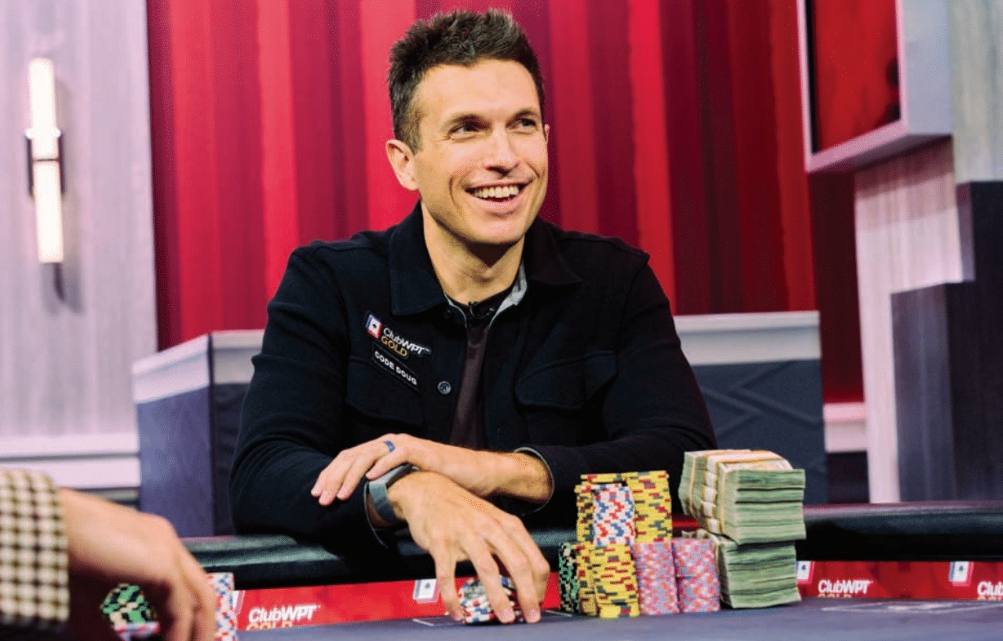
Tim Fiorvanti: Ketola made a lot of noise in the poker world, and not all of it was good, to say the least. How did that heads-up match come together, and what motivated you to jump into all of that?
Doug Polk: When the matches first started going down, of course, I was interested. Obviously, I love playing heads-up no-limit hold’em. It’s my game.
He played a lot of different people, but they typically played overseas in Asia and Europe, locations I’m rarely at, particularly not with a young family. So, when he reached out to me, he said, ‘Hey, I’d love to play an online match.’ For me personally, I had to figure out a way to make that happen on ClubWPT Gold.
We set up the game, playing $2,000-$4,000 with a $400,000 buy-in, same format as his previous matches. I knew going in that this guy was going to Martingale, just continuing to double the stakes. I just mentally prepared myself for the highest stakes game I’ve ever played, $800,000, winner take all.
It was surreal to get to play stakes that high. Even for me, it’s weird when the stakes get that big. You’re looking at the numbers and you’re just like, ‘Yeah, I’ll raise preflop here to $20,000. That’s totally fine. That’s just a normal open.’
Poker Needs Heroes And Villains
Tim Fiorvanti: Did you have any concerns about playing Ketola and giving him more time in the spotlight, considering his comments and online behavior?
Doug Polk: Obviously, he’s a controversial guy. I certainly don’t agree with some of the things he said online. But at the same time, I think poker needs heroes and villains, and I think that being able to watch people battle it out from both sides of that gives poker life. It gives it character.
And guess what? At the poker table, you don’t have to agree with people’s views to play poker with them. How often are you at a table and there’s someone there that’s clearly got different views than you. You can’t just say, ‘I want a table change because that guy’s wearing a mask,’ or, ‘I want a table change because that guy’s wearing a red hat. You sit there and play with whoever is in front of you.
Ultimately, it was a crazy, high-stakes match. I think the viewers enjoyed it. There were some lulls along the way, but at the end of the day, winning $1.2 million is a pretty good day at the office, I would have to say.
The Challenge Of Creating Must-Watch Poker
Tim Fiorvanti: You mentioned heroes and villains. Do you feel like poker is lacking in spectacle these days?
Doug Polk: It’s a good question. I think we have so many events now in poker. In fact, from a poker content perspective specifically, we’ve never had more options for what we can watch. But at the same time, because of that volume of content that’s being pumped out, it makes each one feel a little bit less special.
A good example is the Million Dollar Game over at HCL. I watched a little bit, and I thought it was interesting. Obviously, these were very high stakes, but if you just look at the raw viewership, the first time was a huge show. The second time, it was a big show. Third time, pretty big show. Fourth time was still a big show, but compared to what it was before, it does feel like it didn’t have the same kind of boom as earlier episodes.
If you want to make poker interesting and special, you have to find personality mixes that make it entertaining to watch. Of course, you have to have the stakes, too, and where those things converge is where truly entertaining poker happens.
Honestly, I hate when people say [they’d prefer it] to be a relatable amount of money. If you’ve ever posted $1-$3 clips online, or seen them, you know they don’t do well.
I think we have a lot of people that are doing things the right way. I’m always going to advocate for what we’re doing at The Lodge, obviously. PokerGO does a lot right, and HCL does a good job, too. Triton has some great streams. We have plenty of great shows for putting these kinds of things together. But there has to be a concerted emphasis on making a compelling product that people want to watch.
Selling Upswing Poker
Tim Fiorvanti: You have a lot of irons in the fire right now, most notably with your online poker sponsorship. That all started with the sale of Upswing Poker. Beyond the significant financial upside, was there an emotional weight to selling this company you had built from the ground up?
Doug Polk: Let me give you a little backstory about Upswing Poker. It started in 2015, with myself, Ryan Fee and Matt Colletta, when me and two of my very good friends were like, ‘hey, let’s do a training site.’ Matt knows digital marketing, Fee knows poker, and I’m a good marketing/content guy. We hadn’t done it yet, but I figured we could.
We each wrote a $5,000 check, we put it in, and then disaster struck. Month two, we realized we would need to put in another $5,000. That was the last unprofitable month at Upswing Poker. The business made money every single month for more than nine years. It was a great company, and I felt like we took it as far as we could.
Upswing does a great job of teaching people in a different way. Nowadays, most of the big sites, frankly, copied what we did, which they should have. Look, it was my baby. I promoted it all the time. Lord knows I love that company. I still love the brand. It is weird when I see it now, and that’s not my company anymore. But it made sense for ClubWPT Gold, and it made sense for us.
Family Life
Tim Fiorvanti: For all of the responsibilities, all of the poker, I imagine having a growing family at home has been a motivator in some of these big decisions.
Doug Polk: Being a father is great, because it’s so different from playing poker. One of the things with poker that is probably the biggest drawback is that you get in the mindset of ‘How do I get maximum EV?’
When you have a family, you learn about the people around you, doing things for them and loving them in a truly selfless way. When your kids laugh, it’s the single best thing in the world. My kids are little, so I’m still just starting this journey, but it’s already been incredibly rewarding and fulfilling. I’m proud to be their dad.
The State Of Texas Poker
Tim Fiorvanti: In spending a lot of time at home in Austin, you’ve put a lot into your cardrooms. From the outside, things seem pretty healthy in terms of the poker scene in Texas. What’s your perspective on Texas poker, and how does it compare to where things were a year ago?
Doug Polk: We’ve gotten some updates, where we had a case that worked its way up to the Supreme Court, about whether or not poker should be allowed in Dallas. Specifically, the technicals of the case centered around whether or not the city should have granted this occupancy, only to then take it away. The Supreme Court decided to not hear this case at that level, which could have potentially changed the entire industry.
I don’t want to bore people with all of the details, but the headline for me is that poker in Texas has never been better. We have more clubs than ever. We have more games than ever. I think we’re looking at the safest the industry has ever been in Texas, and it continues to grow and mature.
In my mind, we’re in the early infancy stages and we’re going to see what we saw in places like Florida and California. After so much growth, eventually we will head towards a full licensing type agreement.
Fighting Gambling Tax Changes
Tim Fiorvanti: Speaking of legal concerns in the world of poker, you stepped forward as a voice for the players in response to the gambling tax changes enacted by the ‘Big Beautiful Bill.’ You made mainstream TV appearances, and had Nevada Senator Cortez Masto on your YouTube channel to discuss the issue. What motivated you to become so vocal?
Doug Polk: What the bill did to gambling was fundamentally wrong. The government is taking money that we did not make, just because we cannot defend ourselves. And I guess, as somebody with a voice in this community, there are not many things we just stand together on. We can disagree on lots of subjects, but when it comes to taking money from us that should not be taken, I feel like I have a moral obligation to step forward and do something about it.
The bottom line is, there’s only two parties. They both suck, and they both can go against you at any point. When they do something wrong, and you have a voice in this industry, you should stand up and say something to try and help.
Will we get it overturned? I don’t know. I’ve talked to a bunch of politicians. I’ve done videos and podcasts on it, and I’ve talked at length about it online. I will continue to fight for our community.
It’s been a lot of months, and we haven’t gotten it fixed. My hopes are not high, but I know there are some people fighting for us that hopefully can get this done. Hopefully we can keep this fight moving over the next year, and one day we can fix this.
“I’m Just Trying To Be The Doug Polk”
Tim Fiorvanti: You’re promoting a major poker platform, and you’re one of the most consistently visible poker players in the world. You’re advocating for the present and future of poker. To draw a parallel you might not like, would it be fair to say you’ve got at least a few things in common with poker boom era Daniel Negreanu?
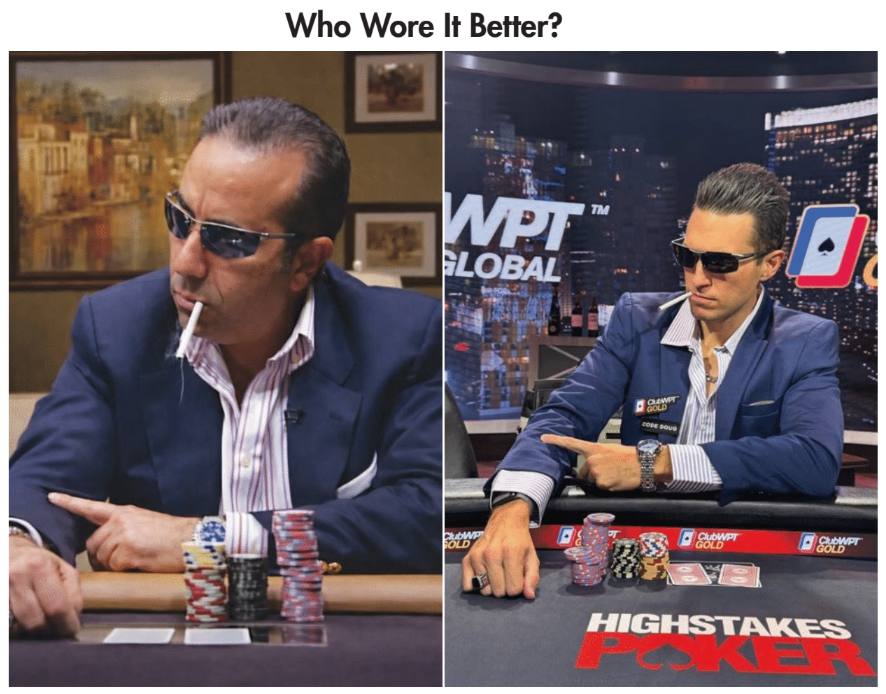
Doug Polk: I think that the poker boom will always have its own [place in history], because so much money was spent promoting those people. All the big names, like Negreanu, Phil Hellmuth, Phil Ivey, Doyle Brunson. (Or maybe Sam Farha?)
I had to do it the old-fashioned way, making YouTube videos. (laughs) And so far, we’ve done pretty good. We’ve done a couple hundred million views overall.
Obviously, I’ve been on all the modern poker shows. I did High Stakes Poker. I’ve gotten on the WSOP broadcasts, on the featured tables. I hosted a season of Poker Night in America. I’ve done everything you’d want to do, on all these shows. But when you’re doing that today, largely through social media content, you’re only going to get the reach of people that click on it, versus when these large entities had the full weight of PokerStars and Full Tilt behind them, paying millions of dollars to ensure that they got their product in front of everyone else.
It’s a different ecosystem now, a different environment now. I don’t know if I’m the next Daniel Negreanu. I’m just trying to be the Doug Polk.
Follow Polk on Twitter/X @DougPolkVids and check out his YouTube channel @DougPolkPoker.
- Photos by PokerGO, WPT, and Card Player