







Sam Greenwood: ‘You Can Learn A Lot From Your Punts’
He Started With Zero, Now He Plays $250K High Rollers
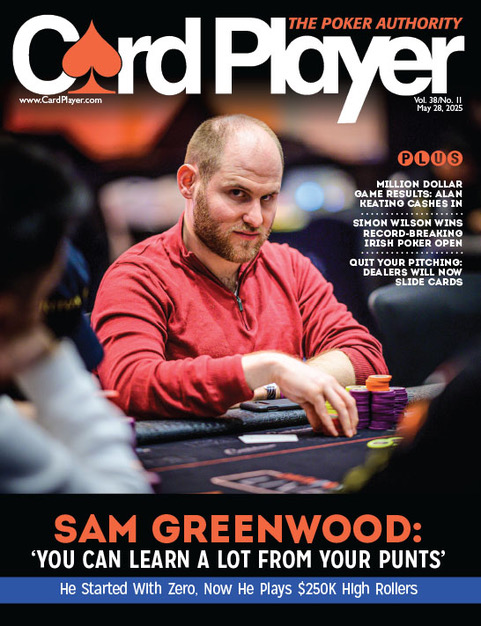 With $42.5 million in recorded tournament earnings and millions more won online, Sam Greenwood is one of the most successful poker players of all time. That includes major scores at high roller events all over the world, with a big run at the Triton Poker Super High Roller Series in Jeju, South Korea, to start the year for almost $2.5 million in cashes.
The poker pro originally from Toronto, Canada, saw his first major cash back in 2013, when he finished runner-up in a €5,500 European Poker Tour Prague pot-limit Omaha event for $101,220. That six-figure payday now ranks 90th on a poker résumé that includes 213 cashes overall, 13 seven-figure prizes, and 19 titles.
Although his average buy-in now exceeds most players’ entire bankrolls, Greenwood also owns a World Series of Poker bracelet from a 2015 $1,000 no-limit hold’em event for $318,977. The brother of fellow poker pros Luc and Max Greenwood has kept his play to the nosebleeds for the better part of the last decade, however, most notably taking down the $250,000 buy-in PokerStars Caribbean Adventure Super High Roller for a massive $3,276,760.
Greenwood was recently a guest on the Table 1 Podcast, explaining how he ran up an online bankroll with zero dollars and how he transitioned to dominating the high-stakes circuit. He also discussed his new Punt of the Day substack, featured in Card Player, where he hopes to bring stripped-down poker advice to more casual players in an easy-to-digest format.
Interview highlights are featured below. You can watch or listen to the entire episode below or on YouTube, Spotify, Apple, or any podcast app.
Greenwood spoke about briefly playing chess before moving on to poker, starting with $0 and building it his bankroll up.
Sam Greenwood: I was good at math growing up. Looking back on it, I just did not have either the head or the emotional constitution for chess. I think it was growing up playing video games, where you just get used to hitting reset. With chess it’s like, ‘You just fucked up – game over.’ So, we dabbled a little with chess, and it just did not interest me. I even remember I had a teacher who said I’d be good at it.
Justin Young: Sounds like kind of an insult.
Sam Greenwood: It was the chess coach. He thought I would be the guy. I just couldn’t do it. It just didn’t click for me for whatever reason. Max (his older brother) was in first year university at the start of the poker boom. The Moneymaker episodes had already aired, and he started playing with Peter Jetten.
(Jetten is a former high-stakes pro who played online under the name ‘Apathy’ and cashed for nearly $10 million in live tournaments.)
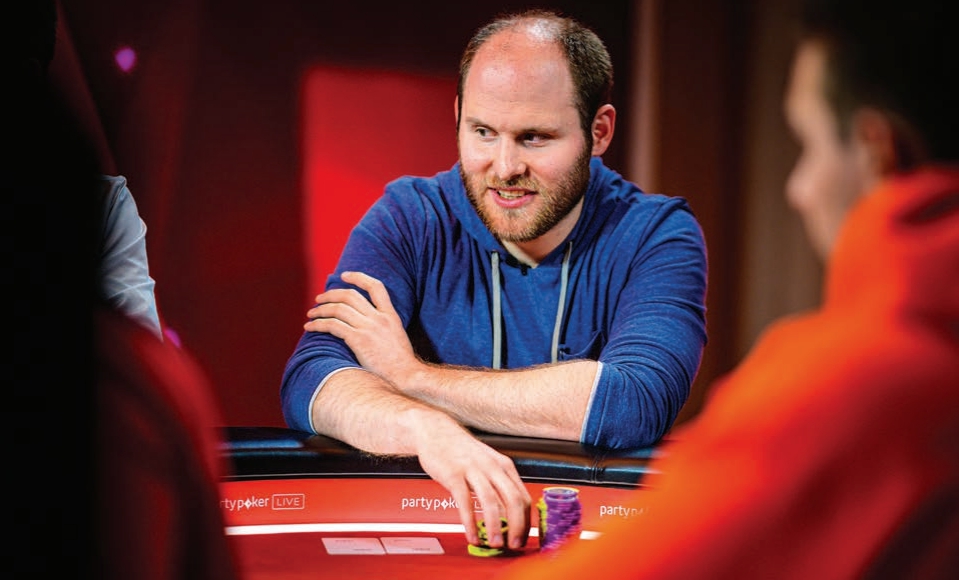 I don’t know if you remember him, but Peter went to high school with us. He got us into it. I remember Peter telling me stories about poker. I remember Max telling me Peter won the Super Monday on PartyPoker for $25,000. I was like, ‘He won $25K in a poker tournament on the internet in one day? That’s what you’re telling me?’
That was crazy. I couldn’t fathom having made that much money in one day. So, Max started playing, and then I started playing. I was in high school and was just playing freerolls. The freerolls would fill up and start at 7 p.m. There would be 1,000 people entering the tournament and you needed to be at your computer at 6 p.m. sharp to register or it would fill up. If you were there at 6:05, you were fucked.
The site I was playing on was called Bugsy’s Club, obviously long gone. You wouldn’t even win money in the freeroll. You would win points you could then play sit-n-go’s or whatever with. If you got enough points, you could convert them into money. I think 1,000 points was worth a dollar.
Then when you cashed the freeroll, you could play whenever you want. You didn’t need to wait for the freeroll, so that was nice. Then eventually in a $1 tournament, I cashed for like 50 bucks.
Justin Young: That’s huge.
Sam Greenwood: I came in fifth I think and was like, ‘Now I can play real money poker.’ Same thing, $1 sit-n-go’s building all the way up. Eventually it got to the point where Max said I should probably try playing on PartyPoker or PokerStars. ‘Try real poker now that you have actual money.’
Luc (his twin brother) and I were both underage at the time, so I created a PartyPoker account under my dad’s name, and Luc created a PokerStars account under my dad’s name. I could play on PartyPoker and he could play on PokerStars.
Justin Young: Your dad was multi-accounting and had no idea.
Sam Greenwood: Max at that point had made enough money playing poker that I was just like, ‘Hey, can I (borrow)?’ It was like the equivalent of asking for your parents’ credit card to buy something online.
Maybe they had some trepidation, but they weren’t funding the account. We were funding it with our own money. I started playing $5 sit-n-go’s, then $10 sit-n-go’s, and then all the way up to the point where by the time I started university I had $10,000 on PartyPoker and was playing $100 sit-n-go’s. That felt like I had accomplished something.
That was also the point in time where you needed 100 buy-ins. That was my bankroll requirement – 100 buy-ins. It didn’t matter what the game was.
I was fortunate enough that my parents paid for my school, rent, dorms, and meal plan. I could just treat it like a video game. I could just worry about moving up stakes and that sort of stuff. I didn’t need to deal with actually paying for things.
I went to McGill University in Montreal. There was sort of a clubbing scene, but when you’re 18, you’re just going to pubs anyway. What’s the worst you could do? Spend $300 at the bar out one night. My expenses were nothing, so it just didn’t really matter. I could just keep playing.
Art Parmann: So, you built it up from zero? You didn’t ever have to deposit?
Sam Greenwood: I remember somebody saying, ‘Nobody should ever work at McDonald’s because you could just make $15 an hour playing $11 sit-n-go’s.’ That was the time where you didn’t need to be good to make a decent amount of money at those stakes.
Justin Young: Ah, the good old days.

The conversation later shifted to Greenwood’s success in super high rollers and how he began playing on poker’s biggest stages.
Justin Young: Just after Black Friday, you started playing high-stakes tournaments. Did you just dive into those?
Sam Greenwood: I had a lot of friends like Mike Watson, Dan Smith, Ike Haxton, and Scott Seiver who were playing the super high rollers, and there’d be the dynamic where I would be looking at the tournaments and listening to them talk about who was playing.
They’d say, ‘Oh, this guy sucks.’ I would be like, ‘I think he sucks too.’ Then I thought, ‘Hey, I think I can play these things. I think I’m good enough to play in them.’ I also recognize that there is a sort of gravity like in private games, where if you just keep showing up and you keep playing in the game, people will think you belong. I thought if I could start playing the super high rollers, if I could put up some results, then people would think I belong. The first super high roller I played was the $100,000 at the PokerStars Caribbean Adventure in 2015 and I min-cashed it.
Art Parmann: See, ‘I belong.’
Justin Young: It’s a good start.
Sam Greenwood: Then right after that, there were super high rollers in Australia. The combination of all of those got to the point where I consistently could get in those tournaments. The thing people don’t really talk about much when it comes to high roller events is that they’re really fun to play despite the added stress, competitiveness, and all that. Nowadays, everyone knows each other and there’s a lot fucking around.
When you play them, you start getting a reputation. You start getting better at adjusting to specific player tendencies. The first time, it seems crazy. Then by the eighth time, it just feels like the most natural thing in the world. It’s just a normal poker tournament.
Greenwood also discussed his Punt of the Day substack, which keeps him pretty busy.
Art Parmann: You started your own newsletter that you’re putting out five days a week. That’s a commitment. What made you want to start doing that?
Sam Greenwood: Yeah, five days a week is a commitment. I have people who have already subscribed. I love Run It Once, and I’m still making videos for them and they’ve been good to me, but I felt a lot of poker strategy content that’s public operates in one of two modes that I’m not the biggest fan of.
One is like, ‘We’ll tell you all these secrets to be the best and destroy your competition’ type stuff, which always feels like you’re kind of overselling it a little. The other is very technical and in-depth.
I’ve done this in the past. ‘Hey, here’s one hand I played. I’m going to talk about this for 45 minutes.’ I’ll be like, ‘The board was 9-6-5, but if it was 9-6-7, we would have done this.’ But I wanted to instead harken back to [the old days of] Two Plus Two. Good analysis, in-depth, but also something you could read with coffee in the morning or before you go to bed. I wanted something quick and punchy like that.
The other thing is sort of tying into how we talked about high rollers in general. I want to demystify the super high roller culture and how the top guys are playing. I want to try to explain that when you’re playing a hand, there are all sorts of other factors people consider that might adjust their strategies. There are all sorts of stuff people get wrong, especially under time constraints, and so there’s that element too. I wanted something that demystifies what you’re thinking and what you’re going through in the hand.
The way I structure each post is I talk to the best of my abilities, what I was thinking about as I was actually playing the hand, and then try to explain what I got wrong.
I don’t give this big explanation of range strategy. If you’re somebody who casually plays poker, who never looks at software, then this is for you. Then for premium subscribers, I post, I share sims I’ve made, I give further analysis, that sort of stuff.
But the main meat of the blog is for somebody who plays poker once a month or plays in a home game. You can read my blog and go, ‘This makes sense. I learned something. I picked up a couple of tips. this is something I can use.’
About The Table 1 Podcast
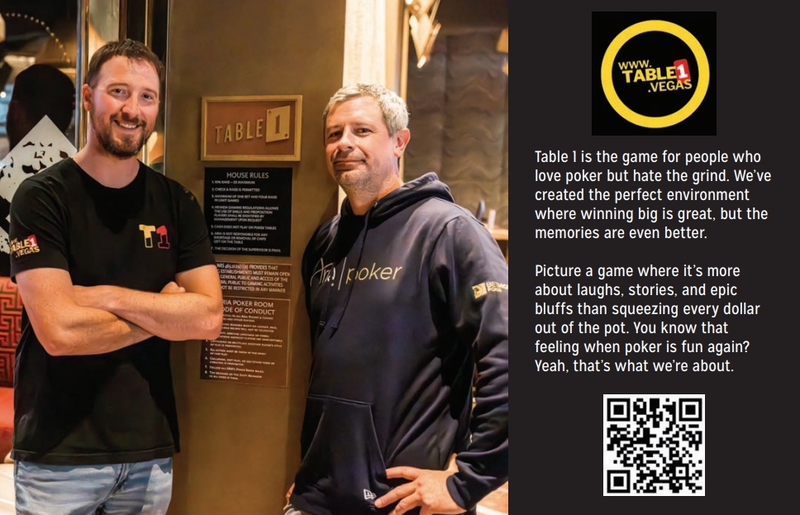
Hosted by high-stakes poker pros Art Parmann and Justin Young, the Table 1 Podcast is on a mission to make poker fun again. Tune in to see world-class pros talk poker, gambling, and all manner of life experiences on and off the felt. Visit the website for the podcast, newsletter, or even to get in the game. ♠
*Photos – PokerGO