







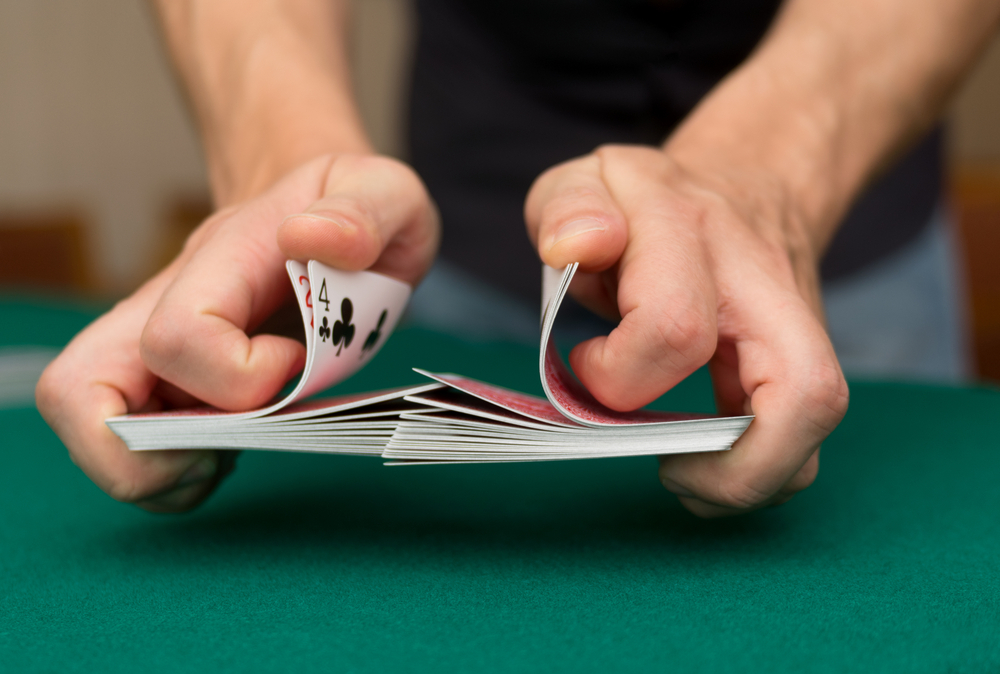
 The most well-known stud lowball variant is Razz, a straight-forward game where the object is to make the best ace-to-five low and neither straights nor flushes count against you. It’s a simple game to learn, but overall, not as simple as many would think as tremendous skill is required to play it at an elite level.
Thirty years ago, Razz was considered a dying game, but it got a second chance at life when H.O.R.S.E. (Hold’em; Omaha Eight or Better; Razz; Stud; Stud Eight or Better) rotations became popular in the late 1990s as high-stakes players looked to defend themselves against specialists. These days it seems to have an “it’s kind of lame but it’s cool” vibe about it.
Over the years attendance numbers in the $1,500 WSOP razz events have steadily grown, and now usually garner around the same number of entrants as a $1,500 limit hold’em event. However, it’s not a very popular game in either home games or the low- or medium-stakes mixed cash games where the most favored stud lowball variants are Razz-deucey and Razz-dacey.
Razz-deucey is a split-pot game where the object is to make the best deuce-to-seven low and the best badugi. Straights and flushes count against you, and aces are high making 2-3-4-5 the most powerful badugi.
Razz-dacey is a split-pot game where the object is to make the best ace-to-five low and the best badugi. However, aces are low in this variation, making A-2-3-4 the nuts in badugi.
Both games are usually played as ‘super’ meaning everyone gets four down cards and must discard two before fourth street. (Otherwise their hand is automatically dead.) They can also be played as Pineapple (three cards down and discard one) or just plain old two down.
In Razz-deucey, the A♠ is the automatic bring-in card while in Razz-dacey it is the K♠.
New players understandably get confused at the name Razz-deucey because Razz makes them think they want to make an ace-to-five low, and there’s also no mention of a badugi being involved. When attempting to clarify the rules, it often hits home when telling them it’s Badeucey spread stud style.
So perhaps it should be called Super Stud Badeucey? And then Razz-dacey could go back to being referred as Super Razz-dugi, the name it was often referred to back in the days before deuce-to-seven Razz became popular.
Recently I almost played an entire round of Razz-deucey while everyone else was playing Razz-dacey. It’s easy to miss it on the plaque, especially when most of the time the game of choice is Razz-deucey, but was fortunate to win the few pots I played before realizing my error.
When playing these games as ‘super’ it’s important to start out with three rainbow cards most of the time. In Razz-deucey you want to see a three to an eight or better, but nines hold value as well, especially if the worst card is hidden. For example, a hand such as (2♣9♦)3♥ is probably superior to (6♥7♠)8♣.
We don’t always need three unsuited cards to play, especially when there’s a chance to win the antes without a contest, or we are up against a single opponent who may be weak. Be careful of falling into the trap of playing with a high card up, like (2♣4♠)Q♦ in multi-way pots, just because you have two good cards underneath and three to a badugi. Anyone starting out with three low rainbow cards has an approximate 50/50 shot of making at least a jack badugi by the river.
Dead cards matter a lot in this game and most paramount is how many of your premium badugi cards look to be available. For example, if you hold (2♣4♠)5♦ you don’t want to see the 3♥, 6♥, 7♥ or the 8♥ on board or fall to your opponents during the hand. There are only four of them to track, so we should always know exactly how many are left as it will frequently determine your best course of action.
Also consider the fact that if someone who showed strength on third street has a 4♥ door card, they usually don’t have one of the hearts you need underneath. It’s possible to brick out a few times and call a fifth street bet against strong boards when your key cards are live that would give you a premium badugi and possible freeroll.
One big problem in all lowball stud variants is that a high card showing usually renders the holding unplayable. Action Razz attempts to remedy that flaw by implementing a qualifier where a hand must contain a jack, queen, or king, and any qualifying hand beats a non-qualifier.
In other words, a king-low would beat an ace-to-five wheel lacking a paint. If no one can produce a qualifying hand at showdown, then the traditional lowest Razz holding takes the pot.
The highest card starting with the 10♠ brings in the action as it is considered the worst card to have. While it can be played as ‘super,’ it’s advisable to play it with just two down cards, otherwise it’s too easy to get a face card. And most of the fun in the game is trying to guess whether your opponent already has one of the key cards or still needs to collect some paint by the river.
It’s worth clarifying that you only need the face card to qualify, it’s not required to be part of your final five-card low. For example, (A-3)J-4-5-7(9), would be a qualified made seven, not a jack low. A-2-4 or other premium starting hands are still playable as they will obtain a paint card by seventh street around 70% of the time.
Action Razz isn’t that widely known but the few times that we played it, it certainly lived up to its name and was a lot of fun. If your home game is populated with an adventurous and easy-going crew, it’s certainly worth a try.
More From This Series
Introduction
Old School Dramaha
Super Sized Stud Hi-Lo
Badugi Dramahas
Simultaneous Omaha And Hold’em
Point-Based Dramaha Variants
Archie And It’s Variants
Badeucey And Badacey
Passing Pips And Red/Black Split
 Kevin Haney is a former actuary but left the corporate job to focus on his passions for poker and fitness. The certified personal trainer owned a gym in New Jersey, but has since moved to Las Vegas. He started playing the game back in 2003, and particularly enjoys taking new players interested in mixed games under his wing and quickly making them proficient in all variants. Learn more or just say hello with an email to haneyk612@gmail.com.