








In a game where precision meets emotion, the mental side of poker often separates the elite from the merely talented. In this edition of Head Games, a diverse lineup of professionals open up about the subtle — and often overlooked — dimensions of improvement that define their edge at the tables. These players are not just refining strategy or memorizing solver outputs, they are exploring the inner architecture of performance — balance, intuition, and adaptation.
This is not about charts or cold calculations. It’s about what happens behind the scenes — the mindset work, personal growth, and self-examination that fuels sustained excellence. Poker may be a game of cards, but as these pros reveal, the real battleground is the mind.
The Pros: Esther Taylor, Zak VanKeuren, Ashley Frank, Derek Kwan, Dara O’Kearney, and Rayan Chamas
What is one aspect of the game you are working on?
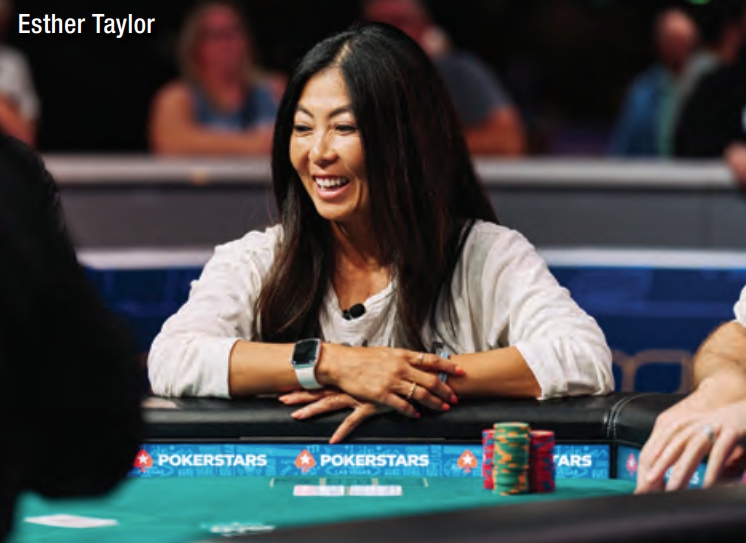 Esther Taylor: I am working on volume, specifically focusing on quality over quantity.
I think that before you get to a certain point in your career, you absolutely have to put as much volume as your bankroll allows to get as many hand scenarios as possible under your belt as a professional.
But there is a point at which you have to take into account how much time you are spending at the tables vs. your EV. You have to consider the value of your time. I am being more selective about the tournaments I play lately, while staying true to the balance in my home and personal life, and relationships.
Poker should be only a part of your circle. I find the most successful people, not only in poker but in life, have a fulfilling amount of balance in all areas of their lives.
Being able to leave poker “at the tables” and not let it negatively affect the rest of your life is a severely underrated skill!
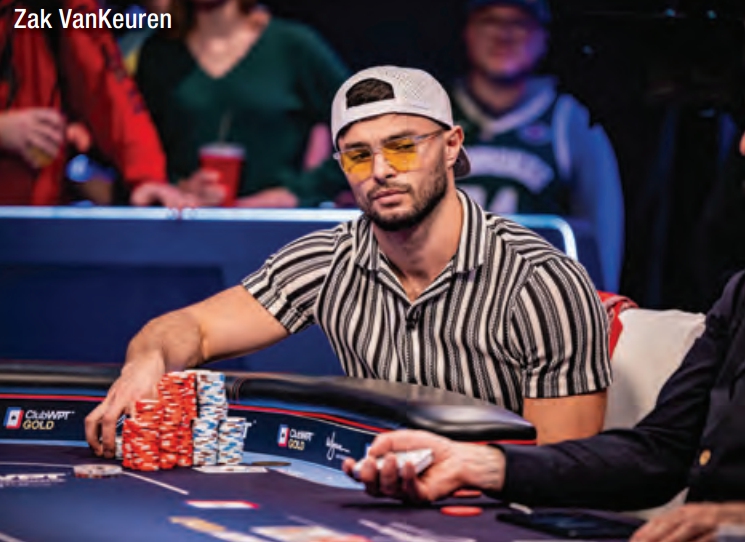
Zak VanKeuren: There are so many different aspects of poker that I love to study and refine, but the area that’s made the biggest difference in both my happiness and my results is designing a life I truly love and playing the game from that foundation of alignment.
Poker can consume us if we let it. For a long time, I felt that subtle pressure of needing to “make money” from the game. And any time I played from that mindset, I felt off, disconnected from the deeper purpose that drew me to poker in the first place. What I’m working on now is cultivating inner alignment: making sure that how I live, how I feel, and how I play are all congruent.
That means creating freedom in my schedule, living intentionally, and investing in my overall well-being. By understanding and caring for myself on different levels, I show up at the table more present, grounded, and clear-minded. Ironically, when I stopped feeling like I needed to win and started focusing on living my highest version of life, my game, and my enjoyment of it, skyrocketed.
 The most undervalued skill in tournament poker right now is emotional regulation and energetic awareness—the ability to stay calm, centered, and connected to your intuition no matter what’s happening around you. So many players obsess over technical theory, solver outputs, and population tendencies, but very few train how to actually access that knowledge under pressure.
Poker is an emotional rollercoaster by design—it exposes fear, greed, attachment, and ego—and if those internal states aren’t managed, they subtly steer decision-making. The best players aren’t just the ones who study the hardest; they’re the ones who can maintain clarity, patience, and composure deep into a 12-hour day or after taking multiple bad beats in a row.
At the highest levels, technical skill is table stakes. The true separator is energetic mastery—being able to hold a calm, confident presence through every phase of a tournament. The players who can stay in that space are the ones who perform at their peak when it matters most.
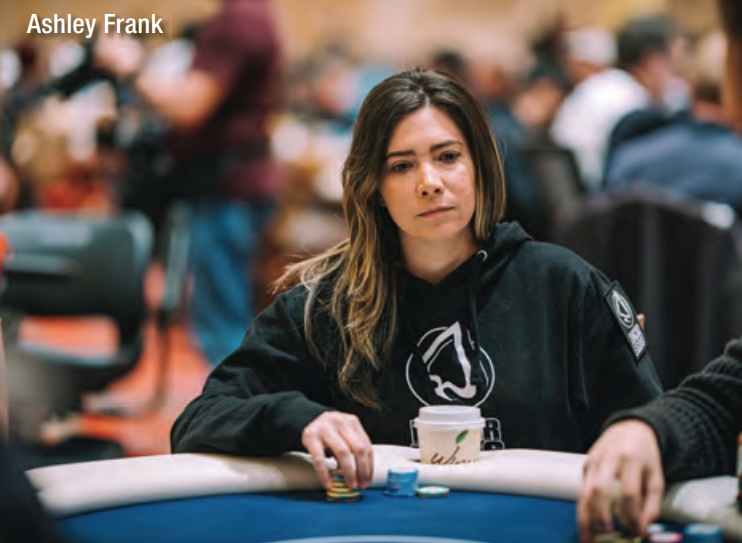
Ashley Frank: Lately, I’ve been reconnecting with the human side of poker, the part you can’t find in a solver. My journey has come full circle. When I first started, I had no grasp of theory, so I played purely off intuition, feel, and instinct. That natural approach was my strength.
Once I discovered solvers, I became obsessed with playing “perfectly,” chasing solver-approved jams and bluffs, and my results tanked. I forgot that theory only matters if your opponents are playing perfectly, too. Poker isn’t static. It’s alive and changing from moment to moment.
Now, I study theory as a foundation. Solvers teach math, not feel. My focus is on hyper-exploitative play and live pattern recognition, studying how people actually behave under fatigue, frustration, or pressure. And obviously, their player types, so I can learn how to exploit them.
 Emotional regulation has also become key. Tilt isn’t just anger; it’s being disconnected from the present. I’ve been training to stay in flow longer, using calm as a weapon when others unravel.
Intuition plays a huge role in staying present. It’s subconscious pattern recognition built through experience. I’m learning to trust it again, alongside logic. The real goal is human adaptation: sensing when momentum shifts, when an opponent’s confidence cracks, and playing the person, not the chart.
Solvers gave us structure, but it’s time to bring the soul back into the game. The best players will not be those who mimic GTO. They will be the ones who can see beyond it.
To me, poker is an endurance sport of the mind. It’s about maintaining awareness across a marathon of decisions and finding that flow state where instinct and logic merge. You don’t reach that by memorizing charts; you reach it through presence. Because in the end, poker is still a human game, and the calmest player usually ends up with the chips.
What are the most undervalued skills in tournament poker today?
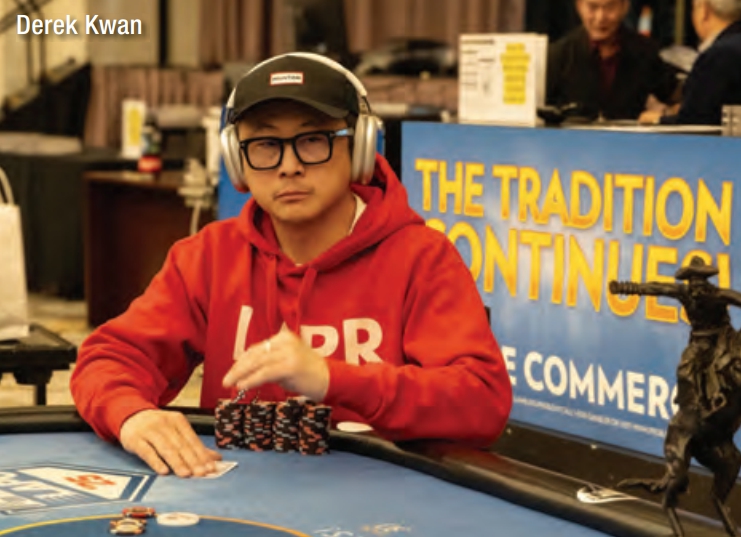
Derek Kwan: I am extremely unbalanced against some specific player types, especially those who are not observant. And I think deeply about how to maximize EV in hands against these types, as I believe your biggest pots will come from them.
 For example, the majority of flops in most phases of tournaments call for smaller bet sizing. But if a player tends to be very sticky on flops but gives up to multiple barrels, you need to find quite literally the max bet size they will call on the flop (is it 200%?) and use that sizing, or I believe you are making a massive error.
There are many different examples like this, but I think most high-stakes pros prioritize the max EV for a scenario rather than for a specific player, and their deviations tend to still be within a “solver-approved” set of choices. But that’s not how you maximally exploit these types.
If I had to estimate, I think upwards of 50 percent of the total tournament ecosystem has attempted to learn from some form of solver, or at least learning materials that teach solver-like concepts. But only maybe 20 percent have stuck with it for more than a month. I honestly believe less than five percent have put in moderate, consistent work for several months or longer.
But you can’t jump to exploits before learning the baselines. While exploits are important, the technical bits are the most significant levers to focus on to make you a better player.
 Dara O’Kearney: I would say multiway pots are usually neglected. The solvers only recently became capable of multiway solutions, and this is the area I’ve been studying the most recently, both to improve my own game and for a course I’m currently putting together.
Another skill is game selection. Most pros seem not to put much thought into this anymore. It’s true that you often don’t have many options when playing live, but for example, during the summer in Vegas, when every property has a series, you should be trying to game select the best games every day.
One trick my friend Andy Hills taught me is that whenever there are competing series, the second or third most prestigious one is usually the best value in terms of likely edge or EV.
So, if everyone is at a European Poker Tour stop, the next biggest festival on at the same time is usually your best option, unless that’s high status too, like a World Poker Tour event, in which case you go for the third biggest.
Rayan Chamas: Self-analysis is so undervalued. Everyone points out others’ mistakes all the time, but they are too scared to criticize themselves.
From my experience, the best players are the ones who are critical of everything they do. This provides a hunger to improve continually, even if you are winning huge tournaments. It’s never enough to stop at the top.
However, you cannot mistake this for greed. Wanting more out of yourself is not tied to money. Elite players tend to review their best moments and still find mistakes. This self-awareness allows them to consistently improve, while their peers waste time pointing out others’ errors.
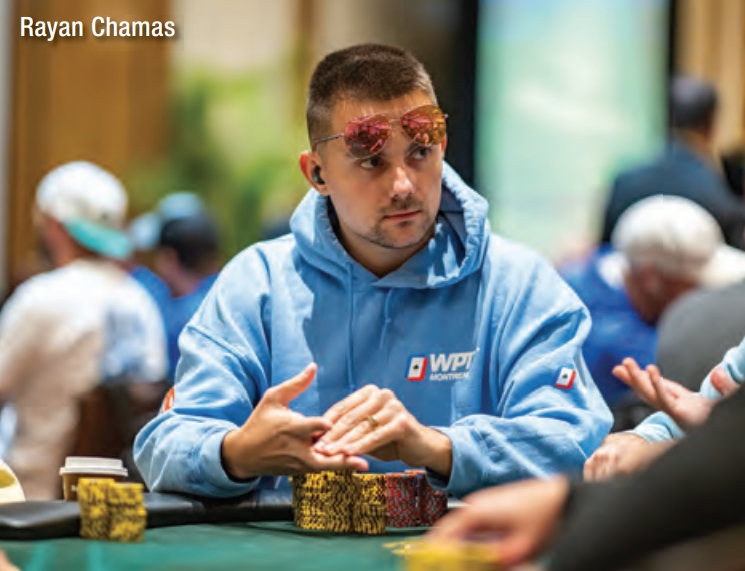 It’s like a little loop that you can only break by doing it yourself first in order to stay ahead of your competition.
I also believe no one focuses enough on in-game performance. It’s one thing to learn theory, but it doesn’t put you in the best state to apply that knowledge during long tournament grinds.
Tournament grinds are eight hours on average, and you always need to be dialed in 100 percent. In order to achieve that, you cannot rely on what you learned from solvers. You must focus on your durability, physical health, and mental health to withstand the pressure that comes with poker.
———————————————————————————————-
Esther ‘E-Tay’ Taylor is a self-proclaimed ‘mommy and part-time poker player.’ This summer, the Oregon native became only the second woman to reach the final table of the $50,000 WSOP Poker Player Championship, taking third for $595,136. The mixed-games standout has more than $3.1 million in career tournament earnings. You can follow Taylor on Twitter/X @e_tay.
Zak VanKeuren took the poker world by storm last December when he captured the WPT Prime event at the WPT World Championship for nearly $1.2 million, capping off a year where the New Yorker also took down an WSOP Online bracelet. VanKeuren is a peak performance/men’s wellness coach who offers both online coaching and in-person retreats. Follow via IG @lucid_poker or on X at @ZakVankeuren.
Ashley ‘Pokerface Ash’ Frank is a major influencer in the poker community, a talented commentator, and a prominent vlogger. With thousands of subscribers, the BetMGM ambassador’s engaging content has captivated a wide audience. Find the Arizona native @pokerface_ash on IG, X, and YouTube.
Derek Kwan is a long-time respected grinder on the Southern California tournament circuit with $1 million in career cashes, including a win in this year’s LA Poker Classic mini main event. The two-time WSOP Circuit ring winner is the creator and host of the popular poker YouTube channel 10MinutePokerTips. Follow Kwan’s poker grind on X @kwansfull.
Dara O’Kearney is a renowned coach, author, commentator, and an ambassador for WPT Global. The co-host of the award-winning podcast The Chip Race, O’Kearney is also the author of seven poker strategy books and the co-founder of the training site SimplifyPoker.com. Follow the Irish poker pro on X @daraokearney.
Rayan ‘Beriuzy’ Chamas is a longtime professional grinder from Lebanon who resides in Canada. In 2023 he narrowly missed out on a WPT title, and in September, the online crusher took down two major events on the same day. Chamas also produced and starred in the YouTube documentary The Reality Of Being A Poker Player – Dealing With $800,000 Downswings. Follow Chamas on X @beriuzy.
- Photos by Card Player, PokerGO, Commerce Casino, PokerStars, and World Poker Tour