
Tom Dwan, who has one of the most recognizable faces in poker, is surprised that people still remember him.
The 39-year-old has just made his first card-playing appearance in months.
“I’ve been living pretty low key,” he tells me over the phone. “I played in a once-a-year poker tournament that a pretty famous painter named Jonas Wood puts on. Alex Botez, [the chess and poker player/streamer] was at my table. Tobey Maguire was at my table. The director Todd Phillips was there. It was nice to chat with people. I’m very slowly stepping back into the spotlight.”
Sooner rather than later, he acknowledges, “I might play on High Stakes Poker.”
How did Dwan do in the tournament?
“It was a $500 buy-in and I dusted $2,000,” he says. “No big thing.”
Rumors, Debt, And A Difficult Year
The man known as ‘durrrr,’ a unique poker mind with a genius for bluffing and seemingly unlimited gears, has slipped into a weird place these days. Rumors circulated that Dwan owes people lots of money. About that, he says, “It’s small. Mostly to a few close friends, not a big deal, and way less than what was put out there. It’s also less than money owed to me, which, unfortunately, I’ll probably never see.”
Then there was the incident in May of last year that resulted in an involuntary two-week stay at Park Royal Centre for Mental Health in London.
Life In Suburban Los Angeles
When I visited Dwan last month, things felt different. Far from the high-stakes tables of Macau, and metaphorically a world away from big games of Las Vegas, the New Jersey native now resides in a cozy home on the outskirts of Los Angeles, living like the poker Jesus of suburbia. After a tumultuous year, Dwan appears to be regrouping.
A mid-sized rental car is parked in the driveway. Family photos are on display inside the duplex he shares with his pretty Turkish girlfriend. He offers coffee, or water, or beer, or whatever else I might want to drink.
Dwan has adapted to the sunbaked lawns, spending his days walking his girl’s jumpy, pint-sized dog, laughing when she critiques his driving, and making small talk over a backyard wall with the construction guy who lives next door.
He has a favorite casual lunch spot, in a nearby strip mall, that serves Mexican-flecked entrees. He insists on picking up the tab. Dwan even covers my airfare for the flight from JFK to LAX. When told that the last-minute nature of the ticket could make it pricy, he replied, “I don’t care. Just don’t spend $5K or something.”
Clearly, some vestiges of his no-limit life remain unshakable. Other aspects have been upended.
Stress, Money, And Changing Risk Tolerance
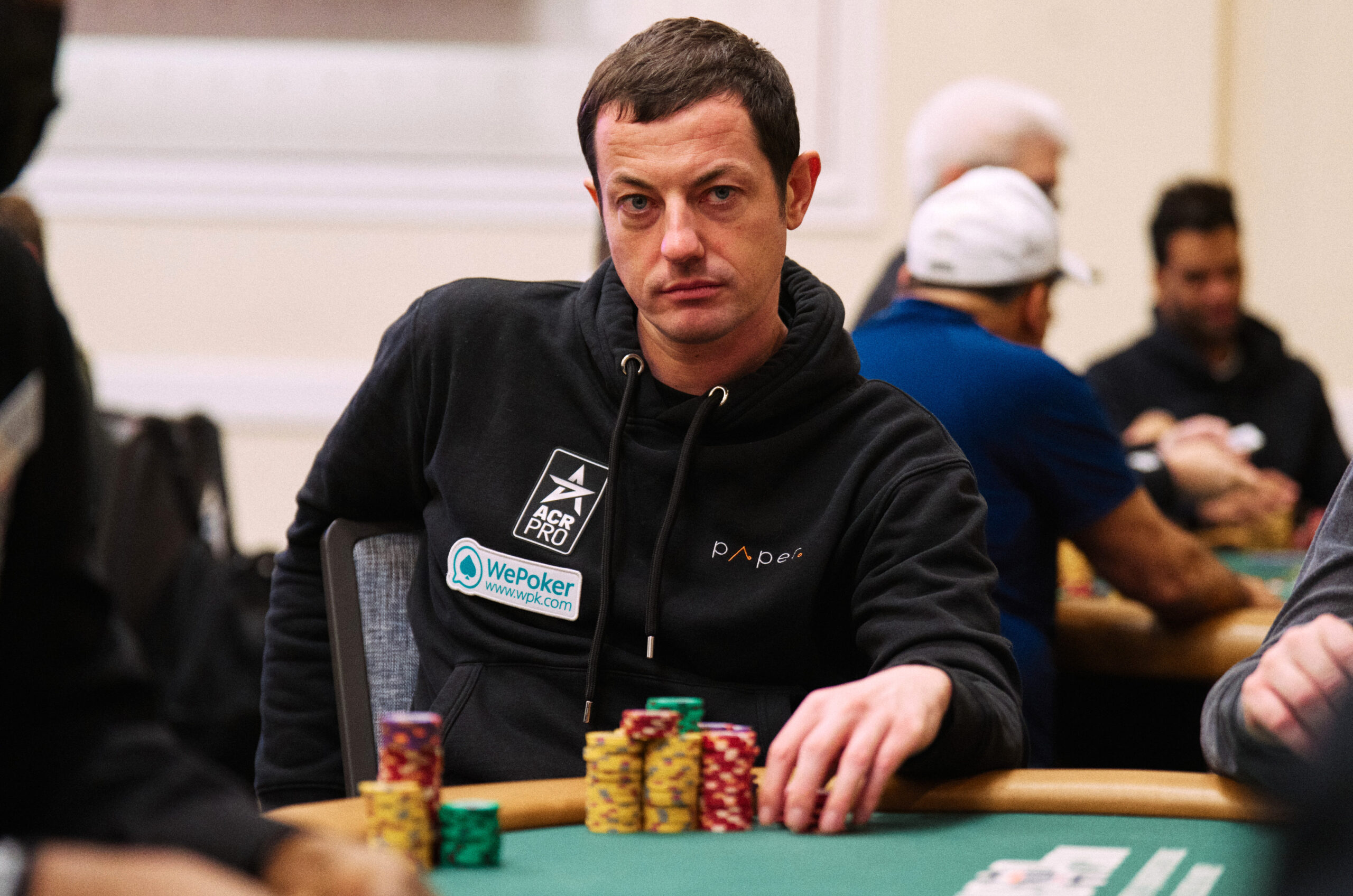
“Things fucking stress me out now,” says Dwan, dressed in black workout pants and a matching jersey. His bright blue eyes are as unnervingly piercing as ever, and he looks pretty good for a guy with an impending 40th birthday on the horizon.
“I used to be able to deal with so much. In 2020, I got brought into the middle of a fucking triad war, for a moment, without intending to, and I handled it. I solved that situation without many headaches. But, right now, I’d rather not play high stakes. Part of it is that I am cash short. Let’s just say that some people have been difficult with me. And part of it is that I can have a higher chance of losing in heavy situations than I did a few years ago.”
The Culture Of Big Money
Nose-bleed gamblers have always had complicated, sometimes complicatedly casual, relationships with money. It’s been said that cash was the cheapest commodity in Stu Ungar’s life. A guy from the famous MIT blackjack team carelessly left a paper bag with $100,000 in it on a classroom desk. Dewey Tomko laughed as he once recounted to me the time that he and Doyle Brunson blew a bundle bankrolling a crackpot who promised to bring up Noah’s Ark.
Dwan seems to think he has money coming, but he admits he also has some small figures out. That is, small for Dwan. But these are sums that would freak out the rest of us.
Dan ‘Jungleman’ Cates, who got into a public tiff with Dwan over unpaid debts from the durrrr challenge that launched some 15 years ago, seems to have reached a version of detente. He posted on Twitter/X, “I have realized that in fact [Dwan] does intend on paying back his debts and has worked tirelessly toward that… I think it’s important to focus on the most mutually beneficial outcome.”
About it, Dwan says, “I gave Jungle around $1.35- to $1.4-million out of $1.5 million. I also helped him make a few million. We don’t always see eye to eye, but we get along some and trust each other’s hearts, even though we have some personality differences.”
Rumors And Public Disputes
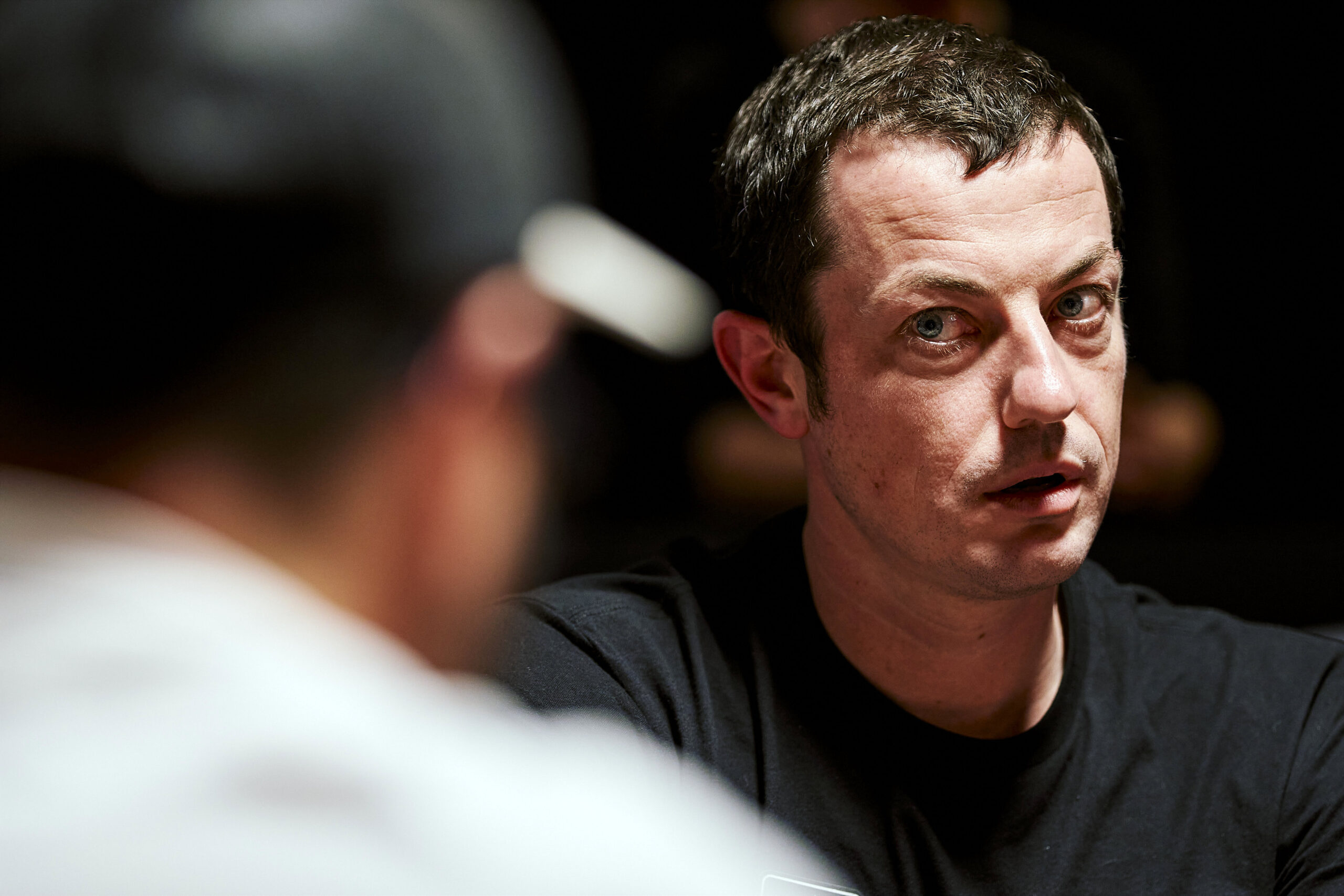
Sitting with Dwan at a table in the gazebo behind his house, I ask him about Doug Polk’s assertion that Dwan “owes about $30 million” to “maybe… dangerous” people. Dwan denies it and traces the story to what he claims is the source.
“Fucking Airball,” he says, “who owed me money at the time, and still does, started this rumor that I owe $30 million. Then Doug reinforced it. They both know it’s not true. Airball was trying to steal VIPs for his game and Doug was doing his shenanigans.”
Nikhil ‘Airball’ Arcott denied the accusation, telling me, “I definitely do not owe Tom money. Tom owes me money. We’re at an impasse.”
The Macau Years
Regardless of the claims, the assertation that Dwan is in the hole for $30 million begs the question as to how things worked for him during his salad days in Asia. He arrived there in 2009 and began playing there more seriously a couple years later, after Black Friday blew up online poker in the United States.
Dwan discovered another world in Macau, with its own etiquette and a need to score an invite to play in the best games.
“I think I handled myself pretty well. I tried not to be an asshole, and I was the most famous poker player in China,” he says, adding that giving action helped considerably, as did selling off pieces of himself to the right people. It was mostly administered by Triton Poker co-founder and casino executive Paul Phua, who often had a large piece and then parceled it out.
“Commonly, I would have 80 percent of myself or less. It would be anywhere from 15- to 80- percent, but normally a little more to the higher side.”
Whatever Dwan was made to give up, he says it was a good investment for him and for those who had pieces of him.
“Very few people who ever had a piece of me lost money,” Dwan claims. “The chance I would lose in a week [while playing in Asia] was sub 30 percent. And if someone lost money having a piece of me, they could go whining about it to the game runner and I would let them have another piece.”
Cheating, Solvers, And The State Of The Game
Asked about the current state of high-stakes poker, Dwan sees the United States shifting into a less than optimal direction.
“I think an unfortunate consequence of the American gaming laws is that it’s become more and more common to have private games.”
And, as we have all seen with the recent spate of arrests and allegations regarding rigged shuffling machines, so-called x-ray tables, celebrities used to lure in the unwitting, and cleverly marked cards, high-stakes home-games are particularly vulnerable to the underhanded.
“There has been so much fucking cheating. If you’re playing in some $5,000 buy-in game, you may have a watered-down cheating technique from five or 10 years ago. But it still might be some two-bit gangster who knows how to do it.”
Asked if he has fallen victim, Dwan replies, “A lot less often than other pros. I’ve been very careful with most of that stuff, but I’ve made my share of mistakes.”
Caught Red-Handed
Nevertheless, Dwan actually picked off a trio of no-tech cheaters during a tournament in Montenegro a few years back. They sat awkwardly on a sofa “with cushions between their fucking ass cheeks” to get a higher view – scoring peeks at players’ cards and “signaling with their shoulders.”
“If [their partner] was in a huge hand, one of them would sometimes move and see the [opponent’s cards].”
Dwan called it out and the guys took off.
He suggests a simple way to limit cheating would be to randomly “burn one or two or three cards every hand.” He then shifts his attention to another pet peeve.
“I don’t like solvers,” he says. “And the combination of cheating and solvers is way worse than solvers on their own. It’s literally five or 10 times as bad. Cheaters plus solvers are literally killing poker. If you played against me and used a solver, I might be able to win. Maybe I get reads. Maybe you have click tells. But when you are getting cheated, you have no fucking chance.”

Man Of Mystery
When you interview Tom Dwan, as I did over the course of a long weekend in February, the 800-pound gorilla in the room is what the hell happened to take him from the world’s most elite tables to being a regular guy in the suburbs. For what it’s worth, I knew Dwan back in the flying-high days, and I like this version of him better than that one. Then, as now, I never found him to be a person with a linear way of thinking or a clearcut way of expressing his thoughts.
Obviously, he’s made a handful of offbeat comments and has dealt with complications on multiple levels, but so have a lot of other people. Dwan just happens to constantly be under his own kind of poker microscope.
Years ago, I asked what led to him losing much of his multi-million-dollar bankroll during his disasterous heads-up matches against Viktor ‘Isildur1’ Blom. Dwan offered an answer so layered and confounding that I finally got him to simply tell me that he thought he had an edge and that he would take the shot again. It wasn’t illuminating, but it was understandable to me and the people who would read my article.
An Involuntary Stay
The details of what appears to have derailed Dwan are similarly untraceable, tantalizingly vague, and/or off the record evanescent. But it is said to tie into a flight that he says took him from Los Angeles to London via business class. He shows me material evidence, and asks that I not reveal it, to back up his sense of uneasiness relating to what he says went down.
“I was flying to meet with a gambling boss who is also a friend,” Dwan explains of his reason for traveling. “Some things happened on the flight that were unusual, to say the least. I was told that there was no WIFI when there obviously was. I had three glasses of wine and fell asleep.”
“When I woke up, a woman was having a heart attack on the floor next to me, even though all the seats in business class were taken. It didn’t make sense why she would be in that location. I was instructed not to get out of my seat. They didn’t want me to go to the bathroom and wouldn’t let me move back to coach. I was told that the seats were all taken, but they weren’t. It was very weird.”
Instead of being met at the airport by his friend’s driver, he “had a process” and an hour or two later arrived at Hillingdon Hospital, about 3.6 miles away from Heathrow Airport. Roughly 48 hours after that, he says he was involuntarily committed. Though Dwan once acknowledged “processing some versions of details or reality wrong at some point,” he now tells me “that was and is true, but the majority was mostly on point.”
While sitting at a fine wooden table on the patio of my friend’s house in Pasadena, Dwan tells me he entered the flight as one kind of person and deplaned as another. There was talk of him thinking his ribs had been broken and beliefs that he could die while institutionalized. Referencing a cancer diagnosis that I had received – thanks to targeted medication, I’m basically fine – he says, “The risk I was under was less than the risk you were under. [But] one difference is that some of my stuff impacts things that are more serious for our country and the world as a whole.”
That hangs in the air as ominously as a Dwan four-bet on the old High Stakes Poker, where he would send seasoned pros into the tank and spurred host Gabe Kaplan to comment, “It’s Tom Dwan’s world, we just live in it.”
Elaborations on threats to the US are not forthcoming. Fine.
The Biggest Games And Legendary Pots
In the midst of all that, it’s impossible to forget that Dwan has played in some of the biggest games ever. And that is what makes everything so interesting and curious.
Dwan has lived with more complications than one would expect for a person who began playing online as a 17-year-old, figured out the game’s remunerative touchpoints, and wound up in the eye of the high-stakes hurricane. After all, most seriously skilled players take up poker to keep things simple and get rich by competing at a game that others engage in recreationally.
Dwan delivered on the latter. Three years ago, he won what was then the largest pot ever broadcast, competing on Hustler Casino Live against Wesley Fei. The hand was unconventional, as Doug Polk, also in the game, had seen Fei’s cards.
More than $500,000 was in preflop. Fei held A♦K♥, but Dwan kept his cards away from the hole-card camera. He swears it wasn’t intentional. I’m not sure I believe him.
The pot of $3.1 million ultimately went Dwan’s way, with his pocket queens picking off a nearly $800,000 bet on the river of a board reading 8♠8♦3♦5♥6♣.
“A ton of information was given away,” Dwan explains. “Both of those guys gave away so much information by letting other people see their cards. I had some shit on them in my back pocket. I was waiting and trying not to use it. Wesley and Doug are smart fucking guys. If I used it on a smaller hand, they might have figured it out. I might never get to use it again.”
Asked if that was the largest pot he’s ever won, Dwan can’t help but laugh.
“No,” he says. “I’ve played a lot of pots that were $10-million-plus.”
Asked what his biggest would be, Dwan declines.
“You think I’m saying that while the recording is live? Are you an idiot?” He shrugs it off, then adds, “What do you think? Give me a number.”
I venture that maybe it’s in the $20 million range.
“If you gave a worse guess, maybe I would answer when the recorder is off. But you’re still an idiot.”
Playing The Game Within The Game
Dinner time looms. My friend grills steaks and Dwan is obsessed with how he gets them so perfect, observing and asking questions as if he is learning a new game. Seeing a silver lining in his diss, I ask how the vibe in a VIP poker room changed as a giant pot was building.
“It got very quiet,” he replies. “But it’s also relaxed because you have very wealthy, very sophisticated people at the table. Whoever is running the game generally controls the situation and lets the decision happen. If someone came up to me while a big hand is unfolding, I’d say to them, ‘Fuck you. Go away.’ It’s about honoring the integrity of the game.”
For years, this was Dwan’s reality. He resided in the posh One Central in Macau (where the likes of Phil Ivey and Andrew Robl also lived). He learned to respect and listen to his Sino elders, enjoy their customs, and play the game within the game. However, after years on the Asian poker scene, it was during a big night in Vegas when he displayed his understanding of showing fealty to the right people.
How To Get Invited Back To A Big Game
“The person who was keeping track of the credit, a guy who ran one of the biggest games in LA, was on a Keto diet and slightly out of it,” Dwan recounts. “He spilled a glass of red wine and it landed on the purse of a big Chinese boss’s girlfriend. One of the girls who was there, she looked at me and tried to communicate, ‘Tom! Fucking handle!’ I was like, ‘I’m fucking playing poker.’ I had at least $100,000 in front of me. But, at some point, after she repeatedly gave me the signal, I figured that I should trust this girl.”
“So, I got paper towels, I got down on my knees, and I cleaned the [boss’ girlfriend’s] purse. I later found out that the purse was a $100,000-plus Birkin bag. The boss seemed mad for a minute – even though he kept telling me not to worry. And it was right for me to show respect. Maybe that guy wouldn’t have played again for the rest of his trip. He was worth billions and was the worst player in the game.”
Reading The Room
Another time, playing in Macau, Dwan was coerced into giving a guy a break on a bet.
“He put in chips, and then pulled them back,” recalls Dwan. “And even in the really big games in Asia you’re not allowed to do that. I would have given him a 2 percent rebate or something. I looked at him and without saying no, I was saying no. It was over $200,000 and I probably had at least 30 percent of myself. So, it was at least $60,000 and that meant something to me. But, without words being spoken, it was communicated to me to let him off the hook, by a guy [the name is off the record] who is thought of as one of the biggest fish in China [and I can see why he says this]. I looked at the guy like I was going to cry. I tried to communicate, ‘Fuck! Okay.’ And he took his chips back.”
“I asked [the fish] what happened. He said, ‘I don’t know. But it felt right to me.’ I was like, what the fuck?”
By night’s end, Dwan had an answer to his question.
“Within a few hours, that guy had lost not only the $7 million or so he was up at his peak, but about $9 million more. At that point, I realized the [smaller] fish was right. Somehow, he knew that the other guy was a giant-level fish. This was one of the times that I learned that foreigners just don’t understand China, not even me.”
And Dwan realized that if he had not read the room, the consequences could have been huge.
“I don’t know what it would have been, but it would have sucked.” says Dwan, chilling out after the steak dinner. “If the fucking white, famous poker player had taxed this guy on a couple-hundred grand, the group would have lost their giant-level fish forever. [The smaller fish] could have blocked me from any game and he never did.”
Dwan spaces for a second, as if thinking through how things went down, and the peculiarities of being a Western poker superstar playing in Macau. Then he adds, “So, that guy was right, and it was correct for him to make that decision for me – even though to most outsiders it wouldn’t have made sense.”
Looking Ahead
Though the great poker stories are all from Dwan’s recent past, they come during a present that seems to be about grounding himself and perhaps preparing for a fresh run at the game. I wonder where he sees himself a decade from now.
“I hope, 10 years from now, that we have a family,” says Dwan, speaking of himself and his girlfriend. “Hopefully I am working on things I like. I would want to average at least five to 10 hours of poker a month, but I won’t be surprised if it’s 50 or 100. If I don’t play poker for a while, I miss it. But it doesn’t take much for me to scratch the itch.”
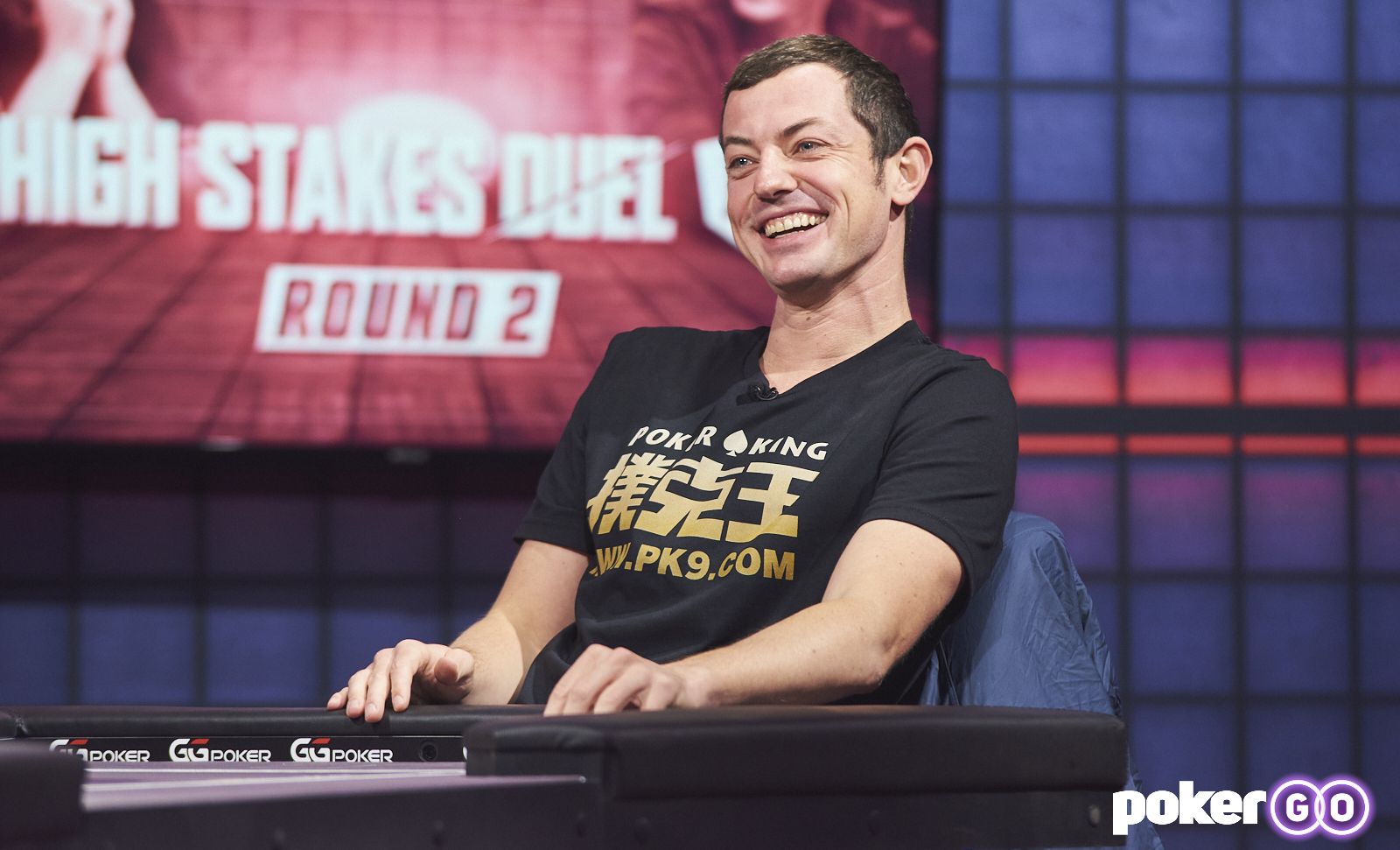
The ‘Durrrr’ Effect Remains Strong
The next afternoon, during our last interview session, we’re occupying an outdoor table at the excellent Pasadena coffee bar Lavendar and Honey. Once again, Dwan takes care of the check. After finishing his drink, he gets up to use the restroom. As he strolls from the table, I spot a couple of Asian guys on the other side of the asphalt.
They yell out his name. For a second, I fear that maybe Polk has been right all along. Maybe the “dangerous” guys have finally emerged, seeking their pound of flesh. Is it all about to go down?
Not exactly.
Dwan is being flagged by two Korean poker fans. They are thrilled to see the Tom Dwan in the wild.
Dwan seems happy to receive the attention. Instead of putting his head down and ignoring them, he strolls over. The fans stop just short of requesting an autograph and I see a lightness find its way to Dwan. He poses for selfies and talks to them about spending time in Seoul. The encounter makes me happy, as does the ease with which he accepts his role as a public person. He’s comfortable being a minor celebrity of sorts, or at least a friendly guy who likes chatting with poker-lovers who flatteringly remember him.
Perhaps this is the new Tom Dwan – or else a return of the old Dwan who’s been through a hell of a lot and is working in his own way to come through the other side.
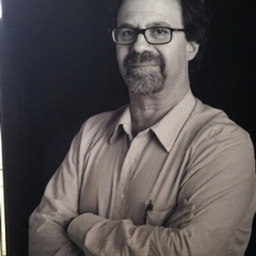 Michael Kaplan is a journalist based in New York City. He is the author of six books including Advantage Players. Kaplan has written for Wired, GQ, and the New York Post, where he is currently a senior features writer. He has focused extensively on technology, gambling, and business — with a particular interest in spots where all three intersect. His article on Kelly “Baccarat Machine” Sun and Phil Ivey is currently in development as a feature film.
- Photos by PokerGO, Triton Poker, and Card Player