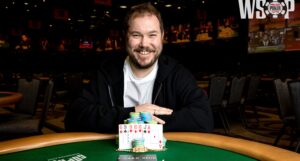
I was playing the $500 Colossus at the World Series of Poker, and I was awarded an unbelievable table draw. Nearly every player was playing straightforward. Thus, I had the chance to rake in a ton of chips.
The table was extremely passive, and not many pots were going more than three ways to the flop. In these cases, you must severely deviate from game theory optimal play. Adjustments to a table like this are easy to make.
These adjustments can pay off in the early and mid-stages of a small-stakes tournament with a buy-in of less than $600. The type of play in these small-stakes live tournaments is the complete opposite of mid and high-stakes online poker tournaments. Thus, implementing a GTO strategy is entirely unnecessary.
How To Adjust To A Passive Table
- Fold more often against aggression
- This is the easiest adjustment to make. If your opponents begin three-betting or raising you, they almost certainly have a strong hand or an extremely strong draw. Just make tighter folds, but call with hands that can crack big hands like low suited connectors.
- Bluff rivers less when board texture doesn’t change
- If you bet multiple streets and get called, don’t bluff the river when it doesn’t change the board texture. Even if your hand is worthy of a triple-barrel bluff, just move on and take another spot.
- Raise more often in late position
- Don’t get too crazy with this advice. But if you’re rarely getting three-bet, you can start opening a few extra hands.
- It’s essential to know that bottom-of-range hands are the bottom because you should have a balance with your hand strength. Roughly 50% should be able to withstand a three-bet and 50% shouldn’t. So if nobody is three-betting you, you can vastly expand your range in late position.
- If nobody’s three-betting you, hands like K-2 offsuit and 7-3 suited can now be raised on the button since you can take a lot of pots postflop. Additionally, you will occasionally make sneaky hands that you shouldn’t have and earn piles.
- Bet larger when you have a strong hand and they show strength
- Bet sizes don’t matter if your opponent has a huge hand and you have the nuts or the virtual nuts. If you’re getting very fast calls on big bets on the turn, put your whole stack in on the river, even if it’s egregiously over the size of the pot.
- These players don’t know how to fold top pair. Make them pay for it when you have two pair or better.
- Play More Passively in Tricky Spots
- If a tight player raises to four time the blind from early position and you have something like pocket jacks with a bigger stack, you can call more often, even if you would normally raise. They’ll let you know whether or not they have a big ace on later streets. You’ll also stack them almost every time if they have a bigger pair and you hit a set.
In-Game Example: Checking Back An Overpair On The River
The blinds were 2,000-4,000 with a 4,000 big blind ante. Late registration was closed, I had roughly 30 big blinds, and I was on the button.
The lojack, who was pretty tight, but not the tightest player at the table, raised to 12,000 from the lojack. She had already mentioned that she never ever plays ace-ten because she hates the hand. This is important to note.
I looked down at J J
J . Normally, I would three-bet her initial raise, but I decided to call instead since I was in position and I could gain more information postflop. The big blind also came along.
The flop was 1065 and she bet 8,000. I decided to raise to 22,000 for three reasons.
- To get the big blind out of the hand
- To gain more information. I would easily fold to a jam as I’m only beat here.
- To control the pot in position
The big blind folded and the lojack called.
The turn was the 2 and she checked. I bet small, this time for 20,000, which was less than a third of the pot. I did this for two reasons.
- Pot control
- I still get value from stubborn overcards like ace-king and ace-queen and from second pairs like pocket nines, eights, and sevens.
She made the call. The river brought the 3 and I, very stubbornly, checked back the river, despite the SPR being below one. Against normal opponents, this is an all-day jam but because it’s a specific player type, I made this adjustment.
- Her range is specifically 77+ and ace-king and ace-queen at this point. This is it.
- I don’t get called by anything worse if I jam.
I sigh-checked and turned over my jacks. She turned over pocket aces and won the pot. Most importantly, I only lost about 40% of my stack instead of going broke.