







 Want to play chess in Afghanistan? Too bad. The Taliban have suspended the game for fear that it could be used to encourage betting.
That’s not all. Would-be gambling magnates in Toronto were brought down for running an illicit online gaming site. In Pakistan, 1,600 people were arrested for taking action on horse cart races. And in Charleston, South Carolina, two men got busted for turning a multi-tenant building into a makeshift casino.
Those all sound like pretty janky ways to try to generate profits through gambling. Anyone on that law-breaking side of the equation can learn lessons from the truly sharp guys, mega advantage players who figure out ways to reel in big bucks by using their giant brains to conceive moves that lawmakers cannot successfully come down on them for.
Advantage Player King
A couple months ago, news broke about Zeljko Ranogajec, who beat everything from blackjack to horse racing and beyond.
I’ve met the guy, but he has been anything but interested in cooperating with me for a story about his time running a team that figured out a mathematically correct way to outplay the Texas lottery.
When the jackpot got suitably high, they simply purchased enough tickets to cover nearly every number. This wasn’t card counting. This was a guaranteed victory. The only question was how much they would earn.
Pulling off the play did necessitate daunting bookkeeping and the ability to get their hands on multiple lottery terminals for printing thousands of tickets an hour, however, in order to close in on the lucky one.
It worked. The team won the drawing’s $57.8-million jackpot, plus a raft of smaller prizes, for a substantial windfall. Authorities didn’t like it, but, en route to their riches, Zeljko and company broke no laws – unlike, say, the goofballs who put gambling machines in an apartment.
Prediction Markets
Also playing the long, ingenious, and legal AP game: a group of MIT grads – coming from the same august institution where the card counting team from the movie 21 was hatched – who are snagging financial-news headlines with Kalshi.
Kalshi is a financial exchange that has weathered accusations of being a high-tech casino. That is incorrect. In reality, Kalshi is a prediction market that allows people to place their money on outcomes for just about anything.
Bookmaking is many shades away from what these savvy people with MIT diplomas are doing.
To that end, the brilliant part is that Kalshi is an exchange, not a gambling operation. The company has no interest in an outcome of what gets wagered on. Kalshi is a facilitator for people who have opposing opinions and want to put their money where their mouths are.
For example, if you want to bet on a Rotten Tomatoes score for a movie, and can find someone else in the Kalshi universe with an opposing view, go for it. Kalshi will serve as the exchange and carve out a small commission for doing so.
Hopefully, we’ll see some lively betting action this summer on who is likely to win the World Series of Poker main event or even the smaller tournaments that get less attention but can be gamed out. Go to Kalshi and find someone on the other side!
The founders of Kalshi insist that putting up money on any outcome is no different from having a financial opinion on whether Nvidia’s price goes up or down two months from now. The company’s latest move is the initiation of sports betting.
Bloomberg just called Luana and I “Two MIT Math Nerds” on its front page today.
How is your day going? pic.twitter.com/cuVjaDjvbz
— Tarek Mansour (@mansourtarek_) May 30, 2025
There are state lawmakers who don’t like it – particularly those in jurisdictions where laws specifically prohibit wagering on games. Happily, it looks like tough luck for them. The argument being made is that this is not gambling any more than it is gambling to put up money on, say, orange futures.
Touchdowns? Crops? Box-office returns? What’s the difference? None that I can see.
Of course, I side with team Kalshi. I think we have the right to bet on anything in the world. And with the Trump administration loosening up regulations on such things, it seems like Kalshi and other operations like it – such as the crypto-centric Polymarket – are in the right place at the right time. They are making choose-your-own-adventure gambling into a reality.
According to Bloomberg Businessweek, the Kalshi action has recently been hot and heavy on everything from whether the Federal Reserve will slash interest rates to who will become the new pope.
Winner of the latter race, Robert Francis Prevost (aka, Pope Leo XIV), was a longshot among Kalshi’s players.
And maybe Kalshi, Polymarket, and the like are what the stiffs deserve. As company cofounder Tarek Mansour put it, “There has been overregulation in the US and now I think things are moving in the other direction. And I think that’s a good thing.”
So, who wants to square off against me on the next horse cart race? No doubt, Kalshi can serve as the exchange.
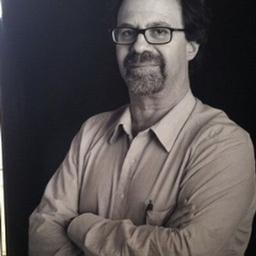 Michael Kaplan is a journalist based in New York City. He is the author of six books including The Advantage Players, and has worked for publications that include Wired, GQ and the New York Post. He has written extensively on technology, gambling, and business — with a particular interest in spots where all three intersect. His article on Kelly “Baccarat Machine” Sun and Phil Ivey is currently in development as a feature film.
*Photo – Shutterstock