







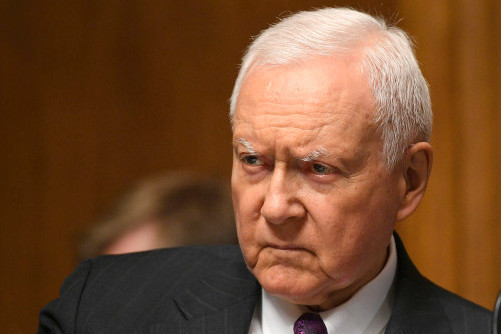
.jpg) For awhile, it looked like the U.S. federal government was going to leave sports betting to the states. However, a draft of a new piece of legislation has emerged from the office of retiring Republican Sen. Orrin Hatch, which would force all U.S.-based sportsbooks to be approved by the U.S. Attorney General before they could open up shop.
For awhile, it looked like the U.S. federal government was going to leave sports betting to the states. However, a draft of a new piece of legislation has emerged from the office of retiring Republican Sen. Orrin Hatch, which would force all U.S.-based sportsbooks to be approved by the U.S. Attorney General before they could open up shop.
Seven states have already legalized sports betting since the May U.S. Supreme Court ruling that the Professional and Amateur Sports Protection Act (PASPA) was unconstitutional, joining Nevada. More than a dozen other states are on the way, or at least considering it.
The federal bill would give operators one more hoop to jump through for licensing, and also force all sportsbooks to use official data from each league or league partner until at least 2022.
The American Gaming Association (AGA) expressed concern over the developing bill.
“Since the Supreme Court’s ruling in May, the American Gaming Association has consistently maintained that federal legislation regarding sports betting is not necessary,” said AGA Vice President of Government Relations Chris Cylke. “That underlying position remains unchanged. At the same time, we remain committed to maintaining an open and constructive dialogue with policymakers considering sports betting legislation at any level of government.”
Should the legislation get passed, the Wire Act would be amended to allow states to share information. That data would also be collected by a new non-profit organization called the National Sports Wagering Clearinghouse, which would be responsible for detecting suspicious betting activity.
The comprehensive 37-page bill would also be bad news for The Stars Group, and any other off-shore operator that took any wagers “on or after Oct. 13, 2006,” the date of the Unlawful Internet Gambling Enforcement Act (UIGEA). The bill seeks to deny licenses to these companies, which would particularly hurt PokerStars and the recent push of their BetStars sports betting brand.
The Stars Group recently agreed to a 20-year deal with Eldorado Resorts, which operates casinos in 12 states, for the rights to their online sports betting skins. The company was also recently approved to offer online gaming in Pennsylvania, joining New Jersey as the first states to welcome the company back to the States after Black Friday.
 In addition to Nevada, New Jersey, Delaware, Rhode Island, Pennsylvania, New Mexico, West Virginia, and Mississippi have all begun to accept sports bets. Americans bet about $150 billion each year on sports, mostly on the black market, according to the AGA.
Sen. Hatch, who comes from Utah, one of the few states with no gambling options of any kind, was also a co-sponsor of PASPA in 1992. The 84-year-old has been outspoken about his desire to see federal oversight of the sports betting industry since PASPA was struck down this summer.