







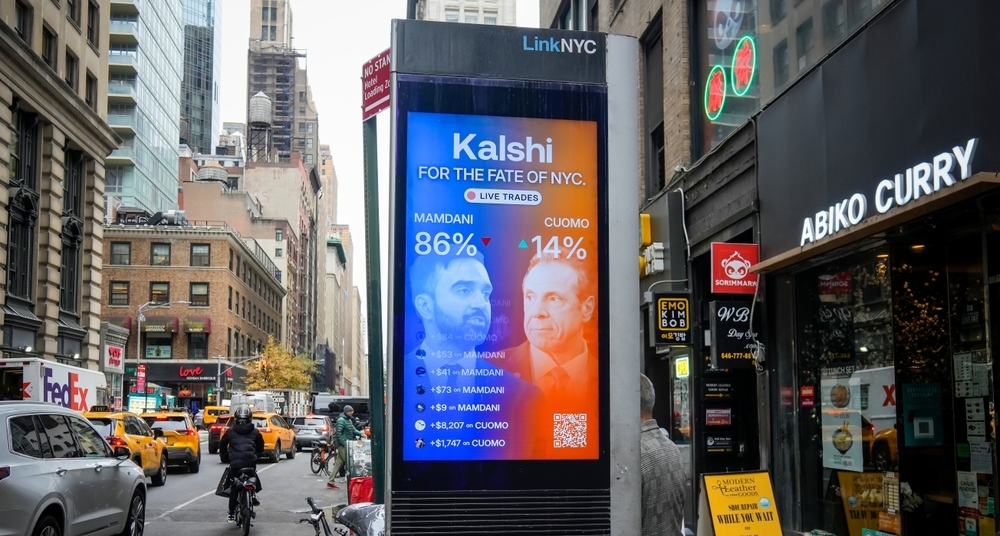
The seemingly never-ending legal battle against prediction markets continues, and for the first time, a city is getting involved in the fight. The city of Baltimore filed a pair of lawsuits this week against Kalshi and Polymarket.
City officials claim the platforms’ sports event contracts allow Baltimore residents to engage in unlawful gambling under Maryland law. The suits further allege that the companies are violating the city’s Consumer Protection Ordinance.
“These companies are running sportsbooks without licenses and betting that a new label will put them above the law,” Mayor Brandon Scott told WTTG. “It won’t. Baltimore will not let multibillion-dollar companies put profits over people and harm our communities through illegal gambling.”
Baltimore Points To Consumer Protections
Many state regulators have put forth similar arguments in legal actions against the platforms. States argue that the companies are skirting state gaming laws by offering event contracts on sports.
In some cases, gaming bodies have sued to block the platforms. Conversely, Kalshi has also turned to the courts to prevent states from enforcing gaming laws against it.
This isn’t the first lawsuit in Maryland involving prediction markets. In August, Kalshi temporarily lost a lawsuit against the Maryland Lottery and Gaming Control Commission.
Like Maryland, Baltimore claims Kalshi and Polymarket offer sports betting without the necessary licensing required under state law. This allows the company to avoid oversight, taxation, responsible gambling requirements, and consumer protections, according to the city.
Both the state and city lawsuits also argue that the companies feature many of the same bets found at traditional sportsbooks. Some of those include moneyline-style wagering, point spreads, totals, tournament outcomes, and player props.
Additionally, the platforms falsely market themselves as lawful, regulated exchanges, the suits claim, and they expose minors and problem gamblers to unlicensed gambling operations.
“Kalshi and Polymarket cannot circumvent Baltimore’s consumer protections by repackaging gambling as something else or claiming federal regulation puts them beyond the reach of our laws,” City Solicitor Ebony M. Thompson said.
“The city will continue to use its consumer protection authority to stop deceptive and unlawful conduct and hold companies accountable when they put our residents at risk.”
More Legal Wrangling This Week
Prediction markets argue that their offerings are different from traditional sports betting and regulated solely at the federal level by the Commodity Futures Trading Commission (CFTC). The companies contend that the platforms are more akin to traditional financial exchanges rather than sportsbooks.
In recent months, the CFTC has moved to enforce its regulatory power over the industry. The commission sued New York in April and also moved with legal actions against Arizona, Connecticut, and Illinois in the same month.
The CFTC also sued New Mexico in June, attempting to stop the state from applying gambling laws against prediction markets.
Prediction markets faced other legal maneuvers this week. A judge in Utah ruled against Kalshi, noting that the state’s anti-gambling laws apply to prediction markets.
A court in Washington state ordered Kalshi to block event contracts on sports, elections, politics, entertainment, culture, technology, science, and other markets with geofencing by Sept. 2. The court will fine the platform $120,000 per day for every day Kalshi operates beyond the deadline.
The ruling also blocks the company from marketing the platform in the state. Kalshi is expected to appeal the ruling.
The state of New York also sued Kalshi this week, alleging the company engaged in illegal gambling. The suit brought a court filing from the CFTC compelling Kalshi to continue operating in the state and highlighting the commission’s “supplemental authority” in the matter.
White House Continues To Back Prediction Markets
The prediction market jurisprudence comes as the White House continues to support the growing industry. The Trump administration is set to host prediction market executives next Wednesday at the White House.
The Trump Administration has not revealed the exact nature of the meeting, but it comes a day before the CFTC holds a meeting for a new Innovation Advisory Committee. The committee includes executives from leading crypto, gambling, finance, and prediction market firms.
Beyond sports, some have voiced concerns about possible insider trading. An indicted Israeli Air Force reservist and an accomplice allegedly used inside information on Israeli and U.S. airstrikes on Iran to trade on Polymarket, winning $128,000 in the process.
Earlier this year, suspicious wagering on the prospects of Iranian Supreme Leader Ayatollah Ali Khamenei remaining in power came to light. Several bettors combined to wager seven figures on the outcome on Kalshi and Polymarket just before Khamenei was killed from airstrikes on his compound in Tehran.
This followed allegations of insider trading on Polymarket regarding the capture and arrest of former Venezuelan leader Nicolás Maduro. In December, a user also apparently won 22 of 23 bets in a single day for more than $1 million. All the wins involved Google search markets, and some on social media alleged the user was an insider with the company.
In March, the Trump administration warned White House staff about using their roles in the federal government to bet on futures markets.
- Photo – Shutterstock/rblfmr