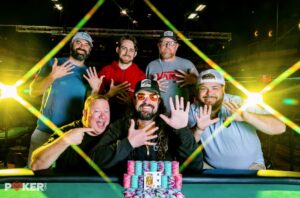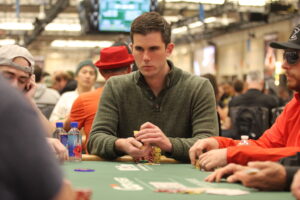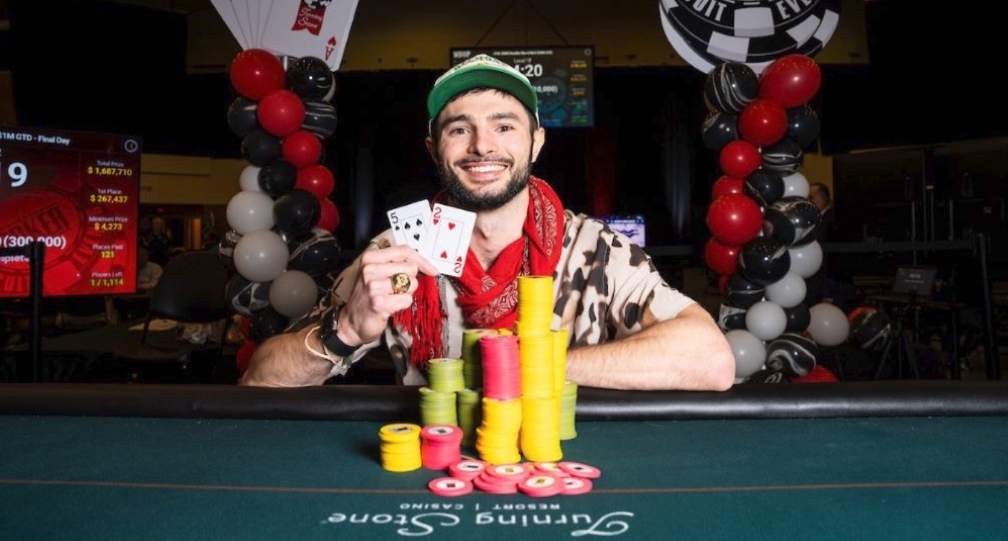
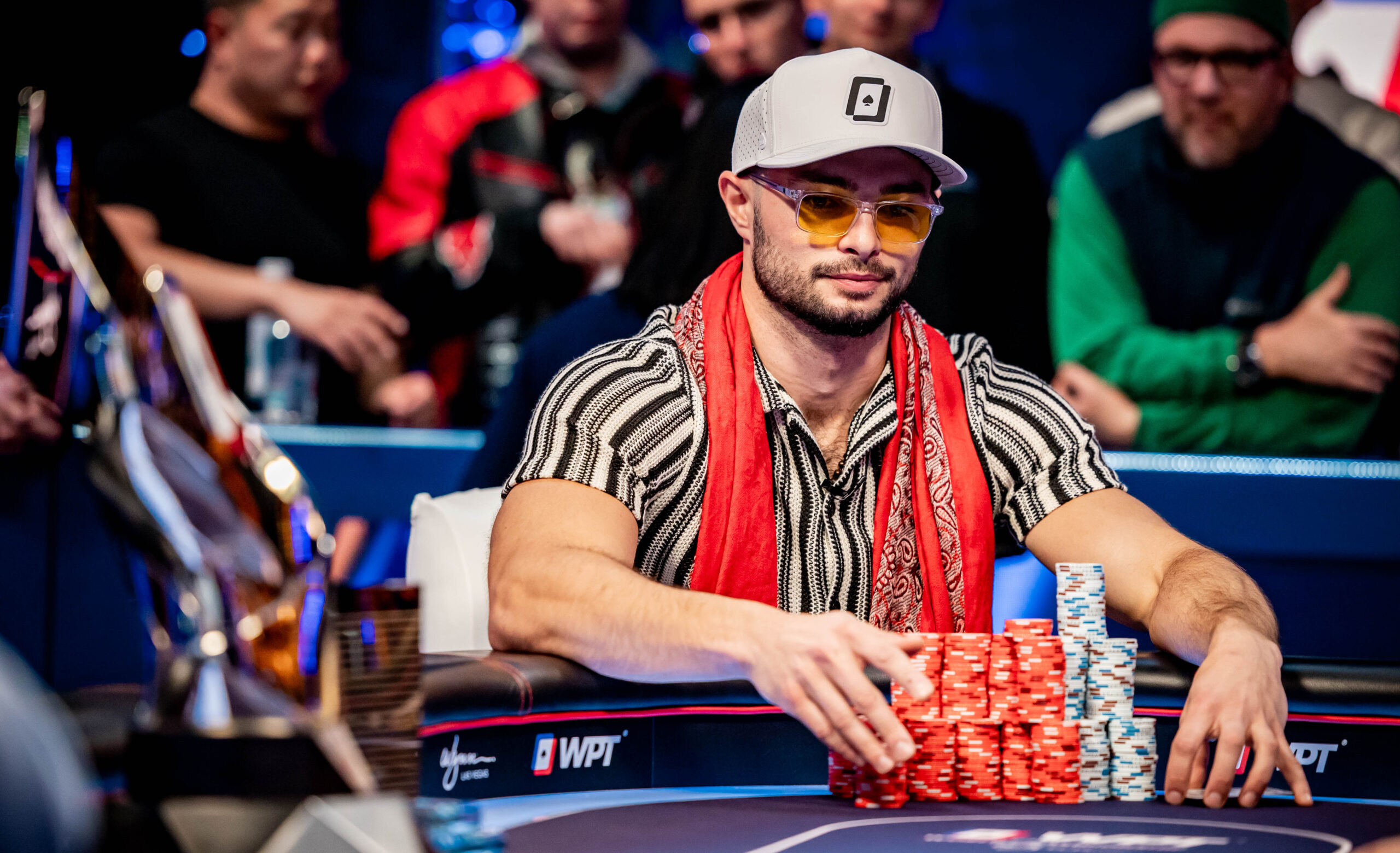
Zak VanKeuren is a professional poker player and elite performance coach recognized for his ability to operate and win under extreme pressure. The New Yorker has earned over $3 million in live and online earnings since 2021, establishing himself as one of the rising players in the game.
VanKeuren narrowly missed out on a World Series of Poker bracelet in 2024, finishing second in a $1,000 online freezeout event. Two weeks later he got another chance and gold, and this time finished off the $3,200 online high roller event for $219,450. He would finish off the year by winning the massive $1,000 WPT Prime Championship at Wynn for a life-changing $1,162,350. Most recently, VanKeuren took down the WSOP Circuit main event at Turning Stone, picking up his first gold ring and $267,437.
What separates VanKeuren from the rest of the pack is not just his results, but the system behind them. As the founder of Lucid Poker, he coaches high-performing individuals including poker players, entrepreneurs, and leaders on mastering decision-making, emotional control, and physical resilience at the highest level. His methodology blends psychology, neuroscience, and holistic performance to create a clear edge where most break down.
Card Player caught up with VanKeuren to break down a couple of key hands from his WSOP Circuit title in March.
Event: 2026 WSOP Circuit Turning Stone Main Event
Buy-In: $1,700
Entrants: 1,114
Prize Pool: $1,687,720
First-Place Prize: $267,437
Hand No. 1
Stacks: Zachary VanKeuren – 150,000 (150 BB) Villain 1 – 150,000 (150 BB) Villain 2 – 120,000 (120 BB)
Blinds: 500-1,000 with a 1,000 big blind ante
Players remaining: 450
Players: 9
ZV: This hand happened on day 1C.
Villain in the highjack raised to 2,200. Villain 2 three-bet to 6,000 from the cutoff.
ZV: I was in the big blind with A♦Q♦.
CT: What range did you put the reraiser on?
ZV: I expect the cutoff to have a relatively tight range, though he definitely was not a super nit. The range should look something like: 9-9+, A-J offsuit+, A-10 suited+, maybe some suited Broadways and wheel suited A-x.
Against this tight range and an uncapped hijack player, my continuing range from the big blind is usually going to be extremely tight. I don’t want to play any cold-calls here out of position, only cold four-bet, or fold.
CT: What would a cold-calling range look like?
ZV: It would be building a cold-calling range with hands that feel comfortable, like 9-9 through Q-Q, and some of my best suited Broadways might seem fine (and even be fine) in practice, but it just turns my already narrow range very face up and doesn’t put more money or pressure when I have Q-Q, K-K, A-A, and A-K.
So, just calling out of position to both players and allowing the hijack to either call and realize equity or four-bet-squeeze himself would be a mistake on my part. Rather than split my range into cold calls and cold four-bets, I can play my entire range as a cold four-bet or fold preflop. My range should look something like J-J+, A-K+, and A-Q suited+.
CT: What hands are an easy fold?
ZV: I think more speculative hands like A-Q offsuit and A-J suited, A-5 suited, etc., should just fold in this position preflop against strong prior action, unless I have reads that these players are uncomfortable or weak.
CT: And what hands would give you a green light to plow ahead with a reraise?
ZV: A-Q suited is probably just good enough to cold four-bet preflop. I honestly considered folding, but thought my hand was just strong enough and had good playability post-flop.
If anyone were to five-bet, I have an easy fold since I’m against K-K+ almost always. If they fold, great. If they call, I have a very playable hand post-flop against some very narrow, and face-up ranges.
VanKeuren reraised to 16,000. Villain 1 folded, and Villain 2 in the cutoff called.
FLOP: Q♣6♦5♣
CT: Not a bad result.
ZV: It’s a great flop for my range and my hand. I have all the Q-Q, K-K and, A-A here. My opponent will have Q-Q preflop, but far less K-K and A-A than I do. He will definitely have some A-Q/K-Q, but this player will basically never have 5-5, 6-6, or 6-5 suited. His range is largely medium pairs like 9-9, 10-10, or J-J, and some A-K, and suited Broadways that missed.
CT: It would seem like the flop is a no-brainer for you to fire a continuation bet.
ZV: Well, I could have definitely c-bet this board for anywhere from 15% to 50% pot. However, in-game, I felt like this player wouldn’t pay me off with his nines through jacks if I bet the flop and get money in on later streets. I don’t want him making any big hero folds here. I want to find a way to get stacks in.
Given that I had A-Q on a Q-6-5 board, the only over-card I need to worry about coming is a king. If I checked, I expected him to think I have a hand like A-K, and that he could happily bet with both bluffs and thin value.
VanKeuren checked, and his opponent bet 15,000.
ZV: I could have raised here, but given the game dynamics, I thought calling would allow him to continue to think I’m weak.
If he has a flush draw, I think he will continue to bluff on blank turns a good amount, and I can get the money in. A raise or call on flop would be fine once I checked and he bet. I like calling better, especially when I have a backdoor flush draw to go with my hand.
VanKeuren called.
TURN: 2♥
VanKeuren checked, and his opponent checked behind.
CT: So where did you think you stood after he had checked?
ZV: At that point, I expected him to have a lot of hands with showdown value. Hands like nines, tens, or jacks, or K-Q, A-Q. Maybe some flush draws or Broadway cards, but I thought he’d at least consider bluffing the turn with these to get me to fold A-K. So, I really thought he was weighted towards medium pairs.
RIVER: 5♠
ZV: At this point, I almost certainly had the best hand; if I’m beat somehow in this four-bet pot… good for him. Now I just need to figure out how to win the most money from this guy.
CT: Walk us through your thoughts on just how to do that.
ZV: He didn’t strike me as the type to raise as a bluff if I bet small. As previously stated, I think he has a hand like K-Q, 9-9, 10-10, and J-J a lot here.
Given our previous dynamics and him seeing me play all day very aggressively as a young tournament reg, I opted for the 1.5x overbet jam, putting him all in.
VanKeuren moved all-in. His opponent called and revealed 10d10s, and VanKeuren won the pot of 242,700.
ZV: Fortunately for me, my read was right, and he took only five seconds to call with tens. I stacked him in a massive pot which propelled me to having a huge stack pretty early in day 1. This allowed me to continue applying pressure and finish the day as chip leader of the flight.
Hand No. 2
Stacks: Zachary VanKeuren – 6,500,000 (54 BB) Zexiang Sun – 6,100,000 (51 BB)
Blinds: 60,000-120,000 with a 120,000 big blind ante
Players Remaining: 10
ZV: With a couple of stacks around 12-20 big blinds, a big stack with 70 big blinds, and a bunch of middling stacks in the 25-40 big blind range, I was second in chips out of the remaining 10 players.
VanKeuren raised from UTG+1 to 250,000 holding 9♦9♥. Zexiang Sun called from the button.
ZK: Sun was third in chips at the table, just behind me.
FLOP: J♦9♣6♦
ZV: The flop was an absolutely beautiful sight. However, Sun and I were basically tied for second in chips with 50+ big blinds, while multiple other stacks had under 30 bigs. Neither of us wanted to lose a big pot against each other. It would have been an ICM disaster.
CT: What was the best possible path to take to get the most value then?
ZV: I needed to be very careful with nearly all of my range on this board. Even A-A or K-K does not want to stack off on this flop, when Sun can have every set and J-9 suited for two pair.
Obviously, when I actually had middle set, I was happy to build a large pot, but I still needed to keep these dynamics in mind. I should probably check my entire range on this board.
VanKeuren checked, and Sun bet 300,000.
ZV: There are not many hands I would want to raise here, since again, bloating a pot even with an overpair is already a dicey proposition, but middle set seems like a perfect candidate. I can get called by A-J, A-Q, A-K, and 6-6.
VanKeuren raised to 900,000.
ZV: Then Sun did something I did not expect at all. He pretty quickly raised.
Sun reraised to 2,000,000.
CT: Clearly, it was time to regroup and reevaluate. Were pocket jacks a possibility here?
ZV: Yes. I honestly threw up in my mouth a little bit. Sun can and likely should flat J-J preflop here off our stacks when I raise under the gun. Obviously, I beat 6-6 for bottom set, but I didn’t expect Sun to three-bet this flop with A-J or Q-Q, so it felt like his range was two-pair+ or a big draw like 8♦7♦, Q♦10♦, or K♦Q♦. (I had the 9♦ in my hand, so I knew he couldn’t have a flush draw and middle pair.)
Again, Sun and I both had the most ICM pressure from anyone at the final table, given that we were second and third in chips.
CT: Folding, I am sure, was not an option.
ZV: Yes. I knew I was not folding middle set, even if he sometimes has J-J. The question was, should I simply call with middle set, or put all the money in? After thinking for a few minutes, I decided that Sun would likely play his 6-6 and J-9 suited this way, and maybe some other value hands that I beat.
CT: What else was a factor?
ZV: I knew he would have a good amount of draws too, and that being out of position would allow him to play perfectly against me on turns and rivers with his worse value hands and draws.
I wanted to take away his ability to over-realize equity in position, so I elected to just put all the money in and pray he didn’t happen to have top set. I obviously didn’t want him to have a big combo draw and run the equity either, but if he did, I wanted to be the one to put the money in.
VanKeuren shoved.
ZV: I faded the snap call, which made me feel great, and he went deep into the tank for more than five minutes. I honestly thought he might have a big combo draw (which I wanted him to fold), or bottom set (which I was obviously hoping he’d call).
After a few more minutes, the clock was called, and Sun ended up folding K-J offsuit with no diamonds face up, a hand I was absolutely not expecting.
Obviously, I would have been thrilled to have him call there drawing nearly dead, but I was grateful he even put in 2,000,000 chips to begin with on that flop.
I showed the 9♦ in my hand to make it seem like I could have had a hand like A♦9♦, 10♦9♦, for a pair and flush draw, so the table might think I’m more reckless than I should be in that spot, and to potentially make Sun question his decision a bit more. Mind games, you know?
Without a showdown, that hand propelled me into the chiplead at the final table, and from there, I was lucky enough to never give it up.
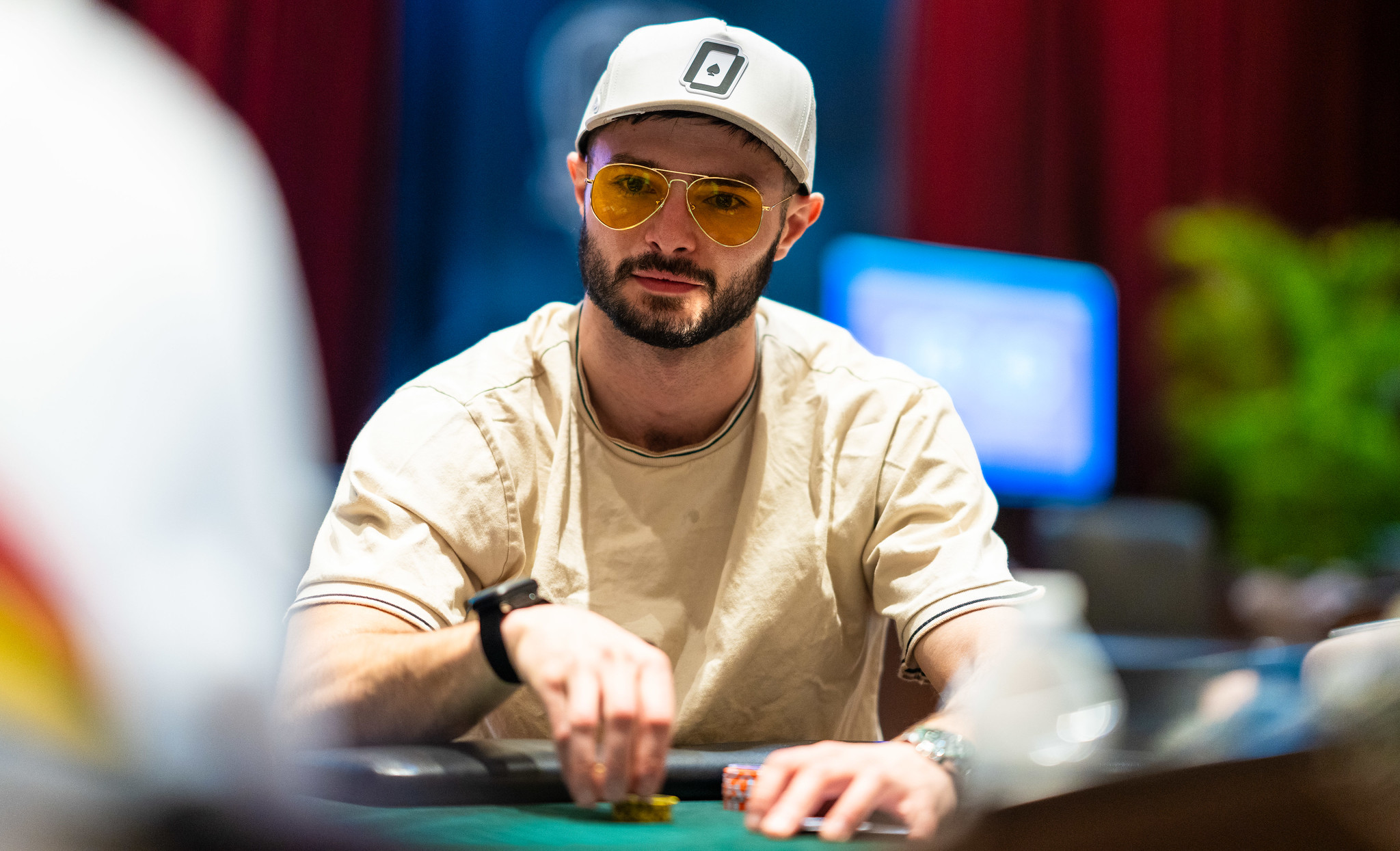
CT: Taking this event down in your backyard, so to speak, must have felt amazing.
ZV: Yes. Turning Stone was the first casino I ever played poker at. I used to buy into $1-$2 games at 18 years old, imagining that one day, I’d get to compete for $10k, $20k, maybe even $100k.
So, 10 years later to win the WSOP Circuit main event, my first ring, and $267,000, with my girlfriend Aubrey, Dad, and friends by my side, was a total full-circle moment that I’ll always remember. It was a literal dream come true for me, and I’m so incredibly grateful for that win.
CT: I have to ask. To what do you attribute your very organized and articulate way of thinking through a hand from start to finish?
ZV: I appreciate that. I think a lot of it comes from the amount of time I’ve spent studying the game over the past 10+ years, learning from some of the best minds through books, videos, courses, and one-on-one coaching. Over time, I’ve developed a structured approach to thinking through hands; focusing on understanding all the key variables at play, and more importantly, how to prioritize them effectively in real time.
Alongside the technical side, I’ve also spent a lot of time working on the mental side of performance, things like staying present, managing emotions, and maintaining clarity under pressure. That’s what allows me to actually access that structure when it matters most. Ultimately, that combination helps me not only arrive at better decisions, but also clearly communicate why those decisions make sense, which has been a big part of my growth both as a player and as a coach.
You can connect with VanKeuren at LucidPoker.org or via Instagram @lucid_poker.
- Photos by WSOP, WPT