 If you weren't in Las Vegas for the 2006 World Series of Poker, may we offer our condolences? The good news is the WSOP experience was simulated through a myriad of comprehensive live updates, interviews, video footage, and daily broadcasts. The bad news is that you missed the most prestigious and fabulous show in the history of poker – not to mention elaborate parties, the Lifestyles exhibition, and other social events. But we don't want to rub it in.
The face of poker has drastically changed for the better, with a promise of becoming even more spectacular in years to come. So, if you didn't make the trek to Las Vegas in 2006, then the 2007 WSOP should be etched in stone on your travel calendar.
In January of this year, long before the first card was pitched, we spoke with WSOP commissioner Jeffrey Pollack. Back then he was already addressing 2005 concerns and issues. But being Pollack's first visit to the WSOP, he had little time to prepare for this year's record-breaking turnout. Yet he successfully implemented some necessary changes, for a noticeable difference in design and functionality.
"I want us to be the best poker brand in the world, and the best poker brand in the sports and entertainment community," says Pollack. "We still have some work to do, but again, I think we have a great running start."
Harrah's Entertainment, which obtained the rights to the brand in the spring of 2004, managed to serve, entertain, and house nearly 50,000 participants in 2006, along with an unprecedented number of fans. But that was only the beginning. 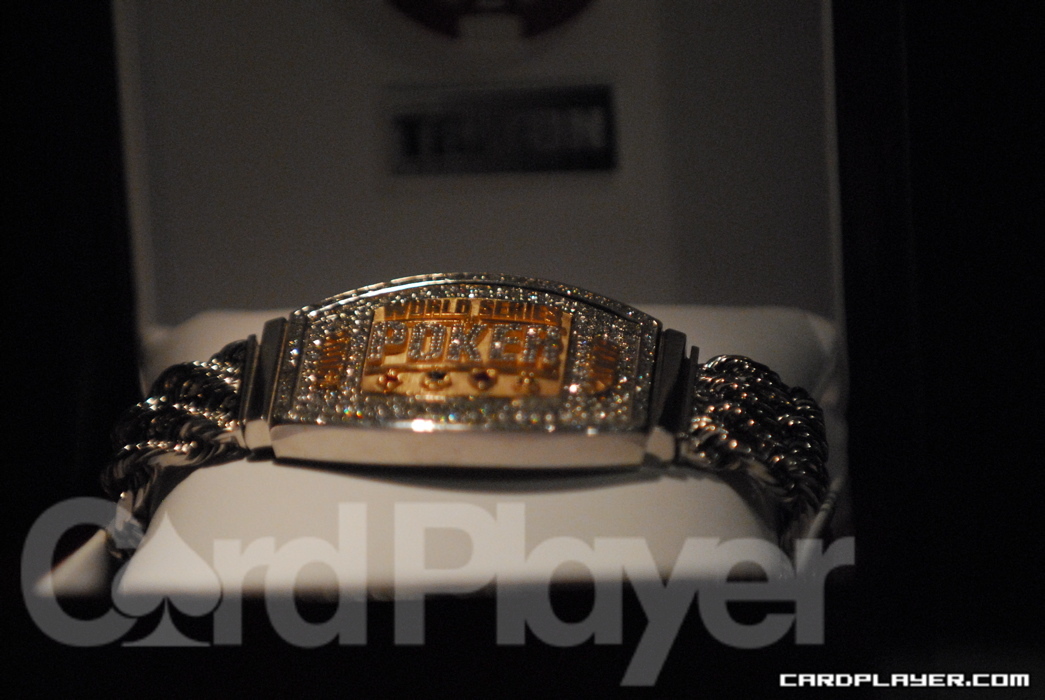 Modernizing the WSOP while preserving the history meant starting from the ground up.
Fredrick Goldman jewelers and TRITON were commissioned to give the winners' bracelets an overhaul, as the outdated square face and linkage were updated to diamond-encrusted oval plaques with braided rope bands. Finally, the newly designed bracelets can stand up to the sleek elegance of other prestigious sports awards. "They're pretty cool." Says back-to-back 2006 WSOP event winner Bill Chen, who was sporting both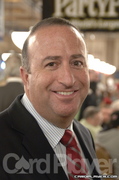 bracelets as he entered another event. "I don't mind wearing these."
Ty Stewart, the tall and amiable NFL marketing VP, hit the ground running when he joined Harrah's Entertainment as sponsorship and licensing executive for the WSOP. Gary Thompson had his hands full juggling media and communications, while Howard Greenbaum, VP of specialty gaming, was there to monitor technical personnel. Bob Daily, tournament director and Rio's poker room manager, scoured the country for available floorpeople and staff. These men and others worked tirelessly to ensure that the WSOP was a well-oiled machine.
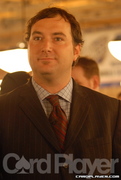 Consider the sheer numbers at this year's WSOP compared to those in the past. There were 45 events for a total of 48,364 entrants over six weeks, a 50 percent increase over 2005. The championship hosted 8,773, amassing an $82.5 million prize pool, for a 58 percent increase. Harrah's anticipates more record-breaking numbers in 2007.
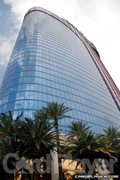
Logistically, this year was a vast improvement over previous ones. Lest we forget, it was only a year ago that the main event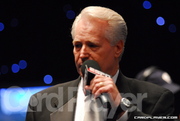 was hosted at Binions, and until 2004, the entire series was conducted either upstairs in Benny's Bullpen, or in Binion's smoky ground floor poker arena with limited space and amenities. In comparison, the Rio Amazon room, though packed to capacity, gave players the elbow room they needed to focus on their game, without unreasonable distractions from the rail.
This year, the media were also kept on a tighter leash, so players were saved from having to endure the physical and psychological improprieties of 2005, as when careless paparazzi bumped JJ Liu with an unwieldy camera lens, clipping her head as her bonnet fell to the floor. And Greg Raymer was seen protecting his holecards from a persistent reporter crouched behind his chair. Let's face it: There are very few media groups who understand poker 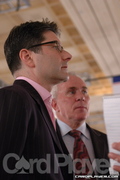 etiquette, and a select few who diligently covered the WSOP when the sport suffered in popularity. As sportswriter and journalist Nolan Dalla once said, "Until recently, the WSOP had to pay for coverage."
In addition to venue and media improvements were several logistical changes. Harrah's redesigned its poker tables with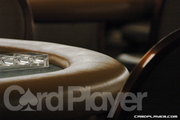 more knee room at corner seat positions, then covered them with industrial strength felt that held up nicely to six weeks of constant abuse. Alternative dining and restroom issues were answered with an affordable gourmet poker kitchen allowing voucher discounts, while nine airconditioned, and well-maintained external lavatories were added. The smoking area was moved outside, with large cooling fans and umbrella-topped tables, allowing the Amazon room, kiosks, lounges, and common areas to remain smoke-free. And along with complimentary cocktail service, reasonably priced beverage bars were located only a few feet from the tables. Milwaukee's Best sponsored an airconditioned recreational lounge, with a beer bar, pool tables, plasma televisions, and club seating located in a tent outside
 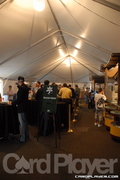 the rear exit. Then there was the issue of midsummer parking alternatives.
Harrah's recognized the needs of arriving guests. And while garages were located nowhere near the poker room, there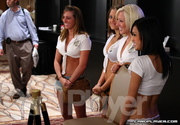 were acres of parking at the front entrance of the convention center. A new and improved valet service provided ice-cold bottled water at pickup, and offered a tempting alternative to the walk across a blistering hot lot on a July afternoon.
Finally, the lounges sponsored by online poker rooms were ideal tourist attractions. And on the days leading up to the championship, there were several lavish social affairs, including Harrah's WSOP bracelet party at the Voodoo Lounge. These events certainly elevated this year's entertainment factor. But it didn't end there.
The Lifestyles show, an exposition hosting dozens of sponsored booths, resembled a 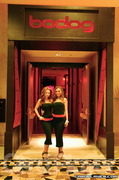 corporate convention, though
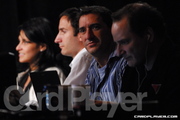
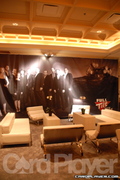 Lifestyles was open to the public. Visitors were offered grab bags at the entrance, and treated to unique collectibles, commercial freebees, and the opportunity to purchase prereleased discounted merchandise. There were spectator shows, demonstrations, and chances to meet popular vendors and online poker room representatives face to face. And Card Player occupied the main stage, with an interactive speaker, free merchandise and apparel, while inviting guests onstage for a handshake and an autograph from their favorite players.
"Isn't this fantastic?" exclaimed marketing representative Wendy Meadly. "There are so many great vendors." She then introduced this reporter to America's No. 1 conman, Todd Robbins. "You've got to see his stuff," said Meadly, as Robbins served up a DVD titled How to Scam Your Way to Free Beer. Though it was not a necessary tool for most women, I assured 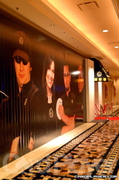 him I'd pass it on to someone who could put it to better use. Additionally, there were poker chips, bobble heads, sunglasses, playing cards, X-box demonstrations, short seminars, and several futuristic inventions, all relating to poker.
The Lifestyles show ran a little over a week, and the ending marked the beginning of the main event. 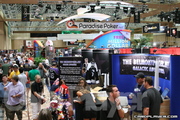
After four flights and five days of combined play, the most impressive display of fan and spectator services came on the final afternoon of the dhampionship. As nine players called it a night after competing for over 14 hours on day 11, they packed up their chips and spent the following day enjoying some much-needed R&R. But not Harrah's – which utilized all 36 hours to prepare the Amazon room for spectators, sparing little expense in creating the ultimate live experience.
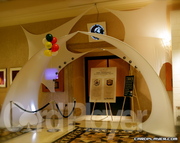 Over 300 fans anxiously waited as the doors to the Amazon room opened just before the final table action began. And Harrah's didn't disappoint, providing ample seating, eight large monitors,
 complimentary cocktail service, and an elevated VIP box, complete with sofas, side tables, and subdued lighting. On a separate stage, famous players Phil Gordon, Perry Friedman, Rafe Furst, Doyle Brunson, and several other celebrities hosted the pay-per-view show airing live on cable television. Every opportunity was afforded fans in witnessing the crowning of the $12 million man.
"I can't believe how much things have changed," said 10-time bracelet winner Johnny Chan. "It's nice, what they 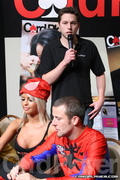 (Harrah's) have done for the WSOP."
So, after several weeks of emails, local surveys, and phone conversations, the votes have been tallied, and most agree that the 2006 World Series of Poker was a success. And while there's room for improvement, issues that arose in 2006 are already being addressed by the Players Advisory Council. And if this year serves as an example, any such concerns will be considered and implemented in 2007.
So Pollack came through on his promise, and positive changes for 2006 are here to stay. But the commissioner still isn't satisfied. "We're not building for the short term," says Pollack, "we're building for the long haul."