







Senior Superlative: Dan Lowery Buzzsaws The Competition
Part-Time Player Challenges For WSOP Circuit Crown
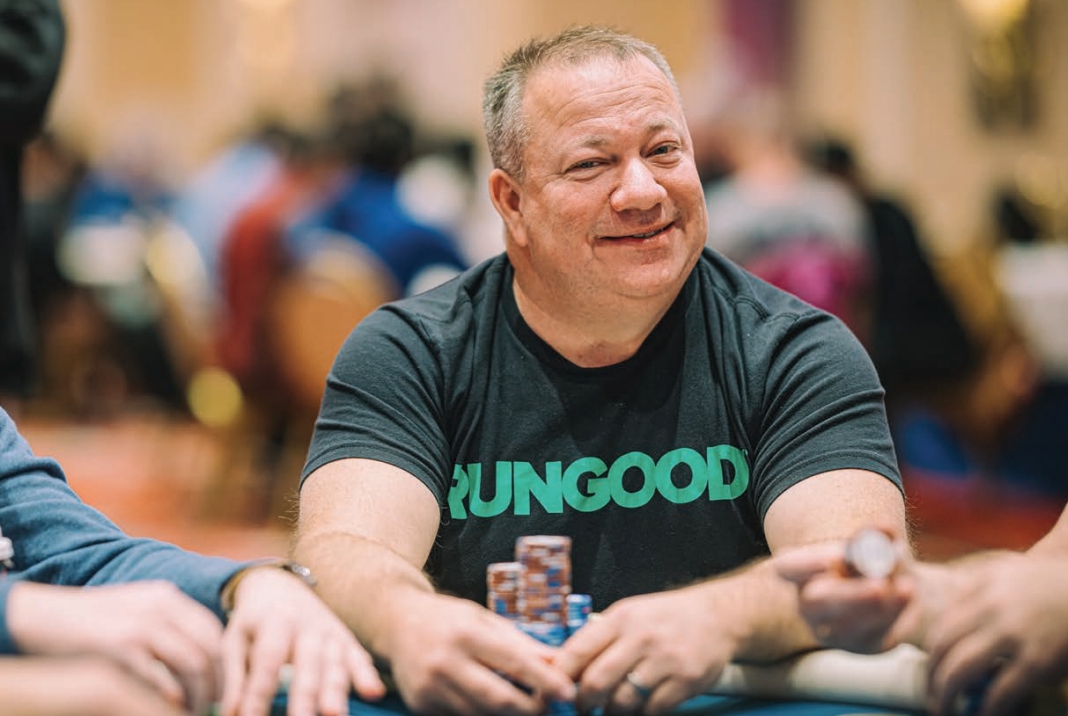
There have been a lot more highs than lows for Dan Lowery these days on the circuit. In fact, this interview was conducted just a few hours after his latest trip to the winner’s circle, when he took down the RunGood Poker Series main event in Joplin, Missouri in April for nearly $75,000.
It was the 41st live tournament victory for the 51-year-old part-time player, who operates a sawmill by day while still finding time to coach his kid’s basketball team. The Arkansas resident has managed to rack up more than $3.5 million in cashes as a weekend warrior, and most recently has made his mark on the senior circuit.
In March, Lowery won back-to-back senior’s events at the World Series of Poker Circuit stop in Tulsa, Oklahoma, growing his ring collection to 18 and pulling him into a tie for second all-time behind Ari Engel and his 19. Then a week later, he took down the Milly In Philly Senior high roller event in Mississippi.
This success came after banking almost $400,000 in the senior’s event at the WPT World Championship back in 2023, which remains the biggest cash of his career. He had just turned 50 a couple of weeks before.
Craig Tapscott: You’ve got a lot on your plate running a business and being a husband and father of four. What do you love about the game that keeps you coming back?
Dan Lowery: The competition is what brought me to the game. I’ve always loved card games, board games, or any kind of strategy games. Being able to make money while playing a social game is also alluring. The fact that I don’t have to play other than when I want to also keeps me from getting burned out.
CT: How do you go about improving your game year after year?
DL: I often go over hands and situations with good players. I study styles at the table that the better players are using. Experience goes a long way, but adjusting and adapting to the times is key. I play a very exploitative style, which works well for me.
CT: You mentioned adjusting to the times. What are some of the most significant changes you’ve noticed in tournament poker over the last 10 years?
 DL: Poker seems to have gone in cycles since I started playing. When I first started, the opening sizes were bigger. A few years later, they were smaller but were often met with three-bets, four-bets, and five-bets quite often. It was sometimes crazy, where it seemed to be a constant game of chicken.
CT: To what do you credit your longevity in the game?
DL: I’d say I’ve stayed ahead of the curve, so to speak, when it comes to certain trends. Bankroll management has been key as well. I don’t play above my means.
I have never needed or wanted a backer. I just play low- to mid-stakes tourneys. I used to play way bigger cash games than I do now with a way smaller bankroll. (laughs) I can’t say that was ever terrible for me, but looking back, I realize it might’ve been a tad reckless.
I have a business that I’ve owned since I was a kid, and I have always been able to make money outside of poker. I supplement my income with poker and poker bankroll from home when needed.
But the key to longevity in my case, I’d say, is primarily the fact that I have a great support system. My wife Krista is great, and my network of friends and road family is phenomenal!
CT: You have to be able to read people quite well to play an exploitative strategy. Can you talk about some of the tells to pick up on live players that people aren’t paying enough attention to?
DL: The typical sizing tells, timing tells, verbal tells, and all the usual body language. I feel most of it comes with experience. I’ve always been able to sense strength or weakness, and I’d say live reads are definitely the reason I have thrived in poker for so many years.
I chalk a lot of my “feel game” up to life experiences. People who know me know I have a very interesting past full of mostly personal stories. Those experiences have molded me into who I am and how I play.
CT: How do you deal with aggression from other players at the table?
DL: I’ve said in some articles in the past that ‘I start slow on certain tables.’ Whenever I say that in public, I get an eruption of laughter from the cheap seats. (laughs) So, the short answer is that I fight aggression with aggression. Yes, I will trap at times when warranted, but not many players are ever more aggressive than I am.
CT: You just won three senior events in a row. Do you approach these events differently than a regular tournament?
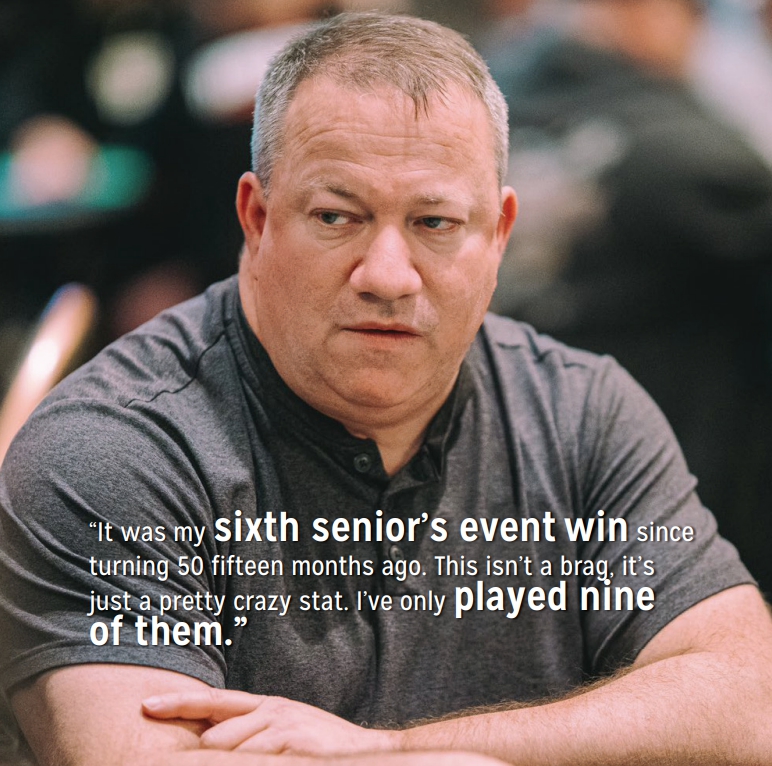
DL: It was my sixth senior’s event win since turning 50 fifteen months ago. This isn’t a brag, it’s just a pretty crazy stat. I’ve only played nine of them.
I definitely have to adjust my play, though. There are so many passive, trapping styles to contend with. I do feel the senior’s tournaments are more enjoyable and laid back. They don’t take things too serious and generally act faster than players in open fields.
Seniors don’t seem stressed over the money, which makes things easier. I don’t feel I can necessarily get away with [bluffing/stealing] more, but I’ve found I can size up and get paid more often on my big hands, and I can also control pots with smaller bets when need be.
CT: Does being one of the leaders in the WSOP Circuit ring race bring the best out of you when you show up for an event?
DL: I don’t think about it in that sense, really. If I buy into a tournament, I play to win. That’s the bottom line. I love to compete, and the results follow.
CT: What have you learned by watching and playing with the man leading the pack, Ari Engel?
 DL: Ari is great! He can be pretty relentless with his aggression. That’s where our game is very similar. But he really doesn’t seem to make many mistakes. I have a ton of respect for Ari. He is humble, kind, and a great ambassador for poker.
CT: What are the top three leaks you see at the mid-stakes?
DL: First of all, I see a lot of the younger players firing away at everything. I’m talking multiple bullets in MTTs. Then they play cash games or sit-n-go’s late into the night. They don’t get much rest and seem to be unfocused. Sadly, a lot of them will use Adderall or other substances to stay alert. Some also party really hard or drink while playing. Even if they win at poker, they end up in the pit gambling and squandering their bankroll.
Another leak I see in new players is their approach to the game. They’ll play too tight just to get to a day 2 or into the money and then find themselves too short to maneuver once a bubble bursts. They might have a decent cashing percentage, but they’re not really making money.
I also feel like many of the younger generation of players don’t pay attention while they’re out of a hand and lose out on gaining critical info on their opponents. They don’t study their opponents tells and tendencies. Then, when they get involved in a hand with those people, they’re pretty lost. They’re usually distracted by their cell phone. (I’m also guilty of this a lot!)
If new players want to avoid these bankroll dangers, they’ll take certain precautions. They’ll avoid the pit and be selective about when and how late they play. They’ll try to get ample sleep. They’ll avoid drinking while playing. They’ll put their phone in their hoodie or backpack and only check it on breaks. They’ll study their opponents and sharpen their live reading skills.
All of this takes discipline, but it is definitely achievable.
CT: What’s been some of the most challenging roadblocks you’ve encountered along your poker journey? Did you ever consider quitting?
DL: When I was first starting I had a problem with gambling. It would kill my bankroll, and I’d have to start over. I got that under control, but I’ll get on a kick from time to time, and I’ll make a sports bet at a stop. I’ve noticed that regardless of whether I was winning or losing the bet, I’d struggle with poker 100 percent at that time. It affects my mindset. What I do now is try my best to avoid that.
I’ve wanted to walk away from the game a couple of times. I’ve struggled with disrespectful people surrounding the game. A lot of the comments are jealous, losing players who don’t understand why they see me winning and they’re not having the same success. So, they get personal. It’s affected me mentally, and I’ve had to take some significant time off as a result.
I’ve learned to live with the comments and the resentment. I try not to value their opinion of me. But sometimes, it’s hard to ignore. I’ve felt I needed validation from others in the past.
I’ve proven to be a good player, but I still desire to be respected among my peers. And I’ve thought about quitting poker altogether when I haven’t been. Then I come back to reality and realize some people are just miserable assholes. (laughs)

CT: What advice do you have for players regarding the mental toughness needed to survive in poker long-term?
DL: Balance is key. I have to take time away from the casino when I’m at a stop. I’ll have nice dinners with friends. Go to a movie or go for a drive, get away from it all, and recharge.
I am a part-time player. I feel that helps to avoid burning out. I recommend having a part-time job to occupy your time and supplement your bankroll.
As for the game itself, I’d say the biggest thing for a tournament poker player to remember is that variance is real. Whether short-term, where you’re losing what seems to be an unfair share of flips, or you’re not cashing a tourney for a long stretch.
You’re not just getting unlucky, you’re probably playing badly, too. Take some time off! It could simply be a day or two. Do something other than poker and regroup. The highest high in poker doesn’t compare to how low you can feel. And losing happens way more than winning. You just have to keep that in perspective.
Dan Lowery is an ambassador for the Run Good Poker Series and can be found on Twitter/X @danmflowery.
- Photos by World Poker Tour, World Series of Poker, and Run Good Poker Series