







 Even the best players in the world make mistakes. Join Sam Greenwood as he breaks down and analyzes hands played from the high roller circuit on his Punt Of The Day Substack.
When I started Punt Of The Day, I thought having a Types Of Errors Made section would help me and the reader spot specific leaks in my game, but oftentimes I have used that section to focus on something simple, which is the Goldilocks problem.
Is the amount of money I put in the pot too much, not enough, or just right?
When you’re value betting, it’s helpful to think of how much money your hand is worth; when you’re bluffing, it’s helpful to think of what hands you’d value bet with that size. A reason I focus on the amount of money I put in the pot is because putting the wrong amount of money in the pot tends to be much more costly than other technical mistakes.
If you pick the wrong size, or have the wrong range strategy, or pick a combo that is slightly off, there is a good chance that you will be fine against a human opponent who doesn’t know your exact strategy and isn’t countering it perfectly. But if you regularly put three times as much money in the pot as you’re supposed to, it will hurt in the long run.
In today’s hand, I get every post-flop decision wrong. Some with too much money, some with not enough, but only one is really costly.
Event: 2024 EPT Paris $25,000 High Roller
The Hand
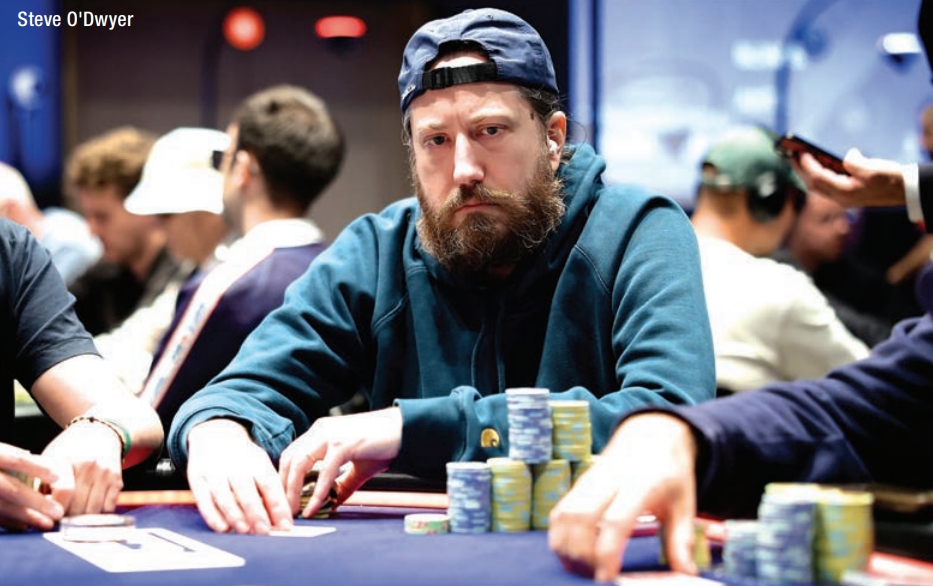
With blinds of 1,000-1,500 with a 1,500 big blind ante, the action folded to me on the button and I raised to 4,000 with 7♦5♦. Steve O’Dwyer called in the big blind, sitting on a stack of 115,000.
Flop: A♠9♠8♣ (pot: 10,500)
Steve checked, and I bet 3,000. He called.
Turn: 9♦ (pot: 16,500)
Steve bet 4,000. I raised to 16,000, and he called.
River: K♣ (pot: 48,500)
Steve checked, and I moved all-in for his 92,500 effective stack. He called with Ah 2h to double up.
What Was I Thinking?
I thought a flop of A-9-8 was a pure continuation-bet on the button vs. the big blind, and I thought the boards I checked would be the ace-high boards where the big blind has a lot of straight draws, but the cards are smaller, like A-7-6 with a flush draw.
I thought my hand, a bad gutshot, would mix between big bet and a blocker bet, and I rolled a small number and blocked.
On the turn, Steve’s lead makes sense. He does often check-call the flop with a nine, and leading the turn with a small bet from the big blind when the middle or bottom card pairs is a normal play.
I thought my turn bluff-raising range would consist of a variety of flush and straight draws, along with some no-equity bluffs with key blockers like K♠ 10x. I rolled an aggressive number and raised, and Steve called.
On the river, I thought my value betting range would be trips or better, and my bluffs would be hands like mine that played the board or worse, so I thought the appropriate size was all-in. Steve called with A-2.
What I Got Wrong
The flop is a high-frequency check with hand and range, and when I bet on this board, I favor a bigger size. I got the mechanic about the types of boards I check wrong as well. A-9-8 checks more often than A-7-6, but more importantly, I didn’t even consider checking on the flop, which is my highest frequency play.
On the turn, my logic is sound, and while 7-5 never raises, 6-5 does a ton of raising. 6-5 is also a hand that bets large on the flop close to 100% of the time, because it can fold out some 10-6 the big blind has, which makes it less likely the button gets straight-over-straighted. Raising with 7-5 is technically wrong, but it doesn’t lose much, and 7-5 resembles the types of hands that might raise.
What I got wrong on the turn was my overall range strategy, which includes raising a ton of random no-draw hands like K♣2♣. It’s a bluff that looks pretty wild, but it blocks the big blind’s strongest non-full house 9-x hands, and I can get bad top pairs to fold but also get called by J-10 and flush draws occasionally and win at showdown.
Sometimes I punt because I make a complex technical mistake. In this hand, my river mistake started from an avoidable mistake. I misread the board!
I didn’t realize that on the river, all non-full house nines chop. Therefore, if I have a hand like Q-9, picking overbet all-in is very optimistic. It means I need to get called by a bare ace more often than he has a full house. That’s hard to do.
My river range is polar, but even half-pot, in-position bets on the river are polarized. Most of my bluffs have 0% equity; a bad nine still has 90% equity, but a lot of that equity is driven from hands that we chop with or hands that will check-fold.
However, even on a deuce river that doesn’t force chops, K-9 through J-9 rarely go all-in despite having a ton of equity. The reason for that is that they’re trying to get called by a nine. If you have a nine in your hand and your all-in is trying to get called by a nine, it makes sense to bet a smaller size that will get called by an ace more often.
It’s also hard to bluff for overpot when you can’t bluff with blockers, your opponent won’t have a nine often enough when you’re value betting, and will have it too often when you’re bluffing.
Types Of Errors Made
- Bad Flop Strategy
- Misread The Board
Grade
For a hand where I got every decision wrong, I actually think I did okay here. None of my decisions lose a ton of EV. If I had 6♥5♥ this would be a normal, solver-approved poker hand. It’s better to bluff 6-5 than 7-5, because you want your opponent to have 10-7, but it’s not that costly overall.
The main problem with this hand is in aggregate. I would have been putting way too much money in the pot on the river with bluffs and trips. It’s not the costliest play to expand your bluffing and value-betting ranges.
It’s possible that when I actually do have trips in this spot, I would have read my hand correctly, but I did not this time, when I had a bluff representing trips. That could be a big problem facing an observant opponent.
Overall, this hand wasn’t too bad, and I gifted chips to Steve. (One of my premium subscribers!) But when I misunderstand my range strategy because I made an error as simple as misreading the board, it’s hard to give myself a good grade. Let’s say B-.
 Sam Greenwood is one of the winningest tournament poker players ever and is third on Canada’s all-time money list, having cashed for $42 million and counting in high roller events all over the world. The former stock trader-turned-champion has played millions of poker hands and is breaking them down street by street on his Punt Of The Day Substack. You can reach out to the Run It Once coach on Twitter/X for private coaching @SamGreenwoodRIO.