







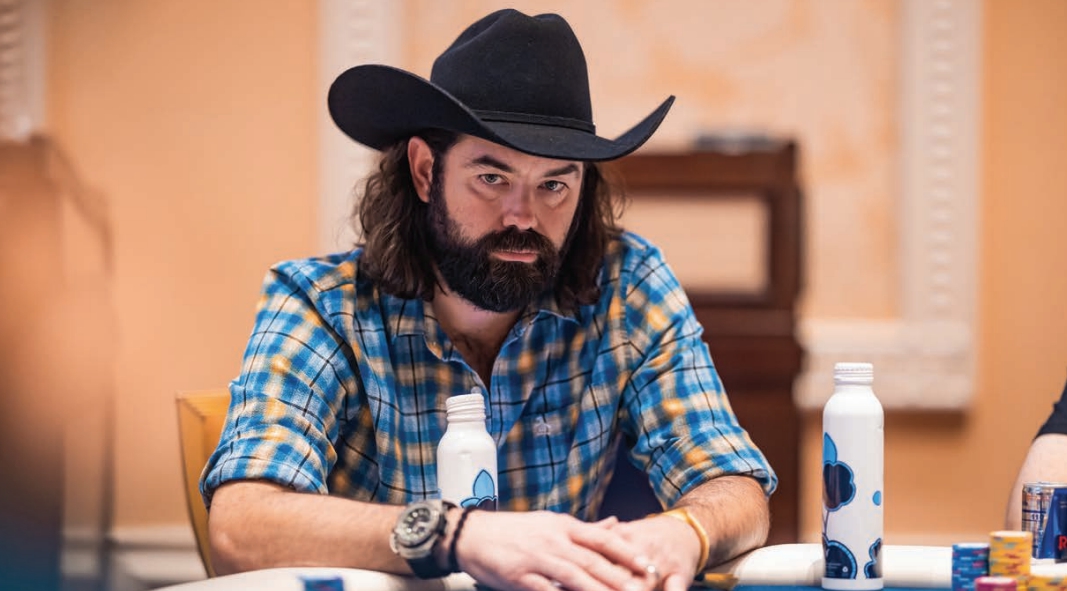
Many poker players have made the transition from dealing to playing full time. Tyler Patterson navigated that transition and the move paid off with a long, successful career in the game.
The native of Seattle, Washington, left college after a year to pitch cards, but he was soon making more cash on the other side of the table. He now has more than $4.3 million in tournament winnings in a career dating back to 2005, with two World Series of Poker bracelets and World Poker Tour title on his resumé.
The first big score came in 2012 when he took third in the WPT Borgata Poker Open for $298,950. Patterson’s first bracelet came followed in 2014 in a $1,500 pot-limit Omaha eight-or-better event for $270,992.
He added the WPT title a year later, banking $375,270 at the bestbet Bounty Scramble. He also went back-to-back, taking fourth place the next year for $100,643. Then there was the deep run at the Bay 101 Shooting Star in 2020 for $113,860, which was interrupted by the COVID pandemic.
Once the poker world reopened, Patterson finished runner-up in the $2,500 RunGood Poker Series main event at Thunder Valley Casino for $156,845. Eight months later, he returned to the same venue and same tournament, and won it all for $200,422. Patterson picked up another RGPS title there this November, along with $60,185. Last summer, Patterson added his second bracelet and career best score in the $3,000 six-max no-limit event, banking $574,223.
The 42-year-old poker pro was recently a guest on the Table 1 podcast and detailed his journey in the game. The conversation included how he got started from the dealer’s box and his long-term backing relationship with a friend who has supported him for 18 years. Some of the discussion included his wins at the WSOP and WPT, the strange scenario of making a delayed-final table right before lockdown, moving to Barbados to play online during the pandemic, and more.
Keep reading for highlights of the interview. You can also watch or listen to the entire episode on YouTube, Spotify, Apple, or any podcast app.
Tyler Patterson: I played beer league softball with this guy who ran a dealing school, and he just raced me through it in a week. I got certified and got a job really quick, just in the summer dealing cards.
Everyone kind of played for fun around that. So I started playing, loved it right away, and was maybe accidentally winning right away. We’re talking about $100 tournaments or $3-$6 or $4-$8 limit hold’em. When I got good, I moved to $5-$10 or $10-$20 limit hold’em.
Justin Young: So, you got your first reps through watching people?
Tyler Patterson: Yeah, for sure.
Justin Young: Were you one of those dealers that would make comments after hands? It’s crazy to me how many dealers make a comment to somebody afterwards like, ‘Man, can’t believe he got away with that bluff.’
Tyler Patterson: Yes, but I was dealing $3-$6 and $4-$8 limit hold’em, so it was acceptable. I definitely talked too much in the box. That’s part of making poker fun, right? I couldn’t have held myself back.
Justin Young: So how are your chops? Are you still keeping a sharp (dealing) just in case things turn south? (Everyone laughs)
Tyler Patterson: Every once in a while, I get to play in a couple home games. If the dealer needs a break, I don’t mind stepping in.
I enjoyed dealing. I didn’t have aspirations of being pro at first, so it was probably two or three years of dealing cards. We had to deal poker and in the pit, so I also dealt Pai Gow and Spanish 21, all that nonsense. But once I was winning, and then realized poker was on TV all the time, I thought maybe this could be real.
There were just books back then, so I read everything there was. I was better than all my friends, but the games were still pretty small to make a living. I was just having fun winning a little here and there.
On my 21st birthday, I took a trip to Commerce for the L.A. Poker Classic. I had my whole life bankroll of $3,000 or $4,000, and that became $25,000 or $30,000 by the end of the trip. The tribal casinos in the Seattle area started [spreading] no-limit games. I paid off some student loans and started transitioning into dealing less and playing more.
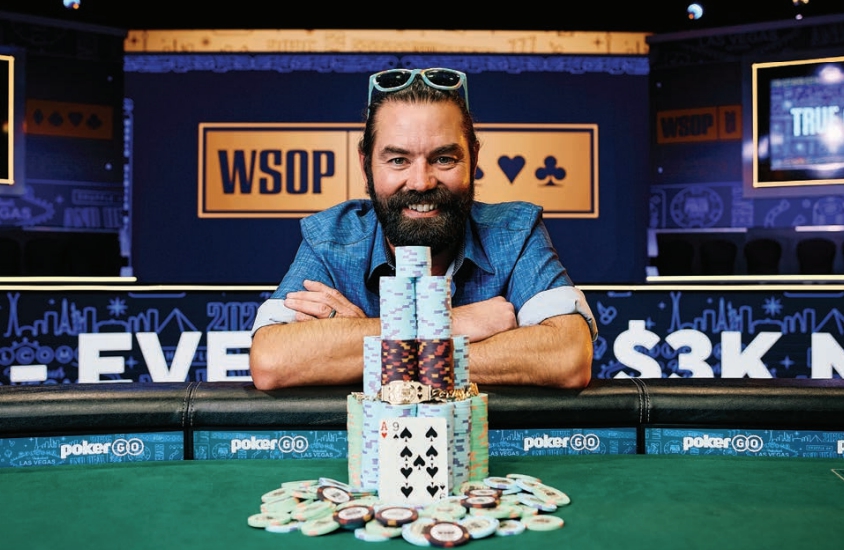
Patterson then discussed entering into a backing deal that remains active years later.
Tyler Patterson My friend Steve [Garfinkle], who is still to this day my tournament backer, was friends with Gavin Smith. Gavin was staking Erick Lindgren, or maybe Lindgren was taking Gavin at the time. I don’t remember, but they had discussed how they went about these things.
He is a history professor at Western Washington. He was a sharp legal mind. He wrote up a legal contract because we weren’t that close yet. We did the whole LAPC series together and I did okay, and we’ve been doing this ever since.
Even with all the success that we’ve had, I’ve never wanted to even consider going on my own for tournaments. He’s never had a piece of my cash [games], but in tournaments it’s nice to have that safety net. We’ve both done really well.
Justin Young: So, he’s been at least a partial backer or full backer for 18 years?
Tyler Patterson: Yeah, he’s talking about writing a book about it because he’s had (Matt) Affleck too for probably 15 years. Steve was the officiant at my wedding. We’re super close family friends.
Justin Young: It’s cool to see a backer relationship that has lasted that long because a lot of times one just gets fed up with the other.
Art Parmann: Does he even play poker?
Tyler Patterson: He does. He got 10th in the WSOP main event the year that Jerry Yang won. He actually got on the TV coverage on the hand he busted in 10th. He was on camera a couple times, but they never introduced him. He does have some poker success, and definitely has poker chops. He plays in the same home games I used to play in Seattle, and he plays some tournaments here and there.
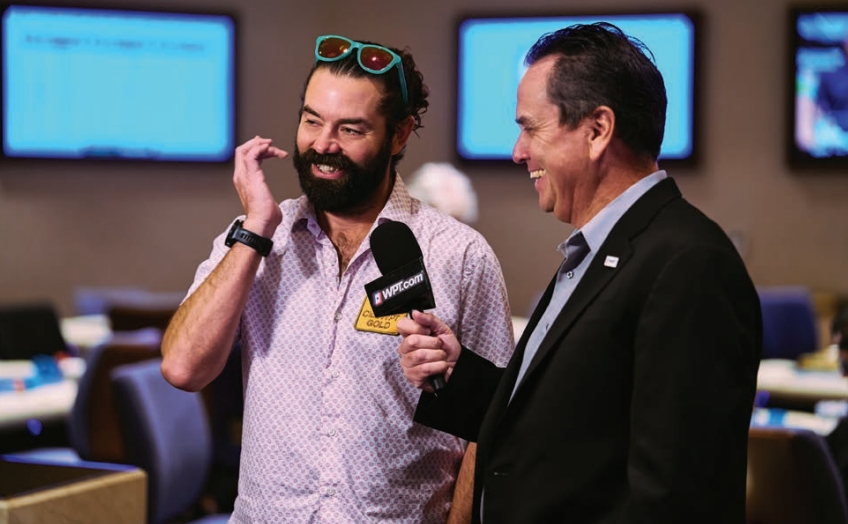
The conversation later shifted to discussing Patterson’s win at the WSOP in 2014 followed by the WPT bestbet Bounty Scramble in 2015.
Tyler Patterson: We were playing PLO hi/lo all the time. My backer convinced me that I had to play the $1,500 PLO [eight-or-better] at the World Series. I had never played a PLO8 tournament, but I played tons of hours of cash at it, so I felt comfortable.
But I wasn’t going to pick that tournament. The way we operate is I make a big schedule of tournaments I think I should play, and he adjusts it a little bit. He put that one on there and I went on to win it.
There were like 990 players, and it was extremely soft in the beginning. It’s not my specialty. I’m not one of the world’s best at PLO8 at all. But the skill edge is still bigger versus the lower average players at PLO8 than it is in hold’em. I had chips and it just worked out.
That was a really fun final table because my friends were at the table and I got heads up with Scott Clements. Scott’s also from the Seattle area, so we had the same rail. There’s a picture of us having like 30 beers on the table because we each ordered as many as they could give us so we could go give them to the audience.
Justin Young: Did that change your life?
Tyler Patterson: It was $270,000, which was not life-changing. But it was validating and made me more comfortable. Then the very next year I won a WPT [for $375,270]. I felt like I was really on the map. I was really a tournament guy from then on.
Art Parmann: What was the bestbet [Bounty Scramble] in Jacksonville like?
Tyler Patterson: Being a bounty is a blast. I don’t know if I really had the credentials so much, but I am Matt Savage’s golf buddy, and he runs the tournament. If I lose enough money to this guy, he’s going to give me some perks.
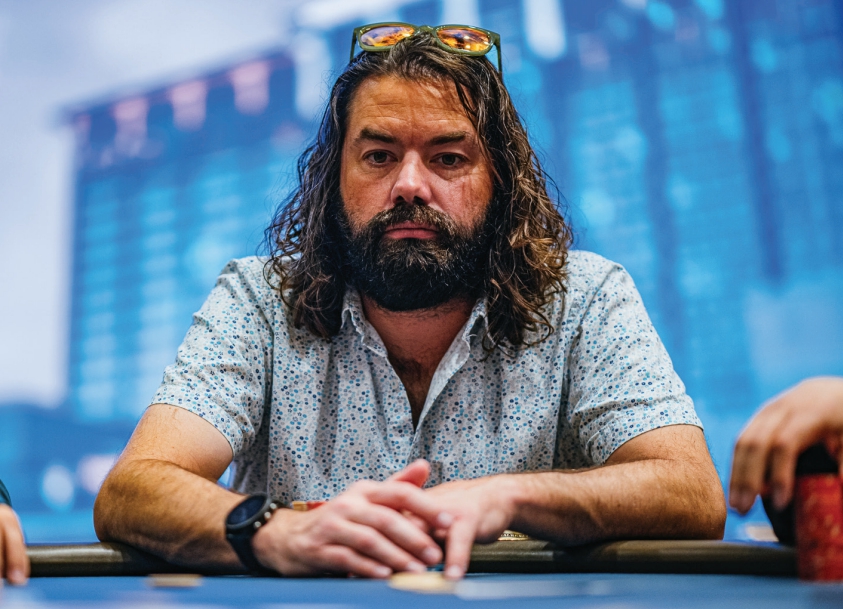
Patterson later talked about the unique situation of making a deep run right as COVID was breaking out.
Justin Young: Let’s go back to COVID. I think it’s interesting you were playing the Shooting Star when all the shit was going down. You made a final table and it was a lot of money up top.
Tyler Patterson: That was actually pretty wild. COVID was on the radar. It was in Asia when we were at LAPC, so people started having hand sanitizer. A lot of the Asian dealers were wearing masks, but no one else was wearing masks yet. There was this weird racism, meanness to the dealers. But Savage is really good about protecting dealers so that was handled well.
We got to Thunder Valley. Now there was hand sanitizer everywhere. They were talking about those dividers [between the players]. I was thinking about not going to the next stop because this was going on, but we didn’t really know if it was serious yet or not. We got to Bay 101 and it was now in the news that there’s a new hotbed in the area, so they were a little scared. Bagging after day one, there was talk of, ‘Hey, are we going to do this?’
At the end of day 2, there were 11 people left. We all got together, and they asked, ‘Do you guys want to just ICM chop this?’ Many of us didn’t. We didn’t know if we were supposed to be scared of COVID yet or not. All the employees had to come the next day anyway, so we weren’t saving anybody by not playing. So, we came back the third day, and the Swedish pro (Michael Tureniec), who’s very good and had a medium stack, shows up visibly ill and wearing a mask.
He was definitely not faking it. It didn’t do him any benefit to get an ICM chop. There was some fish left in the field and even some that had a lot of chips. I definitely wanted to play. Kristen Foxen wanted to play. We started talking to Anthony Zinno and Lexy Gavin, who were both sitting right next to Michael. Anthony is a germaphobe by nature and Lexi was scared.
In the end, I really wanted to play but also I didn’t know if I was holding people hostage for their lives. So, we decided to chop it.
The day before, in the middle of day two, we saw the PGA Tour canceled in the middle of a tournament. We saw March Madness canceled in the middle. It was the right thing for us to chop. I got just around $100,000, which was really nice.
COVID actually sent me into a different world too. My wife and I were living in Vegas, renting at the time, and we were just at the end of our lease and we really liked our place. But she found this thing on Twitter, ‘If you can prove you have your own income so you’re not stealing a job, and you can work remotely, you can live in Barbados for a year as an American.’ So, we took that opportunity.
It was perfect timing. When else were we going to do it? There was no [live] poker, so I had to play online anyway, and in the States, that’s kind of hard. I think I got a lot better. We ended up staying for two years because we loved it so much, and made lifelong friends.
About The Table 1 Podcast
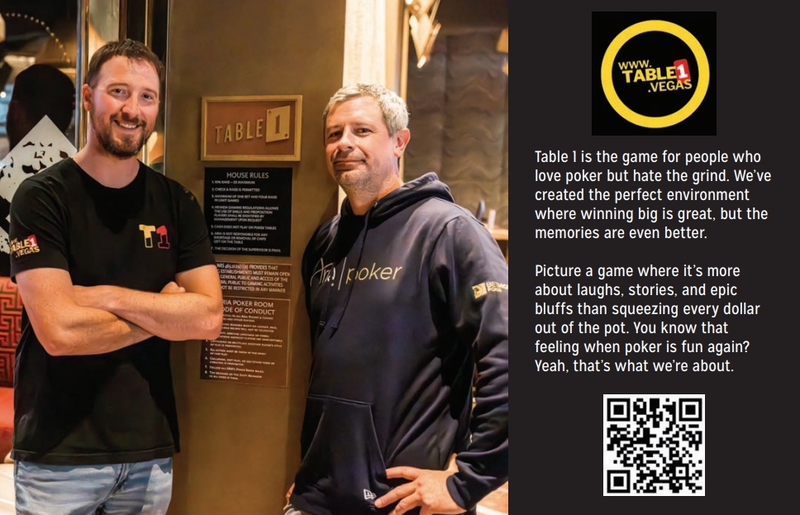
Hosted by high-stakes poker pros Art Parmann and Justin Young, the Table 1 Podcast is on a mission to make poker fun again. Tune in to see world-class pros talk poker, gambling, and all manner of life experiences on and off the felt. Visit the website for the podcast, newsletter, or even to get in the game. ♠
- Photos – PokerGO and WPT