






Even the best players in the world make mistakes. Join Sam Greenwood as he breaks down and analyzes hands played from the high roller circuit on his Punt Of The Day Substack.
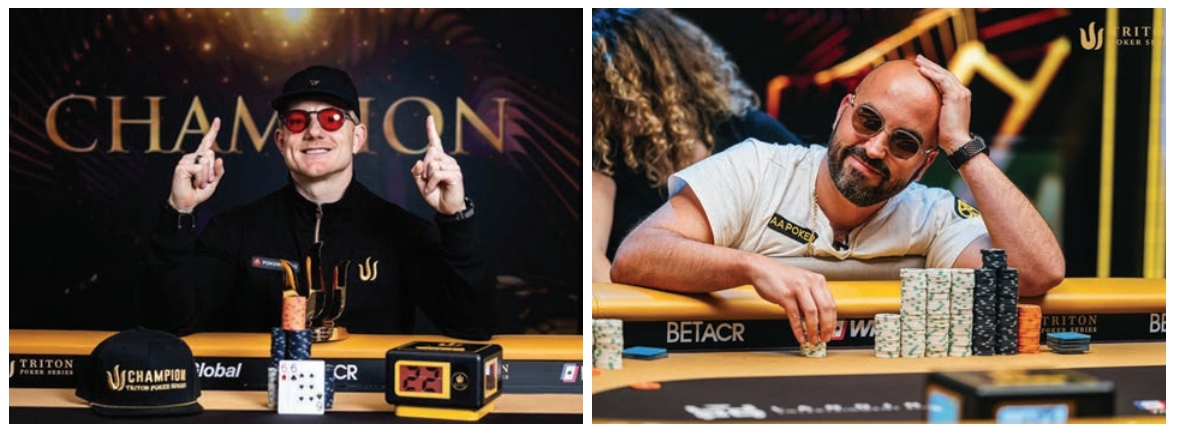
Jason Koon had another great series at Triton Montenegro this summer, winning two titles to give him a dozen on the tour overall, by far the most of any player.
He closed out the trip winning the $30,000 PLO Bounty Quattro, which is a more challenging format than one might think, but has as non-serious an atmosphere as a high roller tournament can have, especially when it’s the final tournament of the trip. Most of the no-limit hold’em players have left town by then and many of those that are left are “upside down” on the trip. Even if they win the event, they’re likely going home with less money than they came with.
The other title Jason won during the series was as serious a tournament as you’re going to find, the $150,000 no-limit event. It is the highest buy-in non-invitational tournament and is usually the toughest tournament of the whole series. It’s always a special tournament and features some of the most skilled play you will see on a Triton stream.
Many times, when I describe a hand as “interesting” it’s a euphemism for “punt,” but in today’s hand Jason played a hand against Bryn Kenney that was one of the more interesting and confounding hands I saw on stream throughout the series.
Was it a punt? Let’s read on.
Event: Triton Montenegro $150,000 High Roller
The Hand
With blinds of 20,000-40,000 with a 40,000 big blind ante, there were 19 players remaining and only 17 spots in the money. Bryn Kenney, sitting on a stack of 1,025,000, raised to 80,000 with Q♣Q♥. Jason Koon, with 2,300,000, called from the small blind with A♣4♥. Poseidon Ho folded from the big blind.
Flop: 7♣6♣3♦ (pot: 240,000)
Jason bet 50,000, and Bryn raised to 255,000. Jason moved all in, and Bryn called off the rest of his stack.
Turn: 10♥ (pot: 2,090,000)
River: 5♥ (pot: 2,090,000)
Jason made a straight on the river, and Bryn was eliminated.
What Was Jason Thinking?
Watching the replay, after Jason called, Poseidon folded without looking at his cards. I think Jason likely picked something up on Poseidon preflop, telegraphing a fold from the big blind.
If you know the big blind is going to fold preflop, A-4 offsuit is an appealing continue closing the action vs. a min-raise.
Three low cards with a potential straight is a very nice flop for Jason’s small blind defense range; it’s still pretty nice even if Bryn recognized Jason peeled wider because he noticed Poseidon was going to fold.
Jason leads the flop with the nut advantage in a situation where he can put a lot of pressure on Bryn two off the money. Bryn raises and Jason has a close decision, but with the A♣ in his hand, Jason is never getting it in vs. a better ace high, and he has some backup when called.
Shoving for 90% pot can never be that big a mistake when you have 30% vs. his most likely value hands. Jason went for it, saw the bad news, and then saw the good news.
What I Think
Before looking it up (cheating), let me take a stab at it.
Jason’s decision preflop is close if you think Poseidon is 100% to fold, but I think it’s winning if you know Poseidon is folding and you think Bryn will play post-flop as if you have a normal small blind defense range.
The flop lead seems dicey to me, because it seems like Bryn has a very strong preflop range, and he might be able and willing to shove over a flop lead with an overpair so close to the money. If Bryn can play shoves, Jason’s hand is the exact type of hand that would have a little too much nut or bluffing potential to want to bet-fold.
If I played leads on the flop, I think I’d pick a polar size that could generate some more folds against unpaired hands.
Once Bryn raises, the hand turns into less of a technical poker hand and more of a hand about reading the man. If he’s got it he’s got it, but you have to make the right read.
Jason’s hand has all the properties of a good bluff-shoving candidate, and it’s just a question of whether Bryn is raise-folding enough. I don’t know the answer to that question and would lean towards no, but calling the raise out of position or folding to the raise are also pretty ugly.
I don’t like shoving, but it seems like the best of three unexciting options.
What The Solver Says
The solver gives an interesting output, which is that Jason leads the flop for a small size with a very high frequency, and Bryn almost never folds the flop with range, but also never raises.
Not rarely raises, never raises.
The idea of this play in solver land is that, as the chip leader, you get to make a small bet that freezes the short stack and lets the big stack showdown for cheap or put more pressure on the shortie later in the hand. The short stack is happy to co-operate and play small-pot poker two off the money with some micro stacks in the tourney.
We don’t know what the solver says Jason should do vs. a raise, because it never raises as Bryn.
Grade
This is one of those hands where Jason makes three decisions— all of them are defensible, but they all feel marginal, and it adds up to a hand that overall feels like there’s something he could have done differently.
Preflop makes sense, but Jason is getting the same pot odds as if Bryn open raises to 2.75x and he was in the big blind instead. I’d feel pretty gross calling a 2.75x with A-4 offsuit from the big blind here, but it would be close.
Calling a min-raise from the small blind with a big blind who is sitting out, we’re getting the same pot odds, but the preflop raiser will give us credit for having a tighter range, which makes me think the call is fine.
Jason’s flop lead is a nice find vs. a computer who will play zero raises, but like most aggressive big-stack plays that ICM outputs use, they only work if your opponent cooperates.
Given that Bryn did raise, and that in ICM outputs I ran, checking Ac 4x and leading 20% pot have the same EV, I think checking is better against an in-position player who will play flop raises.
Once we face the flop raise… ugh, even with hindsight, having run sims on this hand and thinking about it for a week, I still don’t really know what to do. Can we double-check our hand to make sure we don’t have a pair or a flush draw or an open-ender or something?
Overall, I think the shove is not a punt, but it has notes of punt. However, I think when you have three decisions in a hand, all of them have notes of punt, and you get it in bad, it adds up to something worse than the sum of each individual decision.
I’ll give this hand a C+
 Sam Greenwood is one of the winningest tournament poker players ever and is third on Canada’s all-time money list, having cashed for $42 million and counting in high roller events all over the world. The former stock trader-turned-champion has played millions of poker hands and is breaking them down street by street on his Punt Of The Day Substack. You can reach out to the Run It Once coach on Twitter/X for private coaching @SamGreenwoodRIO.