



Amidst ongoing concerns about upcoming tax changes for poker players due to Donald Trump’s “Big Beautiful Bill,” Doug Polk became an outspoken advocate for reversing the changes.
Since President Trump signed the federal statute into law on July 4, several poker players stepped forward. Polk’s voice has been one of the loudest to speak on the potentially devastating effects for both live and online poker players.
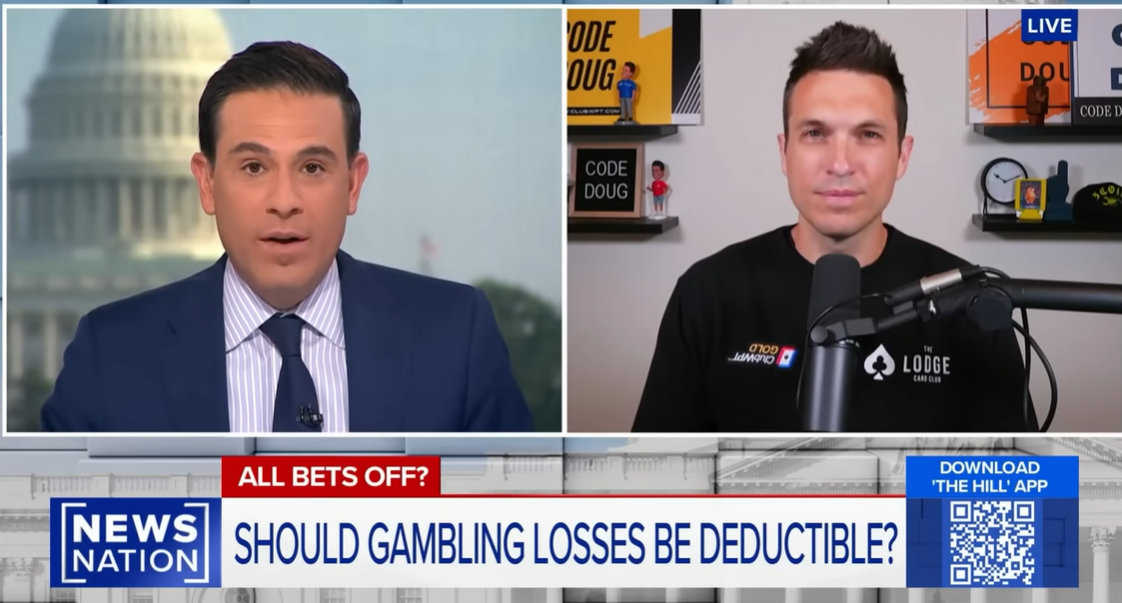
Polk appeared on News Nation with host Blake Burman to present the case for overturning the BBB tax provisions.
Could new tax code end the gambling industry as we know it? Both sides of the coin with @marctshort and @DougPolkVids. @thehill @NewsNation #GamblingTwitter #casino #bettingtwitter pic.twitter.com/1E9XMY2HIu
— Blake Burman (@BlakeBurman) August 4, 2025
“Most people that gamble, at least at some serious sort of level, if you’re a winning gambler, your margins are small,” Polk said. “You might gamble, let’s just say, $1 million a year. Or you might make $1.1 million or $1.05 million. So you might be making $50K, $100K, $150K. This law essentially makes you irrelevant. You no longer can actually even exist in your career path.”
The Risks At Hand
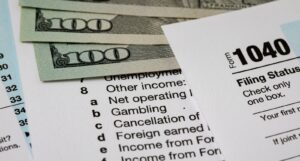
The change in tax code, which is set to be implemented in 2026, directly affects how gambling taxes are calculated. Gamblers will now only be able to deduct 90% of gambling losses and expenses. In Polk’s scenario, a poker player has $1 million in buy-ins. With $1.1 million in cashes, their total profit is $100,000 for the year. But because they can only deduct 90% of their losses, they will be taxed as though they won $200,000, rather than just the $100,000 profit.
Before Polk went on the air, Marc Short represented the perspective of those in support of the change. Short was previously the Chief of Staff for former Vice President Mike Pence, and now works for the conservative advocacy and policy group Advancing American Freedom.
Short compared gambling wins and losses to stock gains and losses. But in Polk’s response, and several pointed replies on X, several major flaws in Short’s argument are clear.
“Marc’s point might make sense if you could carry forward losses in gambling like you can with stocks,” said Polk. “But his point actually doesn’t make any sense whatsoever, because there’s also an issue with gambling in our tax code. We’re not allowed to carry forward losing years. So you might have a $3,000 cap on the amount of loss you can write off in a given year for your stocks, but you can carry that forward to the next year for your next year’s taxes; not the case with gambling.”
Bipartisan Repeal Efforts
Over the last month, strong voices on both sides of the American political spectrum support a repeal of these changes. Two Democrats from Nevada, Senator Catherine Cortez Masto and Representative Dina Titus, each filed bills. Republican Representative Andy Barr also filed a bill.
Jason Smith, the Republican Chairman of the Senate Ways and Means Committee, also committed to reversing the effects of the BBB gambling provision.
Polk also conducted an interview with Cortez Masto in recent weeks on his YouTube channel.
As he wrapped up his segment with Polk, Burman asked what the effects of failing to reverse this tax change would be.
“It’s going to have a drastic impact,” said Polk. “Not just for Vegas, but for many cities around the country, many different states. I live in Texas. Here, we have thousands of people that this will impact who can’t play. You’re going to see revenues drop, you’re going to see tourism drop, you’re going to see jobs lost. You’re going to see a negative impact across the entire gambling space.”