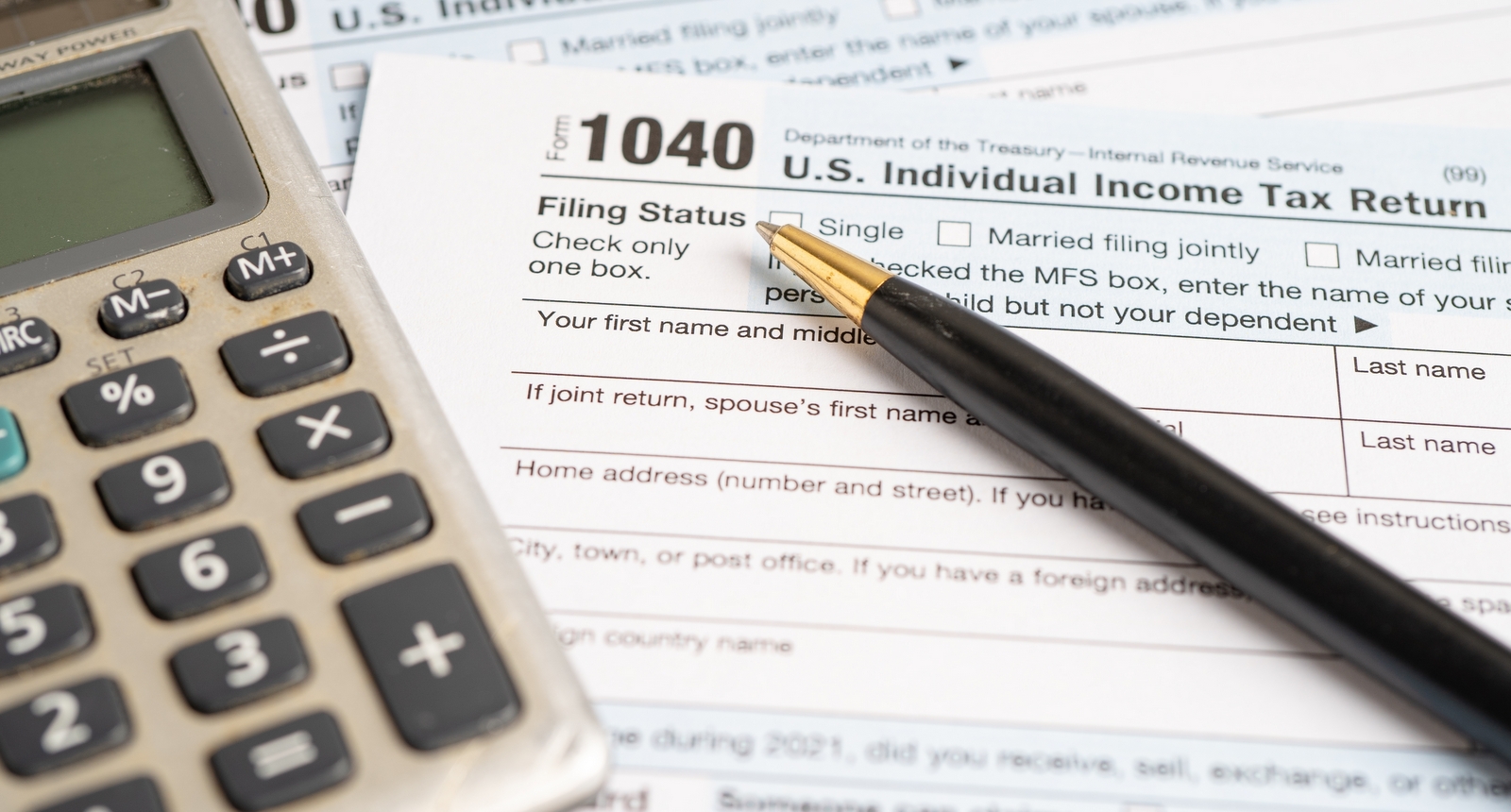
One tax expert has shone a light on a recently added provision in the proposed budget reconciliation bill that could significantly impact professional gamblers.
Both chambers of Congress passed the “One Big Beautiful Bill.” The Senate approved the bill Tuesday after Vice President JD Vance broke the 50-50 tie in the upper chamber.
A portion of the 940-page bill limits how much gamblers can deduct to 90% of their losses. Russ Fox, a principal of Clayton Financial and Tax in Las Vegas, offered an example scenario on his Taxable Talk blog.
“Consider Larry, a professional gambler, with $500,000 of gambling winnings on the poker circuit, but $440,000 of losses and $50,000 of ordinary and necessary business expenses; he’ll have to pay tax on $59,000 of income rather than his $10,000 of net income,” he wrote. “There are two inescapable conclusions if the Senate version becomes law. First, keeping a gambling log will be essential: If Joe had $100,000 of wins and $100,000 losses in the same session he would have $0 of gambling winnings. Second, this would be another big negative towards gambling and would definitely hurt tourism in areas like Nevada.”
Many professional players on both live and popular poker websites use Fox as their accountant and are regarded as leading experts on gambling tax law.
Poker Pros Express Concern Over Senate Version
The House and Senate are ironing out the differences in their versions of the bill. However, only the Senate version contains the gambling tax provisions. The change would take effect in 2026 and only allow gamblers a 90% deduction of gambling losses and expenses.
Phil Galfond labeled the provision as “quite scary” and released a video on Twitter/X outlining his views on the issue. He pointed out that even a break-even gambler would have to pay taxes.
“Let’s say that over the course of all the sessions that we played throughout the year, we won $5.2 million and we lost $5 million for a net of $200,000,” he said. “Now, we would pay as if we won $5.2 million, minus 90% of $5 million, which is $4.5 million for a fake net of $700,000 … so you would make $200,000 during the year and pay tax as if you made $700,000.”
In essence, a player would need to win at least 10% return on investment to break even. Galfond also offered some other scenarios on how the bill could greatly impact professional poker players.
What’s worse is that the numbers for “wins” and “losses” by session can be massive for pros.
A pro who earns $200k/year might have $3m in winnings and $2.8m in losses.
90% of $2.8m = $2.52m
$3. – $2.52m = $480kThis means earning $200k and being taxed as if they earned $480k
— Phil Galfond (@PhilGalfond) July 1, 2025
Nate Silver, poker player and founder of the FiveThirtyEight political polling site, echoed some players’ thoughts on the matter and warned that the bill could further hamper the ability of players to profit.
“Tax code is already punitive to poker players (you get taxed on winning years but can’t write off losing years unless you file as a pro; it’s easy to have a down year even as a good player) and the Senate-passed version of OBBBA would make it considerably worse,” he said on Twitter/X.
Poker pro Chris Brewer said the provision would be a “death sentence” for playing poker professionally. Matt Glantz offered his own perspective on the issue as well.
The new federal tax proposal on gamblers in the current Senate bill, often referred to as the “Big, Beautiful Bill,” introduces significant changes to how gambling winnings and losses are taxed:
Limits on Gambling Loss Deductions: The Senate version would permanently limit the…
— Matt Glantz (@MattGlantz) July 1, 2025
Photo courtesy of Shutterstock