







Slowroll in Poker: Definition, Strategy & Common Scenarios
What is a Slowroll in Poker?
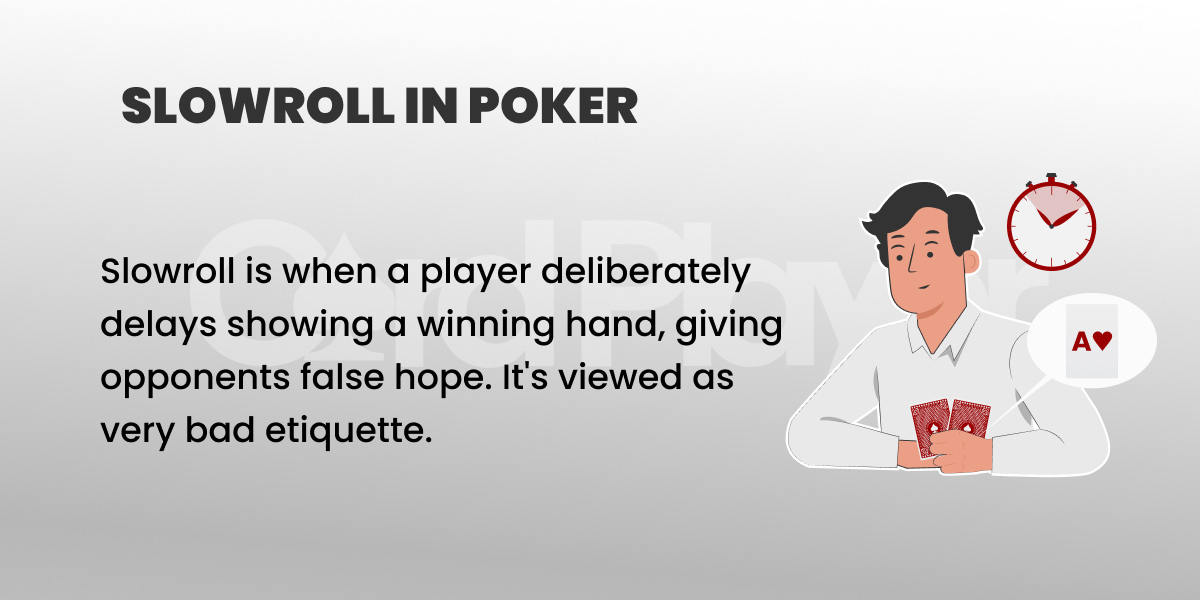
A slowroll in poker is when a player knows they have the winning hand but intentionally delays their action to create false drama at the table.
Most beginners first encounter this term when someone at the table gets upset or calls out another player for the behavior. The meaning of slowroll in poker involves spending too much time deciding on your next move when your cards are already far ahead, making it appear as though your opponent might actually have the better hand.
Picture you’re in a WSOP tournament, holding the nuts on the river. Your opponent pushes all in with a weaker flush. Rather than calling right away, you wait, exhale in frustration, look back at your cards as if reconsidering your decision, and finally make the call.
According to the accepted slowroll poker definition, this deliberate hesitation with an obvious winning hand is the classic example of a slowroll.
Slowroll in Poker: Key Points
- Slowrolling is the intentional delay of the winning hand to create false hope for opponents.
- It’s considered poor etiquette with no strategic value and damages your reputation.
- Stay calm if slowrolled – don’t give them the emotional reaction they’re seeking.
How a Slowroll Happens at the Table
Slowrolls take two different forms, albeit for the same reason. The first is in the context of making an all-in bet. This also occurs during the showdown phase if the player knows they will win the hand.
During an all-in play, the player might have the strongest possible hand, such as a full house or quads. Calling in such a play is almost inconsequential. However, they sit in silence, either counting the chips in their possession or pretending to calculate the odds. To the already all-in player, the seconds drag on longer than they actually do.
One common slowroll poker example is when the player utters statements like, “Nice hand,” or “You got me,” before turning over the winning hand. This is where the player’s words deceive the other player into thinking they are winning, but the reality soon becomes clear.
Such instances are notable given the clear contrast involved. According to poker manners, checking powerful cards means doing it quickly, especially if one understands that it is the last action they make in the deal. Otherwise, the delay seems to have been measured for effect.
Why Players Slowroll
To understand why players slowroll, it’s essential to distinguish between the perspectives of beginners and experienced players.
Beginners might engage in the act of slowrolling by mistake:
- To express anger or frustration, some players slowroll opponents they are upset with.
- To draw attention to their winning hand and create a dramatic moment at the table.
- To engage in what they perceive as table talk, despite how others view the behavior.
- To influence or get inside da particular player’s head during the game.
- To gain some perceived advantage through most players recognize a better alternative.
Nevertheless, most players do not think it is necessary as long as other moves are also feasible. The common thread among most of the plays is the aspect of emotion rather than logic.
Whether it is anger, joy, or bravado, the process of a slowroll is normally short-term.
The Psychology and Etiquette Behind Slowrolling
Etiquette in poker is encouraged to maintain games that are amicable, efficient, and enjoyable. Slowroll etiquette in poker mainly revolves around not delaying the play in very obvious situations.
Also relevant is the psychology involved in reactions to the slowroll. Firstly, in the event the person is all in, they want the consequences anyway. So the period before the chips are committed to the table, prior to the outcome being realized, generates natural tension.
Players usually describe the feeling of being slowrolled as being dishonest. Although the person who is slowrolling is not breaking any rules in the context of poker games, they are somehow cheating by expectation.
The player feels the rush of relief in the split second that their expected bluff is successful.
Due to its emotional influence, slowrolling affects table dynamics more than most people realize. The conversation may become awkward, and some players may tighten up, while others may adopt a more aggressive style of play from that point on.
The atmosphere at the table can shift noticeably, which is why etiquette rules emphasize acting quickly when you know you have a winning hand.
Famous Slowroll Moments in Poker History
Slowrolls occur frequently in online casino play, live tournaments, and cash games. There are many televised hands that include famous poker slowrolls.
Shaun Deeb and Poker Night in America
One instance that is particularly notable is the one involving Shaun Deeb. Facing Mike Matusow (and others) on “Poker Night in America,” Deeb flopped quads and slowrolled Matusow.
Andreas Gann at the 2015 Irish Poker Open
Andreas Gann slowrolled Donnacha O’Dea after hitting the nut flush at the final table of the 2015 Irish Poker Open. However, the board turned over the right cards to give O’Dea a full house, sending Gann to the rail in eighth place.
Is It Rude To Slowroll In Poker?
Is slowrolling rude in poker gets answered the same way by most experienced players.
Yes, it is rude for several reasons:
- Delays the game: Slowrolling wastes time, reduces the number of hands per hour and frustrates players who prefer steady action.
- Shows disrespect: It toys with an opponent’s emotions and adds manufactured stress to a game that already contains natural tension.
- Offers no strategic value: Slowrolling provides no competitive advantage and doesn’t improve your chances of winning the hand.
- Damages reputation: The behaviour can harm your standing among players and may even attract negative attention from tournament organizers.
Pros consider time a valuable resource. They believe that showing strong hands immediately is a simple part of being a good opponent. Better players want to win by outsmarting their opponents, not by adding meaningless theatrics that repel both fellow players and competition organizers.
How to Handle Someone Who Slowrolls You
New players may wonder how to deal with the first instance of slowrolling.
The easiest course of action is also the best: do nothing to provoke further conflict. Label the maneuver as poor sportsmanship, take a deep breath, and proceed.
Keeping your cool helps you protect your decision-making. Emotional play gets you into trouble. Slowrolls are often intended to evoke emotional play. Maintaining your composure prevents the other player from deriving any enjoyment from the process.
However, if the slowroll is taking place in a friendly home game, perhaps a small comment is in order. But in casinos or at tournaments, the best course of action is simply to ignore the problem.
Can Slowrolling Ever Be Justified?
When it comes to intense gaming scenarios like tournaments or for-money play against people you don’t know very well, the answer would be no.
Some home game groups treat slowrolling as light-hearted banter among friends.
However, this only works when all players understand and agree to this dynamic. Even in a casual setting, what one player sees as a joke might offend another, so it’s best to show respect and avoid slowrolling.
From a strategic standpoint, slowrolling offers no advantage. It doesn’t change pot size, alter pot odds, or improve decision making.
Understanding what slowrolling means in poker helps you navigate table dynamics with confidence and respect. Whether you are playing in major tournaments or casual home games, showing your winning hands promptly keeps the game flowing smoothly and maintains the competitive integrity that makes poker enjoyable for everyone at the table.
FAQs
What does slowroll mean in poker?
A slowroll is when a player intentionally delays showing a winning hand or hesitates before calling with a hand that is far ahead, creating false hope for the opponent.
Why is slowrolling considered bad etiquette?
Slowrolling disrupts the pace of play and toys with an opponent’s emotions, which most players view as disrespectful and unnecessary.
What is the difference between a slowroll and a tank call?
A tank call happens when a player genuinely needs time to think. A slowroll occurs when the decision is easy, but the player deliberately delays their move.
What famous players are known for slowrolling?
A few televised examples include moments involving Shaun Deeb and Tony G, though both also acknowledge that slowrolling is generally frowned upon.
How should you respond to a slowroll?
Stay calm, avoid reacting emotionally, and continue playing. Do not let the slowroll affect your decision-making.
Can slowrolling be used as a strategy?
A slowroll does not create any strategic advantage and usually harms a player’s reputation.
Is slowrolling ever acceptable in friendly games?
Some home games treat it as humor, but only when the entire group agrees. Without that agreement, it is usually considered rude.
What happens if you slowroll in a poker tournament?
Nothing official in terms of penalties, but it can damage your table image, frustrate opponents, and attract negative attention from players and staff.