







All-In in Poker: Definition, Strategy, & Core Rules
What Is All-In in Poker?
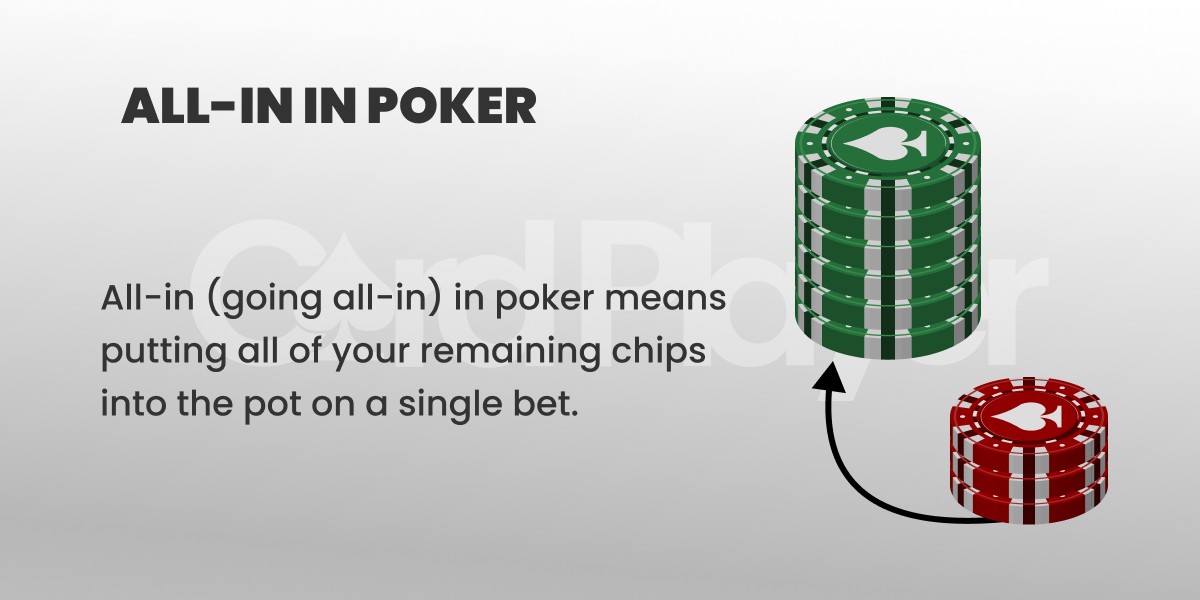
All-in in poker is a term that describes an action in which a player is putting their entire stack into the pot.
Players often go all-in when their stack is low, to make a large strategic move, or to extract maximum value. Since this move creates large pots, it also often puts players on the spot, where making the wrong decision could cost them a lot of money or their tournament life.
With this said, in order for a player to risk all of their chips, the opponent or opponents who are in the hand must have at least the same stack size. It doesn’t matter if you announce a verbal “all-in”; as long as you have more chips than your opponents, you will not be risking your entire stack.
The chip difference in the stack sizes will be returned to you if you lose a hand. In simple terms, the meaning of all-in in poker refers to risking everything you have in a hand. It is common in heads-up play but can occur at any stage in cash games or tournaments.
All-In in Poker: Key Points
- Going all-in means you wager all your remaining chips and cannot bet again in that hand.
- You stay in the hand until the end, even if other players keep betting.
- All-in bets can create side pots in situations where players have different stack sizes.
All-In vs. Open-Shove
All-in and open-shove are similar in concept, but not the same. Going all-in involves betting all your chips during a hand. An open-shove, however, is just one type of all-in bet.
This occurs when a player who is making the first aggressive action in a hand moves all in, without any prior raises or all-ins.
In other words, every open-shove is an all-in, but not every all-in is an open-shove. You can go all-in by calling, raising, or re-raising later in a hand, while an open-shove always refers to being the first aggressive move in that round.
How Does All-In Work in Poker?
Knowing how to go all-in in poker can often result in your survival in a game. At the table, the all-in process is straightforward, even if the situation feels tense:
1. All-In Declaration
You clearly say “all-in” or push all your chips into the pot in one motion. Either action counts.
2. Commitment is Immediate
Once declared, the bet cannot be changed or reduced. You are committed to that amount.
3. Other Players’ Options
Players with more chips can call, fold, or raise if the all-in poker rules allow it. Players with fewer chips can only call with what they have.
4. Side Pot Creation (If Applicable)
Side pots in poker are common in the game. If other players keep betting more than your all-in amount, the hand has extra pots. However, you can only win the portion you fully contributed to.
All-In Rules in Poker
The core rules of going all-in in a game, whether on an online poker site or in a home game, remain the same, regardless of slight variations in the room. The core rules are:
- Verbal declarations are binding: As in all games of this type, if you have placed a stake of “all-in,” then your action is considered final and cannot be taken back.
- One-chip rule variation: Some games consider the action of pushing out one large chip without saying a word a call, not an all-in. It’s always important to announce your actions.
- You can go all-in with any amount: There is no minimum except what you have left. Even one chip can be an all-in.
- Re-raise rights after all-in: Going all-in with a less than full raise may mean that players who join in the hand later are not permitted to re-raise, depending on the house rules.
- Your hand may be exposed: Tournaments will sometimes show all-in hands open after the betting is over.
- All-in protects you: Nothing compels you to bet more than you actually do. Once you go all-in, you can no longer lose.
Side Pots: How Multiple All-Ins Work
Side pots can be confusing, but the concept is very simple.
Imagine three players:
- Player 1 goes all-in with 20 chips.
- Player 2 goes all-in with 60 chips.
- Player 3 calls the 60-chip bet.
Here’s how the pots work:
- The first 20 chips from each player form the main pot (60 chips). All three players can win the main pot.
- The extra chips from Player 2 and Player 3 form a side pot (80 chips). Only Player 2 and Player 3 can win this side pot because Player 1 didn’t contribute to it.
This system ensures that players only win the money they put in, allowing players with smaller stacks to stay competitive rather than being unfairly eliminated.
When Should You Go All-In?
Knowing when to go all-in in poker is where strategy comes in, but for new players, they don’t necessarily need complex math to make good decisions.
You usually go all-in with a comparatively small stack, and folding will leave your stack almost empty. You can also move all-in with a strong hand when trying to keep opponents from a cheap look at the cards.
Also, position is very important. When you go all-in late in position, you get more info about what others will do. Early position all-ins tend to be stronger and get more respect.
Common Mistakes with All-In Bets
Over time, it becomes apparent that new poker players tend to make the same mistakes at the tables, especially when it comes to shoving all-in. Make note of these tips so you can play smarter.
- Going all-in with weak hands while on tilt, often after losing a big pot.
- Shoving all-in with a strong hand too early, scaring opponents into folding and reducing potential value.
- Misunderstanding how side pots work, leading some to believe they can win more than they can.
- Treating an all-in as something special rather than recognizing it as just another bet size that can be right or wrong, depending on the situation.
FAQs
What does all-in mean in poker?
All-in means betting every chip you have left and committing fully to the hand.
How do you go all-in in poker?
You clearly say “all-in” or push all your remaining chips into the pot at once.
What happens when you go all-in in poker?
You stay in the hand, but you cannot bet more chips. Other players may continue betting.
Do you have to go all-in if someone else goes all-in?
No, you can also fold, call for the same amount, or raise if allowed.
How do side pots work in poker?
Side pots form when players bet more than an all-in player can match.
Can you go all-in with one chip?
Yes, any amount you have left can be an all-in.
When should you go all-in in poker?
Common moments include a short stack or a strong hand, or when applying pressure late in a hand.
Can you take back an all-in bet in poker?
No, you cannot. Once declared, an all-in bet is final.