


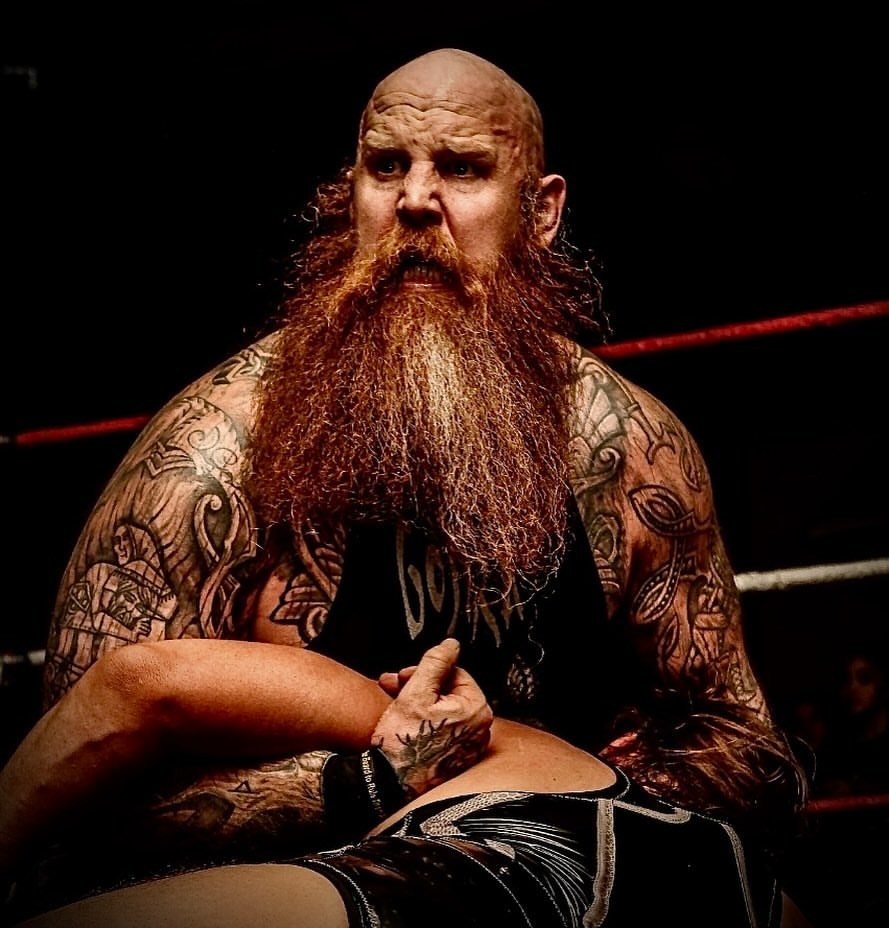
Erick Rowan – IG @erickredbeard
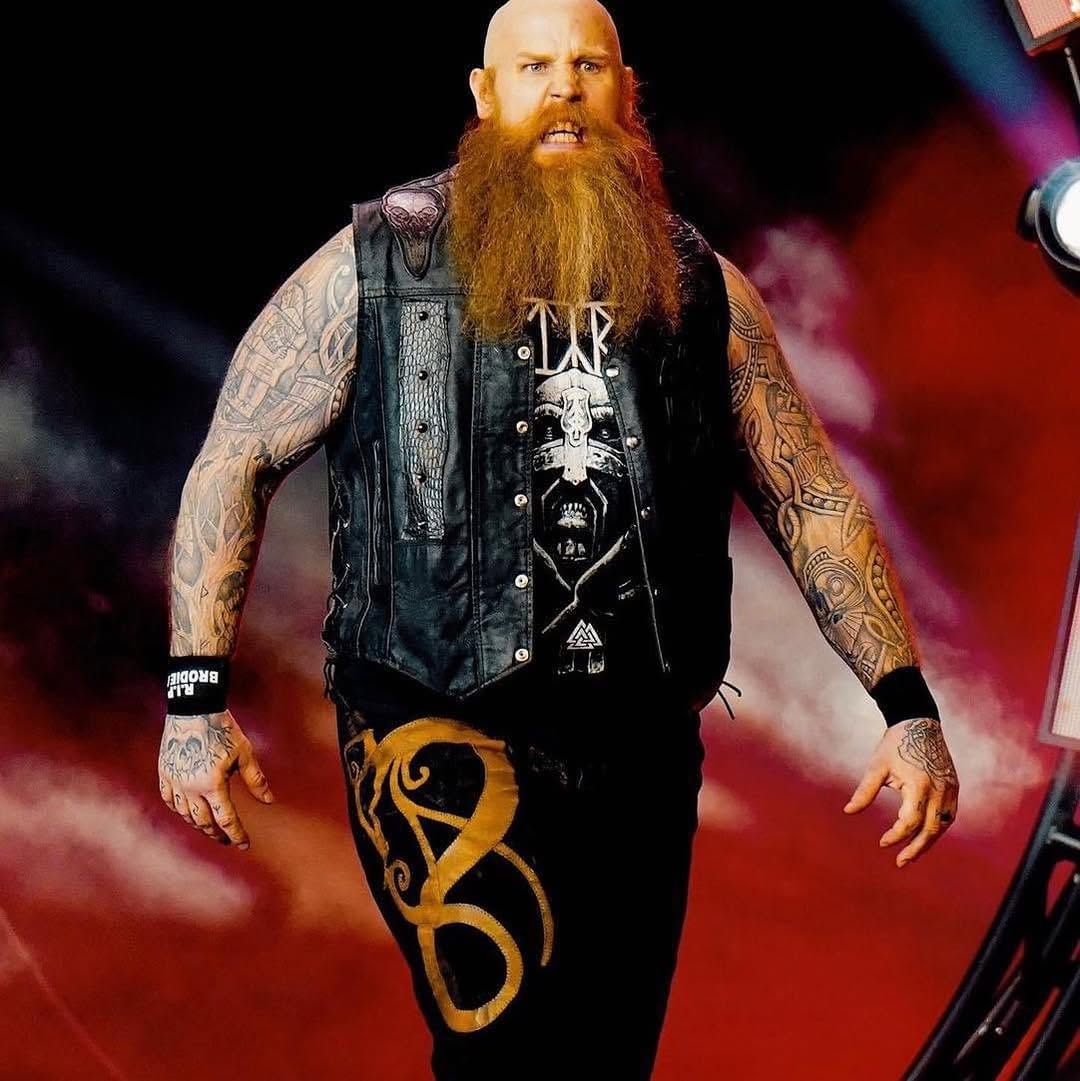
In a wide-ranging exclusive interview with CardPlayer.com, WWE superstar Erick Rowan (Joseph Ruud) spoke about how Bray Wyatt was the peacemaker behind the scenes and reveals why a house show match with Luke Harper stands out more than any other moment in his career.
He also shared who he thinks would have the worst poker face in the locker room and nominated three wrestlers to share the table with.
Q: If you had to build a wrestling-themed poker table, who’s sitting down with you? Who’s playing honestly and who’s definitely trying to cheat?
A: Oh wow, I’m trying to think of guys that could probably bluff. I’d put Jimmy Uso on one of those tables. He’ll light up the mood and he’ll strike you. You’d probably put Seth Rollins to distract people.
He’s probably a sh*t card player. Then I’d have Larry, and Larry would be the honest one on that table, he’d try and take everyone’s money. Then I think Seth would definitely be the one trying to cheat. What I think, I think Larry’s the honest one. I. Yeah. Takes everybody’s money.
Q: Who would have the worst poker face in the locker room?
A: Sami Zayn!
Q: Are you excited to be back on TV?
A: I mean, you always look forward to it. Obviously there’s a lot to explore. I feel like it’s just starting. That’s kind of like the way it is and hopefully we can get acclimated to the fans, figure out who people are and kind of go from there. So, I feel like it’s just starting.
Q: What first drew you to professional wrestling and who were your early inspirations?
A: I wouldn’t say any one direction took me into wrestling. I’d say there were lots of different things pulling me in, but when you’re a kid, you have flashes of stuff you remember, and I remember my parents getting close circuit, pay-per-views over at my uncle’s house.
So us kids would be playing and then we’d notice that they’d be watching wrestling and you have those flashes of stuff like that, or parents would take you to like to like a show when you were a kid and you don’t really remember it. And then I think it was like a junior in high school and I started watching it again. I think this was around 1998, 1999. So it was kind of like the big boom of wrestling. And I think I was playing football at the time and I was just thinking to myself and looking at the guys that were 6’5 and taller. And I’m looking at guys like Kane, guys like Test and thinking maybe one day that’d be something I could maybe do.
I sang in high school, I was interested in acting and stuff like that. But my football coach and my singing coach always clumped heads because you can’t do both. I guess wrestling was kind of my chance to perform and do athletic competition, so I felt like that was a nice mend.
So probably about three years later, I started actually trying to train. I just think it was kind of an interest in showmanship and the sport.
Q: So was it in high school when you realised your destiny was to be a wrestler?
A: I think I had an inkling that I wanted to do it and it wasn’t until after my sophomore year of college that I knew I wanted to pursue this.
Q: You spent some time wrestling in Japan during the early part of your career, how was that?
A: Yeah, I did one of those Harley Race camps, where you spend money after you train, which was a funny concept for kids that don’t have much money that are trying to struggle on the indies. How do you get in front of these people? How do you get in front of people you know from WWE, from NOAH and then Harley’s camp was there and if you pay a certain amount, you do his camp for the week and you get to perform in front of these groups of people and luckily for me, the NOAH guys saw something in me and I was able to go and live in the Dojo, which to people is kind of funny in this day and age. But for three months I lived, trained and worked the tours with NOAH and that was interesting. That was a culture shock at its finest. I was the only American at the Dojo and this was in 2007, so I didn’t have a phone plan that worked over there. So I went to lots of internet cafes trying to keep in contact with people back home.
Q: How did wrestling in Japan influence your style and mindset in the ring? Is there anything you still do now which you learned from your days on the Japanese scene?
A: I think one thing it taught me was everything that I give people, I learned how to take, so I know how it feels. I think that was something that stuck with me. I was taking every move possible in training and part of that was finding out how a move felt if I was going to perform it on others. I think that was something that kind of stuck out with me. And then their kind of hard hitting style and the way everything looks so snug, but didn’t feel like the guy was killing you. Then especially moving into the system later with the WWE, it teaches you real quick. Longevity is important in this career, you have to make it look like you’re hurting each other and you have to do it with as little damage to the other person as possible. And that’s a tough, tricky thing to do.
Q: You’ve wrestled with several different promotions, what are some of the standout differences in the way talent is developed?
A: I’m always a firm believer in working as much as possible and as many different people that are better than you or have more experience than you. And I’m a big firm believer in that, but I’m also a firm believer in getting reps and being able to have serviceable matches, with people that have less experience with you. And I think being able to do both those things really keeps a person sharp and their mindset and their wrestling. I feel it just improves you over time, staying sharp like that and it’s a weird thing to talk about because people don’t really understand what goes into training and doing what we do in the ring. It’s tough.
The one difference and the one thing I knew really helped me coming out the gate was when we would work house shows and we would do like five a week. Like that was great for my development because you’re working with people multiple times a week. And I remember having an opportunity to be in a ring with a guy like Kane, coming up as a young guy and doing singles matches on house shows for a month straight. It might not have been televised all the time, but that stuff is wisdom coming to you. That’s free wisdom coming to you that you’re getting paid to do. Stuff like that I think is very helpful to the developments of people coming up. So just trying to get as much work as possible with people that are better.
Q: You mentioned Kane there, do you see a bit of yourself in him and his style inside the ring?
A: I see it as that we’re big dudes. We do power moves and we fly around a little bit. But I always saw him as a guy that had some longevity in his career and it wasn’t until like the second half that people started being able to hear from him. So I always think that was kind of a funny parallel that I like to think maybe I’m kind of going down where I can develop into somebody that’s not just the quiet monster, but obviously as somebody that has a little bit more depth, to what’s going on inside their head, which we all do, we just need a chance to show it.
Q: What’s a common misconception about wrestlers or the wrestling business that you’d like to clear up?
A: I think sometimes, fans get caught up with what they think is good and bad. And I think that’s funny because wrestling is such a subjective thing, so some people may think something’s bad and then another person watches that same match and they love it. So it’s such a subjective thing that people don’t really understand. I mean you think about things and people train so much to get into it, and some people train really little to get into it. And it comes naturally to some and it takes years and years for other people to catch onto it. But when you put that much time and effort into creating something, it’s kind of hard for people to fathom at home how much time and training people put into this. So whenever I see stuff online that this person didn’t like this match, to me I just kind of chuckle to myself because you can not like it, cool. But don’t be mean to people. I just don’t get the mean-spirited stuff I see online sometimes. I’m pretty calm when it comes to most things, but I think when I see people get hurt and people laugh at it or say something about it, I think that’s kind of what makes me just a little disheartened with society.
Q: When you see these things, what drives you to evolve as a performer? Because things are always changing in wrestling…
A: I think just your love for the business. Your love for the business drives you. Your love for performing drives you, your love for creativity drives you. Even if things don’t always go the way you want them to go, you have to have that creative mindset that you can change at least the split thing that was written to try to add a little bit more of a view to what’s going on.
I don’t know if people understand this, but in wrestling, not everyone can just grab the microphone and start talking about whatever they want. They actually have to live by the story of not necessarily a script, but an outline of where the show is going. Unless you’re working some local indie and you don’t ever want to work for that promoter again, then you go off script and do whatever. It’s still a show and it keeps you on your toes and it keeps you always thinking about what can you do to make this better?
 Q: You said sometimes things don’t always go to plan, what would one piece of advice be to someone who has been released from a company?
A: It always sucks to get let go from any job, right? It’s just a shock. You have this comfortability, no matter what it is, even if you’re on your toes and you’re always trying to do your best. Sometimes that doesn’t matter. Your best doesn’t matter. The bottom line is, it is what it is. So you have to go out and you have to prove that you want this to yourself and not to anybody else, but you have to prove why you love this. And if it can take you to places and people can watch you wrestle that would never be able to watch you wrestle live before.
That’s a win for me that people are watching you for the first time in a setting that is more reminiscent of a good old house show, fan participation. That’s the roots of wrestling, right. Fan participation. And those shows were so much fun to do and I don’t know why you wouldn’t just take advantage of that. It gave me a chance to meet people from all over the world that I maybe would’ve never met and to share with them that night, my love of professional wrestling. So I just want people to look at those things as positive, if they want to continue it, there’s still a life to continue it. It’s not all one thing or the other. There’s so much gray between.
Q: From house shows, to live PPV’s, what is one match or moment that stands out from your career that you’ll never forget exactly what happened?
A: Probably because of my love for the man. It would probably be me and John Huber (Luke Harper, Brodie Lee). Before we did the Bludgeon Brothers stuff, we got put together on house shows for a month or two where we’d have to work each other. And those matches were really fun for me. Partly because he would always have this thing where he’d try to say that he wouldn’t blow up. Blowing up in the ring for those who don’t know what it means. This is when you’re wrestling and you can’t breathe, and that’s when you start to make some mistakes. Just being exhausted, out of wind. And I remember in those matches specifically, it was always my goal to make him exhausted.
There was this one match in China that I remember specifically on tour, and at the end of the match he went over, but there’s a picture of him, I’m sure you can find it somewhere. And it’s him holding the turn buckles with his head straight down and he is just completely exhausted and he’s the one who’s won. And I used to always call him out of that and just laugh. So that’s one match that just sticks in my head. Just for the absurdity of the whole thing that we had going between us, that probably nobody, you know out there knew! Just us.
Q: Can you share any memories or lessons that Bray and Luke have left you with because I know from the way that you just spoke about them and how much they meant to you and how much they mean to the wrestling community as a whole?
A: I was the driver and John was the navigator, and I like to think of Windham as the peacemaker. So when we would drive together early on, we were having to share rooms sometimes and I was a snorer. There was a lot of discontent for each other on some of those loops and Wyndham would be the peacemaker of it all and make sure that we got along, which was a lot of fun. But as far as learning stuff, I feel like we all kind of learned a little bit from each other. You had in Windham someone who was such a master storyteller with the way he would tell stories and the way he would get into his promos, you’d really feel what he was saying. So I like to think that especially now moving forward and kind of getting more into acting and that realm of things, it’s really opened up my emotional connectability to anything I say and makes me feel the words that I’m saying to whoever.
I’m eternally grateful for that stuff and you don’t think about it at the time, but these are things that you pick up. And then with John, I would watch the way he would work seamlessly in the ring and move from how he would move from certain things he would do in the ring to other things he would do in the ring. Kind of like the fluidity of things and It really helped me try to pick up how to do that with my own style, where I can work like me but be able to have those transitions that he would have. It’s kind of hard to not get better around guys like that. Very hard.
Q: Would you say that there’s an honor of carrying the legacy of Bray Wyatt and his concepts through wrestling with you now?
A: I don’t think it’s like this enormous pressure. Yes, we’re keeping the spirit alive. I’m trying to keep John’s spirit alive. These are things that are near to my heart but sometimes it gets emotional. You can’t stop it like you’re surrounded by it. That song that Windham used to come out to, the code orange song. Yeah it’s tough. Seeing the fireflies, it’s tough. But seeing all this stuff and being in there and seeing the fireflies and knowing that this is like being in places that…and you’re looking around and they’re not with you. I mean, that’s a tough pill to swallow.
But then you slowly start to open your eyes and look around and you got Nikki Cross, you got Dexter, you got Gacy, and then you got Taylor, Bo and you open your eyes and you’re like okay, this is a family too.
They’ve become a family to me, and it makes it easier, if that makes any sense. Because I know I have people there that, the people that are no longer here would, would probably smile that were all rocking together, you know? Initially for them, but hopefully to prove something to within ourselves of what that message is, and that’s these people have been thrown away in the eyes of the fans in a story sense.
But in a real life sense, these people have been and kind of forgotten about. These people have been if you really want to go deeper into it, these people have been, there’s been negativity spread about these people individually. Not necessarily now within whatever the realm of whatever’s going on with the group, but there’s been negativity spread about each one of these people, online. I don’t think a lot of these people have had clear chances to showcase what their strengths really are in the company. Any company. And I think this is the chance for them to begin to show those strengths while honoring something that’s pretty big and close to my heart.
Q: How important has it been to have a strong relationship with Uncle Howdy behind the scenes with everything that went on?
A: I feel like me and him weren’t the closest before this happened. I think we’ve gotten a lot closer, and yeah there’s definitely been some emotional days. And for the best, not like a bad thing, but I think we can confide in each other about some issues.
Q: Have there been any moments in your career where wrestling has given you the chance to grow or heal since everything went down?
A: I definitely think it’s healed a little bit because it’s forced me to confront a lot of stuff you can’t hide. In a wrestling ring, people chant what they want to chant, people say what they want to say. There’ve been really emotional times, especially when stuff was just happening and I was on the indies and I wasn’t one to back out of commitments when bad things would happen, so I would honor my commitments and that definitely led to some very emotional days and even more emotional, because like usually it’d be the last match of the night you get on the microphone, we talk a little bit. And you can’t always hide your feelings when you got a live mic.
Q: So what would you say it takes to build a really strong stable in wrestling nowadays?
A: I’m not quite sure how to answer that question. Because they talk about what it takes to build a strong stable. I mean it takes a lot of different things. Timing, right opponents, right matches. It takes the characters being fleshed out so that people understand who these characters are while they’re together. It takes that storytelling element to make everything happen. But I think that’s right with everybody. That’s right with what it takes to make a great singles wrestler, what it takes to make a great tag team. It’s all those things. It’s the story, it’s the character. It’s putting that character in positions to be compelling.
For fans to want to have their eyes on that person, want to see them on the screen because they don’t know what’s going to happen next in that story. I mean, that’s kind of like 101 on any kind of character you want somebody to watch. It’s like, okay, they’re an interesting person. Okay. They do interesting things. And okay, they’re working interesting people. I mean you mess up on any one of those things and alright, here’s an interesting guy that we don’t know what to do with. Let’s just put him in the ring and have him beat up somebody for two minutes and okay then people are going to believe that’s an interesting guy and he’s just wrestled somebody that he’s lost to in two minutes. That doesn’t seem like a compelling thing to watch again, the next week. So there’s a lot of stuff that goes into it. You could put anybody in any position, but if you book them into a corner it’s very hard to get out of that corner.
Q: I wanted to ask you about your acting career. You’ve done acting outside of the ring as well as in it. How’s that going?
A: There are lots of additions that you can’t really talk about because if you don’t book it what’s the point? It’s definitely a world that’s fun when you’re doing it but it’s long hours and it’s basically like paying your dues all over again. To me that’s fun because then your performance is what really matters. Nothing else matters except for your performance. And I think that is something that really draws me to acting is like I can prepare, I can become this character that’s so far away from me as a person. That’s so far away from Erick Rowan as a person. I love that. I mean I mean Erick Rowan, Eric Red Beard, that character is the same person. How many years you play the same character, like it gets, I wouldn’t say old or stale because you’re always doing different things, but it’s fun to get out and play these different characters and dive into their lives.
To me it’s like tapping into emotions that I feel like I’ve never had. One of these earlier roles I did was a small film called Ghost of the Ozarks. And in that film I had never experienced loss because this was while John was still alive, so I hadn’t really experienced the loss and the character that I played, William, he experienced loss in the film. That was something that was very hard to tap into because I had never experienced it. And you know, me and my acting coach, we went through some things and then when it came time for set, I broke down in a way that I hadn’t broken down since John died. So for me to experience all those emotions without actually experiencing any loss at that point, and then experience the loss and feeling the emotion, that’s a crazy thing to get yourself to like in my head. And I just, I think after that I just really got hooked that you can manipulate your own emotions and your own way of thinking to, to actually feel that.
I remember when I filmed that scene, usually I do take after take after take, but after the first take, I couldn’t calm myself back down. So I had to calm myself back down just to go do it again. That was tough. That was very tough, but it was very rewarding, you know? So like, just stuff like that is stuff that’s just so cool to me when it comes to acting, just kind of like the way you can grab onto your emotions on a dime. And you’re feeling it so it’s not faked.
Q: Would you say you have any long term aspirations in TV or film Hollywood?
A: People always say Hollywood. I mean is there anything even filmed in Hollywood anymore? I mean, obviously I’d love to do that kind of stuff. I still have opportunities to do things. I’ve done a couple of things this year that haven’t really been announced yet, but I just love doing it. Like it’s fun to me. So to me, doing these auditions is even if it’s like a three pager, like taking the time and the energy to do all that and not get paid for it. Why would I do that unless it was something I wanted to do and I aspired to do. So yeah, that’s something that I’m trying to do. But that’s another thing where you put in the work to get noticed, you have to constantly put out good work. I don’t think people understand literally how many auditions you might do in a year. You might do 50, you might do 100, but people don’t see that that work because that’s all you and that’s the way it stays.
Q: If you could enter any fictional world, what would you choose and why?
A: It might seem weird, but I’d like to walk in a world where for a day you can see the dead and have conversations with those that have passed. I’d like to talk to my grandma and ask her how she feels about how I’ve done for myself.
Q: And what about your music? Have you written any songs recently?
A: I haven’t really written anything, but I have taken out the guitar and played a few songs and learned some old stuff. I think the last thing I picked up, I played some John Prime. I’m getting to be that old guy that, every now and then picks up an old guitar, dusts it off and tries to get myself through a song. But I got a way to go to get my calluses back. I’ve got to put it down for a bit.
*Photos – Instagram @erickredbeard