 Sometimes casinos suck. Like when you drop a bundle and can’t get a decent comp for all the money you bled.
Other times casinos really suck. Like when they suck the life out of you. That happens when you win a bundle and the casino refuses to pay you off.
It’s extreme, but well within the realm of possibility.
Just ask Thomas McPeek, a 24-year-old sports bettor from the Chicago area.
He claims that he is owed $800,000 in sports betting wins. Two casinos, owned by the formidable Caesars Entertainment, won’t make good on his winning wagers. Casino employees claim that he ran afoul of their policies and does not deserve to get paid. McPeek disagrees, and he wants his money.
Like every sharp sports bettor I know, McPeek worked hard to overcome the vig, to understand the games, to work through the odds, to recognizes edges and expected value, to ultimately win.
He made himself into an expert on football parlays, which are volatile and best left to professional gamblers who truly know what they are doing.
But McPeek is no sucker. He gambles strategically and pulled off what he called “a calculated attack" where he thought he had an edge.
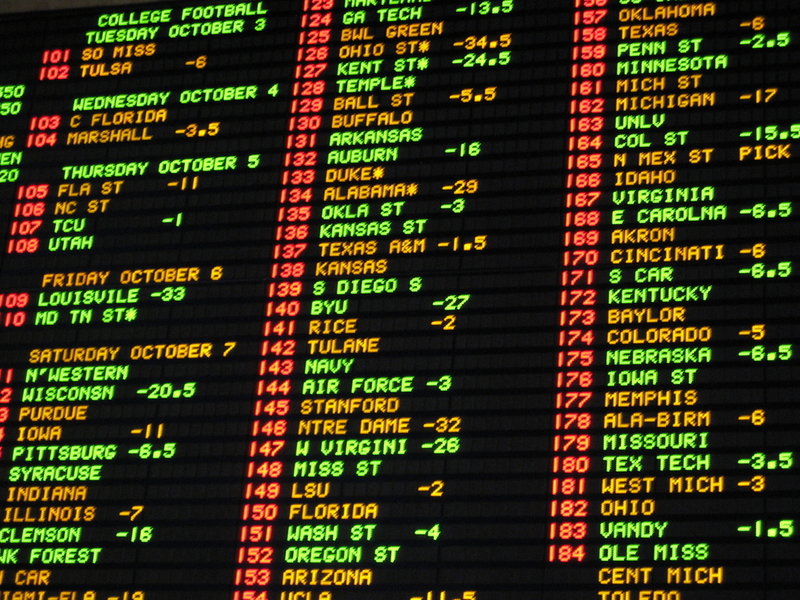
Over the course of a week, he made $30,000 worth of bets at the Horseshoe in Hammond, Indiana, and turned it into $350,000. Additionally, he won $450,000 at Isle casino in Bettendorf, Iowa. He purposely made loads of small bets, spent hours at the betting kiosks, and even employed disguises when necessary.
En route to winning his $800,000, McPeek also lost plenty of parlays. And when it came time to cash in his winners, the Caesars casinos accused him of structuring, a legal distinction put into place to keep people from dodging tax payments or laundering money by not triggering Currency Transaction Reports.
McPeak says that he was not trying to rook the government. He was trying to go unnoticed by the casino (hence, making lots of small bets instead of one big bet that would raise eyebrows) and to not get booted out for being an advantage player.
McPeek had good reason to be concerned. He had already been 86’ed from at least one gambling den after winning more than $100,00 in sports bets. But at least that place paid up before telling him to never return.
Getting backed off is an occupational hazard. It happens all the time to gamblers who win or even seem like they are poised to.
In fact, Billy Walters, one of the world’s most successful sports bettors, wanted to show me how it feels to get backed off and how quick casinos are to do it (this was before I took up card counting and became all too accustomed to the dreaded shoulder tap and escort away from the blackjack table). Walters sent me into the Hilton sports book to make a series of not-so-high college basketball bets.
 I did as Walters instructed, completed multiple trips to the betting counter, and made wagers based on line-movements. After logging several bets, one at a time, I was told by a casino supervisor that I would be allowed to make just one bet per day. It was essentially a back off.
But at least the betting tickets of Walters were not made null and void.
A stomach-churning part of McPeek’s situation is that casino bosses know how hard it is to win parlays. They know the work that goes into someone pulling it off without merely getting lucky once. And, on some level, they would understand the heartache of being hosed on payment after the bets were accepted.
“It’s an insane amount of money,” McPeek told CBS News in Chicago. Explaining that he took his shot and accepted the risks that came with it, McPeek added, “It’s not like I can just snap my fingers and make the bets win. They still have to win.”
The Indiana gaming commission maintains that Caesars followed its rules. Iowa is still figuring things out. McPeek sees the incident as any advantage player would.
“There’s no rules against staying under the radar. It’s horrible what they’re doing to me.”
 Michael Kaplan is a journalist based in New York City. He is the author of five books (“The Advantage Players” out soon) and has worked for publications that include Wired, GQ and the New York Post. He has written extensively on technology, gambling, and business — with a particular interest in spots where all three intersect. His article on Kelly “Baccarat Machine” Sun and Phil Ivey is currently in development as a feature film.
*Photos – Shutterstock