In the face of numerous recent betting scandals, a Texas judge’s ruling on Monday in the Brendan Sorsby case could pave the way for more concerns about gambling and game integrity.
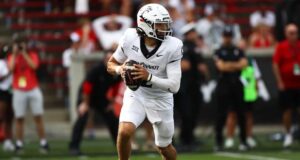
Sorsby transferred to Tech from Indiana University for the upcoming season and received a $4 million NIL deal. But the NCAA ruled he was ineligible for the upcoming season. The organization found Sorsby made more than 9,000 bets while playing at Indiana and Cincinnati. Maybe more importantly, he wagered on his own team.
In response, Sorsby filed legal action against the NCAA to regain eligibility and collect on his NIL deal. Then, Judge Ken Curry of the 99th District Court in Lubbock County granted Sorsby a temporary injunction against the NCAA. In essence, Curry trumped overriding the association’s ruling.
Despite directly violating NCAA gambling rules, including wagering on his own team, the transfer quarterback can suit up for the Red Raiders this fall. The NCAA will appeal the decision.
NCAA athletes and staff members are prohibited from wagering on collegiate athletics and professional sports. College football coaches and officials immediately looked at the ruling as a major issue tied to game integrity and gambling. Some schools have threatened to boycott games against Texas Tech.
“As someone who grew up reading about the ‘Black Sox Scandal,’ and seeing what happened to Pete Rose and just understanding how bright that line seemed to be in all of American sports, I’m stunned that there would be a question at the court level that this is acceptable,” Florida athletic director Scott Stricklin told ESPN. “That’s not a judgment on the young man. It’s just that it was a pretty fundamental tenet of American sports, that if you’re going to participate, you can’t gamble, especially on your own team.”
Details On The Ruling
When the news of Sorsby’s betting habits came to light, the quarterback announced that he had a gambling addiction. He also entered a treatment facility. The university stood by him even as he was ruled ineligible by the NCAA.
“I’m very grateful for the endless support I have received throughout this entire process,” Sorsby said in a statement after the ruling. “I am also grateful for the chance to rejoin my teammates. This opportunity comes with the responsibility to remain focused on my personal growth, the ability to learn from this experience, and to be able to use my situation to help others going forward.”
The NCAA denied Sorsby’s appeal to remain eligible on May 26. Consequently, he took the issue to the legal system. As part of the suit, Sorsby sought a ruling to determine whether he would still be eligible or need to enter the NFL supplemental draft. The deadline to enter the draft is June 22.
Curry’s injunction instituted a two-game suspension instead of a permanent ban. The judge ruled that Sorsby “demonstrated he will suffer a probable, imminent, and irreparable injury if the court does not grant this temporary injunction.”
Additionally, Curry said that Sorsby would miss out on opportunities for training and coaching. If he were ruled ineligible, the quarterback wouldn’t have the information and training to “make an informed decision regarding whether to enter the 2026 NFL Supplemental Draft,” Curry noted.
Sorsby also faced the prospect of losing out on $4 million in NIL money. He was one of the most sought-after quarterbacks in the NCAA player portal.
NCAA Urges Federal Intervention In College Sports
The ruling quickly drew criticism across the college sports landscape. Many claim that if Sorsby isn’t ruled ineligible, the sport will see more gambling scandals in the future. College athletics may no longer be governable.
NCAA President Charlie Baker criticized the ruling and wanted Congress to help curtail the wide-open pay-for-play environment NIL has brought.
“There is no better example of why targeted intervention from Congress is necessary,” Baker said on Twitter/X. “When you have schools and deep-pocketed supporters willing to look the other way on the glaring integrity threat of betting on your own team – and judges whose rulings effectively strip away our ability to stop them – only Congress can equip the NCAA to apply this common sense rule to everyone fairly and consistently.
“The Protect College Sports Act (PCSA) would empower the NCAA to enforce rules including the gambling restrictions – it’s needed now more than ever.”
The bipartisan PCSA is sponsored by Senators Ted Cruz (R-TX), Maria Cantwell (D-MI), Eric Schmitt (R-MO), and Chris Coons (D-DE). The bill seeks to: stabilize player transfer rules; codify Name, Image, and Likeness (NIL); and create an antitrust exemption for the NCAA to govern amateur sports.
Teams Threaten Boycott
The Sorsby ruling created an unprecedented situation. Some schools are threatening to boycott any games against the Red Raiders if Sorsby plays.
Big Ten officials are reportedly considering a leaguewide mandate not to schedule games in any sport against Tech, according to ESPN. Nebraska athletic director Troy Dannen has already said Cornhusker teams wouldn’t be allowed to schedule the Red Raiders.
Texas Tech is part of the Big 12. Conference officials discussed the issue during a conference call on Tuesday. Some reports have said that teams in the conference are leaning toward boycotting games against Tech.
#BREAKING: The majority of Big 12 teams are boycotting their games against Texas Tech next season due to the Brendan Sorsby ruling, per sources.
I’m told that multiple board members have also motioned to eject the Red Raiders from the league.
The only current holdouts are BYU… pic.twitter.com/O0wE2pTL6z
— Rob Reinhart (@RealRobReinhart) June 8, 2026
“We’ve had some serious conversation about it,” Kansas State athletic director Gene Taylor told Yahoo Sports. “There is still a lot to be discussed. We aren’t scheduled to play them this year, but it’s something we have to look at from a college football perspective. This is greater than the Big 12.”
More NCAA Betting Scandals
Allowing Sorsby to play comes as the collegiate athletes and coaches have been implicated in numerous betting scandals over the last few years since the Supreme Court overturned the virtual ban on sports betting outside the state of Nevada.
Authorities charged numerous college basketball players in a point-shaving scheme in January. In November, the association also reversed a previous move allowing athletes and coaching staff to wager on professional sports.
In 2023, the University of Alabama fired head baseball coach Brad Bohannon. The move came after a bettor placed “suspicious” bets on the team at Ohio and Indiana sportsbooks.
According to ESPN, sportsbook surveillance video indicated the person who placed the bets was communicating with Bohannon.