


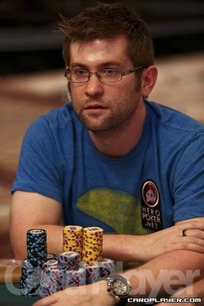
 People in the poker community often come up to me and ask about whatever is on their mind. Some of these questions are good questions, and some are bad beat stories in disguise. I’ve been through quite a few things in my poker career and I like to help whenever possible, and in this new Card Player series, I’d like to share my experiences and knowledge. Feel free to ask any poker-related question (if you have a question, send it to editor@www.cardplayer.com), and I’ll do my best to answer it in the space below.
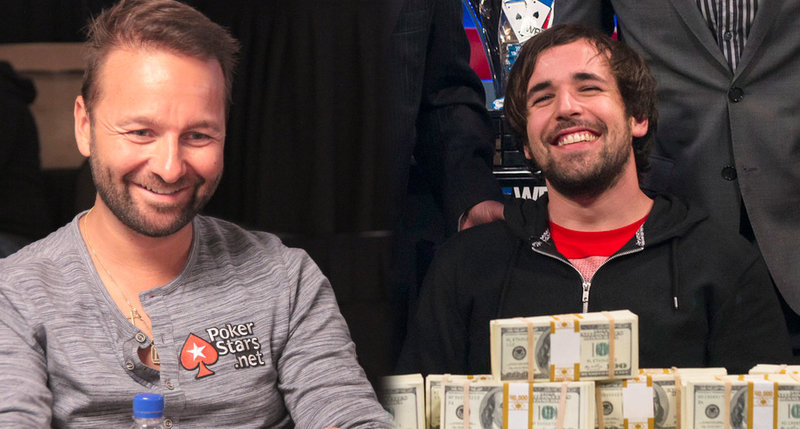
Question: I recently saw a discussion between Daniel Negreanu and Jordan Cristos on Twitter regarding the time Cristos takes to act in tournaments. Do you have any feelings on this matter? How do you decide when it’s time to call the clock on someone? – Joseph
Gavin: I saw this conversation too and I was a little surprised by Jordan’s comments. I haven’t played with him many times but I have played with him before and after his change in thinking habits. I didn’t think his habits really stuck out much before and when I heard people saying things about how long he tanks after his win at the Legends of Poker main event a few years ago, I was surprised. I then played with him at last year’s Legends of Poker and saw that he was taking considerably longer to act than he had previously. Obviously, he thinks it helps his game and I don’t doubt that it does. It probably does so at the expense of others’ time and enjoyment though. He, and others who take a similarly long time playing, probably cost their table 2-3 hands per hour, thus making the tournament structure faster for their table mates by about 10 percent (I’m estimating of course). This is a pretty significant detriment just on an expected value (EV) basis for those at your table. It’s also an enjoyment penalty because the most fun thing about playing poker is playing hands and, if someone at your table is causing you to play significantly less hands than the tables around you, your enjoyment quotient would probably go down some.
 I’ve heard the argument that some players take their time because they are unaccustomed to playing live poker and are concerned with giving off timing or physical tells unless they do exactly the same thing every time they have cards. I know that’s not the case with Jordan since he’s a very experienced live player but I guess it has some merit. I disagree with the timing portion of it though. If your decision is a simple fold, that doesn’t need to be tanked over. Once it’s close, you can take a little bit of time with your preflop decision. For instance, let’s say you hold 8-3 offsuit under the gun and you have more than 10 big blinds in your stack. That’s a pretty simple decision and you can just fold quickly. Now, let’s say you have A-9 suited and it’s borderline on your opening standards. If you take a couple seconds before you either fold or raise, as long as you take that couple of seconds with hands you are sure you’re going to raise like A-A or K-K, you’re already balancing your timing. You’ve now cut out 80 percent of your tanking time from under the gun preflop and you’re making everyone’s day a little better.
When I decide to call the clock can vary wildly by situation. I’ve called a clock on someone in 10 seconds and I’ve let someone tank for 5 minutes or more. The person I called the clock on immediately was clearly stalling so that it would be the last hand before break. There were about 90 seconds left on the clock and he stared at it and paused. I quickly realized what he was doing and called the floor over. It took too long for the floor to arrive to make him fold in enough time to get any positive result from it and I knew that as soon as I called the floor. However, I wanted him to know that I knew what he was doing and that he was going to have to deal with this on future breaks. I’ve also called a clock on someone several hands in a row because they were taking a terrifically long time to act on their hand preflop every single time it was their action. The floor started giving him progressively shorter times to act and finally gave him a warning that he would be penalized if he continued to take a long time to act on his hand. In both instances the person I called the clock on was cordial and changed their future behavior. The truth is, sometimes people don’t realize that they’re being discourteous. Outside of extreme examples like this, calling the clock involves a complex algorithm that takes into account the size of the pot, the gravity of the situation and the possibility of future action in the hand. If someone has three pot sized bets left in their stack and their tanking on the flop in the third level of the tournament, I’m much more likely to call the clock on them than if they are deciding whether to call off the rest of their chips with three tables left.
It’s not hard to be courteous to your table mates while also preserving your right to think about your hand a sufficient amount. I’ve had the clock called on me once in my life and when it happened, everyone at the table was blown away as it was in a tough situation where I had only been thinking for 45 seconds or so. The person I was in the hand with chastised the player who called the clock afterwards because of the outrageous situation. I have had my share of long tanks but because I am courteous of other people’s time at the table and I’m respectful of them when they’re thinking, I’m given time when it’s needed. I suggest everyone takes a similar approach. Remember that you’re not the only one who paid the entry fee for the tournament and think of them as well.
If you have a question for Gavin, send it to editor@www.cardplayer.com.