
When it comes to succeeding in poker, there is no better basic poker strategy advice than “work smarter, not harder.” People can spend more than 10 years as a losing player. Or, on the flip side, they can transform into a winning player in less than 12 months.
I know it because I’ve done it.
I went from barely being able to hold my cards correctly to entering my first poker tournament three months later and winning first place. I signed a book deal with the world’s largest poker book publisher, D&B Poker, just over one year later.
Now, I specialize in poker tips for beginners – accelerating you from amateur to crusher as quickly as possible.
Here are my secrets.
Texas Hold’em Poker Strategy: Key Points
- Beginner tip: Fold more hands than you play, and use an RFI chart to guide your starting hand selection.
- Intermediate tip: Don’t limp into pots – always raise when you’re first in, and use continuation bets to keep your story consistent.
- Advanced tip: Adjust your decisions to the specific opponents at your table, not just to the standard charts or “book” plays.
- Tournament tip: Practice strict bankroll management (at least 100 buy-ins), bluff more often, and shove all-in with strong hands when blinds get high.
- Cash game tip: Sit down with at least 100 big blinds, keep a bankroll of 30 buy-ins, and avoid being results-oriented; focus on long-term correct decisions, not short-term luck.
In This Guide
Basic Poker Strategy
If you’re new to the game and looking for basic poker strategy and poker tips for beginners, you’ve come to the right place.
It’s much easier to learn the right strategies from scratch than to correct bad habits.
Let’s start with a solid foundation.
💡 Tip 1: Fold
Professional poker players fold around 80% of their hands before the flop.
The best poker strategy tip for beginners is simply to fold more often.
Why is this?
Because you can win by having better hands than your opponents. They may have a hand like King-Nine, but you can best them with a hand like King-Queen.
Having a higher “kicker” than your opponent means you will win around 75% of the time. A higher pair than your opponent positions you as a roughly 80% favorite. There are simply no better odds in the casino.
💡 Tip 2: Use an RFI Chart
The best poker strategy chart to optimize your game is a Raise First In (RFI) chart.
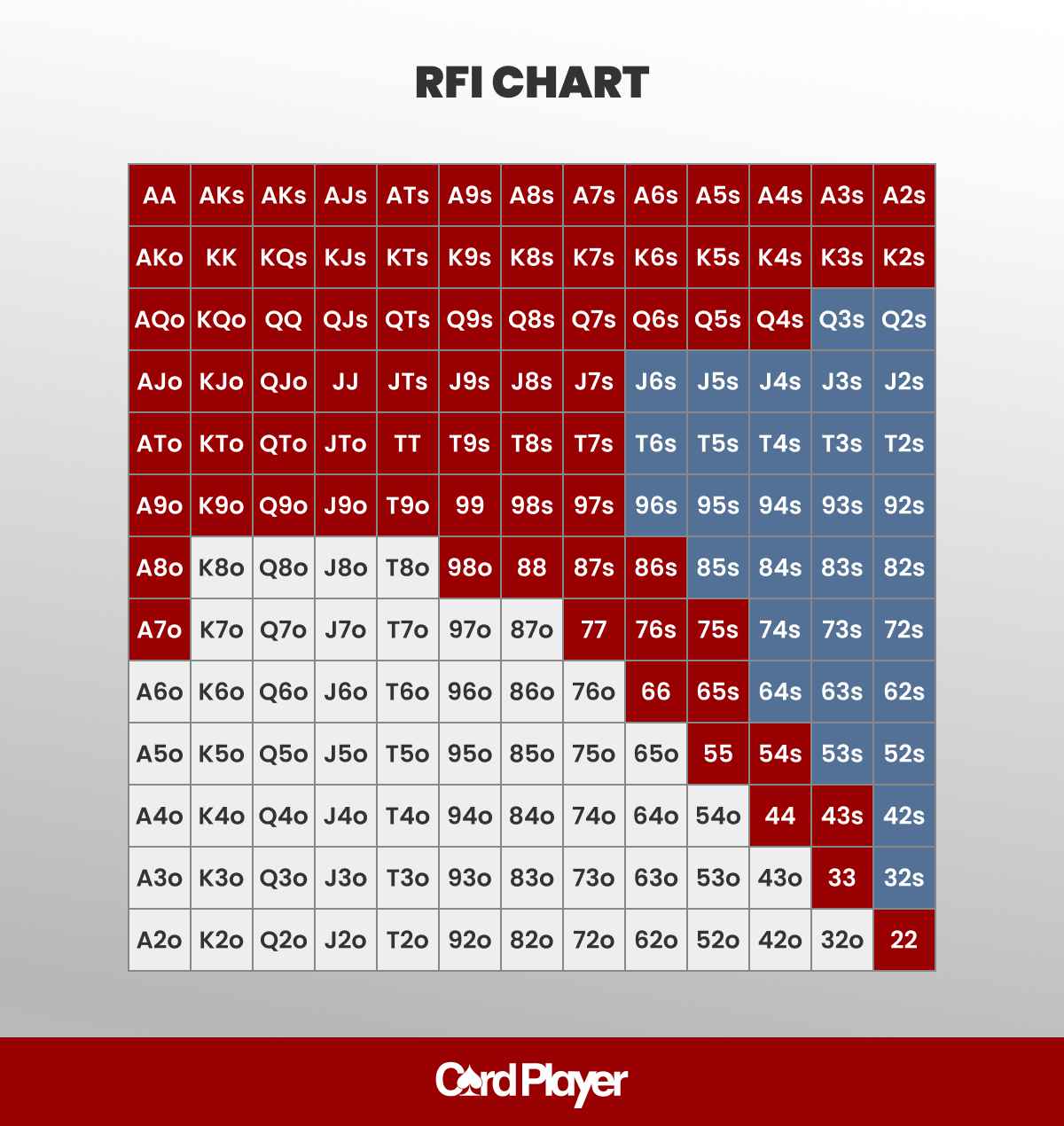
This is a mathematically precise guide specifying which cards to play when. It’s a cheat sheet of exactly which cards to raise and which cards to fold in every seat at the table.
This was the key in personally transforming me from a clueless loser to an accomplished winner – I made 180 flashcards based on an RFI poker strategy chart. I memorized the starting hands, which gave me an immediate – and significant – edge over my opponents.
Another basic poker strategy tip? Mistakes compound. A weak hand before the flop is going to make for a weak hand after the flop. While you open a lot more weak hands in later positions, you should be a lot more conservative in early positions.
Example:
- You raise a hand like Q♦️7♦️ UTG preflop.
- Flop: K♠️7♣️3.
Are you winning or losing? It’s hard to say – you could be ahead or far behind if someone has a King. Your decisions will get harder, not easier, when you play weak hands preflop.
An RFI poker strategy chart protects you from these tricky spots. It makes your decisions easier and tilts the math in your favor – steering you towards only playing the best starting hands.
💡 Tip 3: Know Basic Poker Odds
While you’re busy drilling your RFI chart, make sure to practice basic poker odds. Don’t be left in the dark, guessing how often you’ll hit your flush.
These are some of the major math percentages:
- If you flop a flush draw, you’ll hit it around 36% of the time.
- If you flop a straight draw, you’ll hit it around 32% of the time.
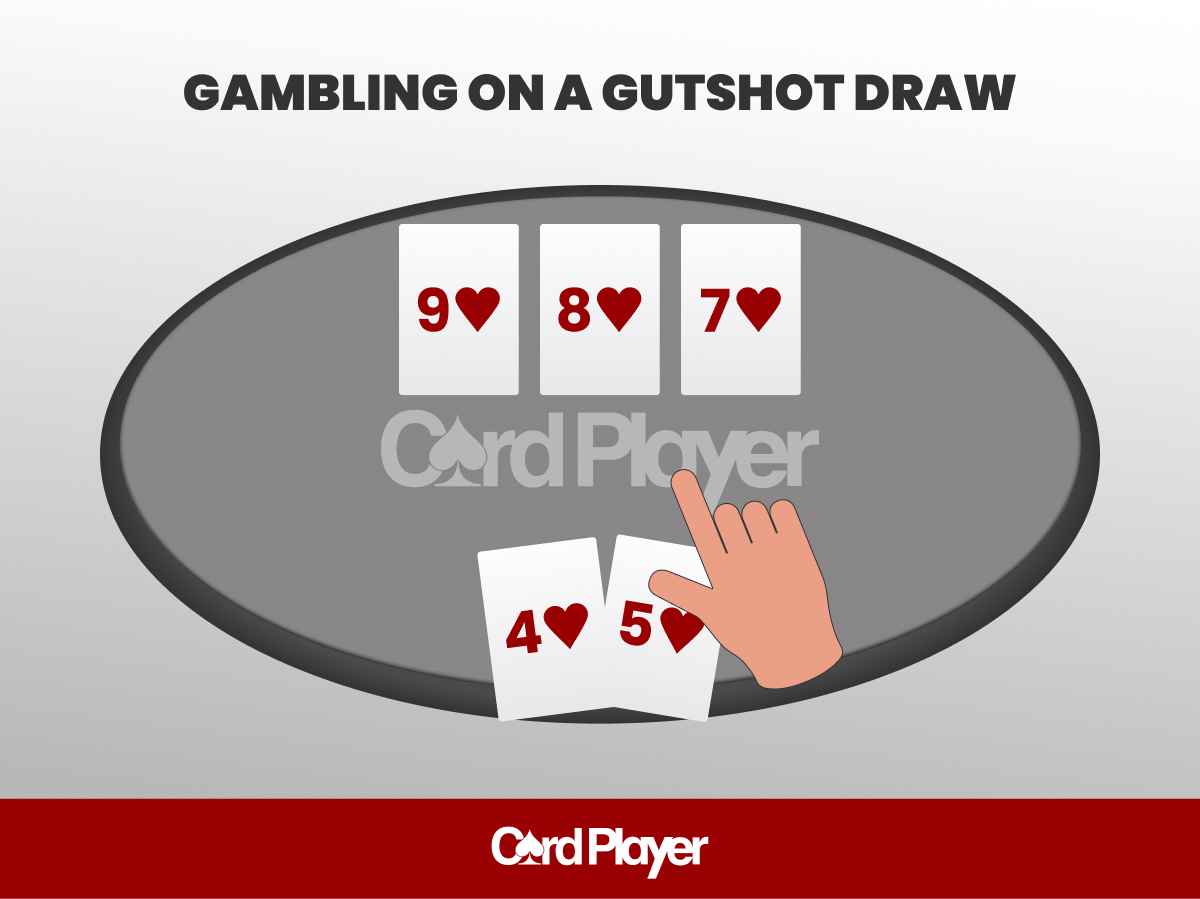
- If you flop a gutshot (inside straight draw), you’ll hit it around 16% of the time.
Committing these three to memory should already land you an advantage over your opponents.
Bonus: Did you know that a backdoor flush draw only hits about 4% of the time?
Don’t get too excited when you have K♠️Q♠️ and the flop is A♠️3♦️4♦️thinking you’re going to hit consecutive spades… 96% of the time, you’ll miss your flush. Just another reason not to overvalue the potential of suited cards.
💡 Tip 4: Start by Playing Poker Online
The best online poker tip is a bit of a hot take – start by playing on online poker sites.
- The buy-in levels are much more affordable: You can practice at the microstakes for merely a few cents per hand or a few dollars per tournament.
- You will gain experience quicker: The average live poker table sees 30 hands per hour. The average online poker table sees 90 hands per hour – and you can multiply that by playing simultaneous tables.
Online poker players easily see as many hands in one year as some live players will see in a decade.
There is simply no better way to gain experience faster – and learn at a reasonable price point – than playing poker digitally. If you’re just getting started, CoinPoker is a good spot to dip your toes in, since you’ll find plenty of hands to help you learn.
Intermediate Poker Strategy
Ready to move up in stakes? Let’s dive into some intermediate poker strategy tips.
💡 Tip 1: Don’t Limp
Now that you know which hands to play, it’s time to focus on how to play them – starting with eliminating limps (and often even calls) preflop.
When it’s your turn and everyone has folded, and you have a playable hand based on your RFI strategy chart, never limp – always raise (except when you’re in the small blind).
Limping with medium hands while raising strong ones makes your range too predictable. Treat hands like pocket sevens the same way you would pocket aces when you’re the first to enter the pot. Raise.
Never be the first to limp, as it signals weakness.
💡 Tip 2: Tell the Story with a C-Bet
Poker is all about storytelling – you need to sell the idea that you have the hand you’re representing.
When you raise preflop, you’re signaling strength. To keep that narrative going, you should follow up with a continuation bet (c-bet) on the flop.
By consistently c-betting, you make yourself harder to read and tougher to play against. As you refine your strategy, you’ll want to mix in some well-timed checks instead of always c-betting. But when in doubt, bet.
It’s better to lean on the side of over-aggression than under-aggression.
💡 Tip 3: Think in Ranges
Rather than trying to pinpoint your opponent on a specific hand, try to imagine the range of hands they’re probably playing.
Did they limp before the flop? They probably have low cards they’re not very confident in, but might get excited when they see a flop 5♣️6♣️7♥️. This corresponds with the type of hand they’re likely holding.
Thinking in ranges will also help you grow your poker storytelling. What range of cards does your opponent put you on? If you’re betting big and representing a premium hand, your bluffs should be much more effective.
Advanced Poker Strategy
This goes beyond the scope of poker strategy tips for beginners, but I do want to make one important note.
As you plow through countless poker strategy articles and advice, you will almost certainly come across guidelines that tell you all the predictable bluff and value spots.
For example, you might read that a “natural bluff” for an opponent would be to bet a missed flush draw. While this is certainly true in a vacuum, you need to square it with real life.
What’s your opponent’s motivation for being there? Are they passive and retired, simply looking for a way to pass the time? Then they’re probably not bluffing – regardless of what any book will tell you.
Are they drunk and just turned 21 yesterday? They’re likely to be more reckless and driven by a desire to prove something. You should call their bets wider.
In live poker, you need to consider who you’re playing against before making any decisions.
The best poker strategy tip for advanced players is to adjust based on your opponent.
You’d be surprised by how many poker players miss this critical point. They are book smart but not street smart.
Tournament Poker Strategy
Poker tournaments offer an incredible allure: taking a small amount of money and turning it into a large one.
Here are poker tournament strategy tips to get you started:
- Keep very strict bankroll management: The variance in tournaments is huge, especially in large field events, even for the very best players in poker. Never buy into a poker tournament for a large percentage of your bankroll – it’s a pure gamble. Pros aim for 100 buy-ins at least.
- Shove all in preflop: In poker tournaments, you can’t always afford to be patient. When the blind levels are high, you need to be prepared to shove all your chips in the middle with hands like a big ace or a pair.
- Bluff more: Your bluffs should be more effective in tournaments than in cash games. While it depends on your exact opponent, people are more skittish about losing their chips in a poker tournament after they can no longer rebuy. Use their fear of elimination against them.
Cash Game Poker Strategy
Poker cash games are essentially one long, continuous session. Think of all your decisions as part of the same timeline rather than a series of independent events.
- Don’t be results-oriented: Just because you or one of your opponents gets lucky playing lousy cards does not make it a sustainable strategy over time. You want to focus on making the right moves mathematically in the long run – regardless of any singular outcome.
- Make sure you have 100 big blinds: Don’t sit down at a $1/$3 game with less than $300 (100 x $3) – it increases your variance and decreases your skill edge.
- Set aside 30 buy-ins: Poker has bigger swings than most people expect. Yes, you can replenish your bankroll with your day job, but if your goal is to play like a pro and not go broke, you should have at least 30 buy-ins.
If the bad beats and big bankrolls put you off, don’t forget you can always practice by playing online. The buy-ins are much more moderate on the Internet, and you can move up in stakes slowly.
Mastering poker, particularly Texas Hold’em, is not easy and requires discipline and strategy. From timely folding weak hands and using RFI charts as a beginner to storytelling with c-bets and thinking in ranges as an intermediate player, your way to advanced play should be based on a solid foundation that you will refine over time.
Online poker offers a fast, affordable way to gain experience, while advanced tactics – like adjusting to opponents’ style – elevate your game further.
Ultimately, whether you’re interested in cash games or tournaments, potential poker profits come from smart bankroll management and mathematically sound decisions.
However, you should always remember that any kind of gambling is risky and might lead to addiction. Gamble responsibly, and never bet more than you can afford to lose.