




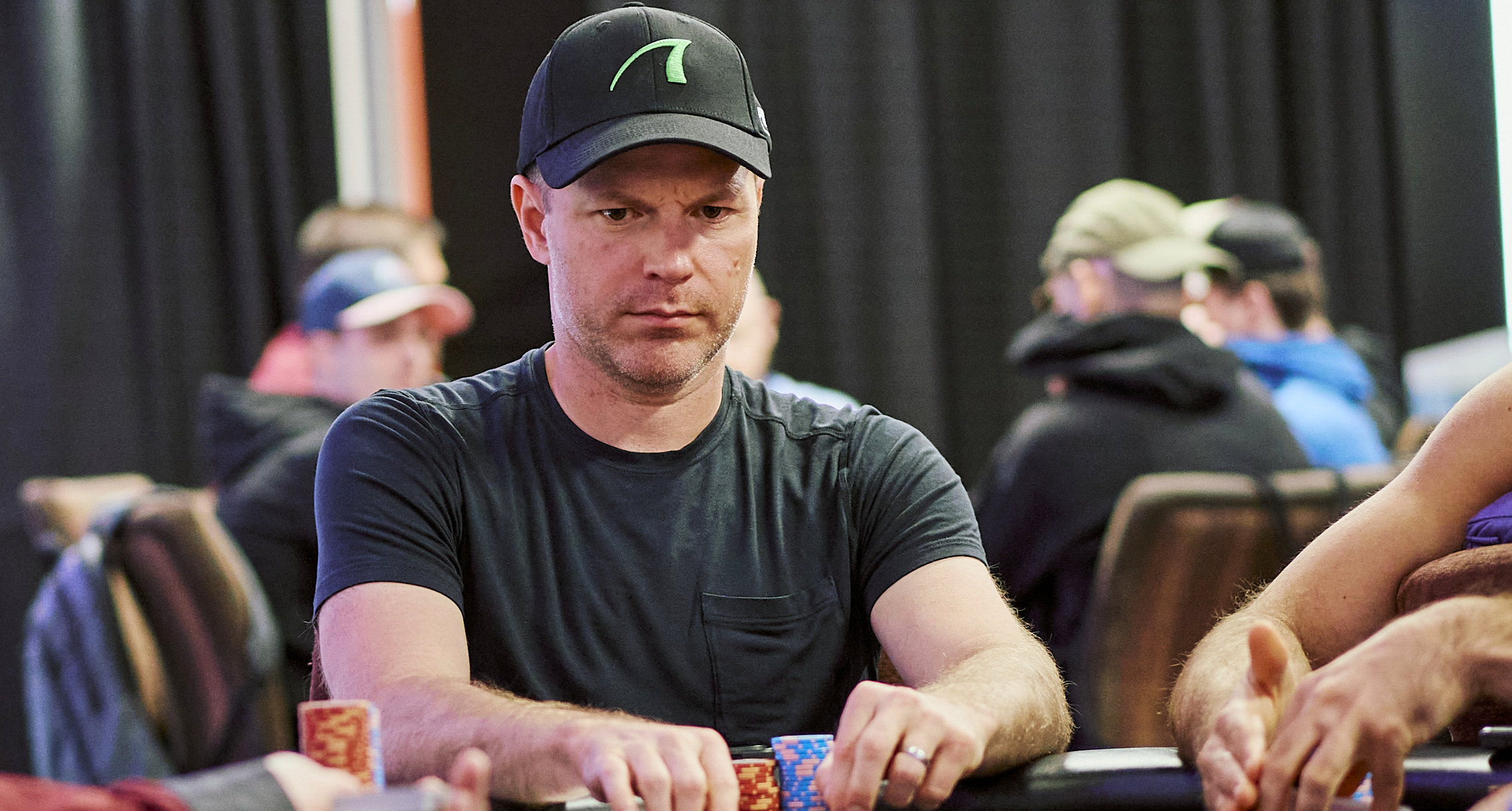
 If you want to increase your poker skills and learn to crush the games, check out Jonathan Little’s elite training site at PokerCoaching.com/CardPlayer.
I was recently told about a hand from a $1-$2 no-limit cash game that illustrates a few mistakes many overly-curious players make.
Everyone folded to our Hero in the hijack who raised to $12 out of his $200 stack with K♦4♦ K♦4♦ is a bit too loose to raise from the hijack seat in a cash game. To justify raising it from the hijack or earlier, the players yet to act must all be too tight and passive (which was not the case at this table).
Also, Hero raised much too large. By making it $12, he ensures that he will be in terrible shape when he gets action because competent players understand they do not need to defend against six-big blind raises too often. Of course, the opponents may not be competent, but even if they call with hands like A♣6♦ or 8♥7♥, it is not a huge success for Hero because those hands have plenty of equity.
The button and the big blind (an aggressive kid) called. The flop came J♠2♦2♥ and everyone checked.
Since the flop is incredibly dry, Hero should have considered making a small continuation bet with much of his range, especially hands that lack showdown value but have some equity, like K♦4♦. This will allow him to cheaply bluff with his air while extracting value with his best hands.
The turn was the 9♥. The big blind bet $22 into the $37 pot and Hero called.
The turn is quite bad for Hero, given he now loses to almost everything. While the aggressive big blind may be semi-bluffing with all possible flush and straight draws, he could also easily be value betting a jack, nine, or deuce. He may even be overvaluing a marginal underpair or ace high. Not to mention that the player on the button behind may have a hand that he can continue.
Hero simply must make this incredibly easy turn fold. If you call in this spot, you will have a difficult time winning at poker.
 The button folded and the river was the 3♦. The big blind bet $60 into the $81 pot.
As on the turn, Hero has an easy fold. That said, given all draws failed to improve on the river, if Hero was somehow convinced that his opponent was mostly bluffing on the turn, he should consider calling the river. The real problem is that he loses to a decent amount of hands his opponent may be turning into a bluff.
Hero called and lost to Q-J, explaining to me that he decided to call because he thought the big blind was an aggressive player.
It is important to understand that just because someone is aggressive does not mean that they are inclined to bluff the turn and river into multiple opponents when the flop checks through. You must figure out the specific spots where your opponent is aggressive and adjust accordingly.
For example, if he was tight and aggressive, his aggression likely means he has a strong hand that he thinks is worth a value bet. If instead, he bets the turn 100% of the time when the flop checks through, Hero’s call becomes much closer to reasonable.
When making an incredibly exploitative call, be sure it is for a reason that is more precise than “my opponent is aggressive.”
If you want to avoid making the most common mistakes I see my students make, I put together a course called The 25 Biggest Leaks and How to Fix Them. This course is completely free inside Card Player Poker School!
When you join the Card Player Poker School (it’s free to join), you’ll also get:
- Free Downloadable Preflop Charts
- GTO Preflop Charts
- Video Classes
- Interactive Hand Quizzes
- Free Course: Master The Fundamentals
- Free Course: The 25 Biggest Leaks And How To Fix Them
- Free Training Every Week
 Jonathan Little is a WSOP bracelet winner, two-time WPT winner, and the 2024 PokerGO Cup champion with nearly $9 million million in live tournament earnings, best-selling author of 15 educational poker books, and 2019 GPI Poker Personality of the Year. If you want to increase your poker skills and learn to crush the games, check out his training site at PokerCoaching.com/cardplayer.