







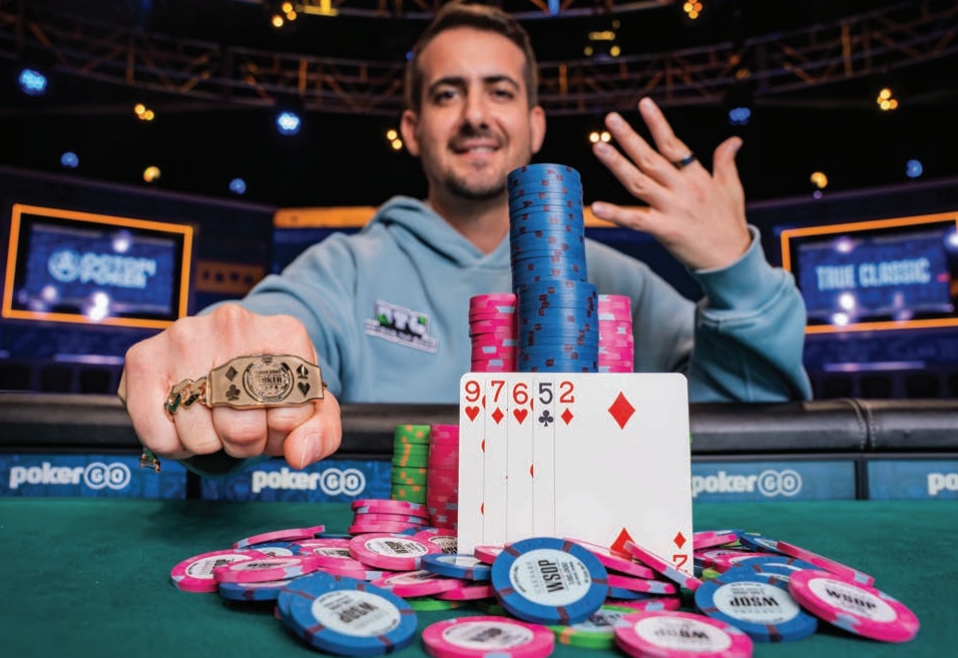
Bradley Ruben graduated from the University of Florida with an MBA, then moved to South Florida for a job in financial sales. He wasn’t passionate at all about the work and was having far more fun playing poker on the side. In 2012 Ruben decided to play full-time and he hasn’t looked back since. He decided early on to focus on pot-limit Omaha, as he enjoyed the game and felt that there were too many good players already specializing in hold’em.
Ruben’s life changed forever in 2018, however, when he caused a tragic car accident. He was left feeling guilty, ashamed, and struggling with self-worth. If it wasn’t for the support of his family and close friends, he says he wouldn’t have made it through the ordeal and is very thankful for the coaches and medical professionals who helped him heal and return to his chosen profession stronger than before. The accident crystallized Ruben’s passion for mental health and PTSD recovery.
In 2020, Ruben won his first WSOP bracelet online in a $1,500 pot-limit Omaha event. Another PLO online bracelet followed in 2021, as well as his first live title in the $1,500 razz event. In 2022, he took down the $1,500 dealer’s choice event.
Most recently, he won the $1,500 no-limit 2-7 lowball tournament for his fifth bracelet in as many years. The WSOP Circuit ring winner has more than $2.2 million in tournament earnings overall.
Event: WSOP No-Limit 2-7 Single Draw Lowball
Buy-In: $1,500
Entrants: 532
Prize Pool: $706,230
First-Place Prize: $130,080
Brad Ruben: I wanted to share a couple hands that could help laymen understand this wonderful game more.
Craig Tapwcott: That’s me. Layman. I play most of the mixed games, but I don’t know this one. Can you share a few basic strategy premises to the game?
BR: In no-limit deuce, everyone gets dealt five cards. The objective is to get the worst possible hand (7-5-4-3-2 offsuit is the nuts). There’s a small blind, a big blind, and a big blind ante that’s slightly larger than the big blind. Players can bet any amount at any time, and the players who stick around after the initial betting round get an additional draw.
So, for example, a hand like 8-8-5-3-2 is a very strong draw and wants to continue, discard one of the eights and hopefully catch a 4,6,7 or 9 to improve to a strong hand.
CT: Okay the beginners are satisfied but let’s go deeper with some tips.
BR: You want to three-bet convertible hands like J-9-5-3-2 or J-7-4-3-2 in position. This hand is a favorite if they draw one. And if they stand pat, you have an easy decision to draw one.
You want to be balanced with bet sizings. Bet big after the draw with big made hands or big pairs (for example, bet 8-8-5-3-2 the same large amount as you’d bet 8-7-5-3-2). This makes you difficult to play against.
Always be observant of the action and take notes on opponents, like you would do with every form of poker. Are they too loose? Three-bet them wider. Too tight? Don’t call their bets after the draw unless you draw to a good hand like a 10-7 or better.
CT: Players really seem to get excited for this one on the summer schedule every year.
BR: There’s a lot of skill to the game, and a lot of action. Players often have very little information. There are no community cards, just betting patterns and the number of cards drawn.
So, the game becomes a psychological one. Are they pat because they have it? Or because they are snowing? (Bluffing with a hand like 7-7-5-5-3, which blocks good cards that an opponent might need.)
Many players say this is the purest form of poker, where reading your opponent is a vital skill.
Hand No. 1
Stacks: Brad Ruben – 3,000,000 (120 BB) Han Liu – 3,000,000 (120 BB) Tyler Phillips – 1,500,000 (60 BB)
Blinds: 10,000-25,000 with a 35,000 big blind ante
Players Remaining: 6
BR: We were all deep. Han, who was to my right, and I had around 120 big blinds. The small blind had 60 big blinds and was the second shortest stack. The shortest stack still had a whopping 55 big blinds!
 Liu raised to 80,000 from under-the-gun.
This raise from Han was a bigger raise than the rest of the players have been utilizing, but also made sense with how deep everyone was.
Ruben called from UTG+1 holding Q-7-6-4-2.
CT: What’s your take on your hand at this point?
BR: This is a draw 1 hand that can make monsters. (7-6-4-3-2 is the second nuts and 7-6-5-4-2 is the fourth nuts.)
Tyler Phillips made it 300,000 to go from the small blind, and Liu folded.
BR: I had an easy call with a very strong draw.
Ruben called. Phillips stood pat, and Ruben took one card.
As expected, Tyler stands pat, and I draw. Before I checked my card, I observed what he did, and he decided to bet 600,000 into 740,000.
Phillips bet 600,000.
CT: That’s almost a pot-sized bet?
BR: Yes. That’s a large bet. Tyler is saying he has a big hand, like a strong nine (9-7-6-3-2 or 9-6-5-4-2) or an eight-low or better.
I checked my card and caught a king. But something felt off. I knew Tyler as a good, balanced player and capable of having snows (which are hands like 7-7-7-5-2, 9-8-8-6-6, which block strong made pat hands).
So, I thought about it for a bit, looked at Tyler, and wasn’t picking up on any tells. But my instincts told me that Tyler wanted a fold, not a call, so I went with my gut and called.
Ruben won the hand of 1,940,000.
He tapped the table, and my hero call was luckily correct. This was a big pot, as it propelled me to the chip lead and crippled a strong opponent.
Hand No. 2
Stacks: Brad Ruben – 3,250,000 (130 BB) Han Liu – 4,000,000 (160 BB)
Blinds: 10,000-25,000 with a 35,000 big blind ante
Players Remaining: 5
BR: This is another hero call in a small pot, but it explains some no-limit deuce concepts well.
Liu raised to 100,000 from the small blind.
BR: We were at the same blind level and I had 4-3-3-2-2. This was an easy call despite being a D2, (drawing two cards because I have two pair) because I am in position and we are deep (he has 160 big blinds, and I have 130 big blinds) so there are implied odds if I draw well. Plus, Han is a loose aggressive player with a wider range than most, so we must call.
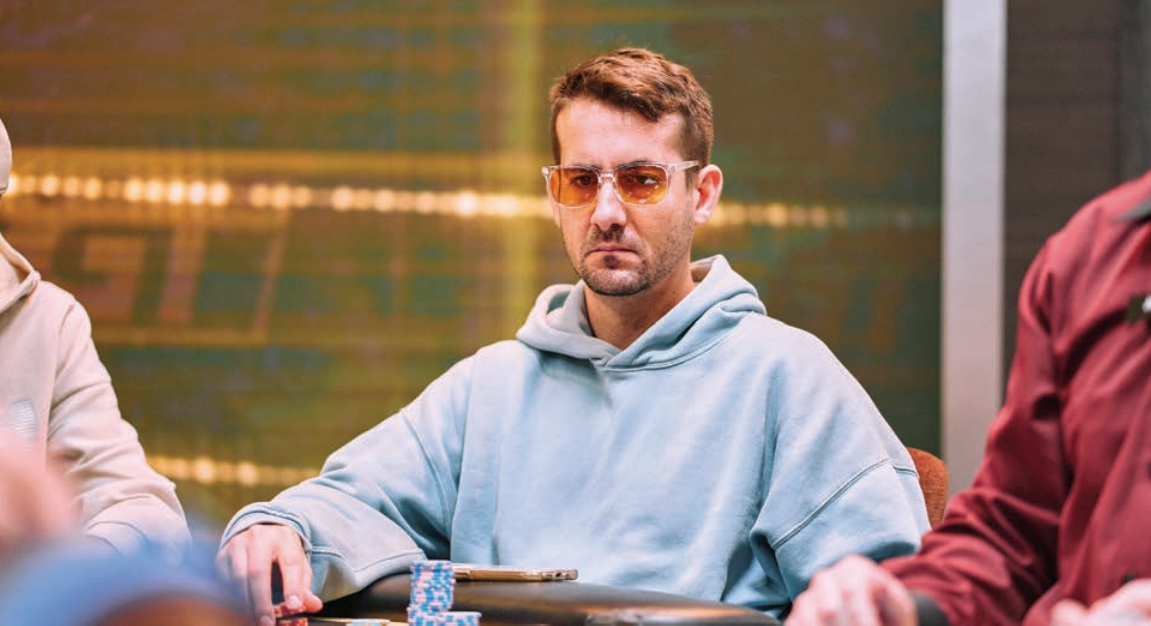
Ruben called. Liu drew one card and Ruben drew two.
Liu bet 200,000.
He bet 200,000 into 245,000, or 80 percent of pot. I drew a 4 and a K, so I could only beat higher pairs (fives thru tens).
Since I’ve seen 2-2, 3-3 and 4-4, that makes it more likely that Han has some fives through nines in his hand and he could have paired one of them.
CT: What does that bet sizing signal to you?
BR: His large wager is saying he has a hand like a strong ten, or a nine or even an eight. Or, he’s bluffing with a high pair that balances those hands. Han is a good, thinking player who will balance his range and have both strong hands and high pairs.
CT: What now?
BR: I have to be right 45 percent of the time, and my hand is one of the best bluff catchers I could have, having seen so many deuces, threes and fours, and not seen any sixes thru tens, so…
Ruben called.
BR: I made the arguably mandatory call, and he fortunately showed a pair of nines.
Ruben won the pot of 645,000.
CT: Great call and congratulations on your latest bracelet!
Ruben’s dream is to continue to raise awareness for non-profits such as the PTSD Foundation of America and Shields and Stripes. He hopes to be an example that with the right support, hard work, and a good mindset, things can turn around. Follow Ruben on Twitter/X @Brad_Ruben and on IG @bradrubenpoker.
- Photos by PokerGO, Card Player