







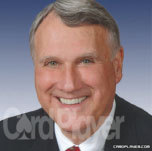
 An effort to criminalize America's national card game via the Unlawful Internet Gambling Enforcement Act of 2006 (UIGEA) was one of the more disgraceful statutes passed and signed during the Bush administration, a period already notorious for the ill-conceived laws, wars, and policies of cynically moralistic politicians. The UIGEA ban on some but not all games "subject to chance" primarily targeted online poker sites. When the bill failed to attract enough support on its own merits, Sens. Bill Frist (R-Tenn.) and Jon Kyl (R-Ariz.) deceptively attached it to a worthier bill designed to improve security at American ports.
 Sen. Frank Lautenberg (D-N.J.) stated that no one on the Senate-House Conference Committee had even seen the final language of the entire bill, and many senators were probably unaware of its gaming provisions when they voted to protect major ports from terrorist attack. Even if they were, they may not have known what to make of it. Gambling law expert I. Nelson Rose found parts of the UIGEA "indecipherable," and wondered whether the confusion stemmed from typos or proofreading errors, "since the bill was rushed through without an opportunity to even be read." The attachment maneuver took place in the eleventh hour of debate on the Safe Port Act, which finally passed on a midnight vote by frazzled senators anxious to both protect the nation's ports and begin their election-year recess. President Bush enthusiastically signed it into law on Friday the 13th of October 2006.
As The New York Times pointed out, the law "did not make it impossible or illegal for Americans to bet online, but it did make it trickier for players to get their cash to the offshore casinos that run the Internet sites." More than a few people saw the effort to criminalize Internet gaming sites as a convenient distraction from the war in Iraq. It also fit the Bush-Rove pattern of supporting moralistic initiatives designed not to change behavior but merely to gratify the arch-conservative base of the president and like-minded congressmen, and to parlay fears about national security into support for other items on their agenda.
"Frist's last-minute addition of this amendment to a completely unrelated bill should be seen by all poker players as an underhanded, purely political move designed solely to shore up Frist's dwindling right-wing, out-of-touch, conservative base," Phil Gordon scoffed. "As a lifelong poker player," said Doyle Brunson, "I can't believe the underhanded way this new bill restricting online poker was passed through Congress. What does Internet poker have to do with the Safe Port Bill? We Texans don't like this kind of trickery. Texas is a state where you can see an enemy coming, a friend is a friend, and you look someone straight in the eyes." Ethan Ruby, unable to play in casinos since being paralyzed in an automobile accident, can play only online. "Internet poker is a great source of enjoyment and allows me to compete on an equal playing field with people from around the world," he said. "I can't understand how President Bush would take this game away from me and millions of other Americans."
"This last-minute deal reeks of political gamesmanship," concluded Michael Bolcerek, president of the Poker Players Alliance. "The American people should be outraged that Congress has hijacked a vital security bill with a poker prohibition that nearly three-fourths of the country opposes." Bolcerek predicted that the UIGEA will "damage an already fractured relationship between government and the electorate."
The Act's effect in the online poker community was debilitating, at least temporarily – an expensive hassle, to be sure, but hardly the fatal blow that its proponents had hoped to deliver. Sites listed on the London Stock Exchange, such as PartyPoker, by far the busiest virtual cardroom at the time, were forced to stop serving American players in response to the Act. The stock of Party Gaming PLC, which runs PartyPoker, lost 60 percent of its value the day after the bill was passed. Other sites, such as DoylesRoom, also stopped serving American customers for a number of months, though players in the U.S. quickly found other sites, especially Full Tilt and PokerStars, that were more than happy to take their action. Yet because of the net loss of online satellite opportunities, the number of entrants to the following World Series main event dipped significantly (from 8,773 to 6,358 in 2007) for the first time in history.
 Card Player legal analyst Allyn Jaffrey Shulman wasn't alone in pointing out that even though annual gambling revenues online had surpassed $12 billion, the UIGEA futilely attempted to ban rather than regulate and tax it. And while the Act prohibited American banks from transferring money in or out of the sites, the sites themselves are located in countries in which gambling is legal, and the U.S. had no power to make laws affecting companies such as PokerStars or NETELLER that were legally doing business offshore.
The controversy took on a global dimension when the World Trade Organization ruled in favor of Antigua and Barbuda, which had claimed that aggressive efforts by the United States unfairly discriminated against offshore online gambling companies. When the WTO ruled that the U.S. must bring its laws into compliance with its decision, The Wall Street Journal reported that the decision would have wide-ranging implications in favor of Internet gambling. Mark Mendel, the lead counsel representing Antigua, noted that the UIGEA exclusions highlight the discriminatory trade effect of the U.S. prohibition. "By creating carve-outs for certain domestic remote gambling opportunities … the legislation flies directly in the face of the WTO ruling. The economic basis of the U.S. restrictions simply cannot be more obvious."
 Rep. Bob Goodlatte (R-Va.), who led the push for the UIGEA in the House, conceded that "Under current federal law, it is unclear whether using the Internet to operate a gambling business is illegal. The closest useful statute currently is the Wire Act, which prohibits gambling over telephone wires. The Wire Act, which was written well before the invention of the World Wide Web, has become outdated." Goodlatte proposed to amend the Wire Act "to make it clear that the prohibitions include Internet gambling and the use of other new technologies."
"There has never been legislation that would ban online gaming," Shulman said in response. "Bills have been introduced that affect the transfer of moneys from U.S. financial institutions to online gaming sites, but this is quite different than banning online gaming. The proper language always should have been that legislation has been introduced in an attempt to curb the rapidly growing online gaming industry. The current bill attempts to ban certain forms of online gaming while sanctioning others. Although Goodlatte claims that the current bill prohibits all gambling on the Internet, it does no such thing. While this bill is admittedly more ambitious than past attempts, it is fraught with built-in, foreseeable problems and contradictions." She noted that the bill prohibits gambling businesses from accepting online bets where a person risks something of value "upon the outcome of a contest of others, a sporting event, or a game predominantly subject to chance." This last phrase addresses not whether the game contains an element of chance or an element of skill, but whether chance or skill is the dominant factor in determining the outcome. Shulman, Howard Lederer, and others have pointed out that when so many pots are won by a bettor who gets no callers, and when the best players consistently win in the long run, it's absurd to deny that skill is the dominant factor in poker. Like chess, stock trading, or managing a business or sports franchise, poker is a thinking person's game that relies on logic, intelligence, psychological insight, money management, luck, and the ability to adjust our tactics to what our opponents are doing. To compare it to playing the lottery, bingo, slot machines, blackjack, or craps couldn't be much more ridiculous.
Shulman also reminds us that the Supreme Court has already held playing poker to be a profession, which clearly implies a preponderance of skill. In Commissioner of IRS v. Groetzinger (1987), the Court held that since nearly all states permit some form of gambling, if a taxpayer "devotes his full-time activity to gambling, and it is his intended livelihood source, it would seem that basic concepts of fairness (if there be much of that in the income tax law) demand that his activity be regarded as a trade or business just as any other readily accepted activity, such as being a retail store proprietor or, to come closer categorically, as being a casino operator or as being an active trader on the exchanges."
Under most jurisdictions, the term "game of skill" is reserved for those in which skill determines the result more than luck does. Chess, bridge, poker, and most physical games qualify; bingo, blackjack, craps, roulette, and lotteries don't. Even so, there are plenty of U.S. jurisdictions in which betting on lotteries and bingo is legal and betting on skill-based games is not. This has been true since the country was founded – lotteries funded the Continental Army as well as most universities and state governments – and will stay true for some time to come. One reason is that old habits die hard. The political criterion is usually who will benefit from the wagering, not how much skill is involved.
Another question raised by Shulman is, why should the federal government expend resources to ban some forms of gambling while permitting and even encouraging others? Frist, Kyl, Goodlatte, et al. argued that gambling destroys the moral fiber of society, only to cynically carve out exceptions for online betting on horse races, the stock market, and lotteries. Lotteries, of course, are nothing but long-shot schemes based entirely on chance, yet they legally siphon billions of dollars – mostly from the pockets of those who can least afford it – into the coffers of 31 states, and counting.
 Among the many members of Congress opposed to the UIGEA, House Judiciary Chairman John Conyers (D-Mich.) noted an obvious and ominous parallel. "You might remember a failed experiment the U.S. government tried in the 1920s called Prohibition." He said that supporters of the UIGEA "believe they can stop the millions of Americans who gamble online by prohibiting the use of credit cards to gamble on the Internet. Just as outlawing alcohol did not work in the 1920s, current attempts to prohibit online gaming will not work, either." Instead of a prohibition that drives gambling underground and into the hands of unscrupulous operators, Conyers proposed that "Congress should examine the feasibility of strictly licensing and regulating the online gaming industry. State regulation will ensure that gaming companies play fair and drive out dishonest operators," adding that it could also provide "tax revenue for financially strapped states." Referring to the billions of dollars vacuumed from the U.S. economy into offshore gambling sites, Shulman agreed with Conyers by proposing that the government "regulate and benefit from the taxation instead of generously making offshore governments rich. Why keep trying to legislate morality," she asked, "and, instead, keep all that money in the United States, where it belongs?"
Meanwhile, Wayne Abernathy of the American Bankers Association was warning that the UIGEA was so unclear and sweeping that it threatened to cause "an erosion of the performance of the financial system." Not only are banks not equipped to examine every last financial transaction to make sure they are not for online gambling, he said, but the Act fails to clearly define what online gambling is. Instead, it leaves it up to banks to decide which transactions to allow, which to block, putting them in the business of law-enforcement agencies like the FBI. Even if the government were to provide a list of restricted online gambling companies, banks would still find it impossible to ensure that every transaction was legal, because there are so many different ways to transfer money online and because of how quickly the Internet changes.
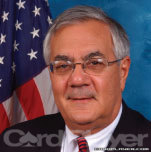 In April 2007, Rep. Barney Frank (D-Mass.) introduced a bill to overturn the UIGEA, calling it "an inappropriate interference on the personal freedom of Americans." In its place, Frank's Internet Gambling Regulation and Enforcement Act (HR 2046) would construct a viable framework for taxing and regulating online gaming. It would establish criteria to distinguish between legitimate sites and those engaged in unscrupulous practices, and would put in place mechanisms to block minors and problem gamblers while allowing responsible adults to play poker online.
The Poker Players Alliance, now headed by former senator Alfonse D'Amato, is committed to helping Frank overturn the UIGEA or at least exempt poker from its provisions. The PPA keeps voters informed on a range of related issues, including the latest age-verification software. It estimates that more than $4 billion in revenue is lost every year because of the attempt to ban online poker instead of regulating and taxing it, in spite of polls showing that 75 percent of Americans oppose such a ban. Most of them believe that because online wagers on lotteries are legal, a skill game like poker certainly should be, as well. The PPA also notes that poker tournaments have raised millions of dollars for charity, citing an event featuring 15 members of Congress that raised $288,000 for cancer research.
The game has been played by congressmen, presidents, justices, generals, and ordinary Americans for almost 200 years now. Virtual poker simply extends that tradition as the game and the country evolve in the 21st century. As we watch to see what happens next, we may want to recall how Illinois congressman Abraham Lincoln weighed in on a bill proposing to ban the consumption of alcohol back in 1840. Prohibition, said Lincoln, "goes beyond the bounds of reason in that it attempts to control a man's appetite by legislation and makes crimes out of things that are not crimes. A Prohibition law strikes a blow at the very principles upon which our government was founded." 