







River in Poker: Definition & How to Play the River
What is the River in Poker?
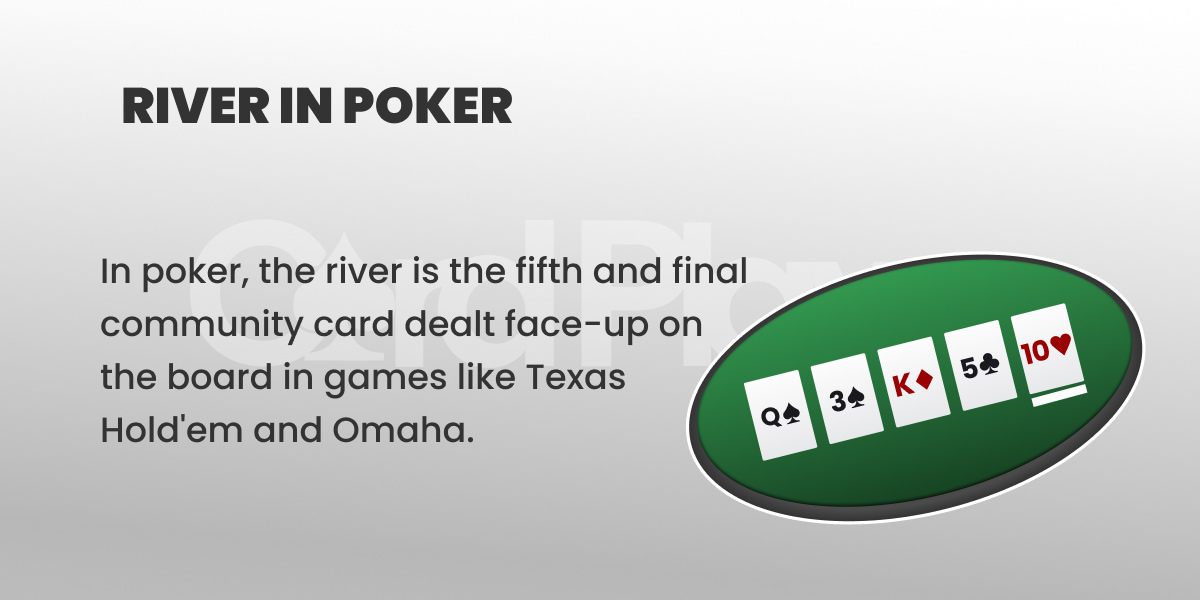
The river in poker is the fifth and final community card dealt in games like Texas Hold’em and Omaha.
It completes the board after the flop and turn. Once the river card appears, all the information regarding community cards is available, and players make their final decisions.
No more cards are coming, so this is the point where made hands stand or fall, and marginal hands face pressure they may not have handled earlier in the betting rounds.
River in Poker: Key Points
- The river card in poker is the fifth and final community card.
- After the river is dealt, players make one last betting decision before showdown.
- Position becomes more important on the river because you want as much information as possible before committing chips.
How Does the River Work in Poker?
After the turn betting round ends, the dealer burns one card facedown and then places the river card faceup on the table.
All the players remaining in the hand now see all five community cards and are aware of the best five-card combination they can form. The final betting round begins, starting with the first active player to the left of the dealer button. Because the river is the last chance to act before cards are shown, betting patterns tend to tighten.
A player who bets heavily on the river is usually polarized between a strong value hand and a bluff.
New players quickly learn that calling too light on the river is one of the most common ways to leak their bankroll. On the other hand, not betting enough with strong hands can lead to long-term losses.
The River in Different Poker Variants
Although people often associate the river with Texas Hold’em, the concept also appears in other poker formats.
Texas Hold’em
In Texas Hold’em, still the most common version of poker at online poker sites, the river is always the final of the five community cards. Each player still in the hand can use any combination of their two hole cards with the five on the board.
Because Hold’em allows so many combinations, the river in poker often forces players to reevaluate earlier assumptions, especially if they complete their draws.
Omaha
Omaha also uses a five-card board, but each player must use two of their four hole cards plus three community cards. This added requirement makes the river card in Omaha especially dramatic because more players have strong draws and multi-card combinations that can shift with the last community card.
Seven Card Stud
Stud does not use community cards, but it still has a seventh street (also called the river).
In Seven Card Stud, the seventh card is dealt facedown to each player, and that final private card can improve a player’s hidden strength. Even though it’s not a shared card, the final betting round works the same way: one last decision before showdown.
River Example in a Real Hand
This is a fairly simple example of the river in poker. Imagine a simple Texas Hold’em hand between two players. You hold K♣ Q♣ and the board runs out:
- Flop: Q♦ 8♣ 4♠
- Turn: 6♣
- River: 3♦
On the flop, you make top pair with a King kicker—a decent but vulnerable hand.
The turn gives you a flush draw, adding nine outs to improve. When the river brings the 3♦, your flush draw misses, and you’re left with just one pair of Queens. Now your opponent fires a large bet on the river. This is where river decisions get interesting.
Ask yourself:
- What hands would bet this river? Strong made hands like two pair or sets would bet for value. But missed straight draws (like 7-5) or flush draws might also bluff.
- Did your opponent show strength earlier? If they were passive on the flop and turn, a sudden big river bet is suspicious.
- Does the river card help their range? The 3♦ is a brick that doesn’t complete any obvious draws, making this spot more likely to be a bluff.
In this scenario, top pair with a decent kicker is often strong enough to call, especially if your opponent’s betting pattern suggests weakness earlier in the hand. However, against a tight player who rarely bluffs, folding becomes reasonable.
How Do You Play the River in Poker?
Before you even see the river, you should have a plan for that final card.
The last betting round is shaped by all the choices made before it. You are no longer protecting a hand or trying to get a draw because no more cards are coming. You are either taking money out of the pot, controlling it, or deciding if your opponent is bluffing.
You should always consider whether you are playing in position or out of position. This is a crucial concept in any successful poker strategy.
Playing in Position
One of the best things about poker is that you can act last on the river.
When you are in position, you get to see what your opponent does first. If they check, you can decide if a value bet is a good idea. You can assess whether the size of their bet makes sense for the hand they’re representing.
When you’re in position, river bets should be planned.
Strong players usually decide how much to bet on the river based on how often they think they will be called. If you think a weaker player will call a lot with a second-best hand, it makes sense to make a bigger value bet.
Your bluffs should target specific hands in your opponent’s range that are strong enough to have called earlier streets but weak enough to fold to pressure. You can’t bluff players who refuse to lay down any pair.
Playing Out of Position
When you’re out of position, it’s harder to play the river because your opponent gets to act last.
Many beginners make the mistake of checking too often out of position, even with hands strong enough to bet for value. This passive approach causes two problems: you miss value from worse hands that would call, and you make your strategy predictable—betting only with monsters or as a bluff.
When you act first out of position, think about what your opponent’s range looks like.
If you have a strong hand, don’t be afraid to bet for value even from out of position. By betting first, you maintain control of the pot and force your opponent to make the difficult decision. However, with medium-strength hands where you’re unsure if you’re ahead, checking can be the right play. Be prepared to call if your opponent bets and their betting pattern doesn’t match a strong hand.
The goal is to balance your checking range with both medium hands you’ll call with and strong hands you’re checking to induce bluffs.
The worst approach is checking every time you’re out of position simply because you’ll act first. Instead, think strategically about what your hand can accomplish and what range of hands your opponent likely holds.
Common River Mistakes
New players repeatedly make the same mistakes on the river, mostly because the last card seems scary.
- The most common mistake is calling too wide. If an opponent suddenly becomes aggressive on the river after being passive earlier in the hand, that usually means they have a strong hand (but keep in mind that they may be bluffing).
- Another mistake is not value betting when you think your hand is good. Many new players are afraid of betting into a better hand, but this fear often costs them money.
- The last big mistake is bluffing when the board doesn’t help your range.
Experienced players can tell when someone is bluffing because of how they bet earlier in the hand.
The river in poker is the final decision point where all information is available, but that doesn’t make choices easier. River decisions are often the hardest in poker because the pot is largest, mistakes cost the most, and you must accurately read both the board and your opponent with no future cards to bail you out.
If you learn to automatically think about those situations, the river will be less about luck and more about being able to read the board and your opponents.
FAQs
What is the river in poker?
The river in poker is the fifth and final community card, used to complete the board.
How do you deal the river in poker?
The dealer burns one card and then places the fifth community card faceup before the final betting round.
Is the river the 4th or 5th card?
The river is always the 5th card dealt in Texas Hold’em and Omaha.
Is it better to bet or check on the river?
It depends on your hand, your opponent, and whether worse hands can call or better hands can fold.
How important is the river card in poker?
The river is critical because it sets your final hand strength and leads directly to showdown.
What happens after the river card is dealt?
A final betting round takes place, followed by a showdown if multiple players remain.
Can I fold after the river card is dealt?
Yes, you can fold anytime you face a bet and do not want to continue.
Can you bet after the river card is dealt?
Yes, the river includes a full betting round before the showdown.