







Whale in Poker: Definition, Origins & Types of Whales
What Is a Whale in Poker?
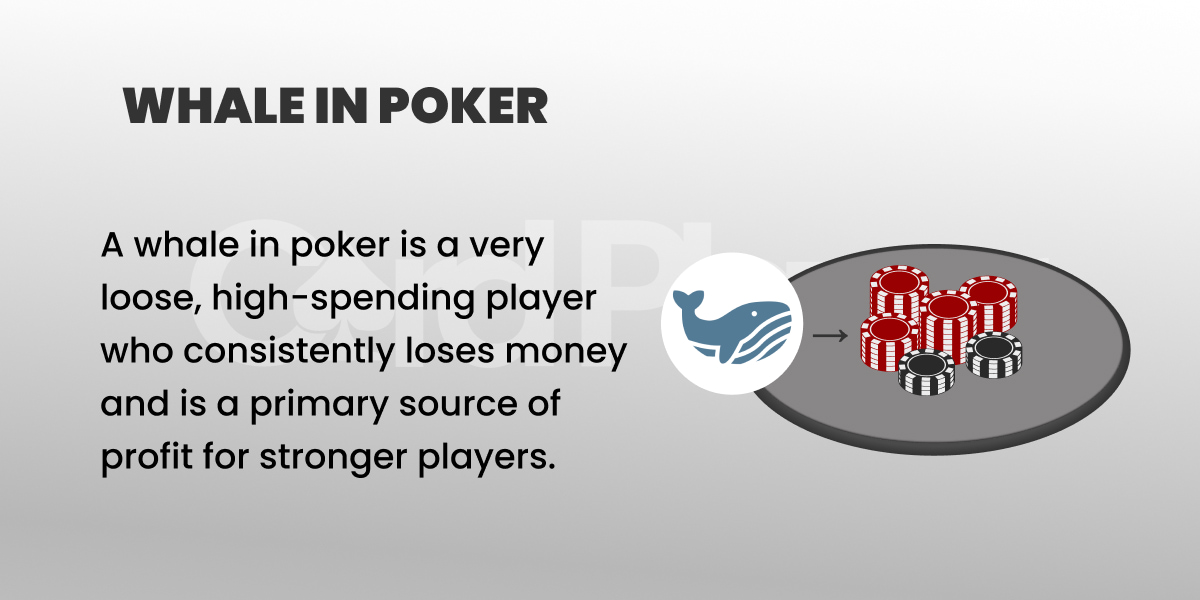
A whale is a player who plays for a lot more money than most people at the table. When a whale sits down, the game usually changes right away. The pots get bigger. More hands are played. The swings feel heavier.
A whale in poker isn’t necessarily defined by skill or a strong understanding of the odds. Some whales know how to play, others do not. What matters is how much money they’re willing to risk and how often they put it into the pot.
Many whales play loose and call bets they should probably fold.
There’s no strict definition of a whale in gambling; it’s simply a word used by players and also casinos, particularly when they refer to regular big spenders or when talking about a player’s net worth.
Whale in Poker: Key Points
- A casino whale is a player who consistently plays for much higher stakes than the majority of participants at the table.
- A whale’s impact on the game is defined primarily by betting behavior and willingness to risk a large amount of money.
- Their presence often alters the size of the pots, the overall dynamic and atmosphere of the poker game.
Why Are Big Gamblers Called “Whales”?
Whale in poker comes from fishing. It’s the biggest catch you can get in the ocean. In gambling, the biggest gamblers are treated the same way.
A whale in old casinos referred to a gambler who could place bets higher than what hundreds of small gamblers could place combined. Such gamblers were limited, and casinos kept a keen eye on them.
When poker became more popular and publicized, the term extended to the poker rooms. Players required a term that conveyed one who brought a lot of money to the table to play without fear. The term whale suited this description.
How a Whale Differs from a High Roller
Many people confuse whale with high roller, but they don’t necessarily mean the same thing. A high roller in a casino wagers large amounts but keeps to a strategy.
A whale may do a lot more than that.
The difference appears in how they gamble. A high roller at a casino can still conserve his gambling bankroll. A whale gambler is more likely to chase losses, overstay his time at the tables, or gamble as if he’s there for fun and not to compete.
How Casinos Identify & Attract Whales
Casinos and online poker sites identify potential whales by analyzing betting behavior rather than making assumptions. They track how much a player wagers, the length of their play sessions, and how frequently they return over time.
This is where the use of loyalty cards helps, as they allow casinos to record actual wagering volume, loss rates, and engagement patterns.
If an individual consistently bets with high levels, they are referred to as a casino whale.
The casinos then have to retain the happy customer. They offer this person private invitations and deals. Understanding how casinos identify whales helps explain why some players receive offers that others never see.
Benefits & Perks Whales Receive
Many whales will receive free hotel rooms, fine dining, paid flights, and private gaming areas.
In poker rooms, whales may be invited to private high-stakes games or allowed to buy in for very large amounts. A casino whale may also be offered credit, allowing them to avoid bringing large amounts of cash.
Famous Poker & Casino Whales
There have been many notable whales in the history of gambling. Some were business owners or wealthy investors. Others were entertainers who enjoyed high-stakes action.
Edward Davis
Edward “Tiger Mike” Davis was one of the most renowned players of the old school Vegas high-roller style. First of all, he was quite flashy in his dress, often wearing tailored suits to fit his occasion, complete with additional pockets.
In addition, Edward Davis often carried a substantial amount of cash, sometimes a gun, and was known to be an ex-oil businessman who would stash massive amounts of money in the trunk of his car to gamble whenever and wherever he pleased.
Andy Beal
Andy Beal is considered one of the biggest all-time poker whales due to the scale of the games he used to play and the stakes he played with.
He’s a billionaire banker and mathematician who used to participate in high-stakes cash games in the early 2000s in Las Vegas, with limits going as high as $100,000-$200,000 and later increased to $400,000-$800,000.
In fact, he used to play heads-up against The Corporation, a group of top players that comprised Phil Ivey, Doyle Brunson, and Chip Reese, among others, and in the process, he won and lost tens of millions of dollars in multiple sessions that fluctuated in value by eight figures in some instances.
Can Whales Hurt Casinos?
A skilled whale who gets lucky can win huge amounts in a short time.
Casinos manage this risk by setting limits and spreading action across games. There is also another risk. If a whale loses too much too fast, they may stop gambling altogether. Casinos also have to consider responsible gambling and their public image.
Examples of Whales in Poker
Example 1: A whale in poker can be a rich player who likes playing at high stakes but does not fully understand poker strategy. They bet large amounts, stay in too many hands, and lose money over time, which makes them very profitable for other players.
Example 2: An online poker whale is a player who repeatedly joins expensive games, even after losing. Because they keep betting large amounts and making basic mistakes, both other players and the poker site benefit from their presence.
FAQs
What is a whale in gambling?
A whale in gambling is a person who bets far more money than the average player on a regular basis.
Why are big gamblers called whales?
They are called whales because the term compares them to the biggest and most valuable catch.
What benefits do casino whales receive?
Casino whales receive perks like free rooms, travel, personal hosts, and access to high-limit games.
How do casinos identify whales?
Casinos identify whales by tracking bet size, play time, and long-term betting patterns.
What’s the difference between a whale and a high roller?
The primary difference between a whale and a high roller is size and risk. Whales play bigger and take more chances.
When can you call someone a whale?
You can call someone a whale when their betting is far above normal levels and stays that way over time.