







Calling Station in Poker: Definition, Meaning & Strategy
What Is a Calling Station in Poker?
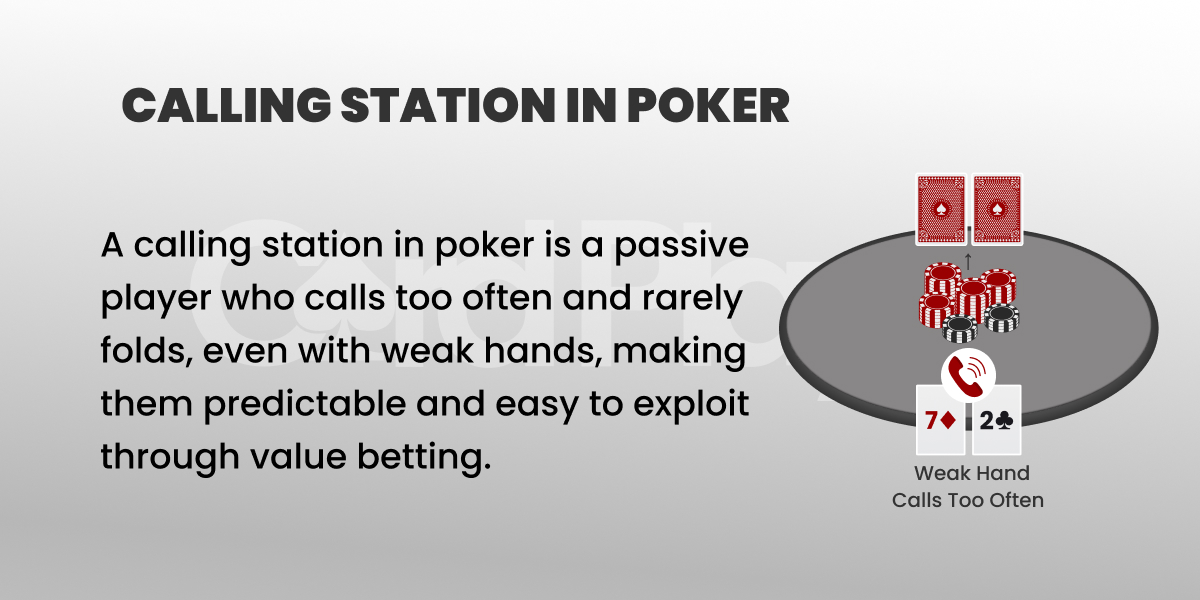
A calling station is a poker player who calls most of the bets and never folds, even if the hand is not mathematically or strategically solid.
To analyze this type of player, you must first understand what calling is. It refers to matching the wager that is being made at the table at that given time. Calling stations call raises before the flop and continue to call on the flop, turn, and river regardless of the poor hand that they might hold.
They’re also passive players. They bluff or raise very infrequently; once they have invested money into the pot, it’s very hard for them to fold.
Calling Station in Poker: Key Points
- A calling station in poker is a player who calls too often and folds rarely, even with weak hands or poor odds.
- Bluffing doesn’t work well because they’re willing to call bets on most streets just to see the showdown.
- The best way to beat a calling station player is to value bet strong hands more often and avoid fancy or deceptive plays.
Calling Station Vs Other Player Types
To gain a better understanding of what a calling station is, it’s helpful to compare it with other types of players.
- Tight players fold frequently and wait for strong opening hands before committing their chips to the pot.
- Loose-aggressive players (LAGs) also participate in many pots, but they continue applying pressure through bets and raises.
- Calling stations are loose and passive. They enter many pots but seldom open the betting with a bet and a raise. Instead, they call to see what happens with the hand.
Mixing up a calling station with a loose player is a mistake many make. The former plays many hands, but the latter can still fold or change and play aggressively.
Calling stations are often depicted as beginners. New players usually call too much; however, now all beginning poker players are calling stations.
| Playing Type | How They Play Hands | Aggression Level | Folding Behavior | Common Traits |
|---|---|---|---|---|
| Calling Station | Calls frequently on all streets | Very Low | Rarely folds | Passive, showdown-oriented, overcalls |
| Tight Player | Plays few hands, waits for strong cards | Low to Medium | Folds often | Patient, selective, avoids marginal spots |
| Loose-Aggressive (LAG) | Plays many hands and applies pressure | High | Folds when facing resistance | Controls pots, forces decisions |
| Loose Player | Enters many pots | Medium | Can fold under pressure | Flexible, adjusts under pressure |
| Beginner | Inconsistent hand selection | Low | Varies | Learning fundamentals, mistakes not always repeated |
Examples of a Calling Station in Action
- Preflop: A calling station limps into the pot. You raise with A-K, and they call.
- Flop (K-7-2): You make a solid bet with top pair. The calling station calls again.
- Turn (9): You increase your bet size. The calling station continues to call.
- River: The board now includes possible draws. You make a large value bet, and once again, the calling station calls – this time with K-4, a weaker kicker than yours.
This is a classic calling station in poker behavior. They had a weak K and never considered folding, even as the board became more dangerous. They weren’t trapping, nor were they slow-playing. They were simply calling because they had a piece of the board.
How to Beat a Calling Station
Learning how to beat calling stations can quickly increase your skill level. The strategy is simple, but it can be hard to follow.
Avoid Bluffing
Against a calling station, bluffing is less productive because they tend to call a lot, and as a result, your bluffs will not be profitable.
Value Betting
Increase the size of your value bets with strong hands, such as top pairs and overpairs. Against these types of players, this is your best chance to utilize your edge.
Bet Sizing
Players who like to call a lot usually don’t pay attention to bez sizing. Increase the size of your value bets to extract maximum value.
Patience
Avoid forcing hands, simply wait for good cards, and when you have them, try to extract as much value as possible.
Common Mistakes Players Make Against Calling Stations
Make note of these common mistakes some players make so you can avoid them.
- Slow-playing strong hands: Slow-playing will cost you chips. They will bet anyway, so slow-playing strong hands will limit your potential for value. Value betting is almost always a superior play.
- Punting your chips away after losing a hand: Players make poor decisions if a calling station wins a hand with a lucky draw.
- Misreading the aggressive play: Don’t make the mistake of bluffing when a calling station raises. A raise from this type of player usually means they have a strong hand that they won’t let go.
Is a Calling Station Ever a Winning Style?
Playing like a calling station is rarely a winning strategy. You’ll end up losing more money with your weak hands than winning money with your good hands. Poker is a game of folding when you’re beat and betting/raising when you’re ahead.
Calling stations can initially seem like successful players. In low-limit or short sessions, beginners might see these kinds of players winning a hand or two after calling down and think this is a good strategy.
In more advanced games, calling stations are easy to notice. They are targeted because they have weaknesses that experienced players normally capitalize on.
Calling Station in Online Poker Vs Live Poker
Calling stations appear at online poker sites and live games, but the patterns can change.
In a live game, it’s not only about the action and the cards. They enjoy seeing flops, staying in hands, and talking at the table. Sometimes their call is not a reflection of how good they think their hand is, but rather a matter of not wanting to miss out.
On the internet, the story is different. Hands happen a lot quicker, so it is easier to notice some of the patterns. You can also recognize them by the speed at which they click buttons – it can seem that they have the “call any bet” option enabled.
FAQs
What is a calling station?
A calling station is a poker player with a tendency to call a lot of bets and to fold very infrequently.
How do you beat a calling station?
You need to bet strong hands and bluff less often, especially if you are playing from a strong position.
Is a calling station the same as a loose player?
A loose player can still fold and play aggressively. A calling station is a loose and passive player, often just calling.
Is playing like a calling station ever profitable?
In the long run, no. Calling stations give up value by repeatedly failing to fold in losing spots.
Why do calling stations hate folding?
Many calling stations dislike folding because they want to reveal the showdown, or they feel bluffs are also being called frequently.
Should you ever bluff a calling station?
Bluffing a call station is almost always a bad idea. They call frequently enough that bluffing simply is not profitable.