







Chip and Doyle can be heard more often in a poker room than chips and salsa in a Mexican restaurant. When not trying to cut each other's throat at the table, these two have been the best of friends for more than 30 years now. Besides playing literally thousands of hours of poker together, these guys have gambled on most anything imaginable.
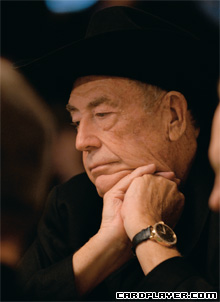 They actually may have watched more sports together than played poker together. Three games a day times 350 days (they took a few off; after all, they aren't complete degenerates) times 30 years equals a lot of wasted time. It's safe to say they had thousands and sometimes even millions on every one of those games, be it football, basketball, tennis, hockey, bowling, soccer … and their specialty, baseball. Their wives would become so upset over the amount of sports they watched that they were forced to go underground. That is, they had to rent an apartment or small home to watch the games in peace. This was referred to as "the safe house." Safe from women, I guess they meant.
Golf was another outlet for their compulsive gambling addiction. Nassaus, scrambles, Calcuttas, and automatic presses were all par for the course. I've often urged my father to write a book on his exploits on the tees. Dewey Tomko, another golf gambler who was possibly the best in this arena, often says, "Doyle Brunson has won more money on the golf course than any human alive, including the pros." That's quite a claim, but if anyone would know, it would be Dewey. He either participated in or witnessed many of the matches firsthand.
Chip and Doyle both started their poker careers in college while on athletic scholarships: Chip at Dartmouth in football and Doyle at Hardin-Simmons in basketball. I'm sure you've heard the stories about my dad: most valuable player in his conference his junior year and scouted by the Lakers before breaking his leg and having it set wrong, ending his basketball career. Chip was a center, and since we don't see too many 195-pound offensive linemen in the NFL, his football career also wound up with his graduation. Both of these former athletes found the competitive outlet they needed in poker.
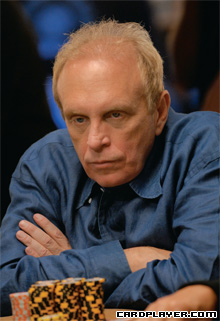 Chip cut his poker teeth at his fraternity house, Beta Theta Pi. He busted students and professors alike, until virtually the whole campus owed him money. The game room at Chip's frat house was actually dedicated the David E. Reese Memorial Card Room when he graduated! Chip was planning on returning to school to get his law degree when he got sidetracked in Las Vegas. When it was time to go back, Chip had to make a decision. He was quoted as saying, "I had to make a choice between being a lawyer or a professional gambler. I chose the more honorable of the two." Chip has since denied to me that he ever made that statement. Who cares about the truth? It's too great a quote not to use!
Chip's obsession with games (backgammon is his latest) started in his early childhood. He had rheumatic fever, and the thinking of doctors at the time was that the child should stay indoors and in bed. Well, Chip is so old that TV hadn't been invented yet, so the only thing he could do to pass the time was play games. Checkers, chess, dominoes, board and card games – Chip mastered them all. Combine these decades of competing at games with Chip's super-high IQ, his insight into human psychology, as well as a killer's instinct, and you have the perfect poker player.
Chip also had one more thing going for him: the ultimate mentor, Doyle Brunson. With all the things I've mentioned that Chip had going for him, he lacked one thing – experience. In poker, there's no substitute for experience. My father, along with a few others such as Johnny Moss and Puggy Pearson, has (had) more experience than anyone else. What better sounding board to bounce poker theory off?
This was, however, definitely no one-way street. Chip established himself as one of the top pros faster than anyone has ever done, before or since. Doyle would now have not only his own experience, but a fresh outlook from Chip's point of view. Poker's two top minds could now collaborate and evaluate all the poker decisions and situations that they saw arise.
Poker isn't all that these two would collaborate on. They had more get-rich-quick business ideas than Fred Flintstone and Barney Rubble. Gold mines, television networks, sandwich franchises, and sports web sites and touting services are but a few of their disasters. I guess these two great minds should have stuck to poker. 