






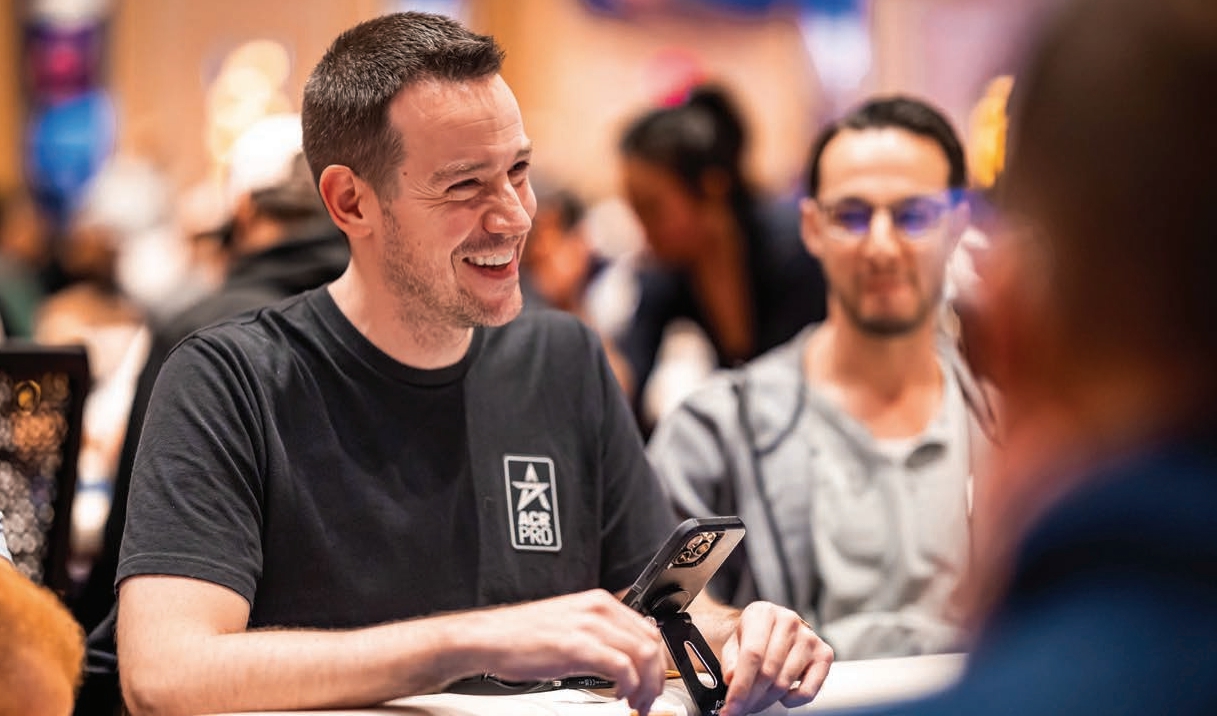
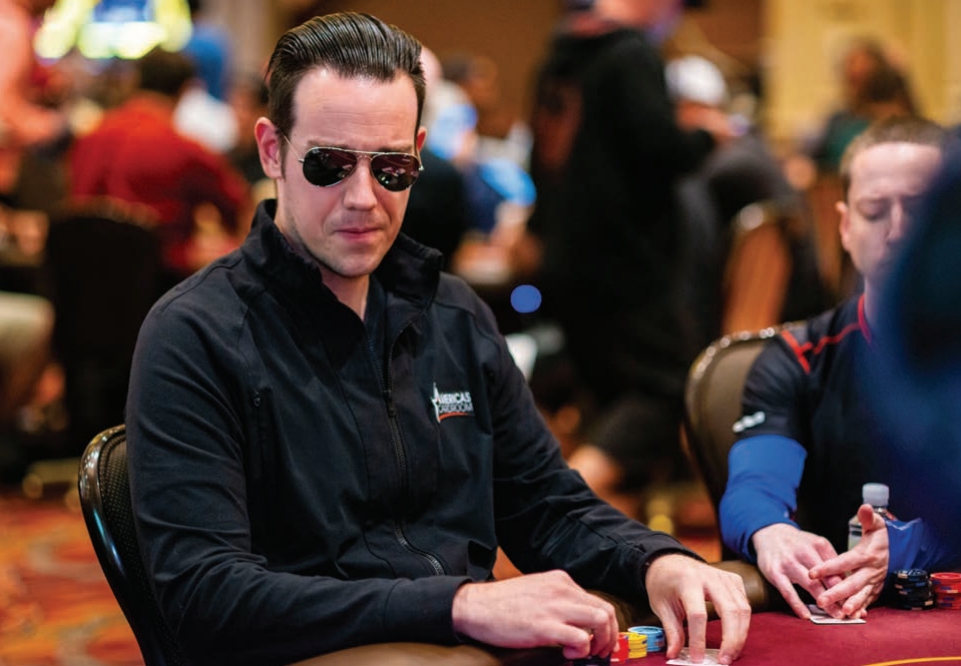
Jeff ‘Boski’ Sluzinski has been involved in quite a few aspects of poker in a career dating back two decades – from the early days of the online game and the boom of the 2000s to vlogging and eventually becoming an ACR Poker ambassador.
The Michigan native found the game after a stint playing Magic: The Gathering, and has since racked up $1.4 million in live tournament winnings. The biggest of that came in 2024 when he won the Enjoy Poker Tour high roller event in Uruguay for $145,310.
Beyond live earnings, however, Sluzinski cut his teeth at the virtual tables even before the Moneymaker boom, finding he could earn a living playing online rather than taking a regular job. After moving to Las Vegas, Sluzinski started vlogging his poker play and quickly found a dedicated following. He has more than 100,000 subscribers across various platforms and his videos have more than 20 million views on YouTube alone.
The 42-year-old recently joined the Table 1 podcast to talk about his life in the game and beyond. Check out some of the highlights of the interview below. You can also watch or listen to the entire episode below or on YouTube, Spotify, Apple, or any podcast app.
Justin Young: Where’d you grow up?
Jeff Sluzinski: Michigan, just outside Detroit. Pretty normal upbringing and eventually got into poker, and here we are. I was a Magic: The Gathering player, and those skills transmitted over a bit. Right around the year 2000 I quit Magic and focused on poker and the rest was the [usual] poker story – home games, Rounders, the Moneymaker boom, Harrington on Hold’em, etc.
Justin Young: Were you playing Magic: The Gathering competitively or just among friends?
Jeff Sluzinski: No, I was traveling and playing in big tournaments.
Magic came out in ‘93 and I got into it in ‘94 or ‘95, at that point just playing at school. I still remember in fifth or sixth grade, our principal banned it because the parents complained it was demonic. They saw a few of the cards, and there were images that were scary demon creatures, and they’re like, ‘Oh, they’re worshiping the devil. We can’t have our kids playing this game,’ so they banned it.
But that didn’t stop me from playing. I definitely had the passion too, just the study, the play testing, and the meta game and the friend groups that you gained by being in this competitive environment to share the knowledge, kind of like poker groups now sharing solves or talking strategy. It’s definitely a big advantage to be in a group.
It’s a great hobby to meet other people and play competitively. The biggest thing was the arbitrage with trading cards and gambling at a young age where, ‘You think your deck’s better than mine, let’s play for a card or for 20 bucks on the side?’
Then you could make a lot of money by selling cards to stores. This was really before the Internet. You didn’t really have a good marketplace. ‘You have a card that you want to buy for $10, I know a guy that’s selling it for $5, so I’ll buy it from him, sell it to you.’ You could do that across all the stores within a 10-mile radius or through people. It was a great way to make money when I was young. This was before I had a car. I had to rely on my parents to drive me to tournaments.
I won the 1999 world championships for juniors and got a $10,000 scholarship, which I ended up using at the University of Michigan, Dearborn. That money ran out and fast forward, I dropped out.
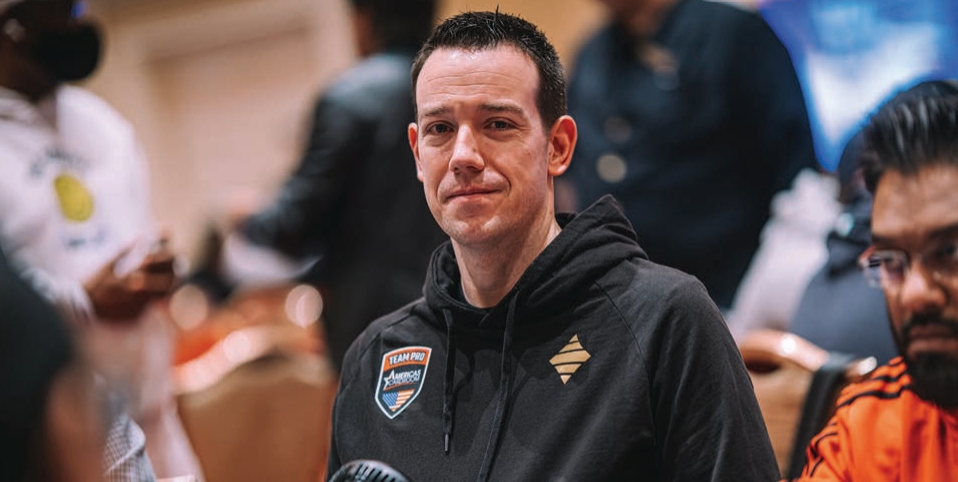
Sluzinski then explained how he transitioned to poker.
Jeff Sluzinski: There’s definitely a stereotype with Magic players. They’re nerdy, outcasts of some sort, and I eventually found them annoying to be around. Not fun. Not a good time. Bad body odor.
Justin Young: Not a whole lot of chicks in there?
Jeff Sluzinski: Worse than a poker tournament, probably 1%. Nothing to get excited about.
I needed money for a car. I was working for $5.50 an hour as a cashier. My parents weren’t going to buy me a car, so poker was a good avenue. I started with home games and started playing online. I was making 10 bucks an hour playing $0.25-$0.50, playing four tables. That was guaranteed.
Art Parmann: At the time of the Moneymaker boom?
Jeff Sluzinski: It was about a year before, so right around there. Then I eventually turned 21 and could go to the casinos in Detroit. I still remember, on my 21st birthday, my license was expired, but I had a new one coming in the mail, so I went to the casino with it, and they’re like, ‘No, this isn’t valid because there’s a hole in it. It expired today.’
I said, ‘Yeah, it expired today… my birthday. Let me fucking gamble. That’s why it’s expired, because I’m 21.’ He was like, ‘We need the official one.’ I had to come back, but I actually had jury duty on that exact day in downtown Detroit.
Art Parmann: Hole in your license? Not good for gambling, but perfectly okay for convicting people. (laughing)
Jeff Sluzinski: I had to spend a week in jury duty. One day I fell asleep after drinking during the dinner break. The judge started yelling at me for falling asleep in my chair. The next day, I brought a bag of Cheetos back from dinner break in the middle of a quiet court, and I started crunching and the bag was crinkling, and everybody just stopped.
I didn’t care. I was missing my classes to get paid like 15 bucks a day. I was also losing so much money by not being able to work. I was working full time as a manager of a telemarketing company at that point. But telemarketing is not the most ethical line of work, which ultimately led me to quit. I just couldn’t do it anymore.
Justin Young: What were you going to school for?
Jeff Sluzinski: Business administration, and it was the only college in Michigan that required calculus for business administration. I failed it three times and gave up.
Art Parmann: I assume you had spun up a little bankroll by then?
Jeff Sluzinski: It was enough to pay the bills, but for years I struggled. We’re talking 99-cent menu every night.
Just Young: How did your parents react to dropping out of college and choosing this career?
Jeff Sluzinski: They weren’t very happy. I get it. There’s definitely a low chance of survival in this industry. I just had so much passion… when you’re young and eager to win those all-ins and sweat those pocket aces.
Justing Young: It’s more like after getting punched in the face, being able to wake up the next morning and say, ‘I can’t wait to do that again.’
Jeff Sluzinski: Yeah, just the enjoyment of the process and the thrill and the love of the game. I played so much on PokerStars that I’d be on the top of the tournament leaderboard for the year, just grinding out all available tournaments. I loved it so much, and I was doing well.
2008 was my breakout year, where I just went on a sick heater online. That’s when I moved to Vegas. I won the nightly $162 [buy-in] for I think $40,000 and then I won the nightly $320 the next day for $60,000. I ended up profiting like $400,000 that year just on one site.
That gave me enough bankroll to be comfortable, to invest, and not worry about the swings and or sweat the buy-ins as much. That was the biggest hurdle for me, putting value on the tournament buy-in. You’ve got to care, but then also not care. ‘$33 could be four dinners. I don’t want to lose four dinners. Oh, wait, I have A-K. I just lost four dinners.’
Art Parmann: After Black Friday you had to move to Vancouver to keep playing.
Jeff Sluzinski: A $2,500 a month furnished apartment. Good times. I did profit after a year, but not enough to make it really worthwhile.
It wasn’t too bad. No snow, nice summers, beautiful women, good food. I had a great schedule. While I was playing, I was also on Match.com, so I’d have a date almost every night. I still remember my username, ‘PoutineDream,’ which I thought was pretty funny.
It was just a good balance of poker and getting to meet people. But I still had a house in Vegas. I was going to have to sell or I couldn’t live in Vancouver. It was too expensive and I’d have to apply for some special visa because you can only stay there for six months at a time. I’d have to go back and prove my residency, that I have a bank account, I have a house, etc. But in the end, it just didn’t seem worth it.
I came back and had to figure out what I was going to do. I decided I was going to quit poker and get a real job.
Art Parmann: What was on your radar for real jobs?
Jeff Sluzinski: The two things I narrowed it down to were salesmen of some sort – I had an in at a mattress sales place where I could make some decent money. People need beds.
I also was actually thinking about becoming a police officer, even at that age. I just had to pass the physical tests, and actually went on a ride along with a Las Vegas police officer. Anybody can do if you just express interest, which I highly recommend. They give you a bulletproof vest. You’re with them for whatever they’ve got to do for eight hours. I’ve always been anti-cheaters and scumbags. If I could indirectly deliver some justice, I think that’d be satisfying.
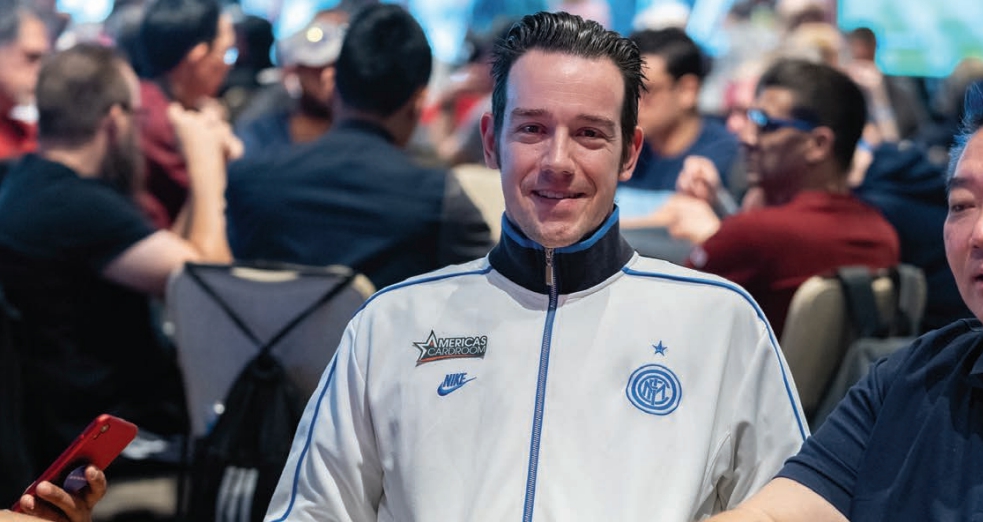
Sluzinski then discussed becoming a vlogger and ACR Poker ambassador.
Jeff Sluzinski: Asking for things is actually how I got my ACR deal, which really changed my life. One of the people at ACR saw my vlog after I had it going for about a year, and they just hit me up on Twitter and said, ‘Hey, if you retweet this, we’re having a $550 buy-in, $1 million guaranteed tournament, and we’ll give you a ticket.’
After I hit him up and said, ‘Sorry I didn’t cash, thanks for the opportunity.’ He said, ‘No problem, thanks for retweeting.’ I then asked, ‘Who are your site pros?’ He said, ‘We don’t have any site pros.’ This was eight years ago. I said, ‘Well, I could be your site pro.’ He said, ‘Alright, let’s do it.’ And here we are.
I think that’s just a good life lesson. Just never be afraid to ask for what you want.
Art Parmann: What made you start your YouTube channel?
Jeff Sluzinski: I didn’t really think people would watch. I originally made YouTube videos just to show my mom what it was like to see a day in the life of a live tournament poker player. My first vlog was a Venetian $400 event, and I didn’t know what I was doing. I used footage of me and my dog at the dog park as an intro. I thought it was so cool that I learned how to use iMovie.
This was the same month as Brad Owen started and a few months after Andrew Neeme started. I saw their videos, and I saw that I could just put it out there and [attract an audience].
I’m just happy people enjoyed it. There’s always going to be trolls, but you can get a lot of genuine feedback just by seeing the [comment] trends, what people like, and learning from that.
This year at the WSOP, more than any other years, [there were] so many people who would come up and say, ‘We appreciate the podcast,’ or ‘we appreciate the content on Twitch or whatever.’ You can’t really put a price on that. At least I’m giving something back in the form of entertainment and letting people live vicariously through me as I just lose tournament after tournament.
They see what it’s really… it’s not all first place with billion-dollar scores. People like the reality of it. I vlog pretty much every single tournament I play, so you know the most likely outcome there.
Justin Young: As long as they’re passionate, it doesn’t matter if they like your play or hate your play. But if they’re passionate about either side, that’s the important part.
About The Table 1 Podcast
Hosted by high-stakes poker pros Art Parmann and Justin Young, the Table 1 Podcast is on a mission to make poker fun again. Tune in to see world-class pros talk poker, gambling, and all manner of life experiences on and off the felt. Visit the website for the podcast, newsletter, or even to get in the game. ♠
- Photos – WPT