










Nit in Poker: Definition & Complete Term Breakdown
What Is a Nit in Poker?
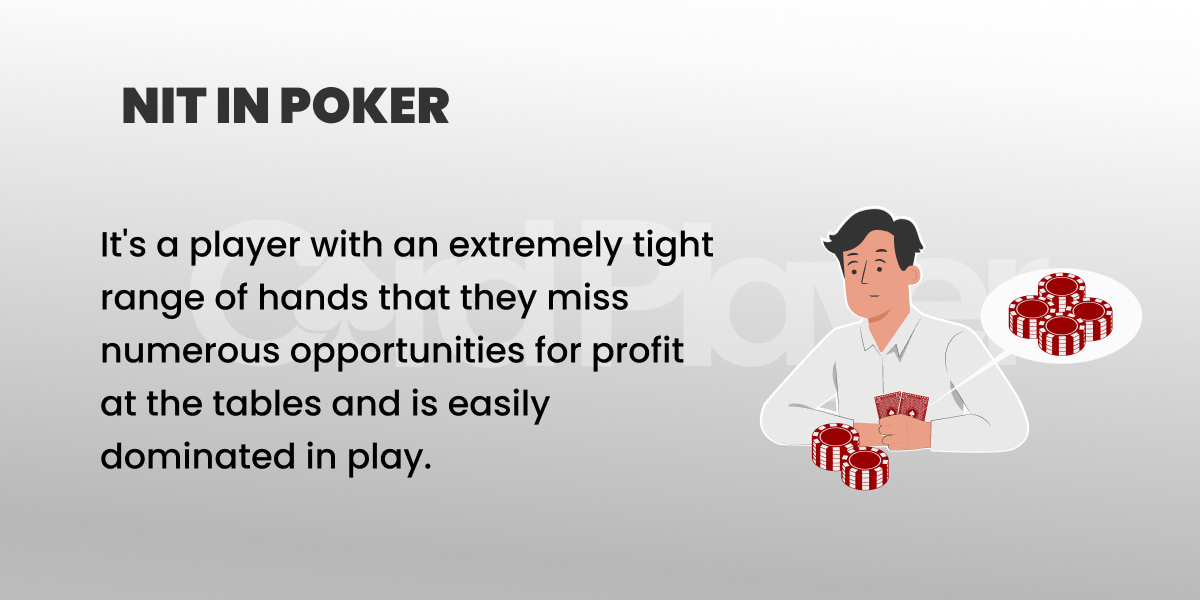
A nit in poker is a player who plays a very narrow range of hands.
This type of player voluntarily wagers chips only in a small number of pots and folds the vast majority of their hands preflop. While “nit” isn’t always meant as an insult, it’s often used that way because this playing style typically isn’t profitable in the long run. It describes a specific tendency where someone plays only the strongest hands and avoids marginal situations almost all the time.
Once you know what to look for, spotting a nit at your table becomes easy.
Most players at your table will see 20-30% of flops, but a nit sees only 8-12% of them. If you play online poker, poker tracking programs make spotting nits even easier by showing their statistics. They only get involved when they have premium cards.
This extreme predictability is by far their biggest weakness and generally limits their success.
Nit in Poker: Key Points
- A nit plays only premium hands, seeing 8-12% of flops compared to the normal 20-30%.
- Nits are extremely predictable and exploitable because their range is so narrow.
- Beat nits by stealing their blinds and folding when they fight back.
How to Recognize a Nit in Poker
Nits have several characteristics that set them apart from other players at the table:
- Excessive preflop folding: They fold the vast majority of their hands before the flop, even when they’re in good positions where they should be playing more aggressively. They rarely steal blinds, and hardly ever play hands such as K-9 or Q-T from any position.
- Passive and cautious postflop play: The postflop game of nits is overly passive. You will notice that they check too often, call too much, and seldom bluff. They also refrain from betting unless they have premium hands.
- Rigid, strength-based decisions: Nits don’t float with weak holdings or make aggressive plays on the turn or river. They only care about their card strength, not their position or stack size.
Once you spot these patterns, nits become easy to read and take advantage of at the table.
Why Do Poker Players Choose to Be Nits
Many players adopt this approach because it feels safe.
Tight play means fewer difficult decisions and less money at risk. For beginners, this approach often makes the most sense. You learn the game by only playing strong hands and making easy decisions.
Some players are simply quite risk-averse and tend to bring that personality to the poker table. They’re uncomfortable with uncertainty and prefer the apparent safety of playing only premium hands.
Some players will change their playstyle to play only premium cards after losing several hands or having a bad session, tightening up to protect their remaining chips. However, these aren’t actual nits – they’re just playing defensively for a while. The problem is that once you start playing this tight, it can become a hard habit to break.
Newer players sometimes think tight play equals good play. They’ve heard “play tight” as general advice and have taken it to extremes. Poker rewards players who can adjust and play different hands in different situations, but nits stick to the same tight approach no matter what.
Cons of Being a Nit in Poker
Playing like a nit costs you money in multiple ways:
- Missing profitable opportunities: Hands like A-9 or K-J are playable in many spots, especially from late position. By automatically folding them, you leave money on the table.
- Opponents adjust quickly: Once opponents realize you only play premium hands, they fold whenever you bet and never pay you off. Your strong hands become worthless because nobody calls them.
- Extreme predictability: Predictable players get exploited. Your opponents know exactly what you have based on your actions, so they make perfect decisions against you.
- Vulnerability at higher stakes: Nitty play will be especially harmful to your game. Good players destroy nits because they know exactly how to adjust. They attack your blinds, they fold to your bets, and they never give you action.
While you can win at lower stakes where opponents make enough mistakes anyway, tight play alone won’t carry you to winning at tough tables.
How to Exploit Nits
Exploiting a nit is straightforward once you identify one.
- Steal their blinds relentlessly. Raise wide from the button and cutoff when a nit is in the small or big blind. They fold constantly. This alone wins you chips.
- Avoid playing big pots with them unless you have premium hands. When a nit bets, they usually have it.
- Fold your marginal hands when a nit three-bets you. They don’t do this without a strong hand, so your A-Q or J-J doesn’t need to get it in against their range. Save your chips for more profitable spots.
- Use their tightness against them. If a nit hasn’t played a hand in thirty minutes, their next raise gets a lot of respect. Use that to fold better hands than theirs when they apply pressure.
- Isolate them in position whenever possible. Nits struggle in pots where they have to make decisions out of position. They get uncomfortable and make mistakes.
When Being a Nit Can Be Smart (and When It Isn’t)
There are spots where playing tight is correct, but it’s not the same as being a nit. Playing tight during a downswing while you rebuild confidence is reasonable. Playing tight in your first session at a new table while you gather information is smart. These are tactical adjustments, not permanent playing styles.
Playing tight like a nit can make sense when you’re facing much more skilled opponents.
Folding more hands and avoiding tough spots keeps you from bleeding chips. But even then, you need balance. Tight play only works if you occasionally do something unexpected; otherwise, good opponents will run you over.
The key distinction is flexibility.
A good player can play tight when the situation calls for it. A nit player can’t play any other way. If you’re always playing like a nit, you’re leaving money on the table. The ideal style of play is generally one where you can move between tight and loose depending on a range of in-game factors, such as position, stack depth, opponents, stage of play, and your image at the table, if any.
Nit Strategy in Cash Games vs Tournaments
Nit play impacts cash games and tournaments differently.
In cash games, being a nit is a permanent leak. You have unlimited time to adjust and improve your game, but many nits never do. They just keep folding and winning small pots. They could make significantly more money by loosening up, but they don’t. The money is available, but they just won’t take it.
In tournaments, nit play is sometimes necessary early on. You’re building a stack, and avoiding unnecessary risk makes sense. But as blinds increase and antes come into play, you have to loosen up, or your stack gets blinded away. Tournament nits often find themselves short-stacked in the middle stages because they waited too long to adjust.
By the time they realize they need to play more hands, they’re forced to play weak hands from a desperate position. Good tournament players mix aggression with smart hand selection throughout the event, changing their strategy as their stack changes and blinds increase. They understand when to attack and when to play more carefully.
Nits never adjust in this way and thus fail to go deep in most tournaments they play.
Balancing Tight & Aggressive Play
To stop playing like a nit, understand that playing tight is just one tool, not your entire strategy. Good players mix strong, medium, and sometimes weak hands into their play based on the situation.
They’re aggressive when it makes sense and tight when the situation calls for it.
Start by identifying which hands you fold too often. If you’re never playing K-J, Q-T, or A-9, you’re probably too tight. These hands have value in the right spots. Add them back into your range from late position first, then gradually from other positions as you get comfortable.
Next, work on your postflop aggression. You don’t need premium hands to bet the flop or turn.
You need good reasons to bet, which include having the best hand, having position, or having a plan. Finally, balance your strong hands with bluffs. If you never bluff, your opponents will crush you. If you bluff too much, they’ll call you down. Start small with one bluff per session if you’re uncomfortable. Build from there.
Your goal is to become unpredictable while still making sound decisions.
FAQs
Can you win money playing like a nit?
You can win at lower stakes where opponents make enough mistakes. Still, nit play becomes increasingly unprofitable as you move up in stakes because skilled players exploit your predictability by stealing your blinds and folding to your bets.
How do you identify a nit player in poker?
Nits see very few flops (8-12% compared to normal 20-30%), rarely steal blinds, avoid marginal hands, and play passively postflop. Their chip stacks stay relatively flat because they win small pots and lose big ones.
Is being a nit a good strategy in poker?
In the long run, this can cost you money. While tight play can be helpful to tactically in certain spots, permanent nit play prevents you from building a strong win rate.
What hands do nit players typically play?
Nits play only premium hands like pocket pairs, AK, AQ, and occasionally AJ. They fold hands like K-J, Q-T, A-9, and most speculative holdings regardless of position.
How should you exploit a nit player?
Steal their blinds relentlessly, avoid big pots unless you have premium hands, fold marginal hands to their three-bets, and isolate them in position. Don’t bluff them unnecessarily since they call more than average.
When should you stop playing like a nit?
Stop playing like a nit once you understand basic poker strategy. Tight play is a good way to start in poker when learning, but winning players need balanced ranges that include bluffs and weaker hands at times.
What is a nit roll in poker?
A nit roll is when a nit player slowly reveals a very strong hand at showdown, often tanking unnecessarily before showing the nuts.